



This past week was one of the most chaotic and revealing weeks for global markets, crypto, and politics all at the same time. Almost every corner of the financial world sent a new signal, some loud, some confusing, and some deeply important for the months ahead. Despite the heavy volatility, the story of the week was clear: fear is high, data is missing, and markets are running on emotion and scattered information instead of solid facts.
Bitcoin: Outflows, Rumors, and Fear
The week closed with one of the harshest signals for crypto: Bitcoin ETFs saw a net outflow of $1.11 billion. This kind of liquidity drain usually adds pressure on price, and we saw that stress clearly.
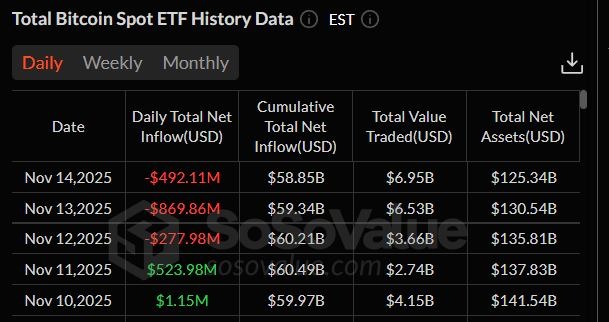
As if outflows weren’t enough, rumors started spreading that MicroStrategy and Michael Saylor were selling 47,000 BTC. Many accounts pushed this as “insider info,” but it turned out to be completely false.
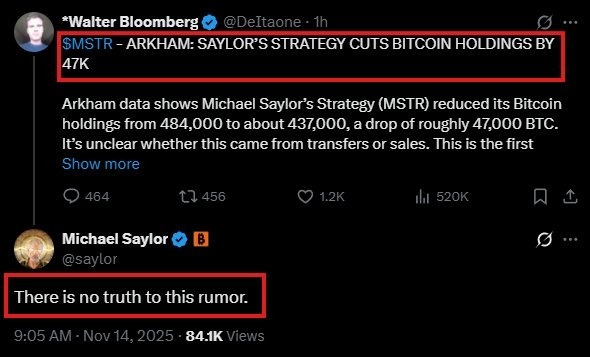
Even Saylor himself responded directly:
“We bought bitcoin every day this week.”, Michael Saylor (Nov 15, 2025)
This sudden panic over false selling was seen by many analysts as a classic bottom signal, a moment when fear becomes irrational.
At the same time, large liquidations hit the market. Over the past 24 hours alone, more than $1 billion in positions were liquidated, and $335 million of that came in just four hours. Most were longs, which shows traders were still betting on upside with high leverage, a dangerous setup in a volatile week.
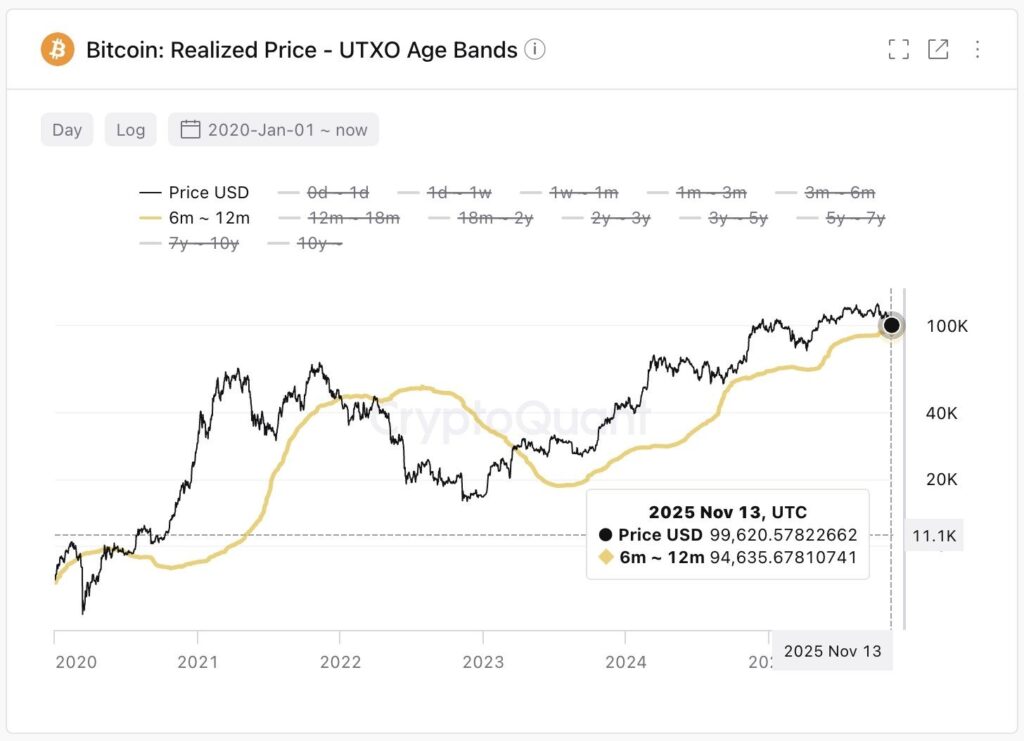
Crypto analyst Ki Young Ju added an important perspective: most people who entered the market in the past 6–12 months have a cost basis near 94,000 USD, and he does not believe we’re in a real bear cycle unless BTC loses that level. In other words:
94K is the line that decides everything.
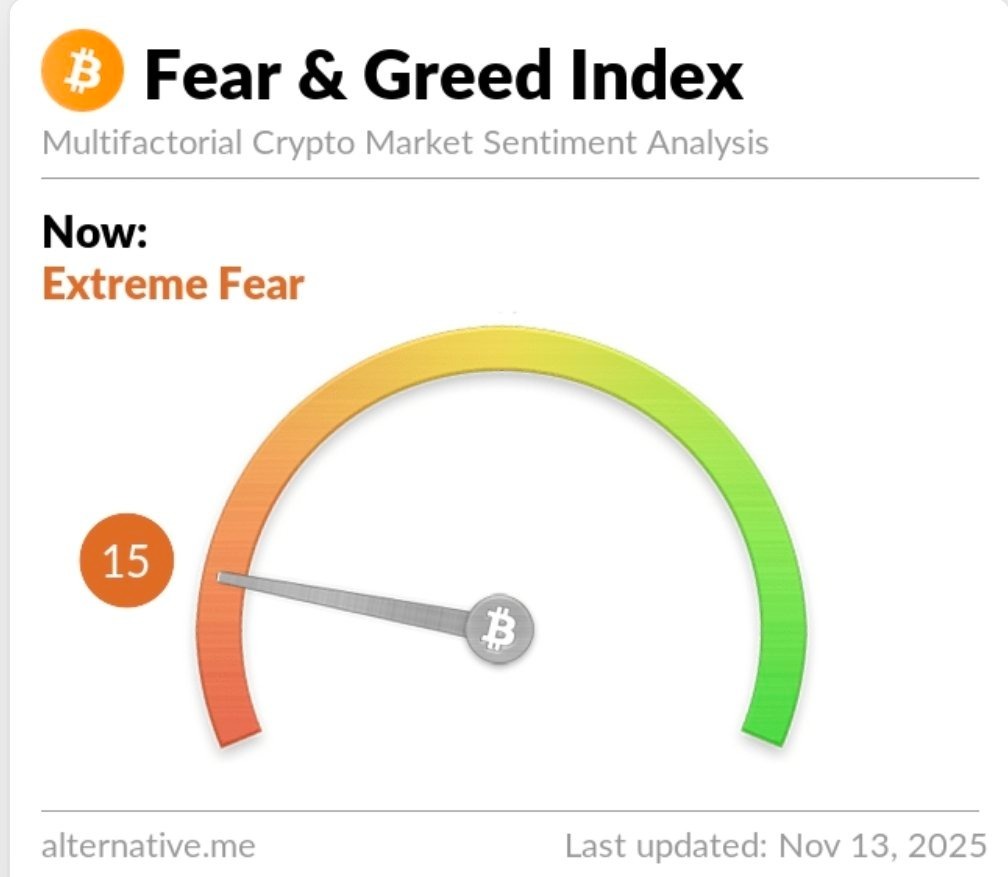
Fear in the market was also confirmed by the Fear & Greed Index, which dropped to 15, a level that rarely stays this low for long. Historically, this level often marks the start of recovery phases, but fear is clearly still driving the moment.
Adding to the sentiment, Eric Trump commented that if people “can’t handle volatility, they shouldn’t enter crypto.” A strange comment, considering the political noise already weighing on markets.
No Data, No Clarity: The U.S. Government Shutdown Fallout
One of the biggest shocks of the week came when the White House said that October jobs and inflation data might not be published due to administrative delays caused by the government shutdown. Markets were depending heavily on these numbers to understand the next direction of interest rates, liquidity, and risk.
As one analyst said:
“No data means no direction.”
The shutdown finally ended on Day 43, making it the longest in U.S. history. Both the Senate and the House moved to approve the reopening. This should ease some economic pressure, but the damage of missing key data is real.
Markets were also hit by another worrying sign:
655 large U.S. companies have gone bankrupt year-to-date, the highest in 15 years. Industrials led with 98 bankruptcies, followed by consumer discretionary and healthcare. Corporate bankruptcies are now rising at a near-crisis pace.
Financial Policies: New Tariffs, New Checks, and New Liquidity
President Trump announced an Executive Order to cut tariffs on beef, coffee, tomatoes, and bananas to fight food inflation.
At the same time, the White House confirmed two major economic stimulus programs:
1) $2000 payments for families earning under $100k
Delivered through tax credits or direct cash.
2) “Trump Children’s Investment Accounts”
Every child born from January 2025 will receive $1000 invested automatically in U.S. equities.
Both plans will be funded through tax reforms, not new money printing, but they still inject large liquidity into the economy. More liquidity almost always finds its way into risk assets like crypto.
Trump also defended his tariff revenue system, saying it generated far more money than expected and that reversing it could trigger over $3 trillion in refunds.
Crypto Regulation: Global Tightening and New Frameworks
Regulatory news came fast and from multiple regions:
- U.S. Senate Agriculture Committee released a draft bill to structure the crypto market.
- FDIC began work on a tokenized deposit insurance framework, a major step toward integrating digital assets into the U.S. banking system.
- EU approved new rules starting 2027:
- Cash payments above €10,000 banned
- All crypto transactions on exchanges require full KYC
- Cash payments above €10,000 banned
- UK proposed limiting stablecoin holdings to £20,000 per person
- Japan’s FSA is planning tighter rules requiring exchanges and custodians to register formally, and banning all unregistered services.
- U.S. Congress is actively working on crypto market structure laws as the shutdown ends.
Crypto is no longer an unregulated zone, governments everywhere are tightening their grip.
ETFs: Expansion and Surprises
A big milestone arrived:
the first U.S. Spot XRP ETF began trading.
More ETF progress included:
- Bitwise Spot Chainlink ETF (CLNK) was officially listed on DTCC
- Canary Capital filed an S-1 for a MOG ETF (yes, a meme coin ETF)
Meanwhile, traditional Bitcoin ETFs saw huge outflows, showing a clear divergence between asset types and investor confidence.
Blockchain Adoption: Real-World Use Cases Accelerate
The week was unusually active in real adoption:
- Visa launched a pilot program using USDC for payments between companies.
- UAE completed its first digital transaction using the digital dirham (CBDC).
- JPMorgan launched JPM Coin on Base, enabling 24/7 institutional settlements.

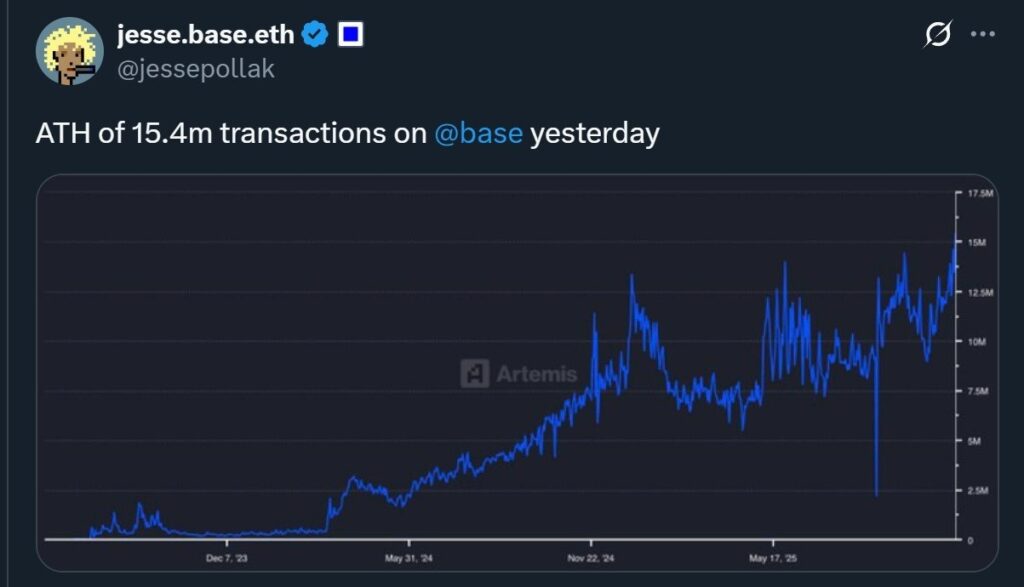
- Base network hit an all-time-high of 15.4 million transactions in a single day.
- x402 processed over 10 million payments between AI agents in one month and used over $200M in ETH secured by Chainlink.
- Mastercard and UBS also joined cross-border settlement pilots on the same infrastructure.
This was one of the strongest weeks ever for institutional and real-world blockchain adoption.
Market Structure: Miners, Leverage, and Correlations
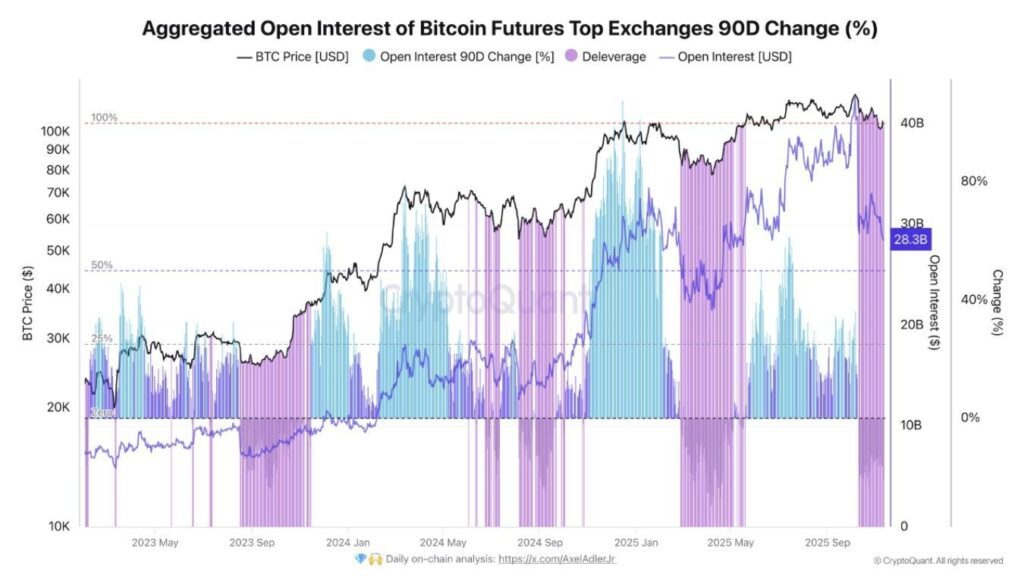
Data from CryptoQuant showed:
- Bitcoin miner selling pressure dropped sharply, meaning less forced selling in the market.
- Leverage unwinding continued, usually a healthy sign before trend reversals.
- Open interest remained low, showing that big players are waiting on the sidelines.
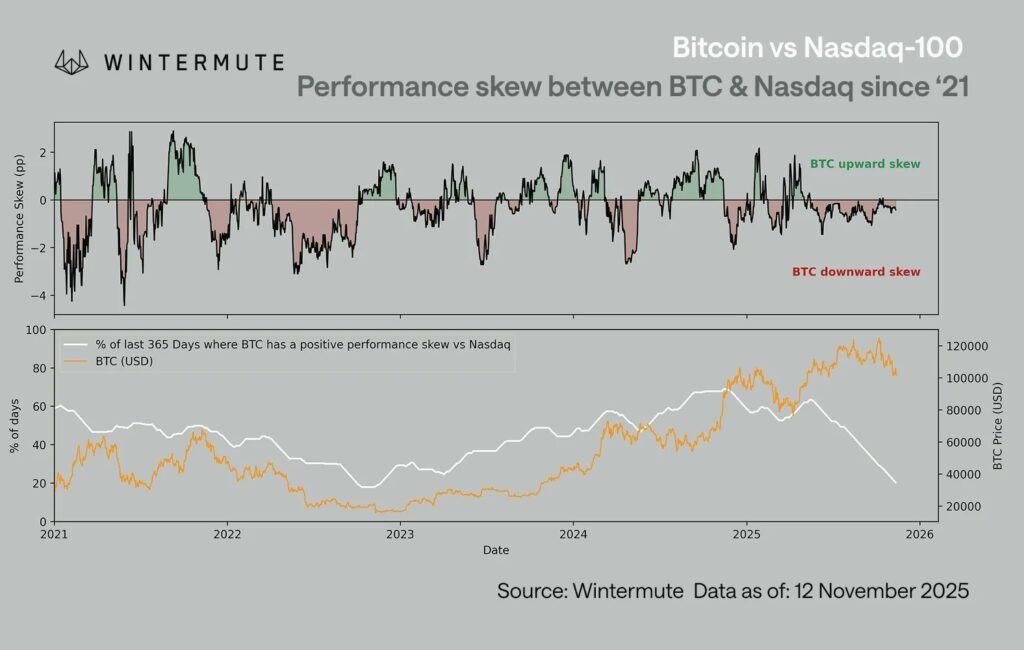
Wintermute added an important insight:
BTC still moves with equities, but only when equities fall.
The correlation is ~0.8, but BTC reacts far more strongly to bad equity days than good ones. This “negative skew” was last seen in late 2022.
Project Updates: Buybacks, Burn Programs, and Ecosystem Growth
Crypto projects continued shifting toward buyback-based value models:
- Aave approved a $50M annual buyback
- EtherFi passed a $50M ETHFI buyback
- Aster DEX allocated 70–80% of season 3 fees to buybacks
- Maple Finance redirects 25% of revenue to $SYRUP
- Venus uses 40% of revenue to support XVS
- zkSync proposed buybacks + staking
Hyperliquid also continued buying back $3.6M worth of tokens per day, removing over $900M from supply so far. Their revenue now surpasses Ethereum, Tron, and Jupiter combined.
Uniswap also pumped earlier in the week after proposing a new fee mechanism plus a 100 million UNI burn (worth ~$800M).
Solana, SUI, and New Tech Highlights
Solana co-founder Anatoly Yakovenko said Solana processed in one month the same number of transactions that Ethereum has processed in its entire history.
Ledger and SUI announced a 400,000 SUI reward campaign, encouraging users to switch to cold wallets during volatile conditions.
And miner warnings came from Marathon CEO Fred Thiel, who said only mining companies with direct control over energy sources will survive the next halving.
Legal, Geopolitical, and Global Events
It was a dramatic week outside markets too:
- Dubai court froze $456M linked to Justin Sun and TUSD, one of the biggest stablecoin-related legal cases in the region.
- China accused the U.S. of stealing 127,000 BTC through a state-level hacking operation, escalating geopolitical tension.
- Russia said it is ready to restart peace talks with Ukraine.
- China also expressed its desire to continue constructive cooperation with the U.S.
Market Psychology and Human Behavior
One of the clearest reminders of sentiment came from a simple story:
In mid-October, Australians stood in long lines to buy gold during its peak. After an 11% correction and a 5% bounce, the lines disappeared.
A perfect example of how people feel safe buying at the top… and scared when the opportunity is actually better.
Final Outlook
This week showed a market stuck between fear, missing data, political noise, massive liquidations, and rising regulatory pressure. But beneath all of that, the foundation of crypto adoption kept getting stronger through ETFs, banking integration, CBDCs, and real-world blockchain usage.
For now, all eyes remain on:
- 94K BTC
- Next liquidity injections
- ETF flows
- Recovery after the shutdown
- Whether fear stays at extreme levels or starts to fade
Despite the chaos, the story of the week can be summarized simply:
fundamentals improved, but sentiment collapsed, and that contrast may shape the next big move. This article is for informational purposes only and does not contain financial advice. Always conduct your own research (DYOR). For more insights, visit blog.millionero.com and when you’re ready, you can trade spot and perpetuals on Millionero.com.