



ETF Flows and Institutional Positioning
This week was dominated by selling from crypto ETFs.
Across the market, Bitcoin ETFs saw another $1.22 billion in outflows, while Ethereum ETFs lost about $500 million over the same period. On a single day, Bitcoin ETF redemptions passed $903 million, making it one of the biggest “dump days” since U.S. spot ETFs launched.
The pressure was strongest at the top:
- The BlackRock Bitcoin ETF recorded about $1.09 billion in outflows this week, described as the largest weekly outflow in its history. This fits with wider data showing November is on track to be the worst month ever for U.S. spot Bitcoin ETF redemptions. (CoinDesk)
At the same time, money is not leaving the whole ETF complex. Two opposite trends appeared:
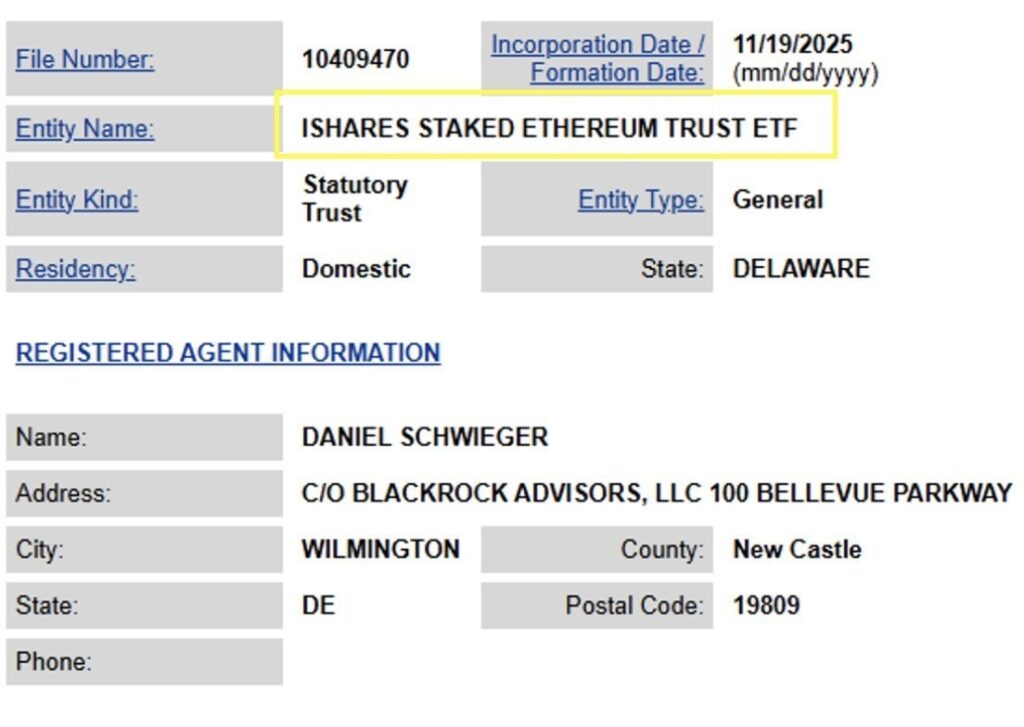
- BlackRock filed for a Staked ETH Trust in Delaware, giving institutions a way to access staked ETH through a regulated product.
- Fidelity launched the Fidelity SOL Fund (FSOL), its Solana ETF with staking rewards. It is already the third or fourth SOL ETF in the U.S., showing that some institutions are still trying to move into high-beta crypto exposure even while BTC and ETH ETFs bleed. (CoinDesk)
Outside ETFs
flows were also busy:
- The Abu Dhabi Investment Council reportedly tripled its Bitcoin ETF position in Q3, ending September with around $520 million in BTC ETF holdings, most of it bought before the latest crash.
- In U.S. politics, Congressman Brandon Gill disclosed another $300,000 Bitcoin purchase, bringing his total BTC buys while in office above $2.5 million.
- And on the opposite side, 65 crypto companies sent a joint letter to Donald Trump, asking him to override Congress and order federal agencies to give a clear, fast regulatory framework for digital assets, arguing that the current gray zone is pushing innovation and investment away from the U.S.
Price Action, Liquidations, and Market Structure
Price action was brutal. One key headline said simply: “Bitcoin 85k.”
BTC dropped toward the low-$80,000s, and funding stress exploded.
In derivatives:
- Almost $1 billion in positions were liquidated in a single hour, mostly longs, and around $2 billion in liquidations hit the market over 24 hours. This is classic “flush the leveraged longs” behavior.
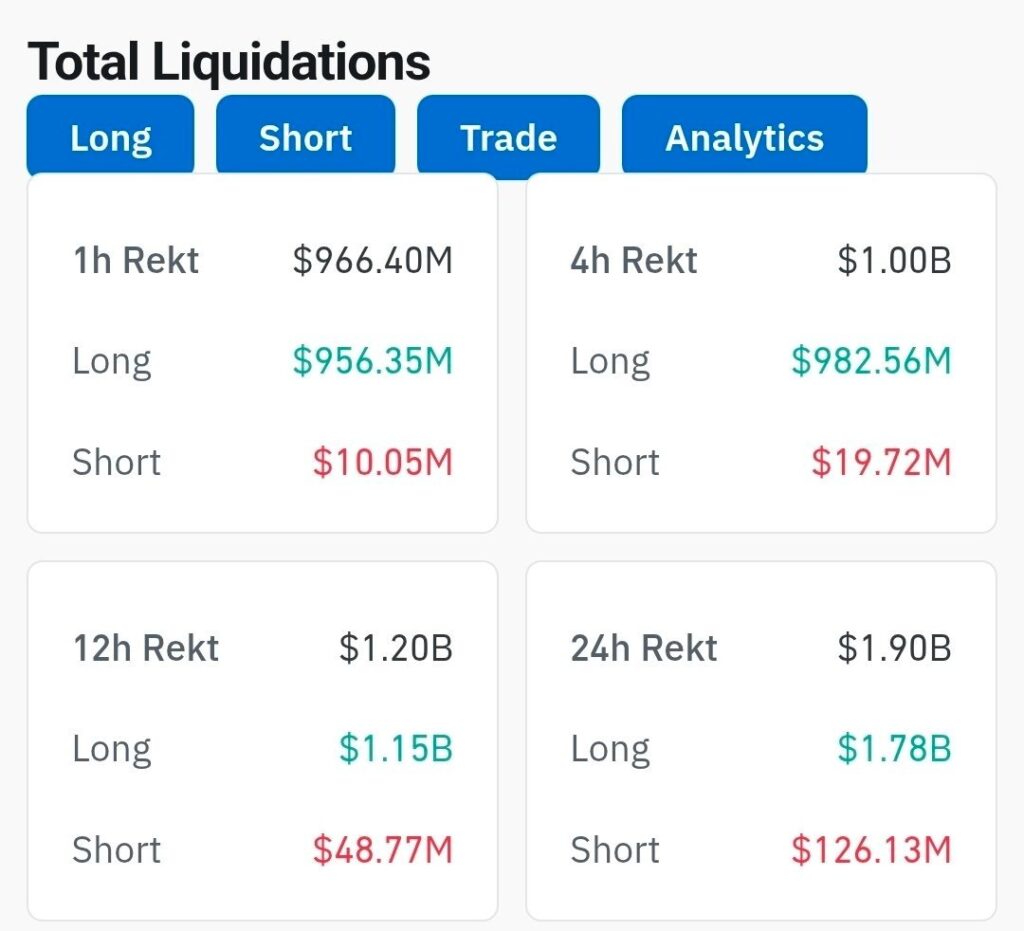
- One tweet called it one of the biggest liquidation waves in recent months, layered on top of the ETF outflows mentioned above.
On-chain and technical signals tell a similar story:
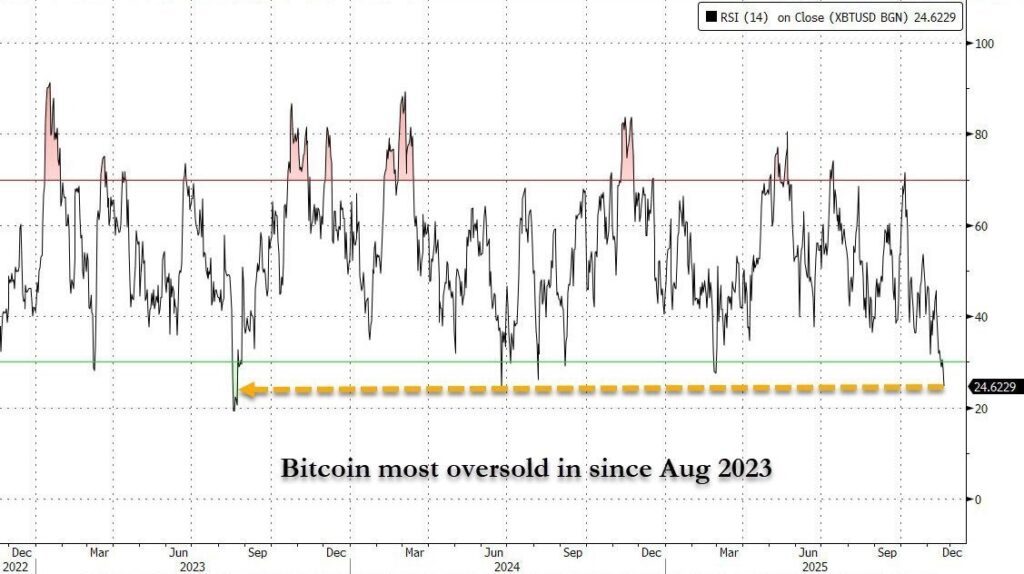
- Bitcoin is now in its most oversold zone since August 2023, when price briefly touched $25,000. Current indicators say this is one of the strongest “oversold” readings in more than a year.
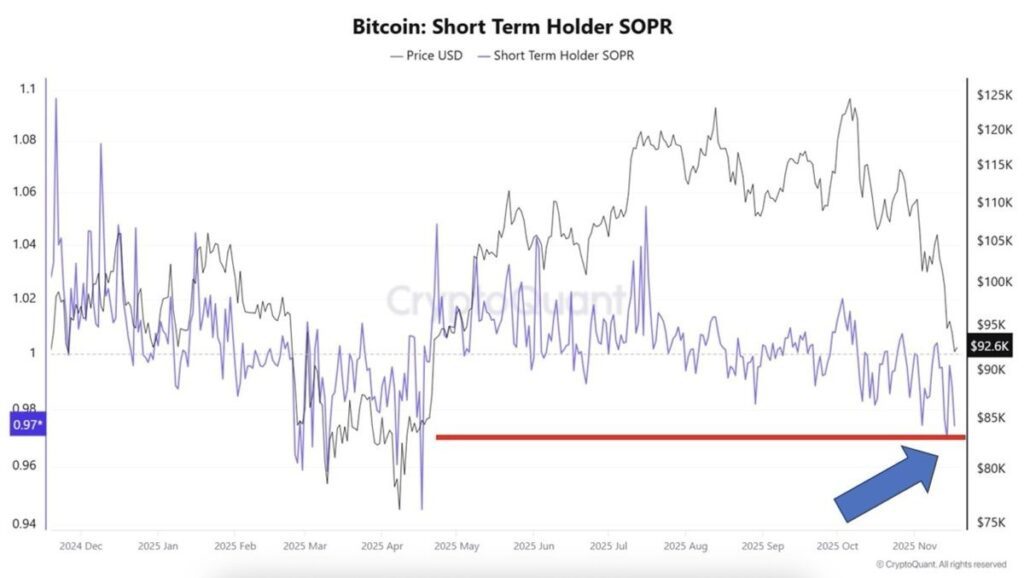
- Short-term holders are capitulating hard. Data from CryptoQuant describes a “classic late-stage fear structure,” where weak hands sell into the hole. Historically, such deep capitulation has appeared near the end of corrections, not at the start of new bear legs.
Whale activity
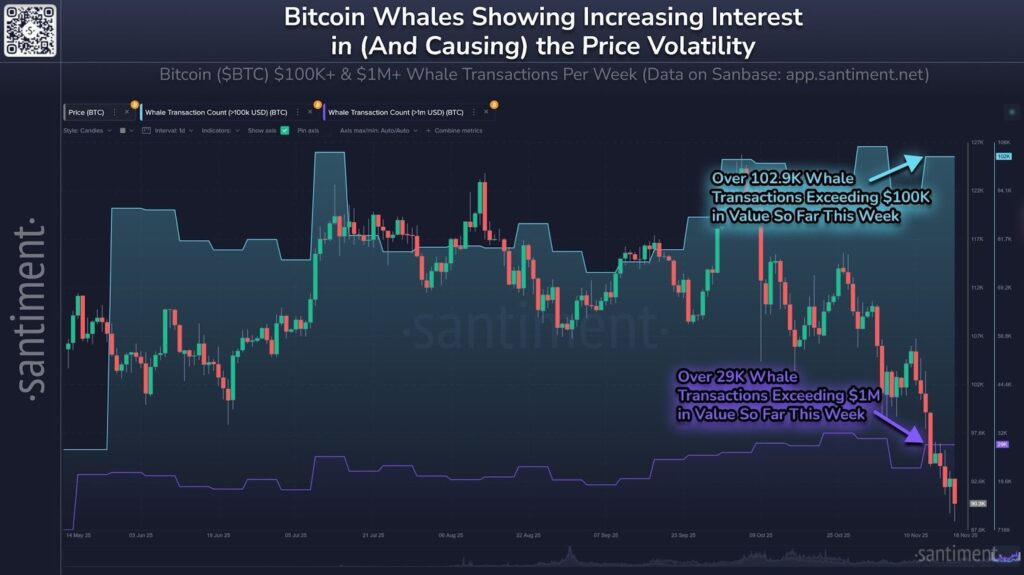
- Over the week, there were more than 102,900 Bitcoin transactions above $100,000, and over 29,000 transactions larger than $1 million. On-chain analysts say this may become the most active whale week of 2025, an early sign that big players are repositioning for whatever comes next.
Spot activity shows a split inside crypto:
- Bitcoin trading volume dropped by about 25%, while Ethereum volume rose roughly 16%.
- MVRV data for the last 30 days suggests “extreme buy zones” for ADA, LINK, and ETH, and “good buy zones” for BTC and XRP, meaning many addresses are sitting on losses and valuations look historically attractive from that specific metric’s point of view.
Not every story is about opportunity. Some show how fragile liquidity can be:
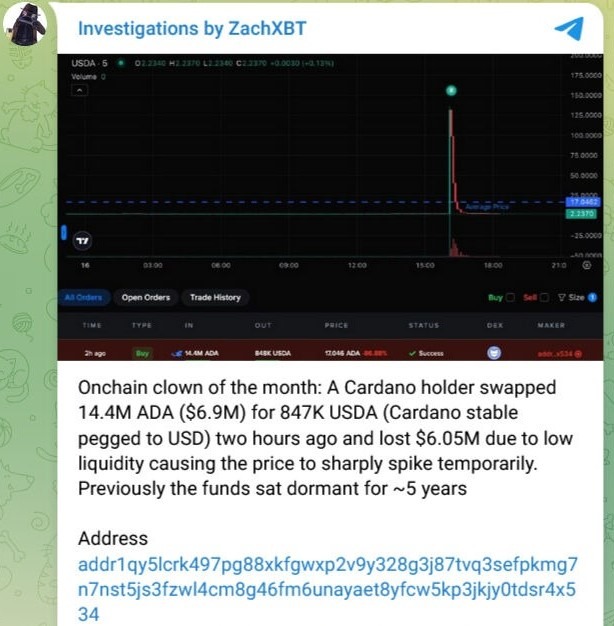
- A Cardano holder who kept ADA for more than five years tried to exit a $6.9 million position through a very low-liquidity pool. Because of massive slippage, the trade ended as about $847,000 in USDA stablecoins. Roughly 90% of the value vanished in a single bad execution. It’s a painful reminder that liquidity risk can be just as dangerous as price risk.
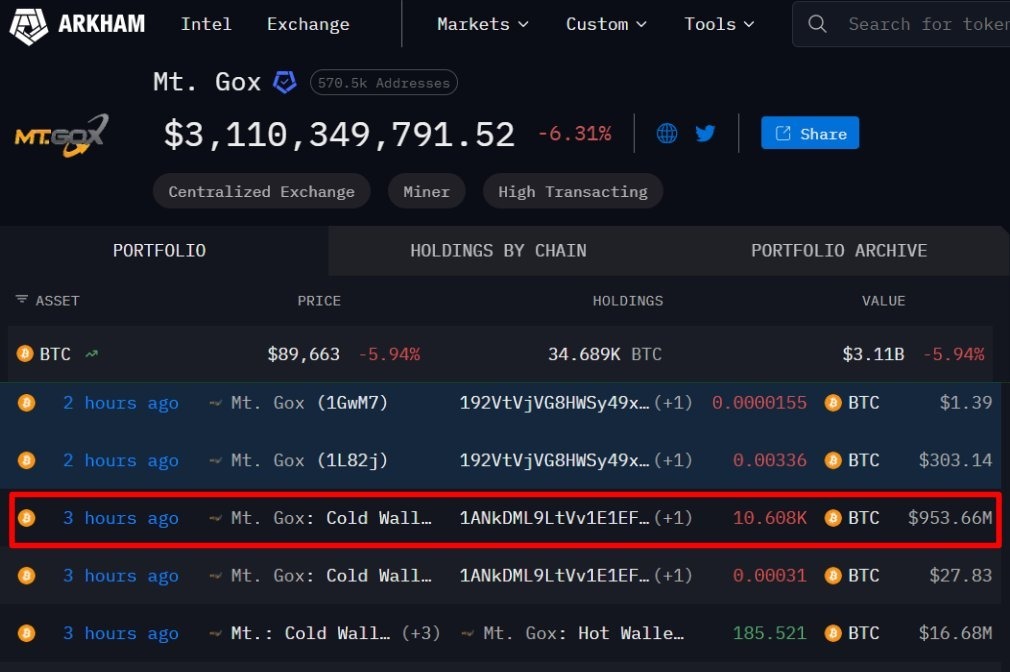
On top of all this, Mt. Gox moved more than 10,600 BTC (about $950 million) after months of silence. Every time that old wallet moves, the market worries about forced selling. Combined with ETF outflows and leveraged liquidations, it adds another layer of fear.
Big Personalities: Saylor, Cramer, Tom Lee and Long-Term Perspective
Several well-known names shaped sentiment this week.
On the bullish side:
- Michael Saylor’s MicroStrategy announced the purchase of 8,178 more BTC for about $835 million, raising total holdings to 649,870 BTC at an average cost of $74,433 per coin.
- At the same time, the MSTR stock price is down more than 40% this month, and analysts at JPMorgan warned the company could be removed from the MSCI and Nasdaq indices. That would force index funds to sell, adding extra pressure. So Saylor is buying into weakness, but he is under real market stress.
- Tom Lee’s Bitmine accumulated 67,021 ETH this week, worth around $234 million, signaling heavy conviction in Ethereum despite the ETF outflows and volatility.
- The CEO of Metaplanet said that Bitcoin ETFs do not weaken Metaplanet’s position and that ETF demand actually supports the company’s long-term strategy as a Bitcoin-focused firm.
On the other side, Jim Cramer turned loudly bearish:
- He said he is now “bearish on Bitcoin”, mocked “crypto cheerleaders” who keep talking about $1 million per BTC in 2030, and claimed these bulls always defend their view no matter what the market does.
- Cramer predicted Michael Saylor would show up on multiple TV segments to defend Bitcoin again, joking that he would “use ChatGPT to predict exactly what Saylor will say.”
To balance the noise, some voices tried to zoom out:
- The Kobeissi Letter reminded traders that since 2017, Bitcoin has had more than ten drawdowns over 25%, six over 50%, and three over 75%—and that every one of those big drawdowns was followed by new all-time highs. Their message: what we are seeing now is harsh, but not unusual for Bitcoin’s history, and may be closer to the end of this correction than the beginning.
Regulation, Market Infrastructure, and Hacks
Regulatory and structural news also moved in many directions.
In the U.S.:
- A new SEC initiative called “Project Crypto” was described by official Selway as an effort to rebuild trust in the market and support “trustless” digital assets, while letting market forces, not regulators alone, shape how the crypto market looks. The tone suggests lighter, more market-driven regulation compared to the past few years.
- During his confirmation hearing, Michael Selig, nominee for CFTC chair, argued for strong oversight of digital assets and DeFi but warned that “regulation by enforcement” alone could push companies offshore. He wants clearer rules that protect investors without killing innovation.
- A U.S. bank regulator allowed banks to hold digital assets to pay blockchain network fees, one of the clearest signs so far that traditional banks and crypto infrastructure are starting to merge.
Outside the U.S
- In Japan, the Financial Services Agency is moving to classify crypto as financial products and to cut tax rates on crypto to 20%. That could make Japan more attractive for both local and foreign investors who want regulated exposure but lower tax pressure.
- Meanwhile, Kalshi, a prediction-market platform, raised another $1 billion only weeks after a $300 million round at a $5 billion valuation, underscoring strong institutional interest in real-money prediction markets even as crypto markets shake.
On the risk and infrastructure side:
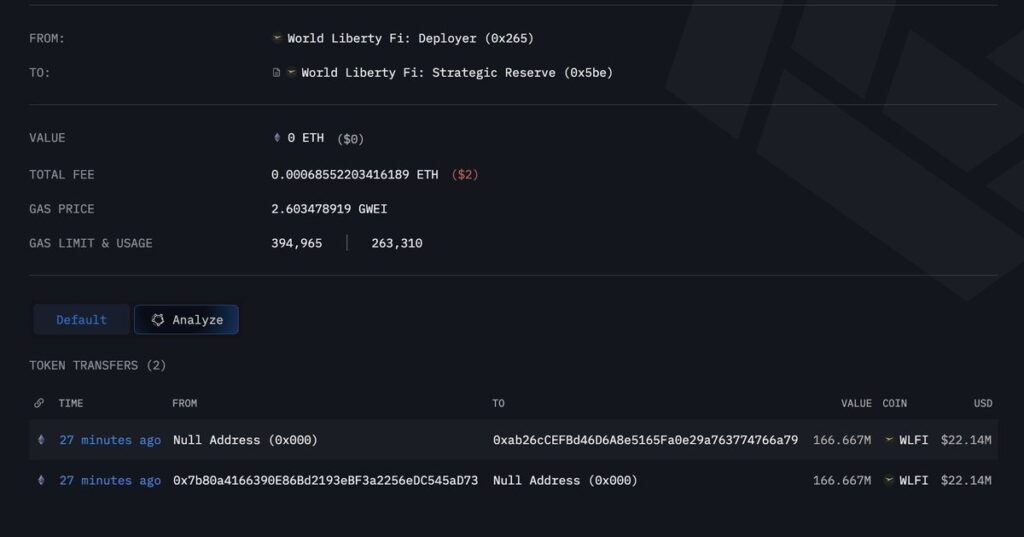
- World Liberty Fi (WLFI) reported that some user wallets tied to its token allocations were compromised. In response, the project triggered an emergency function and burned 166.667 million WLFI (worth about $22.14 million) from the compromised addresses, reallocating them to a recovery wallet to protect investors.
- The Hyperliquid treasury merger vote, worth around $888 million, was delayed, adding uncertainty about when or even whether the deal will close.
- On the more experimental side, Pump’s new “Mayhem Mode”, designed to boost token-launch activity and revenue, failed to deliver in its first week. Launch numbers and income did not rise as hoped, and the platform may need bigger design changes if it wants to revive growth.
Macro, the Fed, and a Very Strange Business Cycle
Macro data and central bank signals gave a mixed but important backdrop to the crypto pain.
First, labor and growth:
- After a 48-day delay, the U.S. Department of Labor finally released the September jobs report:
- +119,000 jobs added, above the +53,000 expected,
- but unemployment rose to 4.4% versus 4.3% expected, the highest since October 2021.
This is a classic “mixed” report: decent hiring, but signs of a softer job market.
- +119,000 jobs added, above the +53,000 expected,
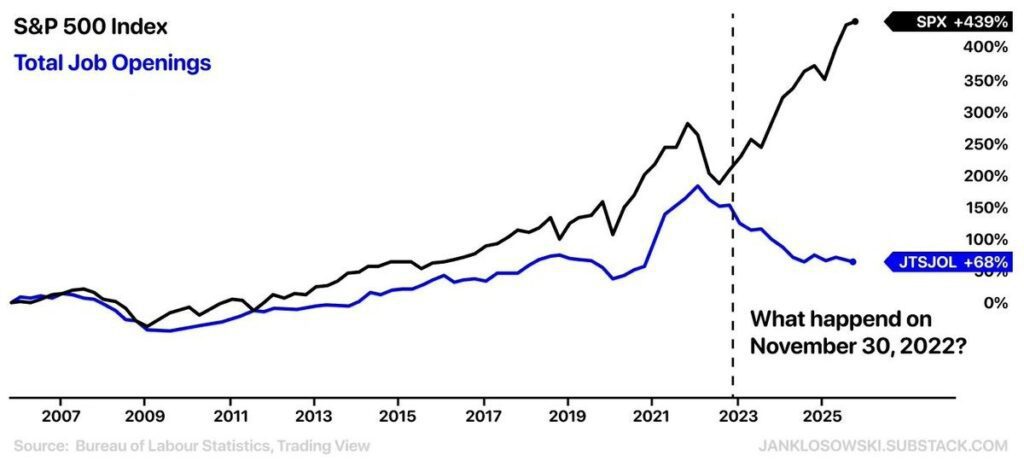
- Some analysts now say stock prices and labor data have flipped their normal relationship. Historically, strong employment was good for equities. Today, strong jobs data often pushes stocks down (because it means tighter policy longer), while weak jobs push stocks up (because they suggest rate cuts).
The Fed:
- FOMC minutes showed that several Fed members think a December rate cut is not appropriate yet, and they warned about a possible stock market drop, especially if AI-related valuations repriced suddenly. They also said data during the shutdown shows a gradual slowdown in the labor market, not a crash but a clear cooling.
- Fed member Waller said he does not see clear forces that would re-accelerate inflation, that the labor market is weak and near a clear slowdown, and that core inflation excluding tariffs is close to the 2% target.
- Fed member Barkin said the real labor market is weaker than official data suggests, adding to fears of a deeper slowdown.
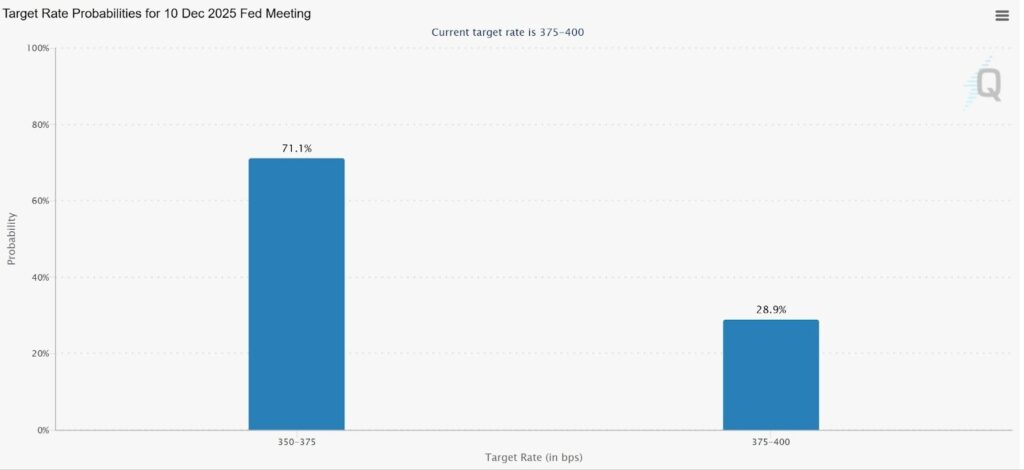
- Despite the cautious tone, CME FedWatch now prices a 71% chance of a December rate cut, especially after New York Fed president Williams described current policy as only “slightly restrictive,” implying there is room to cut.
In politics and fiscal policy:
- Donald Trump said he is speaking with several people about the next Fed chair, that he “knows who he will pick”, and that he is blocked from firing Jerome Powell for now. He plans to decide on the next Fed chair before Christmas, a decision that could shift the whole path of the dollar and global markets.
- Trump also repeated that the only healthcare system he would support is one that “sends money back to people,” and that he wants inflation at 1%, signaling a desire for very tight price stability.
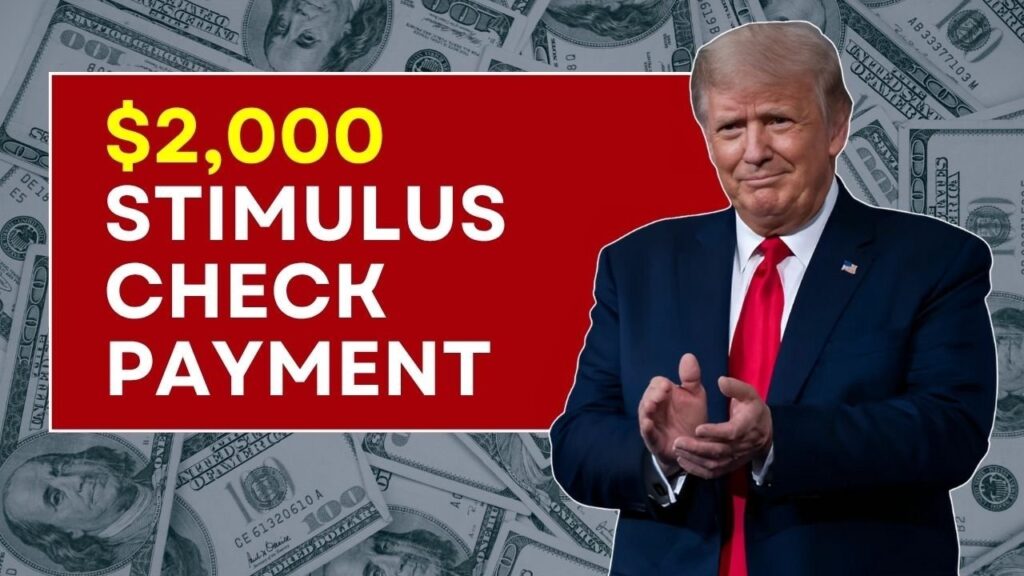
- In another move, Trump announced $2,000 stimulus checks funded by tariffs, planned to start mid-2026, but the plan still needs Congressional approval and there is ongoing debate about who would qualify.
- After the end of the U.S. government shutdown, Bitwise CIO Matt Hougan argued that the cleared backlog could lead to over 100 new crypto ETF approvals in 2026, as regulators finally process delayed applications.
Global stress is not only about rates
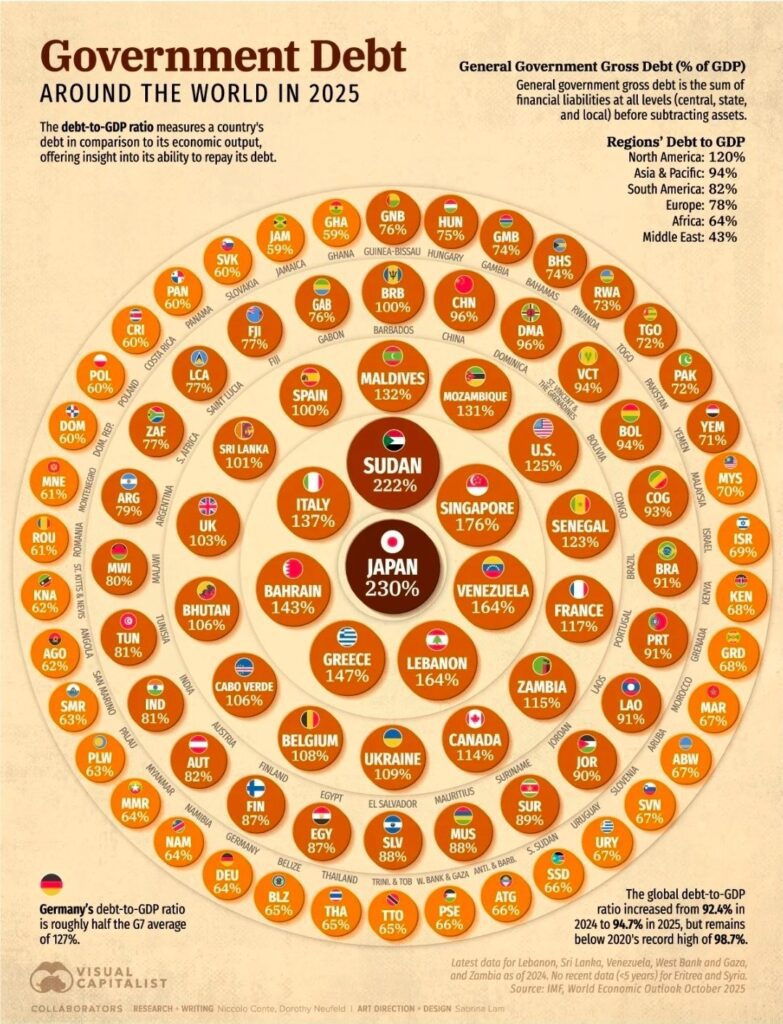
- Global debt has hit about $111 trillion, roughly 94.7% of world GDP. 23 countries now owe more than their entire annual output. The U.S. sits around 125% debt-to-GDP, ranked about 11th in the world, while countries like Japan, Sudan, and Singapore are near the top. The harshest fact: around 3.4 billion people live in countries that spend more on interest payments than on health or education.
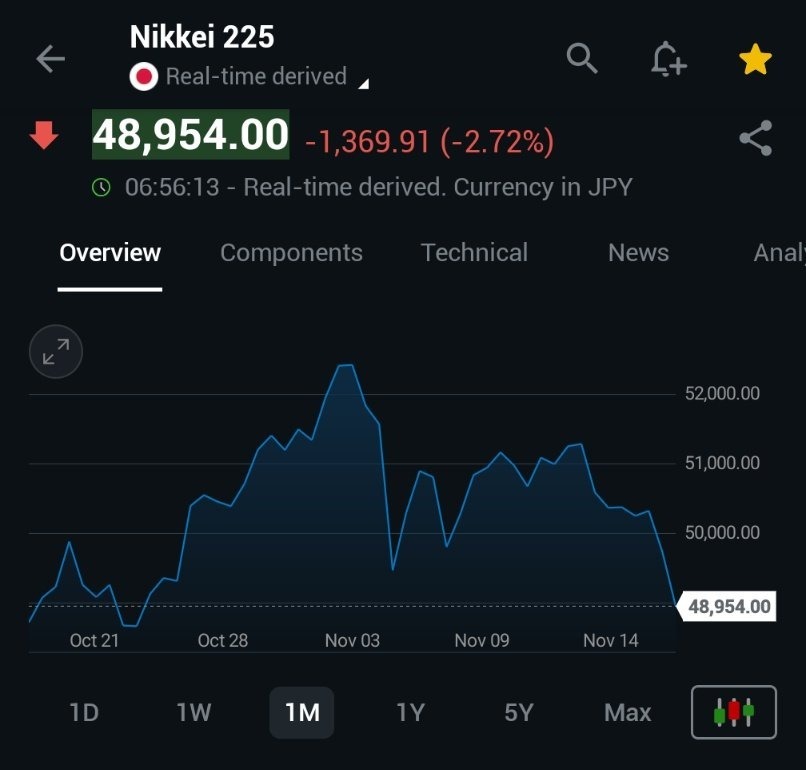
- The Nikkei 225 index in Japan fell more than 3%, reflecting rising risk aversion and spreading concern over global growth and policy tightening.
AI, Nvidia, and Their Indirect Impact on Crypto
AI and Nvidia stayed at the center of the macro story.
- Nvidia reported record quarterly revenue of about $57 billion, with data-center revenue around $51.2 billion, beating expectations and confirming that demand for AI chips is still “off the charts.” Earnings per share came in around $1.30, slightly above estimates. (The Guardian)
- The White House asked Congress to reject a bill that would restrict Nvidia’s chip exports, arguing that such limits would hurt U.S. economic and technological interests.
- At the same time, Trump is preparing an executive order called “Genesis Mission” to support AI development inside the U.S. and keep the country at the front of the global AI race.
Strong Nvidia earnings calmed some “AI bubble” fears in traditional markets, but Fed minutes warned that a sudden re-pricing of AI-linked stocks could still hurt equities. Crypto sits in the middle of this: if AI megacaps stay strong, risk appetite can recover; if they crack, they can drag Bitcoin and altcoins down with them.
DeFi, Governance, and Protocol-Level Stories
A few protocol-specific stories also stood out:
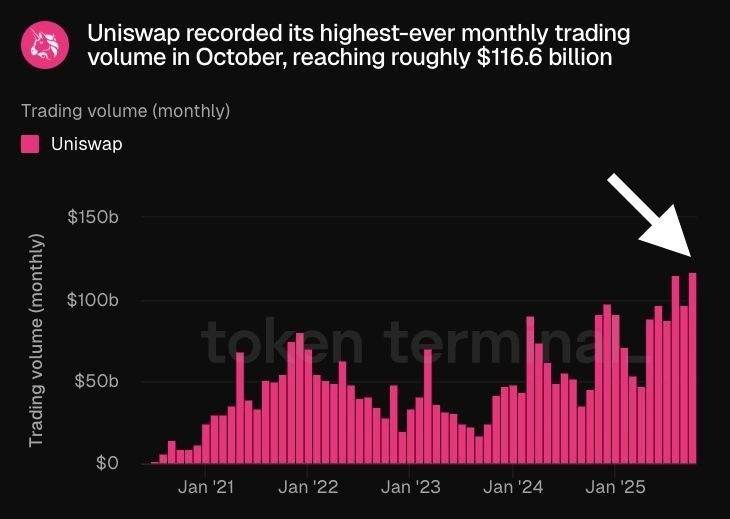
- Uniswap’s UNI hit a record monthly trading volume of $116 billion in October. Much of the excitement is tied to the “UNIfication” proposal, which would:
- turn on protocol fees,
- burn 100 million UNI,
- and send one-third of fees to a yield fund.
This would create a buyback-style dynamic where more network usage means more value returned to token holders and more scarcity. - These governance shifts come at a time when Bitcoin volume is falling but Ethereum volume is rising, suggesting some traders are rotating into DeFi and more complex strategies even in a risk-off environment.
Where This Leaves the Market
Putting everything together:
- Short term, the picture is clearly bearish:
- Record BTC and ETH ETF outflows,
- Mass liquidations,
- Mt. Gox movements,
- Cramer’s loud bearish turn,
- MicroStrategy stock under heavy pressure.
- Record BTC and ETH ETF outflows,
- Medium term, there are strong counter-signals:
- Saylor and Tom Lee buying in size,
- Abu Dhabi tripling its BTC ETF stake,
- Brandon Gill increasing his BTC holdings,
- Japan and U.S. regulators slowly moving toward clearer, more integrated rules,
- New products like BlackRock’s Staked ETH Trust and Fidelity’s SOL ETF.
- Saylor and Tom Lee buying in size,
- Structurally, the market is digesting:
- high global debt,
- a strange cycle where weak labor is “good” for stocks,
- and a world where AI giants like Nvidia shape risk sentiment across all asset classes, including crypto.
- high global debt,
Bitcoin, at around $85,000, is now deeply oversold by many indicators, with short-term holders capitulating and whales very active. History does not guarantee the future, but past cycles suggest that such periods of fear, forced selling, and record outflows often set the stage for the next move, rather than mark the final death of the asset.
This article is for information and education only. It is not financial advice and it is not an offer to buy or sell any asset. This weekly recap is meant to help readers understand how macro news, regulation, and big flows connect to Bitcoin and the wider crypto market.
Trade spot and futures easily on Millionero with low fees and a simple interface. Stay updated by reading our weekly insights on blog.millionero.com