


This past week was all about one big question: did we just see a deep crash that cleans leverage, or the start of something more painful?
On-chain data, ETF flows, stablecoins, and regulation all told different parts of the same story: the market is trying hard to build a bottom after a violent correction.
Bitcoin, ETFs, and the Search for a Bottom
For the first time since October 24, Bitcoin spot ETFs finally turned green again. This week saw about $70.5 million in net inflows into BTC ETFs, while ETH ETFs had an even bigger move with around $312.62 million flowing in.
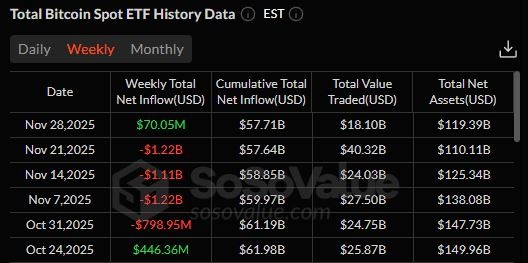
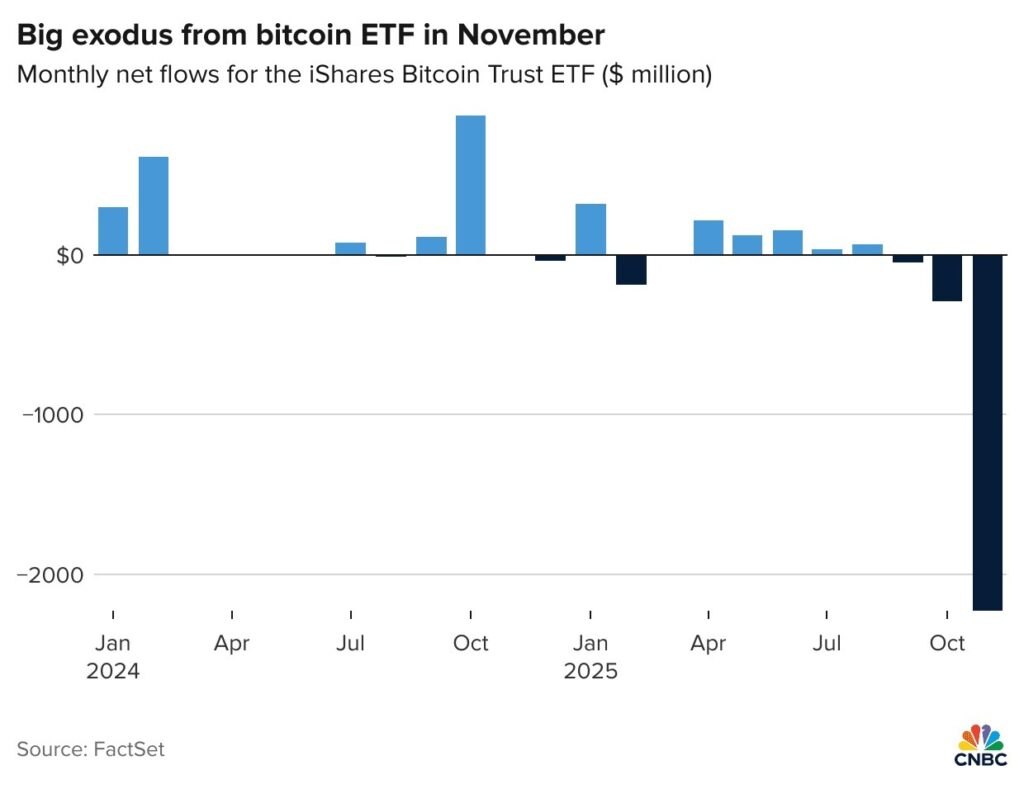
This is important because just days ago, sentiment was terrible after the big “1011” market crash. ETFs had been bleeding for weeks, especially the BlackRock Bitcoin ETF, which saw about $2.35 billion in outflows this month, the largest since it launched. Those withdrawals were one of the clearest signs of institutional fear.
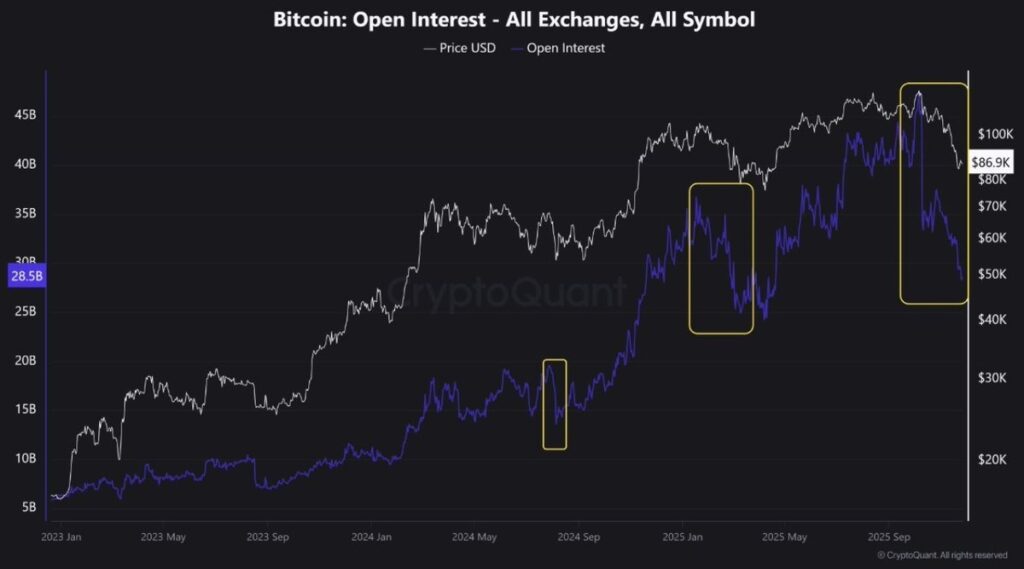
On-chain and derivatives data, however, show something more complex:
- We just had the largest drop in Bitcoin futures open interest in this cycle. Analysts described it as a big long squeeze and a “cleaning” of excess leverage, not the start of a new bear market. The move looks more like forced selling of over-leveraged longs than a calm, spot-driven exit.
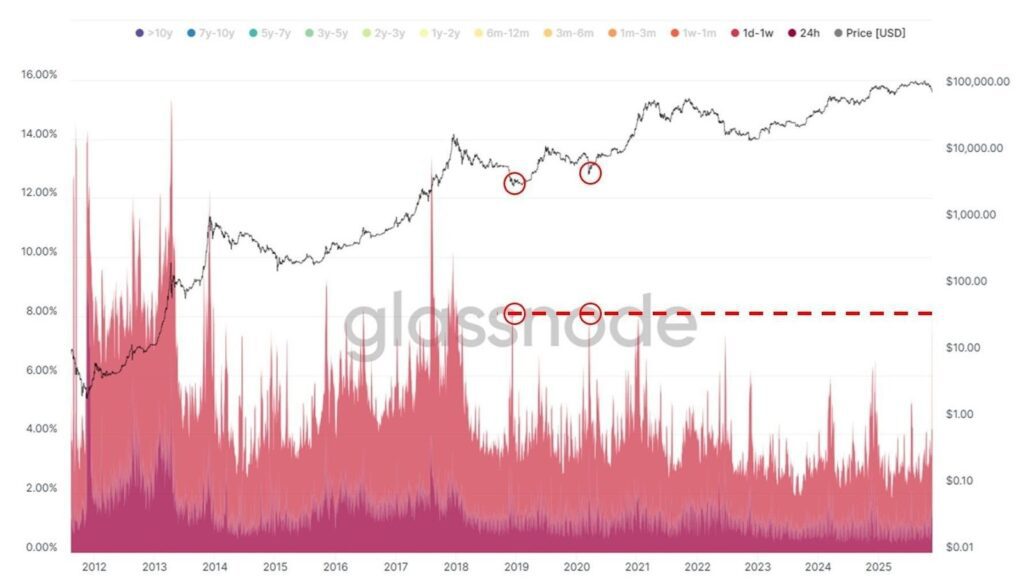
- On-chain, more than 8% of the entire BTC supply moved in a single week. The last two times we saw such huge movement were March 2020 (around $5,000) and December 2018 (around $3,500). Both were major bottom zones in previous cycles.
- Wallet data from CryptoQuant suggests that big players are quietly buying. Holders of 100–1,000 BTC and more than 10,000 BTC have been adding to their positions. At the same time, the 1,000–10,000 BTC group is still distributing, which is why analysts say the bottom is possible but not fully confirmed yet.
Sentiment indicators echo this slow healing mood. The Crypto Fear & Greed Index jumped to 20, up 10 points from last week when Bitcoin was around $80,000. That level of sentiment is similar to when BTC was trading close to $100,000 earlier in the cycle. The mood is still fearful, but the panic is cooling, which often happens before a stronger reversal.
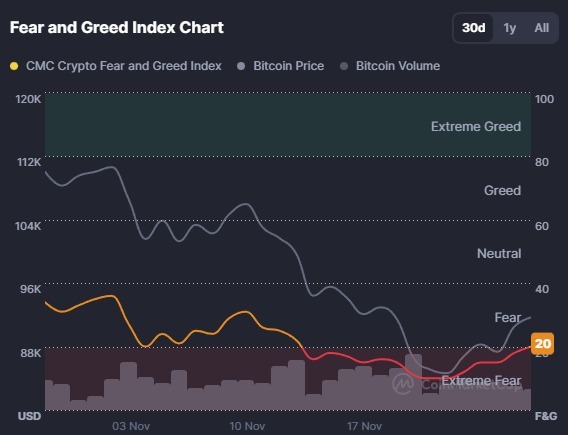
Overall, the picture is mixed but not hopeless: ETFs are finally green again, leverage has been washed out, big whales are buying, and fear is easing, but some mid-sized whales and ETF investors are still cautious.
Stablecoins, Liquidity, and the New Financial Rails
Stablecoins were at the center of the story this week.
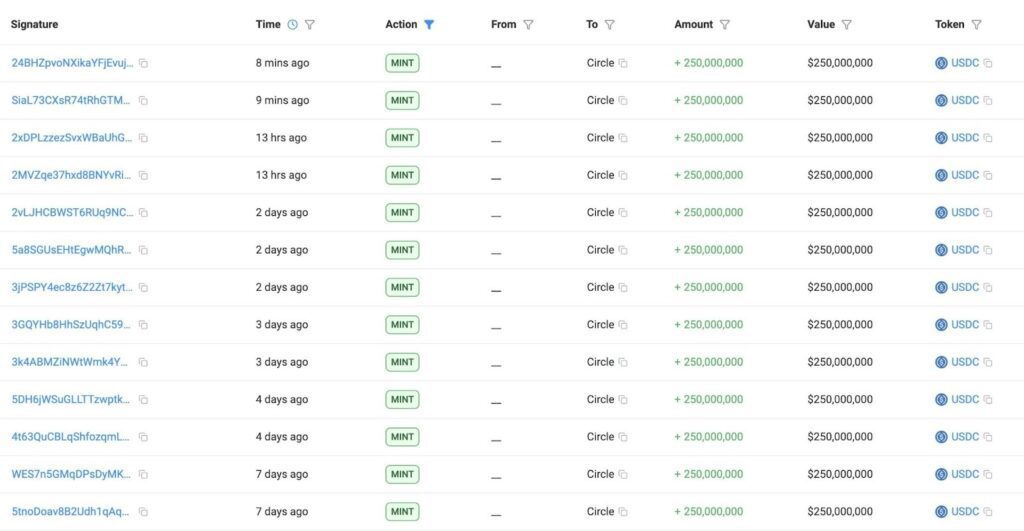
First, Circle minted another 500 million USDC, pushing the total new issuance by Tether + Circle since the 10/11 crash to about $18.25 billion in stablecoins. That is a massive amount of fresh “dry powder” for the market, and it shows that traders still want dollar liquidity on-chain, even after a big sell-off.
At the same time, data showed that the overall stablecoin market cap has actually fallen by around $6 billion from its recent top, the biggest monthly drop since the Luna collapse in May 2022. Back then, almost $500 billion vanished from the crypto market in a few weeks. The current drop is much smaller, but it signals that some money is still leaving risk assets, or at least sitting on the sidelines.
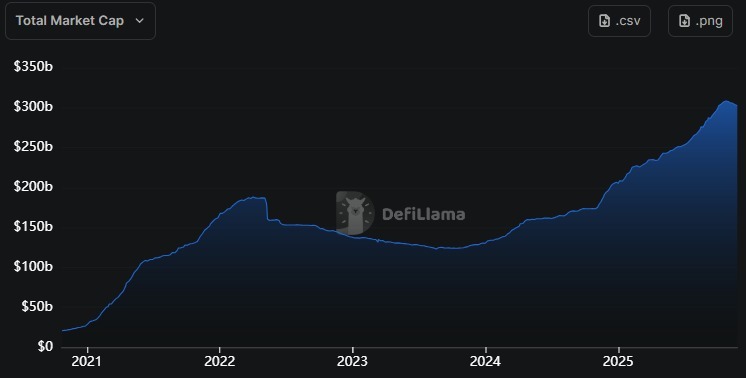
So we have a strange mix:
- Big new USDC / USDT issuance,
- But also a net drop in the total value of all stablecoins.
That suggests rotation and repositioning rather than simple “number go up” demand.
Tether also stayed in the spotlight for other reasons:
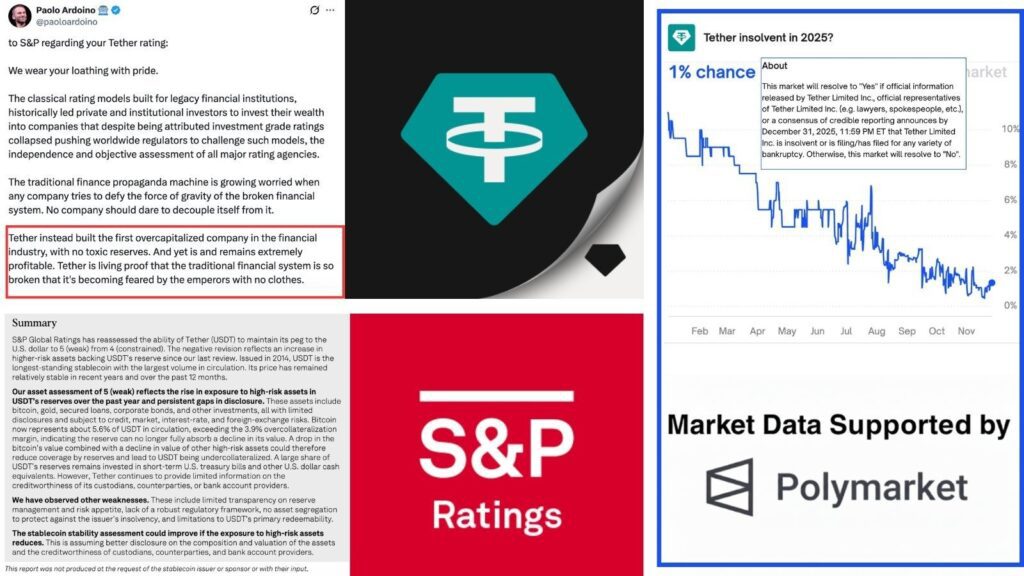
- S&P downgraded the stability rating of USDT, which triggered a strong response from Paolo Ardoino. He said that Tether is living proof that the traditional financial system is so broken it scares “emperors with no clothes.”
- On Polymarket, the probability of Tether going bankrupt in 2025 is being priced at only 1%, which shows that, at least for now, most bettors still trust that USDT will survive.
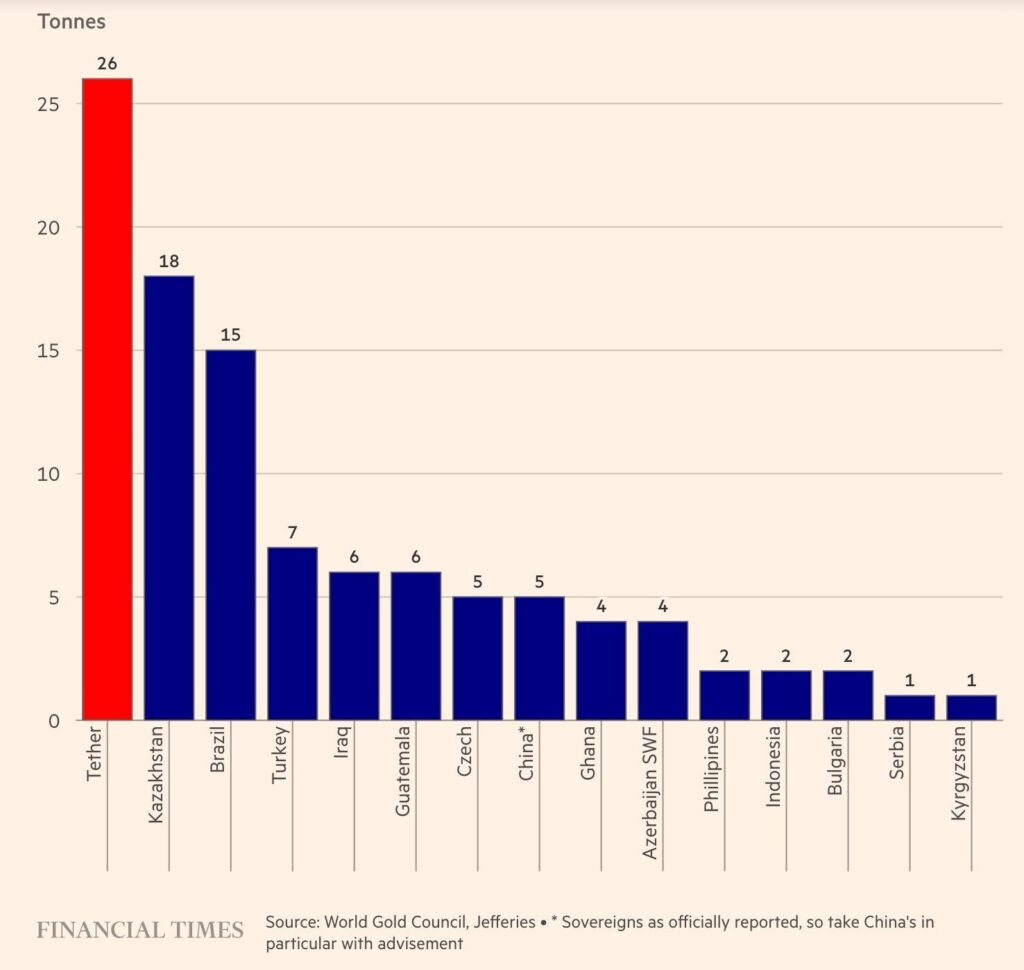
Tether is also acting more and more like a macro player. This week, it came out that Tether bought more gold in the last quarter than all central banks combined, a very unusual role for a private stablecoin issuer.
On the rails side, we saw a huge signal from the legacy payments world:
- SWIFT, the network that moves more than $150 trillion per year, tested USDC settlements on Ethereum in partnership with Citi. This means part of the world’s largest payment network is now experimenting with on-chain rails, where USDC moves over Ethereum instead of only through traditional banking channels.
All of this points in one direction: stablecoins are no longer just a crypto trading tool. They are slowly merging with the global financial system, even as regulators and rating agencies push for more control.
Regulation, Legal Clarity, and Investor Protection
Regulation headlines were everywhere this week and they covered both crypto and traditional markets.
In the U.K., lawmakers proposed a new tax framework for DeFi under a “No Gain, No Loss” rule. The goal is to create clearer tax treatment for staking, lending, and other DeFi activities, but it also signals tighter oversight and higher transparency expectations for users and protocols in that space.
In the US, the SEC scheduled a meeting for December 4 to discuss changes in corporate governance rules and, importantly, the tokenization of stocks. If tokenized shares become more common, a piece of the traditional stock market could move directly onto blockchains, letting investors hold and trade equity on-chain instead of only through old brokerage systems.
Japan also moved to protect users. Authorities announced that crypto exchanges will be required to hold emergency reserves to safeguard customer funds. This is meant to reduce the chance that users lose everything if a platform collapses or faces a sudden crisis.
Elsewhere, we saw new experiments with making crypto “official”:
- Uzbekistan will recognize stablecoins as legal currency starting January 2026. That means people and businesses there will be able to use certain stablecoins in everyday transactions, similar to how they use fiat money today.
- In Abu Dhabi, the financial regulator FSRA recognized Ripple’s RLUSD as a “token referenced to fiat” inside the ADGM financial center. Licensed firms in that zone can now use RLUSD directly, which strengthens Ripple’s push into regulated stablecoins.
These moves all point to the same trend: governments are not ignoring crypto anymore. They are trying to pull it into their legal and tax systems, sometimes with supportive rules, sometimes with heavy control.
XRP, LINK, and Other Assets in Focus
Among altcoins, XRP and LINK had some of the most important headlines.
On the XRP side, demand for Spot XRP ETFs is rising. Filings are getting more attention, helped by three key points:
- More legal clarity around XRP’s regulatory status,
- Growing institutional demand compared to many other altcoins,
- The general trend of large players looking for more diversified ETF exposure beyond just BTC and ETH.
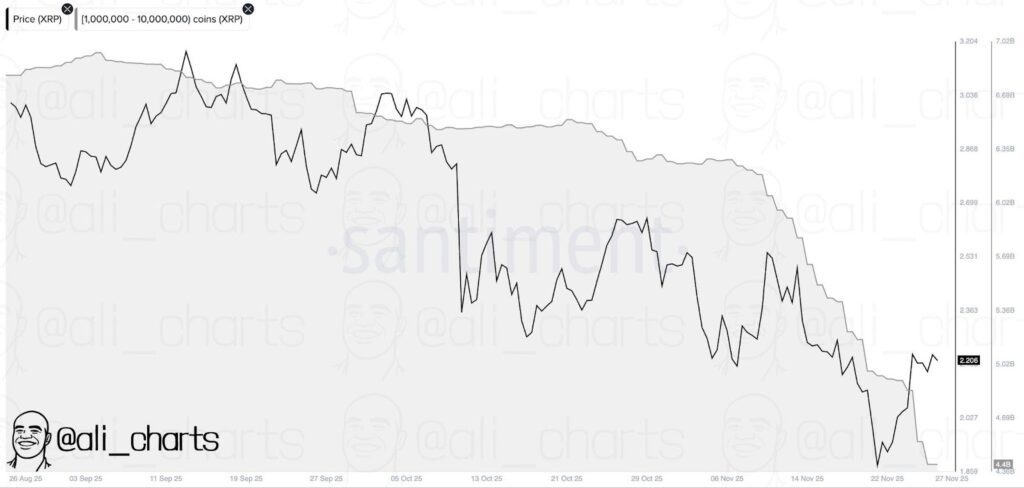
At the same time, on-chain data showed very aggressive XRP whale activity. Around 460 million XRP were sold or redistributed in only 96 hours. That is a huge volume and suggests that large holders are making big adjustments, either taking profit, rotating into other assets, or moving coins into different wallets before the next phase of the market.
For Chainlink, the big story is about a new door opening for institutions:
- The Grayscale LINK ETF (ticker: GLNK) is expected to launch on the NYSE on December 2, 2025. Grayscale updated its S-1 filing on November 12 and noted that the registration would become active automatically under Section 8(a) of the 1933 Securities Act if the SEC did not intervene. (KuCoin)
This will give traditional investors a regulated product that tracks LINK, and it could bring fresh institutional flows into the Chainlink ecosystem if demand is strong.
We also saw strength in public companies linked to crypto treasuries and digital assets. Stocks of companies that hold or manage large crypto treasuries outperformed the broader crypto market recovery:
- BitMine rose about 20%,
- SharpLink was up around 6%,
- Strategy (Saylor’s company) climbed about 5%.
The common point here is institutional ownership. These companies often react faster and more sharply than the underlying coins when institutions reposition.
TradFi vs Bitcoin: S&P 500, JPMorgan, and MicroStrategy
The tension between traditional finance and Bitcoin showed up clearly in how the system is treating MicroStrategy (MSTR).
First, the S&P 500 index committee reviewed candidates for index inclusion and once again skipped MicroStrategy, even though it meets the basic rules: market cap, liquidity, and US listing. Instead, they added SanDisk. The argument in the commentary was simple: the S&P does not seem ready to include a company whose performance is so strongly tied to Bitcoin rather than its old software business.
The message is implicit but clear: they do not want a Bitcoin-heavy stock inside the main benchmark yet. They can delay it, but as BTC exposure becomes a normal part of large portfolios, the index will probably have to face this eventually.
Then came JPMorgan with an even more aggressive move:
- The bank raised margin requirements on MSTR to 95%, an almost unheard-of level for a large Nasdaq stock.
- Some reports said JPMorgan was refusing to deliver MSTR shares to clients who tried to move them off the platform.
- Customers were told they could not borrow against the stock and could not transfer it, turning MSTR into something close to a trapped asset inside that system.
- Before announcing these new rules, JPMorgan had already sold about $134 million of its own MSTR position, which raised questions about conflicts of interest.
At the same time, data showed that institutions sold around $540 million of MSTR in the last quarter, and institutional ownership dropped by about 14.8%. The main reason is simple: they now have spot Bitcoin ETFs, so they no longer need MSTR as a leveraged proxy.
The reaction outside Wall Street was also symbolic. Grant Cardone reportedly closed his JPMorgan account over fraud and Epstein-related concerns and started buying millions of dollars worth of Bitcoin directly. The narrative here is that while some banks are trying to limit exposure to BTC-linked stocks, individual and some institutional players are stepping out of the banking system and going straight to the asset.
Hacks, Security, and New Protection Rules
Security risks did not take a break this week.
The biggest incident was the hack of Upbit, the largest crypto exchange in South Korea. Initial reports said hackers stole around $36.8 million in Solana and other assets, moved out of the exchange to unknown addresses. Later official estimates settled around $30–30.6 million in losses. (Tom’s Hardware)
South Korean authorities now suspect that the Lazarus Group, the North Korean state-linked hacker organization, is behind the attack. The method used looks similar to the 2019 Upbit hack, and Lazarus has a long history of high-value crypto thefts.

This event reinforces two points:
- Asian exchanges remain a prime target for advanced cyber attacks.
- Even top platforms with high trading volume can still lose tens of millions in a matter of minutes if a hot wallet is compromised.
In response to these ongoing risks, regulators like Japan are pushing for emergency reserves on exchanges, which is meant to provide a buffer for users if a platform is hacked or goes under.
Prediction Markets, Institutions, and Macro Politics
Prediction markets also got attention. Galaxy Digital is in talks with Polymarket and Kalshi to act as a liquidity provider. This would deepen order books on these platforms and signals that serious institutions now see prediction markets as a real financial sector, not just a niche betting toy.
On the political side, Donald Trump made a bold statement: he said the US could eliminate income tax entirely and rely on tariff revenue instead. The comment is likely part of an election strategy for next year, but markets treat such talk as risk-on friendly, because lower income taxes would be good for risk assets if they ever became reality. Still, the note added in the original commentary, “pay the debts first”, reminds us that the US debt burden makes such a plan hard to apply in practice.
In commodities, silver stole the spotlight for a moment by hitting a new all-time high at $55. The move came on the back of strong global demand and growing interest in metals as a hedge during economic uncertainty. With gold already widely held, some investors are turning to silver as an alternative hedge, and that shift was clearly visible in price action this week.
Putting It All Together
This week showed a market that is still bruised but not broken.
- Bitcoin and ETH ETFs finally saw inflows again, even as BlackRock’s BTC ETF continued to show heavy outflows on a monthly basis.
- Leverage has been flushed, whales are buying, and on-chain activity is at levels that we usually see near major bottoms, but not all cohorts have stopped selling yet.
- Stablecoins are expanding on some rails (USDC/USDT minting) while shrinking in total market cap, as users reposition between risk and safety.
- Regulators are moving fast: legal tender rules in Uzbekistan, tax rules for DeFi in the U.K., tokenization talks at the SEC, emergency reserves in Japan, and new recognition for RLUSD in Abu Dhabi.
- Altcoins like XRP and LINK are pulling institutions closer through ETF plans and legal clarity.
- TradFi vs Bitcoin is playing out openly through decisions around MSTR, S&P 500, and JPMorgan’s margin rules.
- And in the background, state-backed hackers, gold and silver moves, and political promises remind us that crypto still lives inside a much larger global system.
The market is not out of danger, but the data no longer looks like pure panic. Instead, it looks like a reset phase where leverage is gone, strong hands are slowly stepping in, and regulators are racing to catch up with the new rails of money.
To close this recap, a quick reminder: This article is for education only, not a signal to buy or sell. Please DYOR. You can DYOR in more detail on blog.millionero.com. When you feel ready, you can trade spot and futures on Millionero.