



On December 1, 2025, a few sentences from the head of the Bank of Japan (BOJ) shook almost every market on earth, including Bitcoin. Kazuo Ueda signaled that the BOJ might finally raise interest rates at its December 18–19 meeting after decades of ultra-cheap money.
Japanese government bond yields jumped fast:
- The 2-year JGB briefly hit around 1%, the highest since 2008.
- The 10-year JGB moved toward about 1.9%, the highest in 17 years.
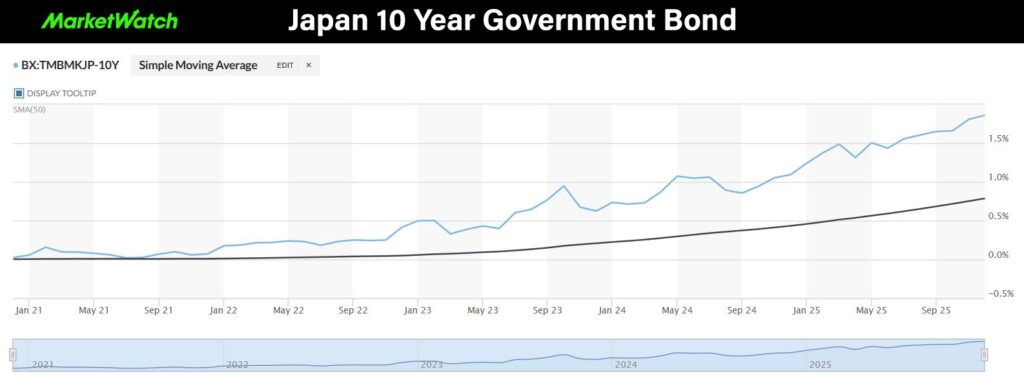
At the same time, the yen strengthened and global investors started to panic about something very specific: the yen carry trade, a huge hidden engine behind global risk assets, including crypto.
Bitcoin reacted quickly. On December 1, BTC dropped roughly 5–8% in a single day. It briefly traded below $84,000, wiping out around $150 billion from total crypto market cap in hours.
What Is the Yen Carry Trade, in Simple Terms?
For years, Japan kept interest rates near zero, while countries like the US had much higher rates. Traders used this gap to run a simple strategy called the yen carry trade:
- Borrow in yen at very low cost.
- Convert to another currency (often dollars).
- Invest in higher-yield assets: for example US bonds, stocks, emerging-market assets, or even crypto.
If things go well, they earn:
- The interest rate difference (higher yield abroad minus low yen cost).
- Sometimes extra profit if the yen gets weaker over time.
Because this was so profitable and stable for many years, the trade became huge. Trillions of dollars of Japanese money and foreign leveraged trades were effectively funded in yen and parked in global risk assets.
This helped:
- Keep global liquidity high (lots of cash hunting returns).
- Support demand for US Treasuries, corporate bonds, tech stocks, and more.
- Indirectly support risk-on crypto rallies, especially in times when “cheap money” pushed people into more speculative assets.
The key assumption behind this:
Japanese rates stay low, and the yen does not suddenly rise.
Once that assumption breaks, the carry trade starts to unwind.
What Happens When the Carry Trade Breaks
When the BOJ hints at raising rates and JGB yields spike, two things happen at once:
- Borrowing in yen becomes more expensive.
- The yen strengthens, so repaying yen loans costs more in foreign-currency terms.
The math behind the trade suddenly looks bad. Traders and institutions react by closing positions:
- They sell foreign assets (stocks, bonds, sometimes crypto)
- They buy yen to pay back their yen loans
This is what we call an unwind. It has a chain reaction:
- Investors dump risk assets across the board.
- Global markets move into “risk-off” mode: people prefer cash, Treasuries, or gold.
- Leverage gets cut, margin calls hit, and forced selling accelerates moves.
In August 2024, a similar JGB shock caused a big drop in Japanese stocks and a volatility spike. The December 2025 move looks like a new round of the same story, but this time with a clearer impact on Bitcoin and crypto.
“Liquidity Is Tightening”. What That Really Means
You will hear analysts say “liquidity is tightening.” In practice, this means:
- Central banks are shrinking their balance sheets (Quantitative Tightening).
- Banks have less excess cash sitting in reserve.
- Short-term funding (like repo) becomes more expensive and sometimes unstable.
From 2023 to 2025, major central banks (Fed, ECB, BOJ) have all been moving, in different ways, towards less easy money. The yen carry unwind adds another layer:
- Japanese money that had been flowing into global assets now gets pulled back.
- The global “pool” of cheap funding shrinks even more.
For markets, tight liquidity means:
- Higher funding costs for hedge funds and traders.
- Less willingness to hold volatile, risky assets.
- Stronger reactions to small pieces of bad news.
In that environment, crypto becomes one of the first things to be sold.
How This Hit Bitcoin and Crypto
The December BOJ shock gave us a clear example of how traditional macro moves can slam crypto in just a few hours.
1. Risk-Off Correlation
Bitcoin now trades more like a high-beta tech asset than like “digital gold” in the short term. When stock markets fall and bond yields jump, big players often sell Bitcoin alongside tech stocks.
In this episode:
- US equity indexes moved lower.
- US Treasury yields rose.
- BTC and ETH both dropped sharply on the same day.
This is classic risk-off behavior: investors close anything risky to reduce exposure.
2. Leverage and Thin Liquidity
Crypto markets are:
- Highly leveraged (a lot of futures and margin trading).
- Still thin compared to major FX or bond markets (order books are not very deep).
So when big players start selling and price breaks key levels:
- Longs get liquidated.
- That forced selling pushes price down more.
- The cycle repeats.
During this move, hundreds of thousands of crypto traders were liquidated, with losses in the hundreds of millions of dollars in a very short time.
3. Sentiment and ETF Flows
At the same time, there were worries about:
- Bitcoin ETF flows slowing or turning negative.
- Big corporate holders like MicroStrategy possibly needing to sell BTC someday to meet dividends or cash needs.
- Stablecoin risks, such as rating concerns around Tether (USDT), which add another layer of fear.
In a tight liquidity environment, these fears weigh more heavily on price because there are fewer fresh buyers stepping in.
What This Could Mean for Bitcoin Going Forward
In the short term, the message is simple:
When global liquidity tightens and carry trades unwind, Bitcoin is at risk of sharp downside moves, even if on-chain data or long-term narratives look strong.
Until:
- The BOJ’s path becomes clearer, and
- Global funding markets calm down,
BTC is likely to stay volatile, with sudden drops whenever traditional markets get nervous.
In the long term, the picture is more complex:
- If BOJ normalization is slow but steady, the world may move into a regime with less free money but also less extreme bubbles.
- Crypto could be pushed to rely more on real use cases (payments, DeFi, settlement, tokenization) and less on pure macro liquidity.
- If, at some point, the Fed and other central banks start cutting rates again while Japan stays tight, new cross-flows could appear that may even support Bitcoin in a different way.
What is clear is that Bitcoin is now tightly plugged into the global macro machine. The yen, Japanese bonds, and BOJ press conferences are no longer “distant” events. They’re part of the same system that moves your crypto chart.
For crypto traders, that means watching Japan, global liquidity, and carry trades is now as important as watching Bitcoin’s own halving cycle or on-chain metrics.
This is not financial advice. Always do your own research, and you can start by reading blog.millionero.com.
When you feel ready, you can trade spot and perps on Millionero.