



If you remember Reserve as “that stablecoin project,” you’re not wrong, but you’re also not up to date. The simple story (“one stablecoin, one token”) has widened into something closer to an onchain product platform, where RSR plays two hard roles at once: governance and first-loss insurance.
This article mixes the old framing (RSR as the backstop behind asset-backed stablecoins) with the new one (RSR as an alignment layer for Decentralized Token Folios). The goal is not hype. It’s clarity.
The old core: a “stablecoin factory,” and RSR as the insurance layer
Reserve Protocol was built to issue decentralized, asset-backed stablecoins, called RTokens, that try to hold value because they are backed by collateral. But collateral can break: assets can depeg, baskets can lose value, or some component can fail. That is where RSR comes in.
Reserve’s plain deal was always straightforward:
- You stake RSR to protect a specific product (an RToken).
- If that product’s collateral falls short, staked RSR can be seized and sold.
- In return, stakers may earn a share of the system’s revenue or yield, and they get governance power.
So, RSR is not trying to be money. It’s closer to a risk-and-reward instrument: you take tail risk, and you earn upside if usage grows.
The timeline that explains why people still talk about it
Reserve was founded in 2018 (Nevin Freeman and Matt Elder), and RSR launched alongside the original stablecoin RSV in 2019. Early adoption mattered less in crypto circles and more in real life: the app gained traction in places like Venezuela and Argentina, where people were searching for something stable in inflation-heavy economies.

Nicolás Maduro, the president of Venezuela, where Reserve has around 500,000 users.
Then came a key turning point: in January 2022, Reserve moved toward a more decentralized structure by upgrading RSR to a “final” version that removed admin minting ability. After that, the system shifted from “one stablecoin” to a platform where anyone could create an RToken backed by a chosen basket of assets.
That change is important because it set the tone: Reserve wanted to be a framework, not a single coin.
The 2025 shift: from RTokens to DTFs (the new “product” story)
By 2025, Reserve’s own docs position the project as a platform for Decentralized Token Folios (DTFs), think “ETF-like baskets,” but minted and redeemed onchain. Reserve describes them as 1:1 backed by baskets of assets, governed onchain, and mintable/redeemable permissionlessly, 24/7.
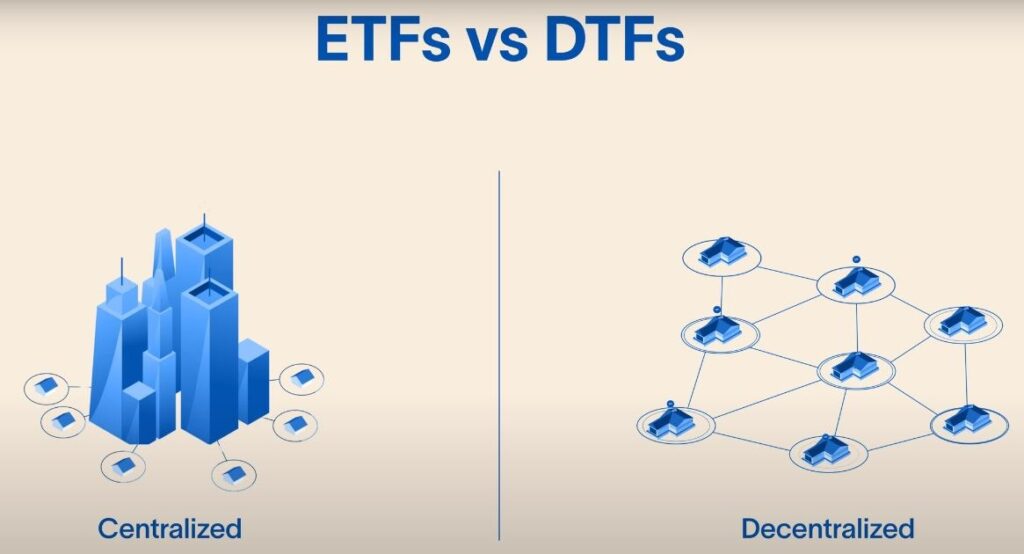
Reserve splits DTFs into two main categories:
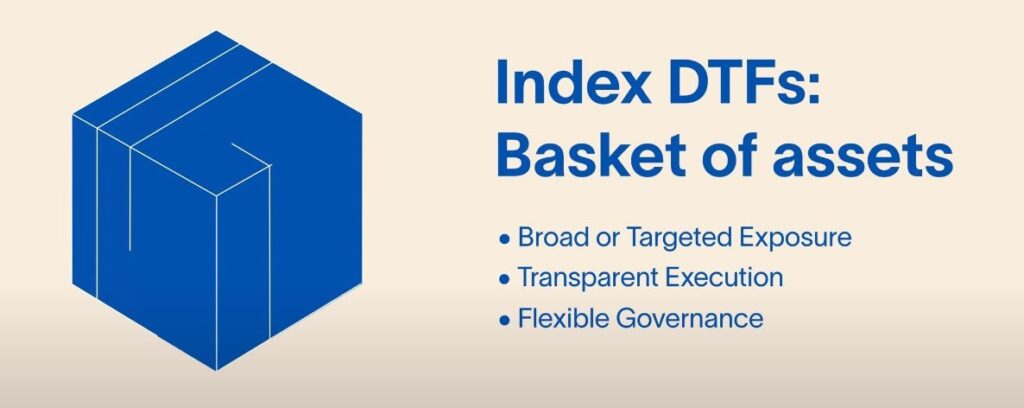
- Index DTFs: “one-click exposure” to broad markets, sectors, or strategies.
- Yield DTFs: baskets designed to harvest yield from collateral, plus an added safety layer through overcollateralization from staked RSR.
Here’s the clean mental model Reserve is pushing now:
DTFs are the product. RSR is the alignment layer, the token that governs, backstops risk, and is meant to capture value as the platform scales.
What RSR “does” now, in plain language
Reserve’s docs describe three big roles for RSR. They sound abstract until you translate them into real incentives.
1) Stake on Yield DTFs: governance + first-loss capital + yield
When you stake RSR on a specific Yield DTF, you do three things at once:
- You help govern that DTF (collateral choices, configuration, upgrades).
- If the collateral depegs or defaults, your stake absorbs the first loss. The protocol can sell or seize your staked RSR to cover the damage.
- In return, you can earn a portion of that DTF’s yield or revenue (as set by governance).
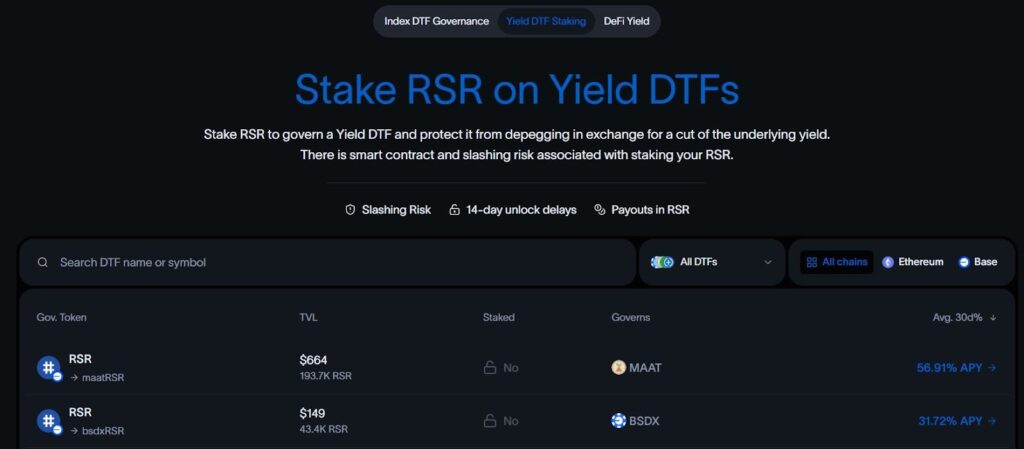
A small mechanic that matters in real life: staking is per DTF, and unstaking usually has a delay (often around ~2 weeks, and governance can set delays in the ~7–30 day range).
2) Vote-lock on Index DTFs: steer indexes, maybe share fees
For Index DTFs, Reserve describes a second pathway: vote-locking RSR to steer things like basket composition, weighting rules, fee splits, upgrades, and rebalancing cadence. If an Index DTF enables revenue sharing, vote-lockers can earn a pro-rata share of certain fees (like minting and TVL fees).
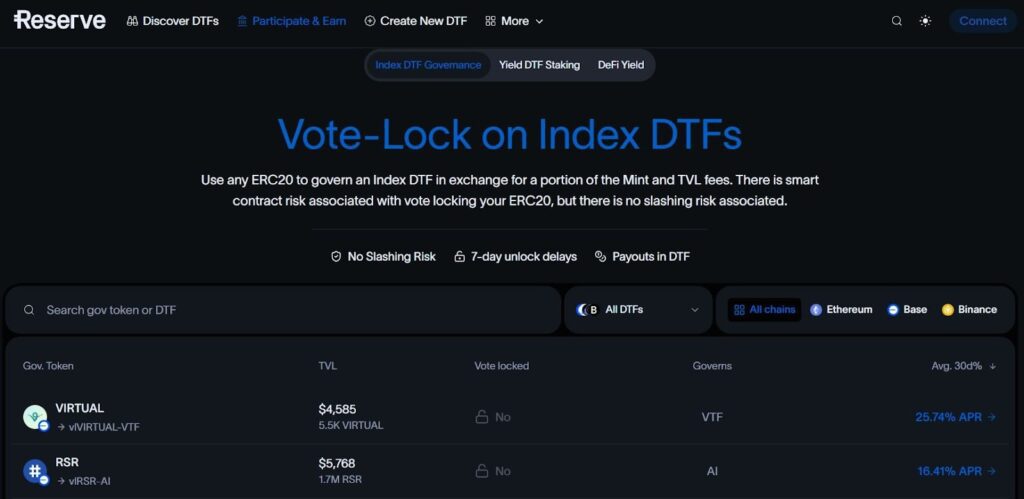
3) A deflationary sink: fees can buy and burn RSR
Reserve also frames RSR as a value-capture asset via buy-and-burn.
And separately, the older writeup notes an added monthly burn program introduced in May 2025 (with an example burn of 1.28M RSR in the first month).
Tokenomics: huge supply, controlled release, and active “reform talk”
RSR is an ERC-20 with a fixed max supply of 100 billion. Reserve’s FAQ framing says ~60% in circulation now, with remaining emissions following a deterministic schedule meant to emulate Bitcoin’s curve.
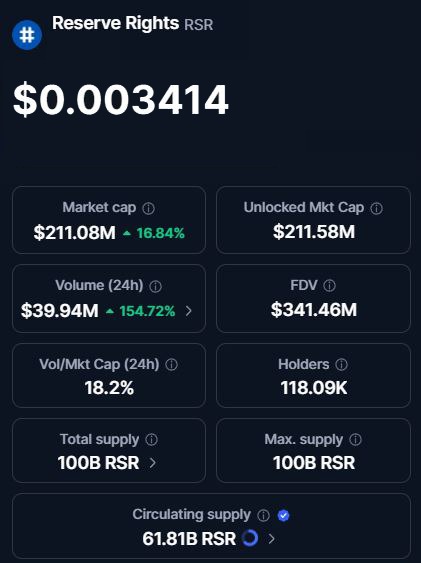
The earlier design also emphasized delayed-release mechanics (like the “Slow Wallet”) and structured allocations (with the report citing a large Foundation allocation, plus team/advisors, and a smaller portion sold in early sales).
One more 2025 detail worth tracking: a recent forum proposal called “RSR Health” (RFC-1269) discusses a possible reform package, including an estimated ~30B RSR burn of unused supply and introducing a veRSR-style governance/tail-emission framework. This is a proposal under discussion, not a completed change.
The honest way to think about RSR risk
RSR is not a “stablecoin bet.” It’s closer to an equity + insurance hybrid for a decentralized, collateral-backed product suite:
- If collateral holds, stakers can collect revenue/yield.
- If collateral breaks, stakers can get hit first, by design.
And in 2025, the narrative is broader: governance for onchain indexes and yield products, plus a slashing/backstop role, plus fee-driven burn mechanics tied to platform usage.
That is the real “RSR story” now: not a meme, not a payment coin, a token that makes you wear the risk if you want the upside.
Nothing in this article is financial advice. If you want to keep learning before you trade, you can explore more explainers on blog.millionero.com, especially topics like stablecoins, collateral risk, DeFi yield, and token utility. When you feel ready, you can use Millionero to access spot and futures markets with tools designed for simple, fast execution. Always do your own research, and size risk like you can afford to be wrong.