



Onchain trading is starting to look like real market infrastructure
The onchain derivatives story is getting harder to ignore.
On Hyperliquid, reported trading volume jumped from $5B to $10B in just 3 weeks. That kind of move usually doesn’t come only from hype; it often signals that traders see the platform as real infrastructure, not just another short-lived app.
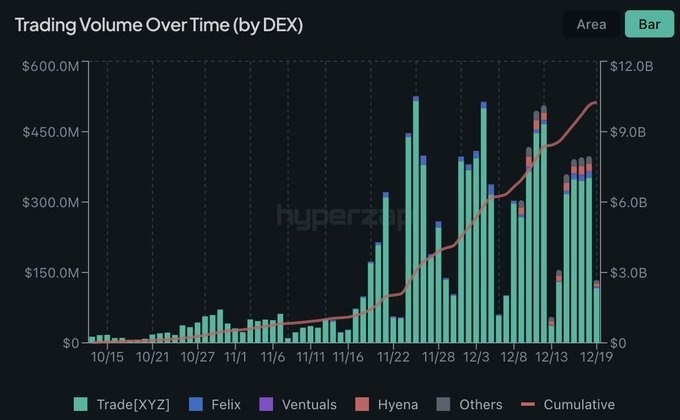
A big part of this is HIP-3, a feature that lets people trade onchain perpetuals for real-world assets like stocks, 24/7. If this direction continues, the line between “crypto trading” and “global markets” becomes thinner.
Instead of thinking about “crypto exchanges” and “stock brokers” as separate worlds, you start to see a single always-on market layer, where:
- familiar assets (like equities)
- live side by side with crypto-native pairs
- and everything trades with crypto-style speed and settlement
The quiet message underneath: the plumbing of traditional markets is slowly moving onchain, whether or not regulators or legacy players are ready to say it out loud.
Quiet ETH accumulation and the supply question (BitMine)
There was also attention on BitMine and its plan to accumulate a massive slice of ETH. It is reported to have completed around 66% of its goal to acquire 5% of the total ETH supply.
This is not just a headline about “someone buying a lot.” It is a supply story:
- A large buyer that steadily accumulates
- A growing share of total ETH taken off the liquid market
- Less flexibility when volatility spikes and everyone wants to buy at once
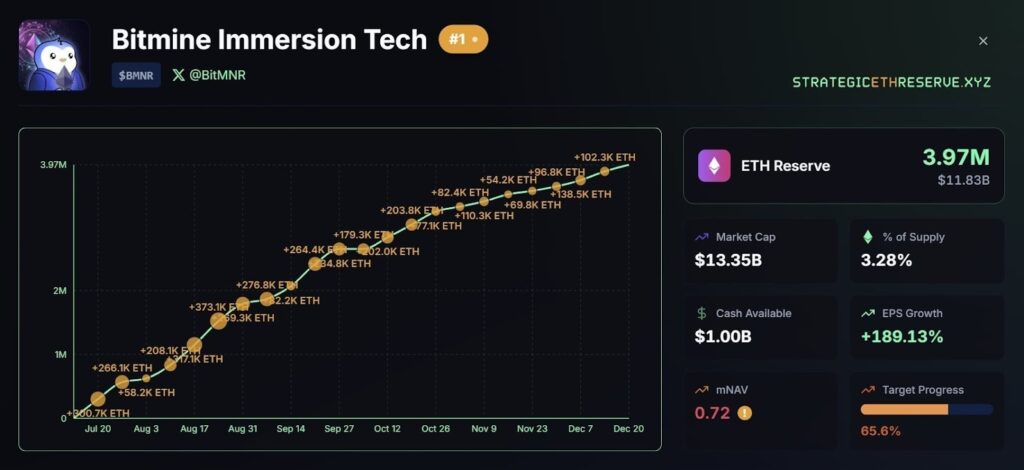
The key point is how quiet this kind of accumulation can be. There is no big narrative push, no drama, just slow absorption of supply. That kind of behavior can matter much more during stressed weeks than loud, short-lived hype.
The harsh lesson from Tensor and $TNSR
The Tensor / $TNSR saga reads like a textbook on how fragile “token culture” can be when there is no clear link between tokens and real ownership.
The rough timeline looks like this:
- January 2025:
$TNSR was integrated through Vector, and many holders saw it as a second chance after the earlier NFT collapse and the drop in Tensor activity. - November 2025:
Coinbase acquired Vector, then shut it down. Around that period, $TNSR, already down roughly 95%, reportedly did a 10x move right before the acquisition, which many observers framed as something that looks like insider trading. - November 2025:
The Tensor Foundation officially took over Tensor and Tensorians. - December 2025:
Still no clear communication, no obvious leadership, no detailed roadmap. Prices reflected that:- $TNSR went back to roughly 95% down
- Tensorians dropped from around $10,000 to about $80
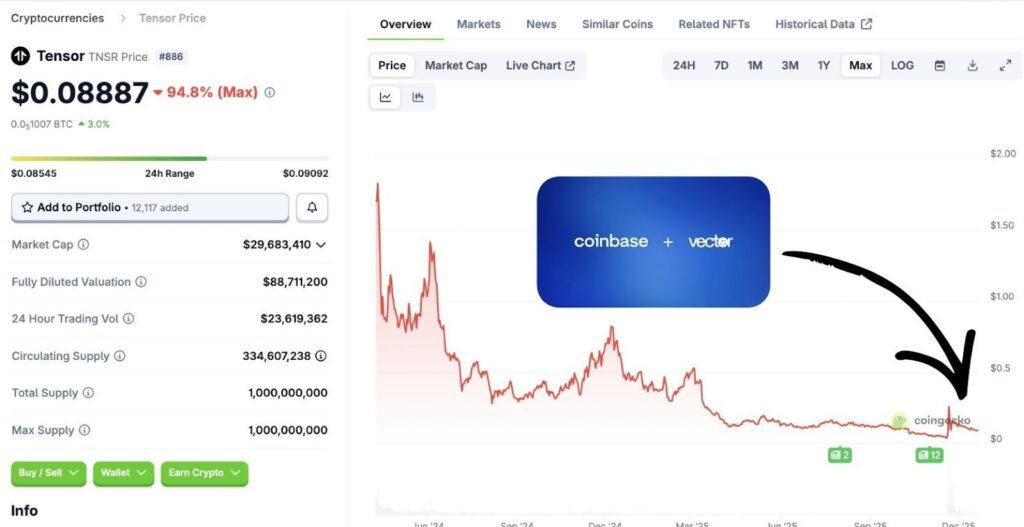
The core idea is simple and painful: holding a token means very little if there is no structured path for holders to share in upside, understand decisions, or trust leadership.
This situation has revived the argument that tokens should move closer to real onchain equity. When governance, incentives, and transparency fail, price becomes the only visible truth, and that truth is usually brutal for long-term holders.
A small but important US policy idea: tiny stablecoin payments
In US policy talk, there is a draft House proposal to exempt stablecoin transactions under $200 from capital gains tax.
On the surface, this looks minor. In practice, it targets the main reason normal people avoid using crypto for daily payments:
- Every coffee
- Every streaming subscription
- Every small online purchase
…can technically create a taxable event when paid with a volatile asset or even a stablecoin that might move slightly.
A rule that says “small stablecoin transactions are tax-free” would:
- Remove a major friction point for real-world usage
- Make it easier to treat stablecoins as digital cash instead of a tradable asset that needs tracking
- Bring crypto payments closer to a simple, everyday habit rather than a tax headache
It’s not a guarantee of new growth on its own, but it is a practical bridge between crypto and normal consumer behavior.
Hacks, losses, and “single-event risk” in 2025
Security numbers for 2025 are still sobering. Reported data point to around $3.4B stolen in crypto hacks this year, with roughly 70% of the losses coming from just three major incidents, including a claimed $1.5B Bybit hack.
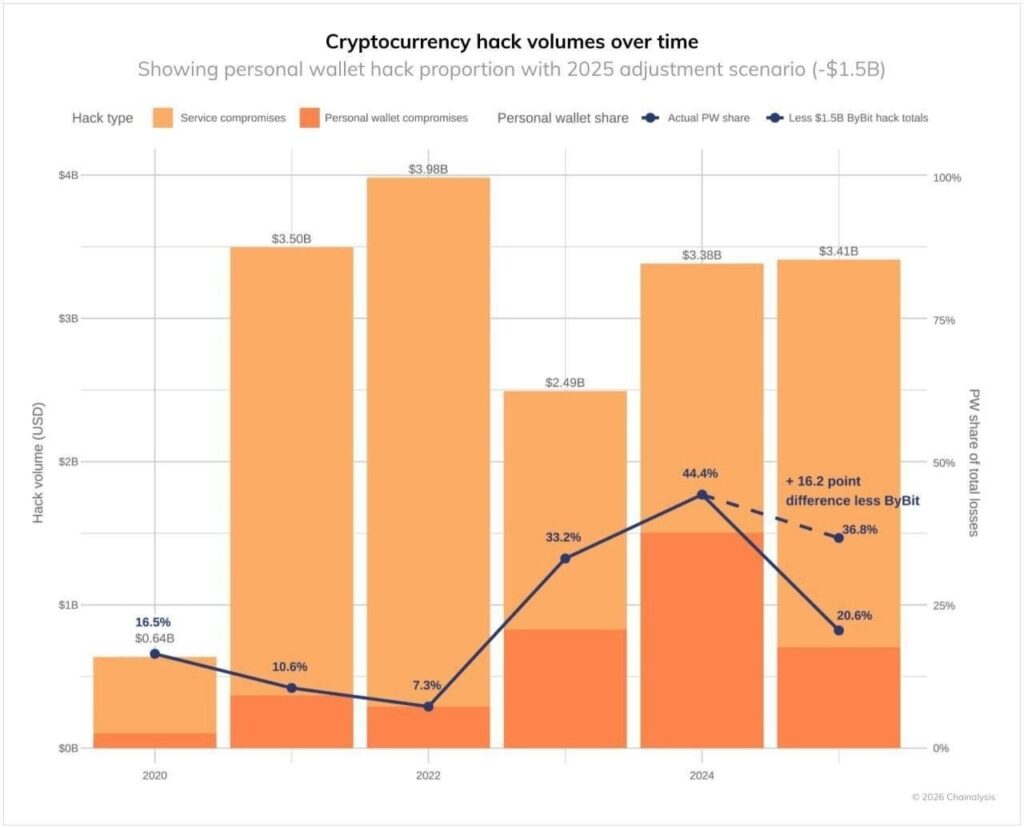
Two important ideas come out of this:
The ecosystem still has a hacking problem. But more specifically, it has a concentration problem: a few catastrophic failures dominate the total losses
That means risk management is not just about “fewer hacks.” It is about reducing single-point failures, exchanges, bridges, or protocols where one mistake can wipe out a huge amount of value in a single event.
Monday shock: metals ripping, Japan yields breaking higher
Today’s macro moves add another layer of tension.
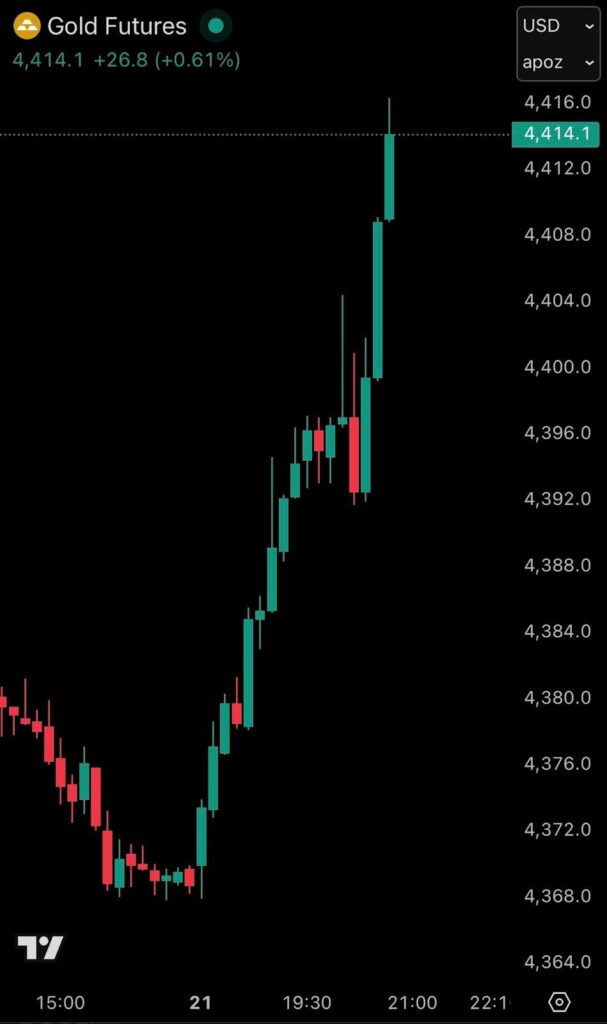
- Gold futures reportedly pushed to a record around $4,415/oz, up about +67% in 2025
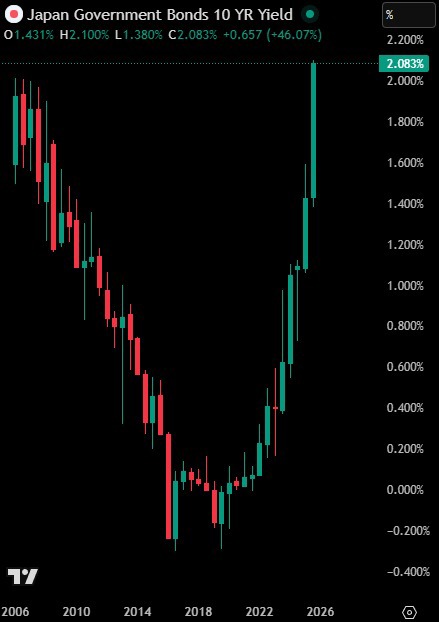
- Japan’s 10Y government bond yield jumped to around 2.10%, roughly +100 bps higher in 2025
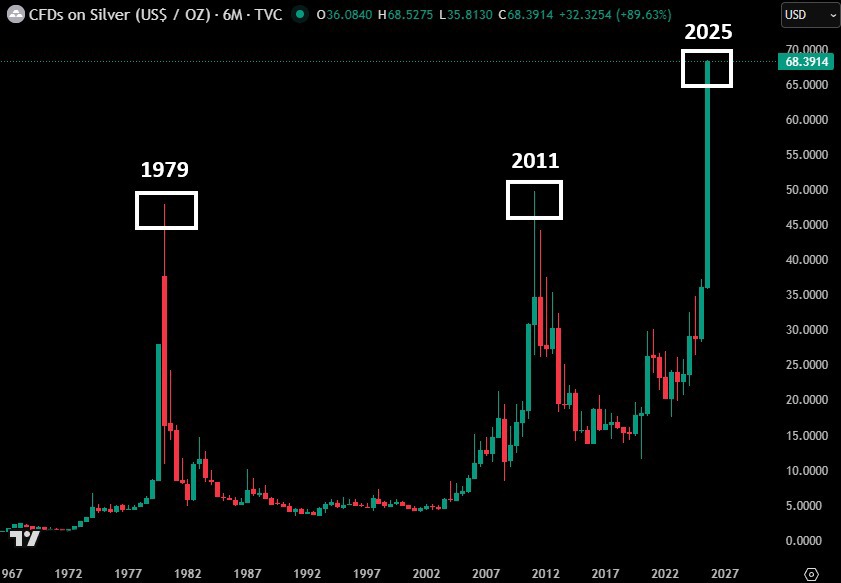
- Silver is said to be printing daily highs, up about +140% in 2025, with 8 straight green months
Even if you treat these as early signals rather than final, confirmed prints, the pattern is clear:
Assets that are supposed to be “safe” or “boring” (bonds, metals), are moving like risk assets
When Japan’s yields rise this much, it doesn’t stay a local story. It can:
- Pull money back home from global markets
- Push up global funding costs
- Squeeze risk appetite everywhere
At the same time, gold and silver rallying hard while yields rise often means investors are not relaxed about:
- Inflation risk
- Debt levels
- Currency stability
Even if equity indices look calm, the “hedge assets” are telling a different story underneath.
What this week’s US data means for the Fed
The US calendar is loaded, and every number will be read through one question:
Does this push the Fed toward “higher-for-longer” rates, or toward earlier cuts?
After a recent Fed decision, markets stop arguing about what the Fed just did and focus on what comes next. That path depends on whether inflation keeps cooling without crushing growth.
October PCE inflation (Monday)
PCE is the Fed’s preferred inflation gauge.
- If it comes in hot, it supports the idea of holding rates higher and being cautious about cuts.
- If it cools clearly, it strengthens the case that the Fed can start or continue cutting without restarting an inflation spike.
US Q3 2025 GDP (Tuesday)
GDP is the basic signal for growth momentum.
- Strong GDP can say:
- “The soft landing story is alive,” or
- “Growth is too strong, so inflation risk stays and rates can’t fall fast.”
- Weak GDP can justify cuts, but first it can trigger recession fear, which often hits risk assets before any “Fed rescue” narrative appears.
December CB Consumer Confidence (Tuesday)
This is not a formal Fed target, but it is linked to future spending.
- Falling confidence suggests weaker demand ahead → easier to argue for lower rates.
- Rising confidence signals resilience → the Fed may feel safer staying patient and restrictive.
October New Home Sales (Tuesday)
Housing is one of the most rate-sensitive sectors.
- Soft sales show that high rates are really biting → supports future easing.
- Stronger sales mean households are still absorbing high rates → less urgent pressure on the Fed to cut.
October Durable Goods Orders (Wednesday)
This data tracks business spending on big items.
- Strong orders = corporate demand still healthy → less need to rush cuts.
- Weak orders = firms pulling back → more evidence that tight policy is cooling activity.
Thursday: Christmas market closure
With US stock markets closed on Christmas, liquidity will be thin around the holiday.
Moves from earlier in the week can look bigger than they really are. Because fewer traders are active, and order books are thinner
That means any surprise, on inflation, growth, or policy, can create outsized price swings in both traditional markets and crypto.
Government shutdown uncertainty
Extra government shutdown headlines add another layer of noise.
- Shutdown risk can hurt confidence and spending, which indirectly supports the case for easier policy
- But it also distorts data and delays releases, making it harder for the market (and sometimes the Fed) to read the real state of the economy
Uncertainty alone can tighten conditions, because investors ask for more compensation for risk.
This week’s Token unlocks
Humanity Protocol (H)
Date: December 25
Unlock Value: 18.71M USDT
% of Circulating supply: 1.34%
Number of Tokens: 133.54M H
Plasma (XPL)
Date: December 25
Unlock Value: 11.41M USDT
% of Circulating supply: 0.89%
Number of Tokens: 88.88M XPL
River (RIVER)
Date: December 22
Unlock Value: 8.56M USDT
% of Circulating supply: 1.86%
Number of Tokens: 1.86M RIVER
Overtake (TAKE)
Date: December 25
Unlock Value: 4.90M USDT
% of Circulating supply: 1.48%
Number of Tokens: 14.78M TAKE
Sahara AI (SAHARA)
Date: December 26
Unlock Value: 4.88M USDT
% of Circulating supply: 1.83%
Number of Tokens: 182.63M SAHARA
SPACE ID (ID)
Date: December 22
Unlock Value: 4.42M USDT
% of Circulating supply: 3.64%
Number of Tokens: 72.65M ID
SoSoValue (SOSO)
Date: December 24
Unlock Value: 3.68M USDT
% of Circulating supply: 0.67%
Number of Tokens: 6.66M SOSO
This article is for information only and should not be taken as financial or investment advice. Crypto markets are volatile and risky. Always do your own research and consider your personal situation before making any decision.
If you want to go deeper into these topics, you can read more analysis on blog.millionero.com.
When you are ready and understand the risks, you can trade spot and futures on Millionero in a responsible way.