



This weekend was all about liquidity and confidence. Money is clearly out there, but it is not rushing into crypto yet. Instead, a lot of attention has moved to gold and silver, while digital assets are still digesting a rough year.
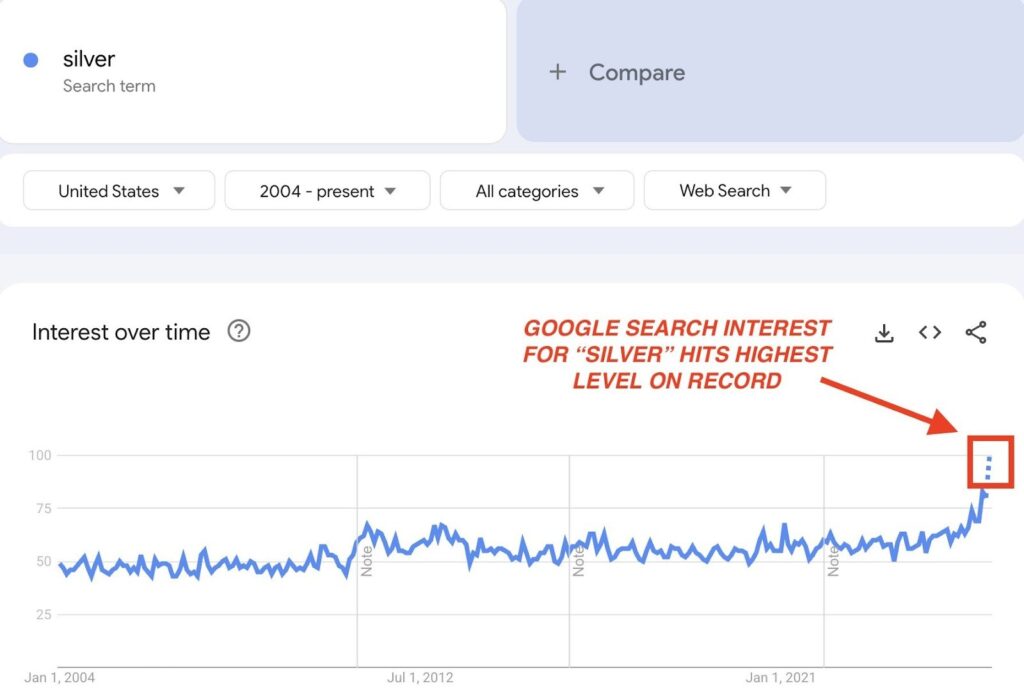
Silver had another wild move. Prices are now up about +175% in 2025, and more recent moves pushed it to over +185% year-to-date, on track for the best year since 1979. Gold and silver together added around $16 trillion in market cap this year. Search interest for the word “silver” on Google has reached its highest level on record, which shows how mainstream this rally has become.
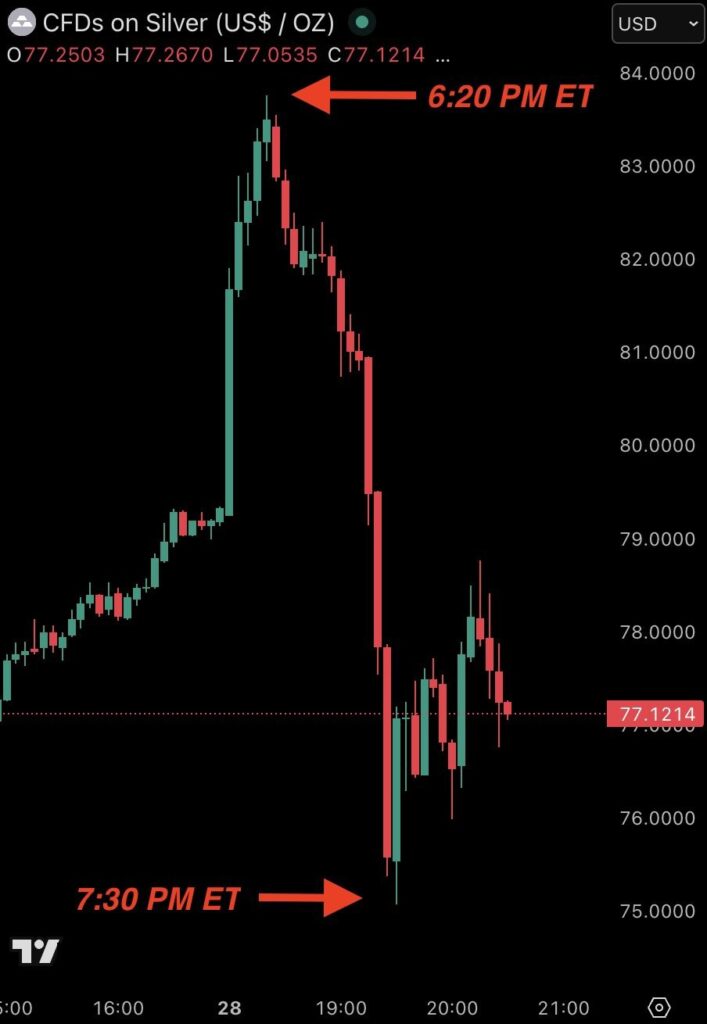
The trading action has been chaotic. At one point, silver jumped to about $83.75/oz, then dropped to around $75.15 within just over an hour. That kind of +6% spike and -10% drop in less than 70 minutes signals a very emotional, crowded trade.
China is adding fuel to this move. From 1 January, it will restrict silver exports, requiring special government licenses. The effect is already visible: in Shanghai, silver traded near $85/oz, roughly $5 higher than the spot price in the US. Supply constraints are now part of the story, not just speculation.
Against this, crypto looks slow. One comparison asked: “Can crypto catch up in 2026?” The Bitcoin-to-silver ratio has dropped to about 1,104, its lowest level since September 2023, after falling 67% since May. The Bitcoin-to-gold ratio is around 19, the lowest since November 2023, down 50% since January. At the 2022 bear market low, those ratios were near 680 and 9. At the same time, the gold-to-silver ratio has fallen to 57x, its lowest since 2013, almost cut in half since March.
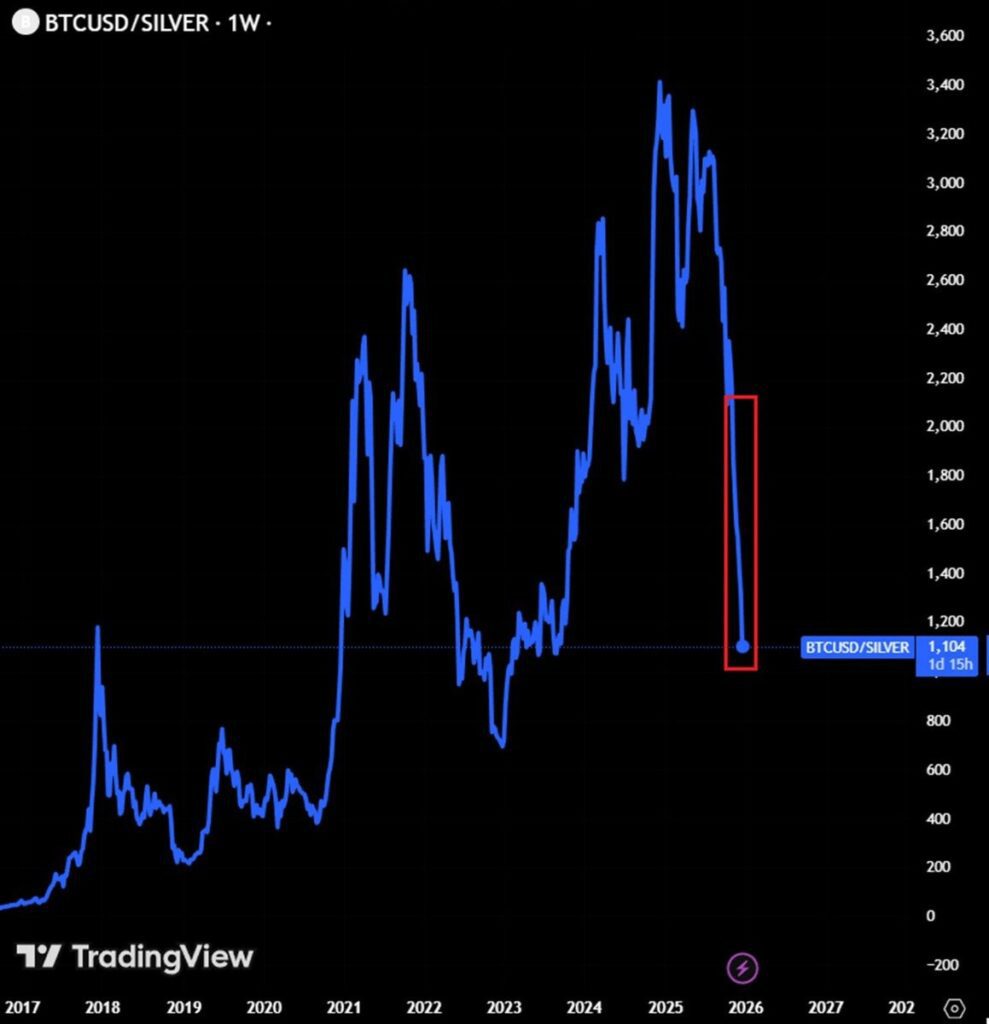
The simple reading: in 2025, precious metals have massively outperformed Bitcoin. People are clearly hunting for safety and hard assets, but they are not choosing crypto first.
A Brutal Q4, but the Market Is Already Looking at Q1 2026
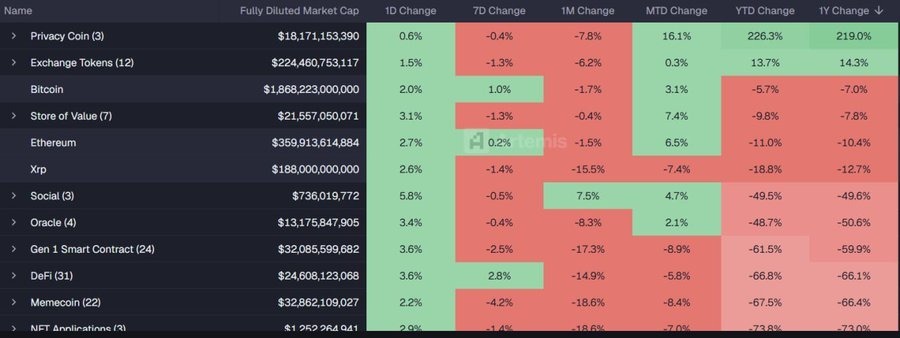
On the crypto side, this has been the worst fourth quarter since the 2018 bear market. Most sectors are in the red this year. The main exceptions are privacy coins and platform coins, which held up better than many other narratives. That usually matters for the next cycle: rotations often start with a few leading sectors, then liquidity spreads out later.
The big question many traders are asking is not “will things improve?” but “when, and who will be ready?” Some analysts think Q1 2026 could mark the start of a turn, not because of hype, but because cycles usually move from despair to slow recovery before anyone feels bullish again.
At the same time, Raoul Pal thinks Bitcoin may be entering a “Phase 2 correction”, another leg of downside or consolidation in the current cycle. On the opposite side, Michael Burry attacked Bitcoin again, saying “Bitcoin is worth nothing… it is the tulip bubble of our time.” These views add to the sense of uncertainty, but they also underline something important:

Bitcoin was designed to function despite strong negative opinions, not because everyone agrees on it. The network does not care if someone calls it a bubble.
Liquidity: Plenty of Money, Not Enough Conviction
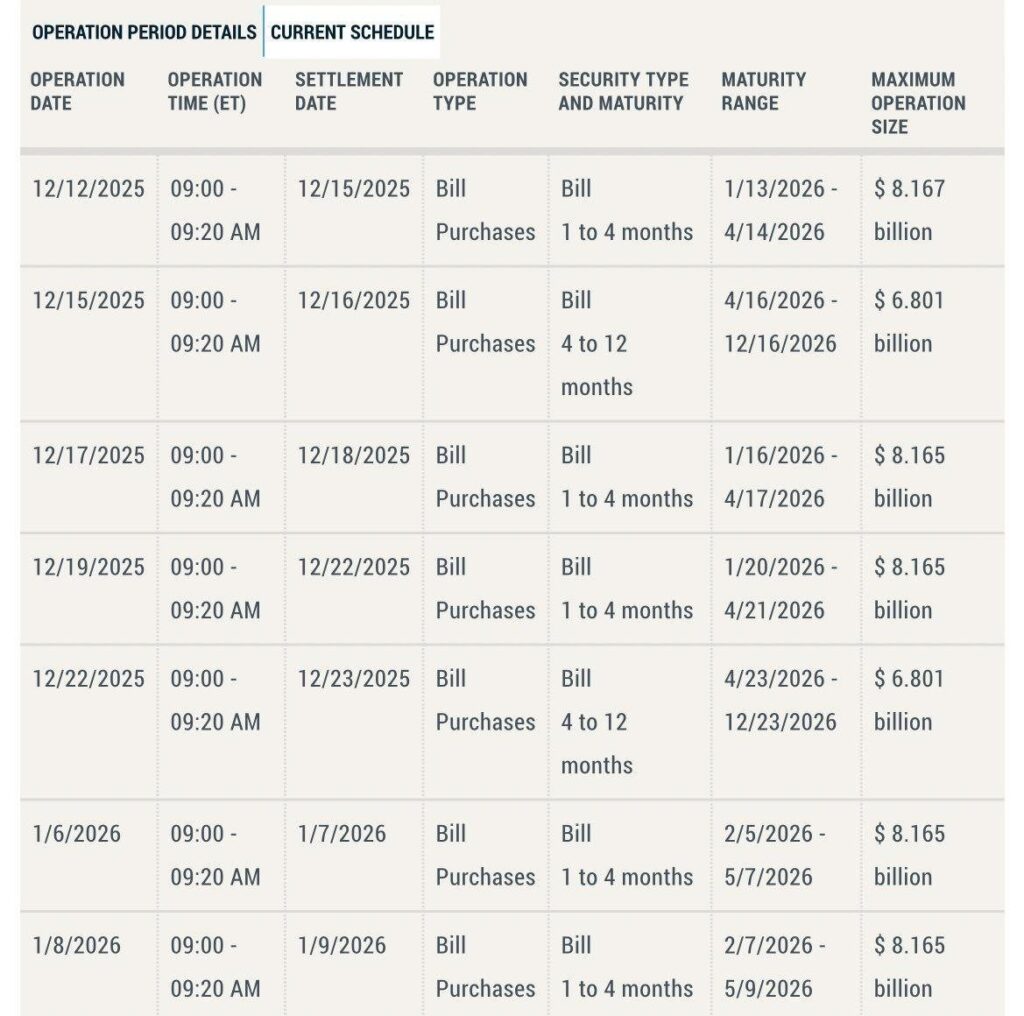
Under the surface, liquidity is not the main problem. In the last two weeks, the Federal Reserve quietly injected about $38.1 billion into the financial system. At the same time, money market funds now hold roughly $7.5 trillion, the highest level ever.
This is not classic QE (Quantitative Easing), but it is active liquidity management. In simple words: the Fed is still running QT on paper (reducing its balance sheet over time), yet it can temporarily add liquidity when needed to keep markets stable. Money is not scarce. What is scarce is confidence.
The same picture shows up in crypto:
- More than $300 billion in stablecoins is still sitting on the sidelines, according to data from Artemis.
- This is not panic money exiting the system. It is idle liquidity waiting for a clear reason to come back.
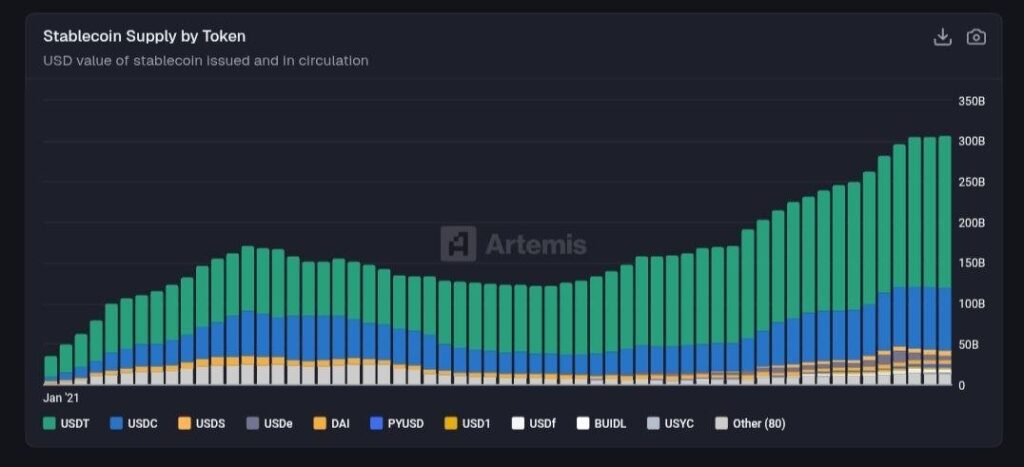
So the real question is not “Is there liquidity?” but “What will restore trust and pull that liquidity back into risk assets like crypto?” When conviction returns, the move can be fast, because the “ammo” is already loaded.
Flows and Platforms: Where the Money Is Moving
pump.fun and Systematic Selling
On-chain data from Lookonchain shows that pump.fun sold another $50 million worth of assets recently. Since 15 October, wallets linked to the platform have:
- Deposited about $617.5 million USDC into Kraken
- At the same time, around $1.1 billion USDC moved from Kraken to Circle
Between 19 May 2024 and 12 August 2025, they sold roughly 4.19 million SOL, worth about $757 million at an average price of $181.
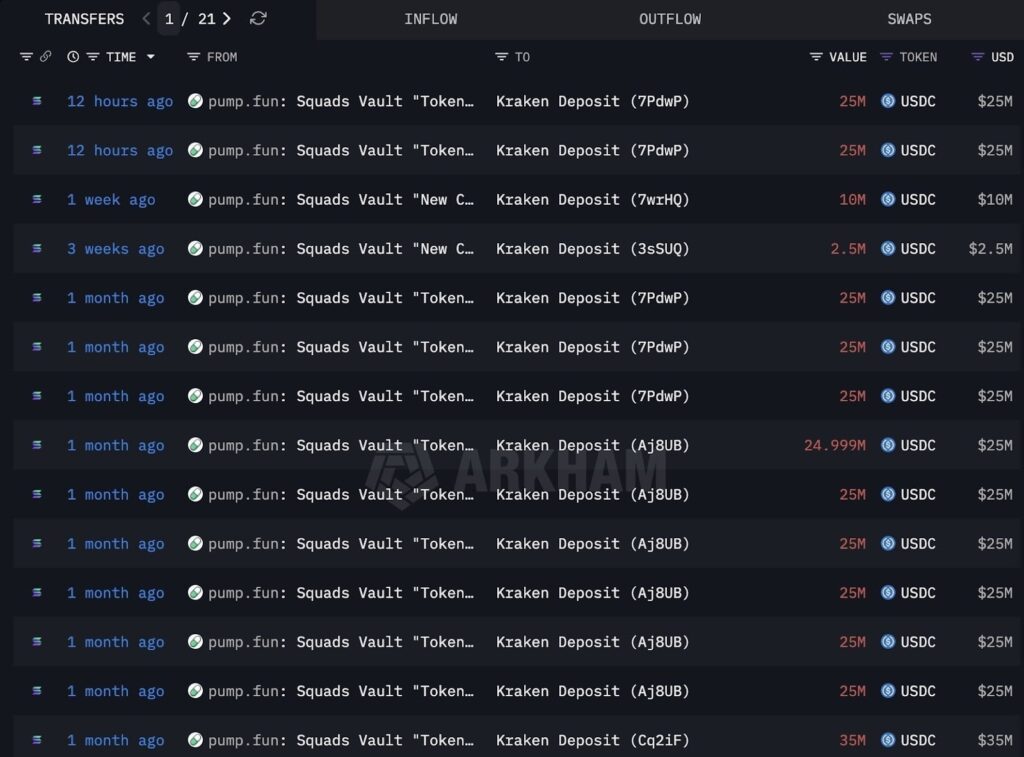
The conclusion is clear: there has been steady, systematic selling, with liquidity being recycled into stablecoins at a fast pace. That kind of flow can put constant pressure on prices, even if retail sentiment feels quiet.
Aave: Signals from Large Holders
On Aave, there were large inflows of AAVE tokens to exchanges. This kind of movement usually means one of two things:
- Some holders are getting ready to sell, or
- They are repositioning before a big price move, either up or down.
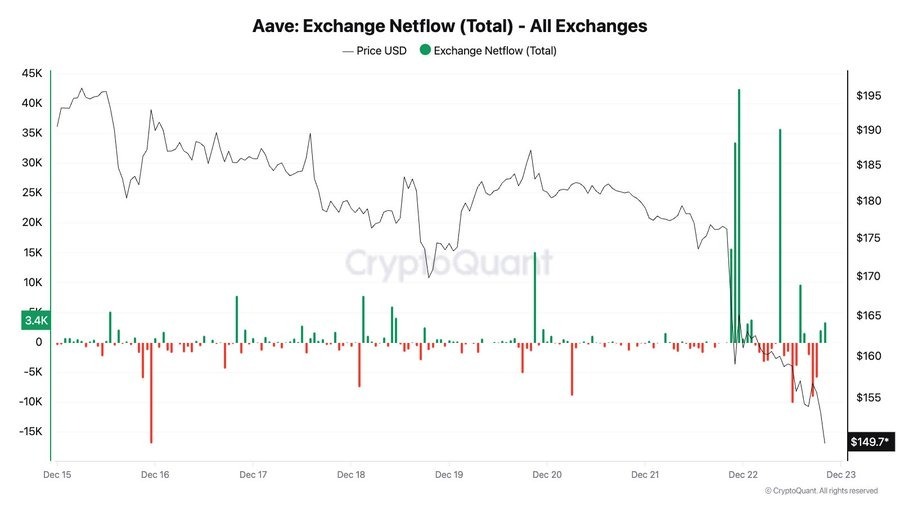
We do not know which one yet. But it tells us that big players are not asleep; they are actively adjusting risk.
Institutions and ETH
Institutional activity around Ethereum also sent mixed messages:
- BitMine, linked to analyst Tom Lee, accumulated about 74,880 ETH, worth roughly $219.2 million.
- At the same time, SharpLink Gaming unstaked or redeemed 35,627 ETH, worth about $104.4 million.
One institution is leaning into ETH for the long term, another is freeing up capital. The market is watching these trades closely, because they hint at how bigger players see the next stage for Ethereum.
USDf and Chainlink Infrastructure
More than $2 billion worth of USDf stablecoins has been moved cross-chain, powered by Chainlink. Falcon Finance chose Chainlink because institutions want:
- High-level security
- Reliable data transfer across different networks
- Infrastructure that has already been tested at institutional scale
This shows how important middleware like Chainlink has become for stablecoin and DeFi projects that want to connect multiple chains without sacrificing trust.
Networks, Revenue, and the Rise of Hyperliquid
If we look at network revenues for 2025, the leaderboard is very clear (data from CryptoRank):
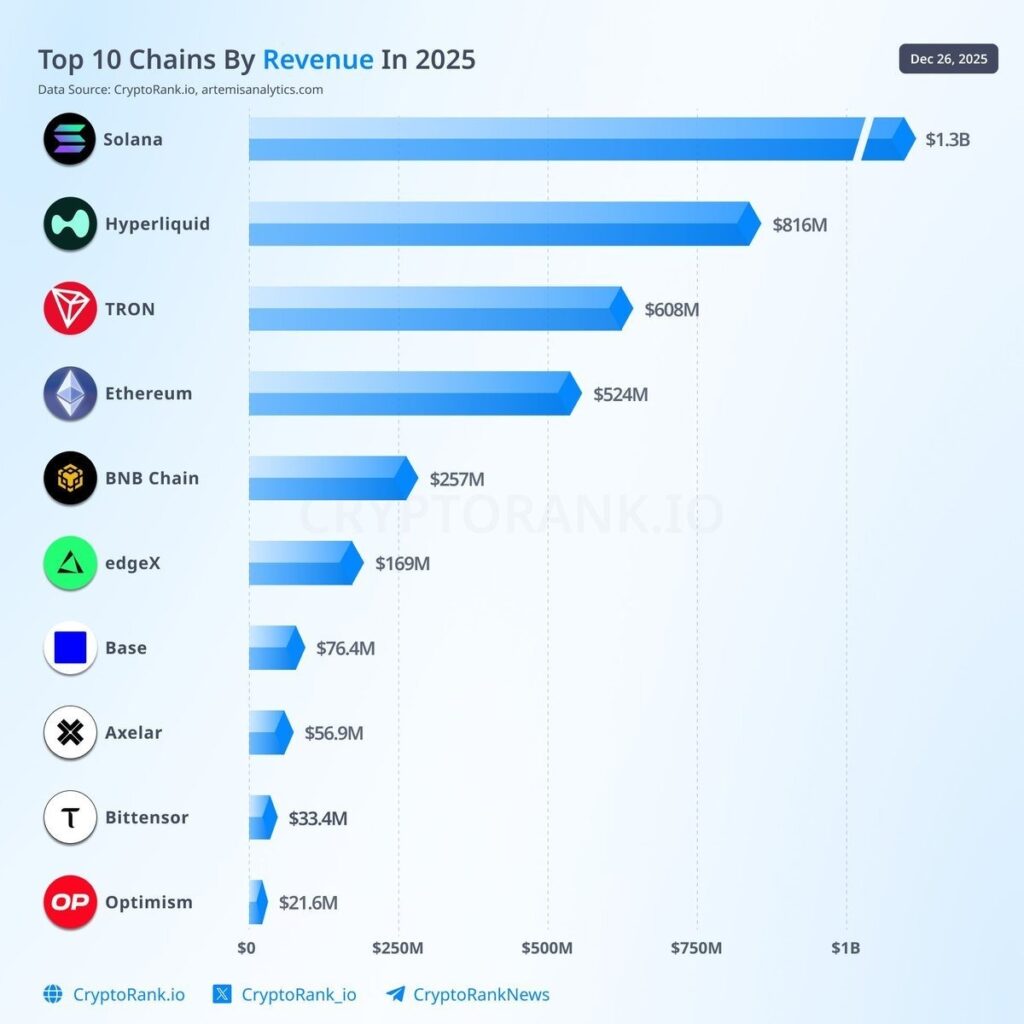
The message is simple: revenue has become the real metric of network strength. Liquidity tends to follow actual usage, not just narratives.
Inside this list, Hyperliquid is especially interesting. According to their own data, in 2025 Hyperliquid:
- Added about 609,700 new users
- Recorded roughly $2.95 trillion in cumulative trading volume
- Generated around $844 million in revenue
- Saw around $3.87 billion in net inflows
- Reached about $4.15 billion in TVL
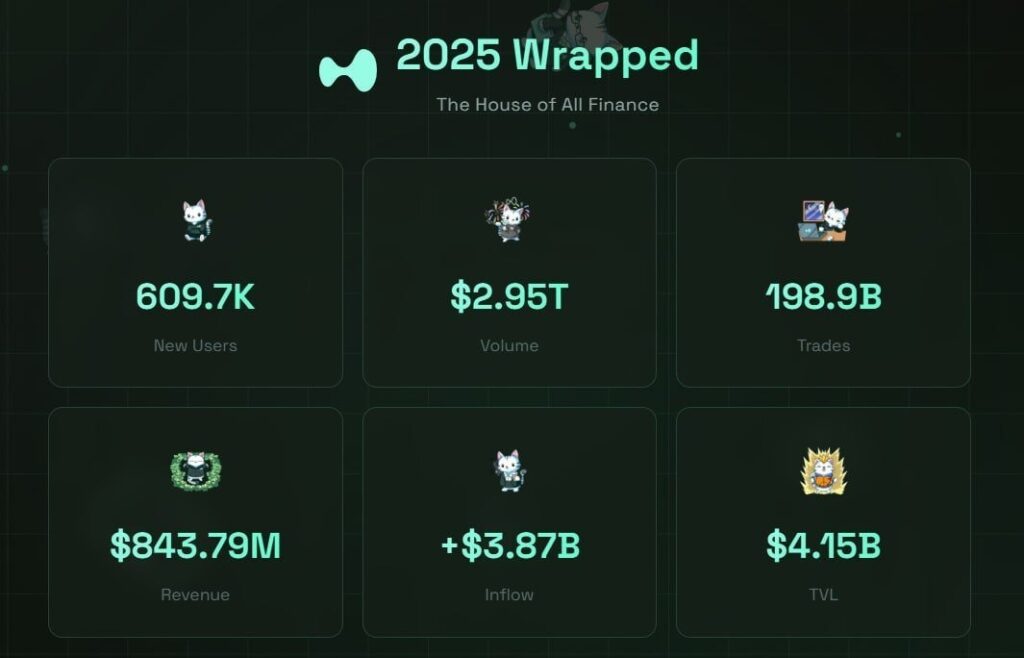
Decentralized trading is clearly not an experiment anymore. It is a real business model that is scaling fast.
Ethereum and Uniswap: Building for the Next Cycle
Looking ahead, Ethereum is preparing a major wave of upgrades for 2026. Validators have started to adopt ZK-proofs, a crucial step towards:
- Much higher throughput
- Better efficiency
- Stronger security
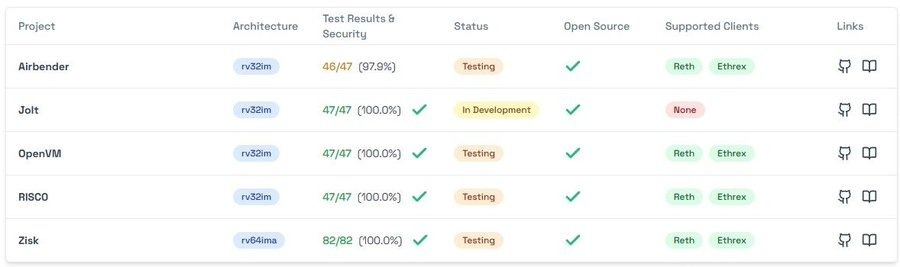
The long-term goal is to move gradually towards 10,000 transactions per second (TPS). If this path works, it will make Ethereum feel less like a congested highway and more like a high-speed network that can actually handle global activity.
On the DeFi side, Uniswap took a big symbolic and economic step. After governance approved a fee burn proposal, the Uniswap treasury burned:
- 100 million UNI, worth around $591 million
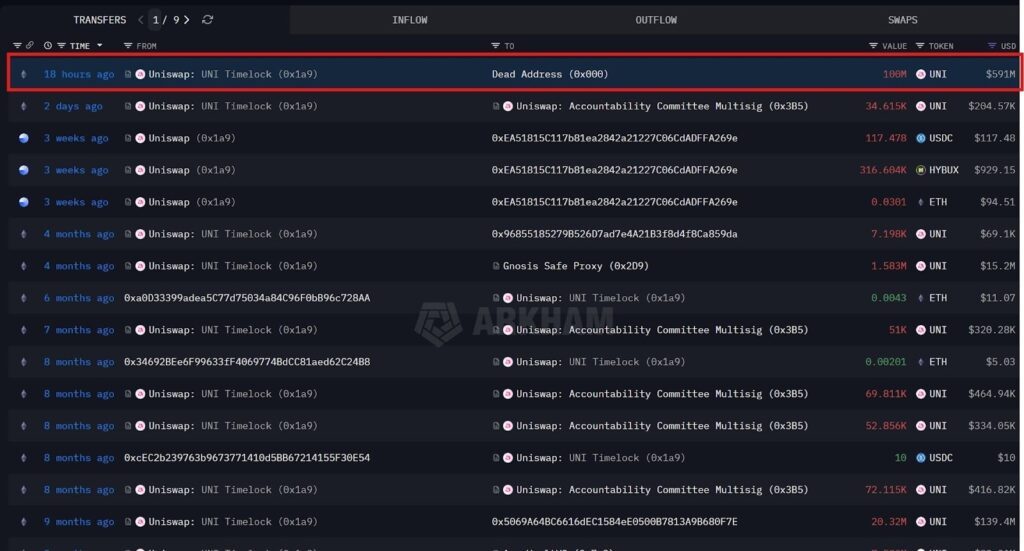
That is a major supply reduction, and it confirms that fee policy and token economics are still evolving as the protocol matures.
Policy, Banking Access, and User Safety
On the regulatory front, Senator Cynthia Lummis highlighted a potential shift in how the Federal Reserve treats crypto companies. She pointed to the idea of “Skinny Accounts”, basic bank accounts at the Fed that could give digital asset firms fair and direct access to banking rails.
Her view is that this move could finally end the habit of de-banking crypto companies, and instead create a more transparent, rules-based system for the sector. If implemented, it would be a big step for equal banking access.
Meanwhile, on the user safety side, JoelKatz, the CTO of Ripple, warned hardware wallet makers against forcing mandatory firmware updates. He argued that:
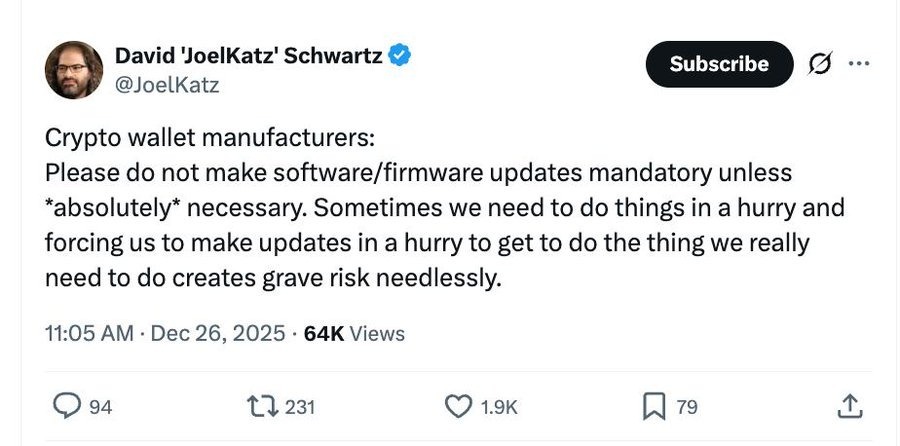
- Forced updates can put users in dangerous situations, especially when they must make quick choices under time pressure.
- Wallets are not just tools; they are the first line of defense in crypto.
The message is that security and control need to stay in the user’s hands, not only in the code.
Crypto-Exposed Stocks: Winners and Losers in 2025
Equity markets told their own story this year. A brief summary of crypto-related stocks in 2025:
- BitMine Immersion led the pack with about +345% gains, helped by its staking and mining activity.
- IREN Ltd also delivered a strong performance, up around +300%.
- Robinhood posted solid growth as its revenues increased sharply.
On the other side:
- Sol Strategies dropped roughly -88%, after focusing on poor-performing investments.
- Strategy Inc, the largest corporate holder of Bitcoin, struggled with heavy losses during the year.
So even inside the “crypto stock” theme, performance is very uneven. Execution and risk management still matter more than narratives.
Bitcoin’s Identity Crisis: Between Metals and Skeptics
Bitcoin sits in the middle of all these cross-currents. On one hand, silver and gold feel like the safe winners of 2025. Ratios show metals outperforming BTC, and mainstream attention is on precious metals.
On the other hand, Bitcoin is still treated as a macro asset that reacts to liquidity and confidence. With analysts like Raoul Pal talking about a second-phase correction, and Michael Burry calling it “worth nothing”, sentiment can feel heavy.
But Bitcoin’s design has always assumed skepticism and conflict. It does not need universal approval; it needs time, security, and liquidity. For now, the liquidity is there. Time and conviction are the missing parts.
The Week Ahead: US Data, the Fed, QT and QE
The coming week is short but busy. These are the key events listed for this week, and how they link back to Fed policy, QT, and QE:
- November Pending Home Sales: Monday
This measures future housing activity based on signed contracts.- If the data is strong, it suggests the economy and housing are still firm. That supports a view of higher for longer rates and continued QT, because the Fed can say the economy can handle tighter conditions.
- If it is weak, it shows housing is under pressure. That can push expectations toward earlier rate cuts or a slower pace of QT, which is more friendly to risk assets, even if it is not full QE.
- Fed Meeting Minutes: Tuesday
The minutes show how the Fed really thinks about inflation, growth, and financial conditions.- If the tone is hawkish (more focus on inflation, talk about staying restrictive, and keeping QT as is), markets may expect fewer cuts and a longer period of balance-sheet reduction. That keeps liquidity tight.
- If the tone is dovish (more worry about growth, more discussion of cuts, or hints that QT might be adjusted), traders can start to price something closer to “stealth QE”: not official asset purchases, but a softer stance that lets liquidity grow again.
- Initial Jobless Claims: Wednesday
This is a weekly look at the labor market.- Higher claims mean more people are losing jobs, which signals a cooling economy. That raises the odds of rate cuts and, over time, a move away from aggressive QT.
- Lower claims mean the job market stays tight. That gives the Fed room to keep QT running and delays any talk of QE-style easing.
- China’s Silver Export Restrictions Begin: Thursday
We already see the impact in Shanghai’s higher silver prices. When the rule goes live on 1 January, it could keep global silver supply tight, support high prices, and feed inflation worries. If metals stay this strong, it can influence how investors think about real assets vs. fiat and may also matter for how the Fed reads future inflation data. It does not change QT/QE directly, but it shapes the inflation side of their decision. - US Stock Market Closed: Thursday (New Year)
A holiday close does not change policy, but it changes liquidity. With one less full trading day and many desks lightly staffed, even small news can move prices more than usual. For crypto, which trades 24/7, this can mean choppy, emotional moves while traditional markets are quiet. - December S&P Global Manufacturing PMI: Friday
This is a forward-looking gauge of industrial activity.- A reading above 50 means expansion. If it stays strong, the Fed has less reason to shift away from QT or hint at QE.
- A weak PMI, especially below 50, signals contraction. That would add pressure on the Fed to think about easier policy, fewer rate hikes (or more cuts), and maybe a softer approach to balance-sheet reduction in the future.
Taken together with the recent $38.1 billion Fed liquidity injection and the $7.5 trillion sitting in money market funds, this week’s data will not decide everything, but it will shape how the market thinks about the path of rates, QT, and any future QE-style easing.
Upcoming Major Token Unlocks
Sui (SUI)
Date: January 1, 2025
Unlock Value: 78.90M USDT
% of Circulating supply: 0.55%
Number of Tokens: 55.31M SUI
Audiera (BEAT)
Date: January 1, 2025
Unlock Value: 43.97M USDT
% of Circulating supply: 2.12%
Number of Tokens: 21.25M BEAT
Ethena (ENA)
Date: January 2, 2025
Unlock Value: 20.08M USDT
% of Circulating supply: 0.63%
Number of Tokens: 94.19M ENA
EigenCloud (EIGEN)
Date: January 1, 2025
Unlock Value: 14.44M USDT
% of Circulating supply: 2.07%
Number of Tokens: 36.82M EIGEN
COCA (COCA)
Date: January 3, 2025
Unlock Value: 12.99M USDT
% of Circulating supply: 1.84%
Number of Tokens: 18.38M COCA
Kamino (KMNO)
Date: December 31, 2024
Unlock Value: 11.00M USDT
% of Circulating supply: 2.20%
Number of Tokens: 220.00M KMNO
Optimism (OP)
Date: December 31, 2024
Unlock Value: 8.85M USDT
% of Circulating supply: 0.75%
Number of Tokens: 32.21M OP
For crypto, the message going into the week is simple:
- Liquidity exists.
- Metals are winning the attention game.
- Crypto is waiting for conviction and a clearer Fed path.
When those two lines finally cross, more confidence and slightly easier liquidity, the large pools of stablecoins and cash on the sidelines can move very fast.
In the end, none of this is financial advice. Markets move fast, and every person has a different risk level and time frame. Always do your own research and double-check the data before you act.
If you want more simple explainers and deeper breakdowns, you can read the latest posts on the Millionero blog at blog.millionero.com. When you feel ready, you can trade spot and futures on Millionero in a way that fits your own plan, not someone else’s.