


Big finance has a funny habit: it moves slowly in public, then quickly in private. Canton is one of those projects that looks “too boring” for crypto drama, but it keeps showing up in places that matter: clearing, settlement, tokenized cash, and the back-office plumbing that makes markets run.
Canton’s pitch is simple: put real financial workflows on a blockchain without forcing banks to broadcast their business to the whole world.
What Canton is, in plain words
Most public blockchains work like a giant shared notebook. Everyone sees the same ledger, and everyone can replay what happened. That transparency is great for open networks, but it’s awkward for institutions that must protect client data, trading intent, and private contracts.
Canton tries a different approach: it’s built to connect institutions while keeping transaction details private, so only the parties involved can see them, while the network still coordinates the “truth” of what settled and when. Canton itself describes this as a privacy-enabled open network for regulated markets.
The key idea: a “network of networks”
Canton isn’t trying to force every participant into one shared ledger. Instead, it works more like a set of connected domains.
Think of it like this:
- Each institution can run its own “domain” (its own environment and rules).
- When two domains need to do business, Canton uses a shared coordination layer so the trade can complete safely.
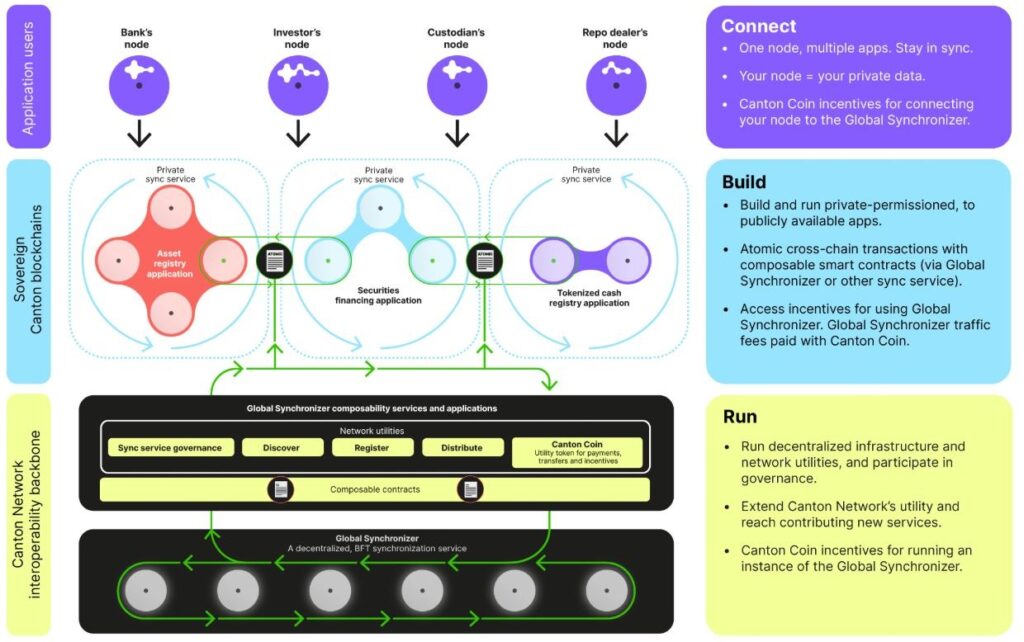
That coordination layer is often described as the Global Synchronizer, basically the traffic controller that helps different domains finalize transactions together. This structure is one reason Canton is viewed as institution-friendly rather than retail-first.
Why institutions care: settlement that doesn’t leak secrets
In markets, the real pain is rarely “can we trade?” It’s “can we settle quickly and safely?”
Canton focuses on atomic settlement logic (the idea that a multi-step deal either completes fully or fails fully). In normal human terms, it’s trying to reduce the classic mess of: “I sent the asset… did you send the cash?… are we sure both sides updated their systems?”

For large players, privacy is not a luxury. It’s survival. That’s why Canton often gets framed as part of a bigger push toward pragmatic privacy in crypto infrastructure.
The moment everyone circled: DTCC + tokenized U.S. Treasuries
If you want one headline that explains why Canton is taken seriously, it’s this:
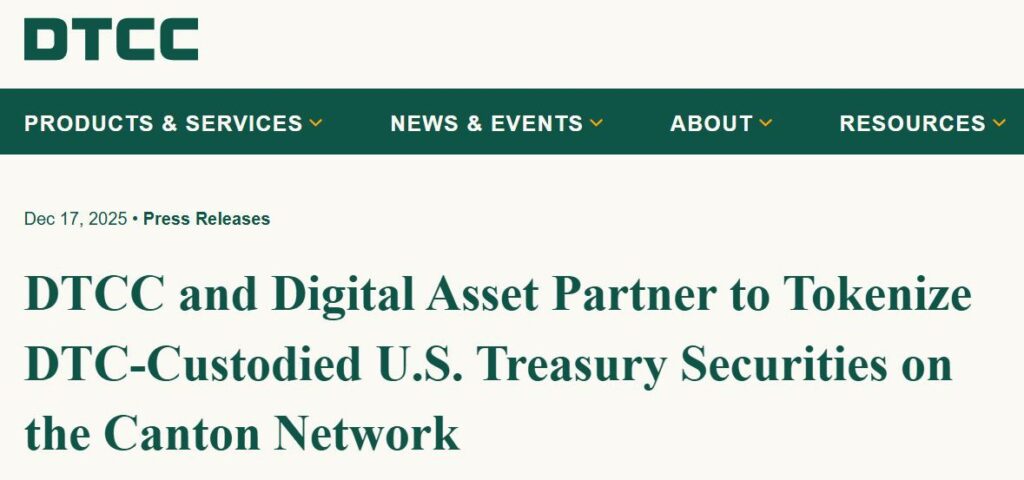
DTCC announced it will tokenize a subset of DTC-custodied U.S. Treasury securities on Canton, aiming for an MVP in a controlled production environment in the first half of 2026, and expanding after that based on client interest.
DTCC is not a “crypto partner of the week.” It’s core market infrastructure. So when it picks rails, people listen.
Where stablecoins and tokenized cash fit in
Canton is also built for the cash leg of transactions, because tokenizing assets without tokenizing cash is like building highways without cars.
One of the loudest signals here was Circle’s acquisition of Hashnote and the USYC tokenized money market fund, alongside a strategic partnership with DRW. The public messaging around the deal explicitly points to Canton as a place for institutional-grade tokenized money and collateral.
This matters because institutions don’t just want “a stablecoin.” They want controlled, compliant movement of tokenized value that can settle against tokenized assets without exposing everything to the public internet.
So what is $CC actually for?
Canton Coin ($CC) is basically the network’s utility and incentive engine.
Two core roles show up again and again:
- Fees (“traffic fees”)
Network usage fees are paid in $CC, and the design emphasizes that fees are burned, removed from supply. - Rewards for useful work
Instead of a classic ICO distribution, Canton emphasizes that $CC is earned by contributing utility (infrastructure and activity), using a burn-and-mint equilibrium model.
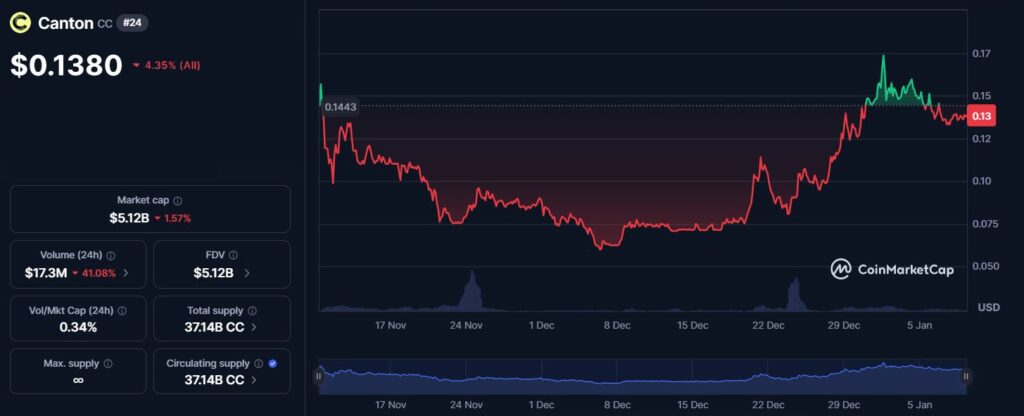
This is also why you’ll see Canton people repeat one line in interviews: they refused to do an ICO and refused a pre-mine, framing it as a long-build infrastructure choice, not a fast-fundraising move.
Governance: not “token voting,” more like industry steering
Canton leans toward governance structures that look familiar to enterprises: committees, foundations, and defined roles.
A big example: reporting around DTCC’s move notes it will become co-chair of the Canton Foundation alongside Euroclear, tying governance directly to major market infrastructure names.
That structure won’t thrill crypto purists who want coin-vote politics, but it’s exactly the kind of setup institutions tend to trust.
The main debate: “Is it really permissionless?”
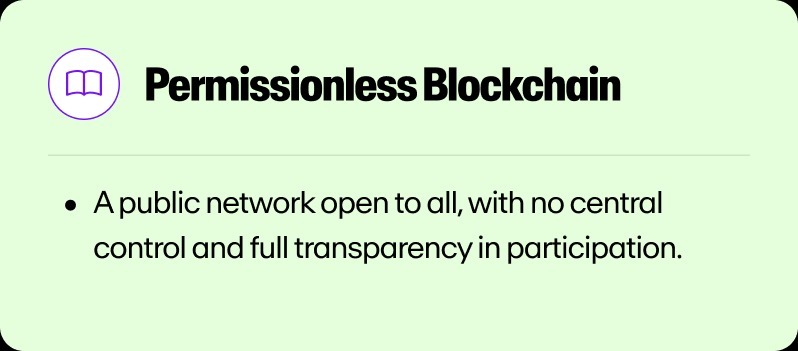
This is where Canton splits opinions.
Supporters say: it’s open infrastructure, built so many parties can connect without one gatekeeper.
Skeptics say: in practice, the important apps are still permissioned because regulated assets require identity, compliance, and access control.
Honestly, both can be true. Canton’s real bet is that the next wave of on-chain finance will be privacy-first and compliance-aware, even if that feels less ideologically pure than early crypto narratives.
The takeaway: Canton is about the boring parts that decide who wins
If Canton succeeds, it won’t be because retail fell in love with it. It’ll be because the world’s largest financial pipes quietly adopt it for:
- tokenized Treasuries and other RWAs,
- tokenized cash and settlement,
- faster, safer post-trade workflows,
- and private coordination across many institutions.
In other words: less meme energy, more infrastructure gravity.
This article is for information and educational purposes only and does not constitute financial advice, investment advice, or trading advice. Crypto markets are high-risk and highly volatile, and you can lose some or all of your funds. Always Do Your Own Research and make decisions based on your own risk tolerance.
For more market explainers and guides, visit blog.millionero.com.
If you choose to trade, you can access Spot and Futures/Perpetuals on Millionero.