



Over the weekend, crypto talk split into two very different moods. On the surface, risk sentiment sounded “fine”: some desks argued that lower volatility across stocks, FX, and rates makes investors feel safer stepping back into risk, including crypto. Underneath, though, the headlines were about pressure on institutions, from the DOJ Probe, Washington drama around the Fed, to courts potentially forcing huge tariff refunds, to “trad-fi” quietly pushing deeper into tokenized cash rails.
Bitcoin’s “range week” story, plus the big expiry overhang
A popular trading narrative going into mid-January is that mechanical hedging flows, not fundamentals, have kept BTC trading inside a tight band. One widely shared note said market-maker hedging is pinning BTC around $92k–$98k, and that the “real” directional move often shows up after a large options expiry clears.
That same thread pointed at a major Deribit expiry on January 17, described as unusually large versus global BTC derivatives. Whether the exact figure is perfect or not, the key point is what traders are watching: if hedges unwind, price can finally “pick a direction,” especially into the January 18–25 window.
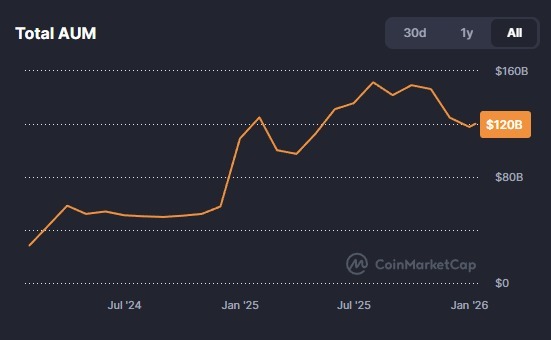
At the same time, the “institutional wrapper” story is still very alive. The weekend also marked roughly two years since U.S. spot Bitcoin ETFs began trading (January 11, 2024), and trackers put combined spot BTC ETF AUM at around $120B recently.
Powell vs. DOJ: Fed independence became the main macro headline
The biggest shock headline wasn’t CPI or jobs, it was Fed Chair Jerome Powell saying the DOJ served grand jury subpoenas and threatened criminal indictment tied to his June Senate testimony about the Fed’s building renovation. Powell framed it as political pressure linked to disagreements over interest rates, not really about the renovation itself.
Markets didn’t need many details to react. The idea that legal pressure could be used to influence monetary policy is enough to rattle risk assets, because it hits the core assumption that the Fed sets rates based on inflation and employment, not the President’s preferred outcome. That’s why the “Powell punch-back” angle mattered: after a long stretch of refusing to comment on political attacks, Powell directly connected the threat to the Fed’s rate decisions.
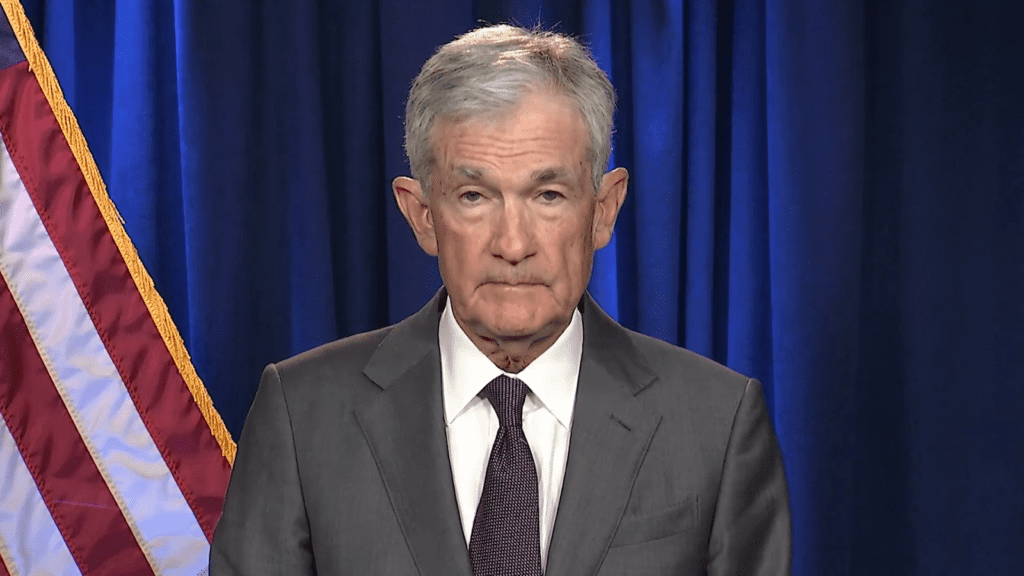
This also lands right in front of the next big rate checkpoint: the January 28 FOMC meeting, where markets have been leaning toward a pause / hold rather than immediate cuts, unless data forces the Fed’s hand.
Supreme Court tariff ruling: the “refund bomb” risk
Another weekend theme was court-driven policy risk. Reuters reported that over $133.5B of tariffs are at risk of court-ordered refunds depending on how the U.S. Supreme Court rules, and that the Court is expected to issue rulings on January 14, 2026 (with Trump’s tariff authority one of the major cases in focus).
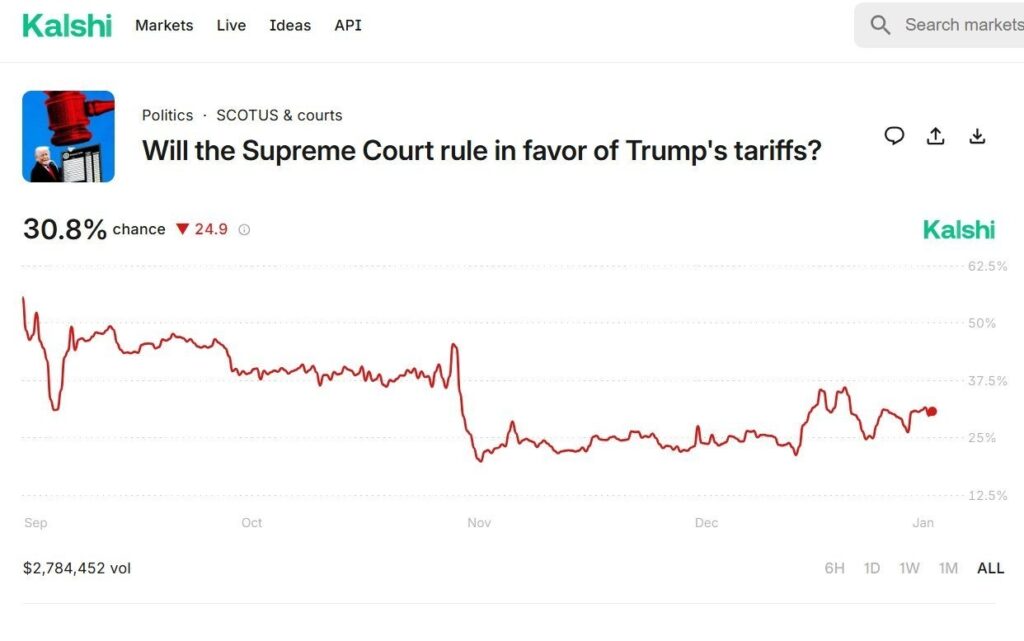
Crypto Twitter translated that into a simple tradeable probability: Kalshi pricing ~70% odds of the tariffs being struck down (and ~30% the other way). Even if the ruling goes against the tariffs, refunds and implementation could still turn into a messy fight, but the “headline risk” is what traders care about first.
Big infrastructure quietly moved forward (tokenized cash, indexes, payments)
While the political headlines were loud, the weekend also had several “plumbing” stories that matter long-term:
BNY tokenized deposits. BNY (the large custodial bank) announced tokenized deposit capabilities for institutional clients, basically creating tokenized representations of client deposits to support faster, on-chain settlement between participants.
Nasdaq + CME deepen crypto partnership. Nasdaq and CME Group moved to unify/relaunch their crypto index effort under a refreshed benchmark, positioning it as more standard infrastructure for institutions.
Rain’s stablecoin funding. Stablecoin payments firm Rain raised new capital and framed it as expansion of global, compliant stablecoin payment infrastructure, with a post-money valuation cited at $1.95B.
a16z raised $15B. Andreessen Horowitz said it raised over $15B in new funds, pitching it as fuel for AI, crypto, defense, and other strategic tech areas tied to long-run U.S. competitiveness.
Product news: X goes “asset-specific” with Smart Cashtags
X is preparing “Smart Cashtags” that let posters specify the exact asset (or even a smart contract) behind a ticker, then show real-time price data and aggregated mentions directly from the timeline. The plan, as described, is to roll out next month.
It sounds simple, but it’s a big deal for crypto discourse because ticker collisions and look-alike symbols are a real problem. “Smart Cashtags” is basically X admitting: “people trade off what they read here, so the tagging needs to be precise.”
Security + legal pressure: TRU collapse, Immunefi, and Tornado Cash fallout
$TRU (Truebit) exploit. The weekend included a severe exploit claim: a $26.6M hit tied to a smart-contract bug (described as a pricing flaw in an old “Purchase” contract) that allegedly enabled minting massive amounts of TRU for near-zero cost, followed by a 99.9% crash.
$IMU (Immunefi). In the same security lane, Immunefi was highlighted as the large Web3 bug bounty marketplace connecting projects with researchers who responsibly disclose vulnerabilities in exchange for rewards.
$ETH / $TORN and Roman Storm. Vitalik Buterin publicly backed Tornado Cash developer Roman Storm, who was convicted last August on a money transmitting charge after being charged in 2023 with money laundering/sanctions/unlicensed money transmission conspiracies. The bigger market takeaway is that the Tornado Cash saga is still shaping how devs think about “code vs. compliance,” especially for privacy tooling.
New chain / NFT corner: MegaETH “Frontier” phase
$MEGA. MegaETH NFTs were said to be going live on OpenSea, while app developers are actively deploying on MegaETH during its “Frontier” phase ahead of full mainnet. The vibe here is early-ecosystem bootstrapping: builders want attention before the mainnet moment.
Token-launch incentives: Dynamic Fees V1 gets reworked in 2026
One of the most “inside baseball” weekend notes was about Dynamic Fees V1. The critique was that it successfully incentivized higher-quality project tokens, but over-rewarded low-risk memecoin creation, discouraged real trading, and delivered weak UX and weak “real utility” for boosting token value.
The planned fix for 2026 is basically: move power from the system to the market, let traders decide which narratives deserve Creator Fees, how those fees are used, and shift incentives toward trading + liquidity instead of endless coin-launch farming.
What’s coming this week: U.S. numbers that can push the next Fed decision
The following U.S. numbers are getting published this week:
- NY Fed manufacturing index (Monday)
- CPI (Tuesday)
- New home sales (Tuesday)
- PPI (Wednesday)
- Retail sales (Wednesday)
- Existing home sales (Wednesday)
- Initial jobless claims (Thursday)
- Philadelphia Fed manufacturing index (Thursday)
- Industrial production (Friday)
If CPI/PPI come in hot, it strengthens the case for the Fed to hold rates higher for longer (or at least delay cuts), because inflation progress would look less convincing. If inflation prints cool and labor data (like jobless claims) softens without collapsing, it gives the Fed more room to resume cuts later, but “later” still matters. In a week where Powell is openly arguing about independence and political pressure, the Fed will likely want the data to do the talking.
This Week’s Major Token Unlocks
CHEEL (CHEEL)
Date: January 13, 2026
Unlock Value: 11.50M USDT
% of Circulating supply: 2.78%
Number of Tokens: 20.81M CHEEL
STRK (STRK)
Date: January 15, 2026
Unlock Value: 10.33M USDT
% of Circulating supply: 4.83%
Number of Tokens: 127.00M STRK
SEI (SEI)
Date: January 15, 2026
Unlock Value: 6.70M USDT
% of Circulating supply: 1.05%
Number of Tokens: 75.80M SEI
ARB (ARB)
Date: January 16, 2026
Unlock Value: 18.88M USDT
% of Circulating supply: 1.86%
Number of Tokens: 96.00M ARB
ZK (ZK)
Date: January 17, 2026
Unlock Value: 5.89M USDT
% of Circulating supply: 3.16%
Number of Tokens: 173.08M ZK
TRUMP (TRUMP)
Date: January 18, 2026
Unlock Value: 271.50M USDT
% of Circulating supply: 11.95%
Number of Tokens: 55.10M TRUMP
ONDO (ONDO)
Date: January 18, 2026
Unlock Value: 772.42M USDT
% of Circulating supply: 57.23%
Number of Tokens: 1.94B ONDO
Non-financial advice. DYOR. This is a market review, not a recommendation to buy or sell. For more articles and explainers, read blog.millionero.com. If you choose to trade, you can trade Spot and Futures/Perpetuals on Millionero. always manage risk.