


A key U.S. crypto regulation effort hit a sudden pause this week after the Senate Banking Committee cancelled a scheduled vote on the proposed crypto market structure bill. The decision followed a public withdrawal of support from Coinbase, one of the largest and most influential crypto companies in the country.
The move immediately triggered debate across the industry, with many arguing that the bill, as currently written, would hurt crypto innovation while favoring traditional banks.
Why Coinbase Pulled Its Support
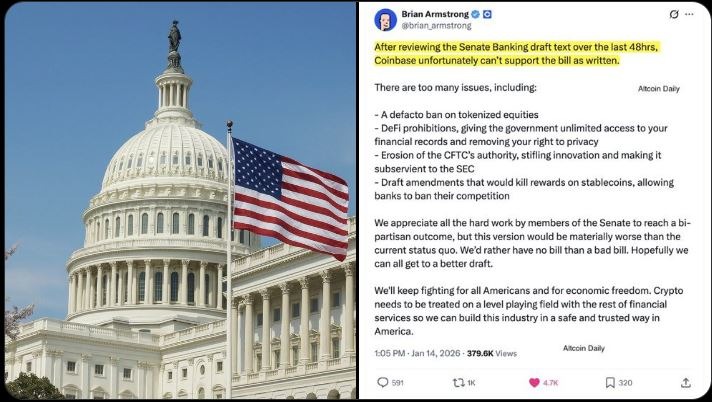
In a statement shared on social media, Brian Armstrong said Coinbase could not support the bill after reviewing the final Senate Banking draft over the past 48 hours. According to Armstrong, the text introduced several serious problems that made the legislation “materially worse than the status quo.”
Coinbase highlighted four major concerns:
- A de facto ban on tokenized equities, limiting onchain representations of stocks and similar assets
- Severe restrictions on DeFi, including provisions that could allow broad government access to users’ financial records and weaken privacy rights
- Reduced authority for the CFTC, shifting power toward the SEC and potentially stifling innovation
- Stablecoin amendments that would kill user rewards, while giving banks the ability to block their onchain competition
Armstrong summarized Coinbase’s position clearly: no bill is better than a bad bill.
What This Means for the Vote
Shortly after Coinbase’s statement gained traction, reports confirmed that the Senate Banking Committee cancelled the planned vote. While no new date has been announced, the delay signals that lawmakers may need to revisit the draft before moving forward.

This is significant because the bill was supposed to bring clarity to long-standing questions around crypto oversight in the U.S., including the division of responsibility between the CFTC and the SEC. Instead, the current version appears to have deepened concerns inside the crypto industry rather than resolving them.
“This Helps Banks, Not Crypto”
Industry reaction was swift. Many commentators argued that the bill’s structure benefits traditional financial institutions more than actual crypto users or builders. The strongest criticism focused on stablecoins and DeFi, where banks could gain regulatory advantages over blockchain-native competitors.
That narrative aligns with a broader fear in crypto: regulation framed as “consumer protection” can sometimes function as competitive protection for incumbents.
Bigger Picture: Regulation vs. Innovation
This episode highlights a recurring theme in U.S. crypto policy. The industry broadly supports clear and fair rules, but resists frameworks that import legacy financial controls without respecting how blockchain systems actually work.
For now, the cancellation means uncertainty continues. But it also gives lawmakers an opportunity to revise the bill in a way that balances oversight, privacy, and innovation more effectively.
As Armstrong noted, crypto needs to be treated on a level playing field with the rest of financial services, not reshaped to fit outdated models.
Not financial advice. Do your own research.
For more crypto regulation explainers and weekly market recaps, read blog.millionero.com.
On Millionero, you can trade spot markets for simple buys and sells, or use perpetuals if you understand the risks and manage them properly.