


In crypto, timing is everything. Markets don’t just move on interest rates or ETF flows. They move on stories, and few stories have been as loud, as fast, and as confusing as the one built around Donald Trump’s second political rise and his family’s sudden crypto footprint. To supporters, Trump became the industry’s strongest shield: a president who stopped treating crypto like a suspicious corner of finance and started treating it like a strategic sector.
To critics, the same period looks like a case study in blurred lines, where policy, branding, and personal profit sit too close together to be comfortable.Both views can be true at the same time. That’s what makes this moment so hard to judge, and so important to understand.
From “Bitcoin is a scam” to “America is the crypto capital”
Trump’s crypto arc is one of the sharpest reversals in modern U.S. politics. In the years before his return to power, he repeatedly attacked Bitcoin and warned that crypto could threaten the dollar. But by mid-2024, the political incentives had changed: crypto had become a voting bloc, a donor pool, and a cultural symbol of “anti-establishment finance.”
That shift became official in early 2025 with an executive order titled “Strengthening American Leadership in Digital Financial Technology”, which laid out the administration’s pro-crypto posture, created a working group to shape policy, and explicitly rejected a U.S. CBDC direction.

Then came the bigger signal: a formal government approach to holding digital assets. The White House later described a March 2025 executive order establishing a Strategic Bitcoin Reserve and a broader U.S. Digital Asset Stockpile, framing it as national strategy rather than a temporary enforcement byproduct.
To the market, the message was simple: the U.S. wasn’t just “allowing” crypto, it was aligning with it.
Regulation didn’t disappear, its center of gravity moved
The most meaningful change wasn’t a single law. It was a tone reset across agencies.
Three developments mattered most:
- Meme coins got “de-scoped” by the SEC staff, not as a blanket approval, but as a general view that many meme coins don’t meet the standard definition of securities.
- The DOJ disbanded its National Cryptocurrency Enforcement Team (NCET) and narrowed the scope of crypto investigations, focusing more on criminal use cases like terrorism or cartels rather than broad industry policing.
- Bank regulators opened doors again. The OCC reaffirmed that banks can engage in certain crypto activities (like custody and some stablecoin-related actions) without the prior “ask first” barrier that existed earlier.
If you’re a large institution, this is the kind of environment you’ve wanted: clearer lanes, fewer headline-grabbing enforcement fights, and less fear that one regulator can freeze the industry through lawsuits.
But the same shift also creates a gap: when enforcement pulls back faster than consumer safeguards are built, risk doesn’t vanish, it spreads.
The Trump family business move: WLFI as brand, funding engine, and controversy magnet
The family’s crypto story didn’t stay at the level of policy. It became a business.
World Liberty Financial (often seen as WLFI) launched in 2024 and positioned itself as a DeFi-focused project tied to a Trump-linked brand identity. Reporting and project documents indicate Trump-affiliated entities were entitled to a very large share of token-sale revenue, figures around 75% of net proceeds have been widely cited.
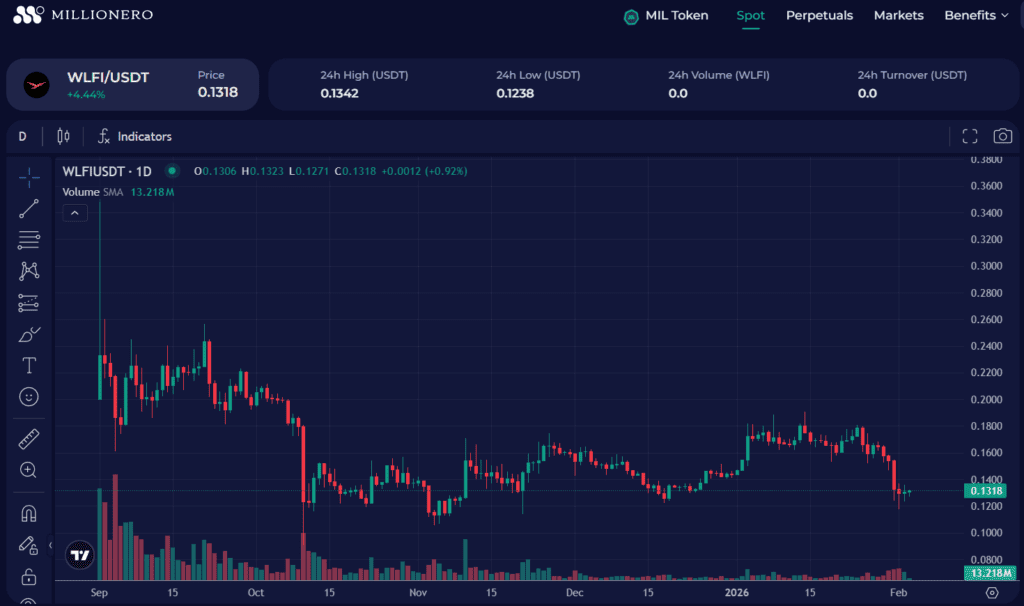
This is where the debate changes shape. When a politician supports an industry, that’s politics. When a politician’s family builds a product inside that same industry, while policy is being rewritten, people stop arguing about “crypto” and start arguing about conflicts of interest.
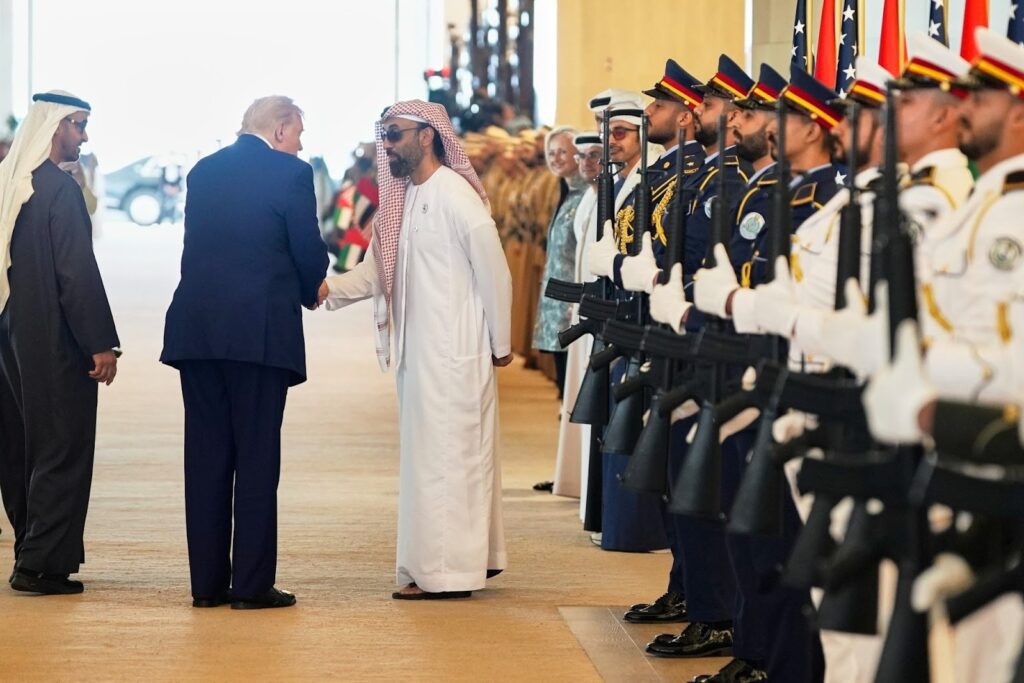
And those concerns intensified in early 2026 with reporting that investors linked to Sheikh Tahnoon bin Zayed Al Nahyan acquired a large stake in WLFI just before the inauguration, triggering fresh scrutiny about foreign influence and ethical boundaries.
WSJ
The administration and company allies have pushed back against wrongdoing claims, and ethics disputes don’t automatically translate into illegality. But reputationally, it’s a heavy cloud, and crypto is an industry where trust is already fragile.
The memecoin flashpoint: $TRUMP and $MELANIA as a liquidity vacuum moment
Nothing symbolized the new era more than the Trump-linked memecoin launches right before inauguration.
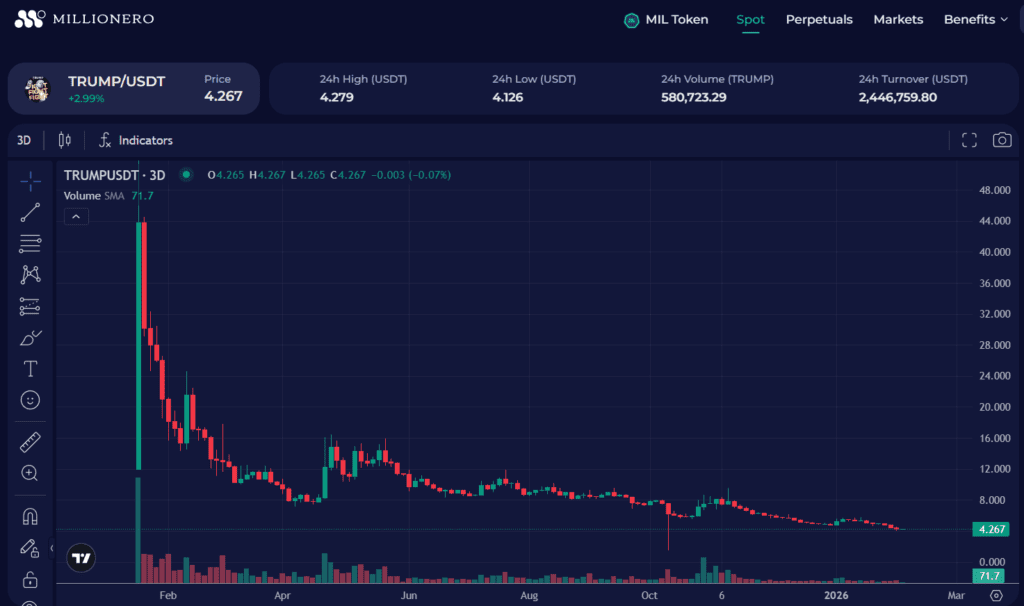
$TRUMP launched on January 17, 2025, just days before the inauguration, followed quickly by $MELANIA.
Whether you see this as clever branding or cynical extraction depends on what you focus on:
- At peak frenzy, the tokens reached multi-billion-dollar valuations, and trading volumes pulled attention across the market.
- Blockchain analysis reported that $TRUMP generated up to ~$100 million in trading fees in under two weeks, while many smaller holders lost money after the early spike faded.
- Investigations and reporting around $MELANIA raised questions about insider-style behavior, including wallets buying before public announcements and flipping quickly, exactly the kind of pattern that makes retail traders feel like exit liquidity.
This is likely what many traders mean when they say the launches “sucked liquidity” from crypto. It’s not that money vanished from the ecosystem, it’s that attention and capital briefly concentrated into a tiny number of narrative assets, often at the expense of broader altcoin rotation.
And because the launch came from the political apex of the U.S., the optics were different. Meme coins are already a high-volatility game. When they carry perceived presidential proximity, the market treats them like an event, then punishes late buyers the way it always does.
The “good for adoption” case vs. the “bad precedent” case
Here’s the tension in plain language:
Why supporters say it helped
- It made crypto feel politically protected in the U.S.
- It nudged institutions toward custody, payments, and stablecoin experiments.
- It delivered the first major federal stablecoin framework through the GENIUS Act, including reserve and disclosure requirements.
Why critics say it’s dangerous
- Policy changes happened alongside direct or indirect family profit opportunities.
- Enforcement pullbacks can increase the room for manipulation, low-disclosure fundraising, and “rules-light” product design.
- The memecoin episode looked like a stress test for market ethics, and the market didn’t pass cleanly.
Even if you avoid taking sides, the structural question remains: Can an industry mature if it relies on political families as its most visible “front door”?
What this means for crypto’s next cycle
Crypto tends to confuse short-term momentum with long-term health. A friendlier White House can lift prices, speed up partnerships, and pull capital onshore. But if credibility breaks, through scandals, insider narratives, or “VIP coins”, the same mainstream attention can turn into mainstream backlash.
Trump and his sons helped push crypto closer to the center of American power. That is real. But the cost may be a deeper argument over legitimacy: not “Is crypto legal?” but “Is crypto fair, clean, and governable?”
The next market cycle will answer that more clearly than any speech or executive order ever could.
This article is for information only, not financial advice. Always do your own research and manage risk carefully. Become a reader at blog.millionero.com for awesome contents like this.