



The cryptocurrency market doesn’t exist in a vacuum. While many investors focus on single indicators or narratives, the reality is that multiple macroeconomic forces interact in complex ways to influence digital asset prices. Understanding this interplay requires examining the full spectrum of macro indicators rather than cherry-picking data points that confirm a predetermined view.
The Global Money Supply Question
Global M2 money supply expansion has become a popular talking point among cryptocurrency analysts. Many expect substantial growth from current levels, which theoretically should support risk assets like Bitcoin. However, the relationship between M2 and Bitcoin prices deserves closer scrutiny than simple correlation would suggest.
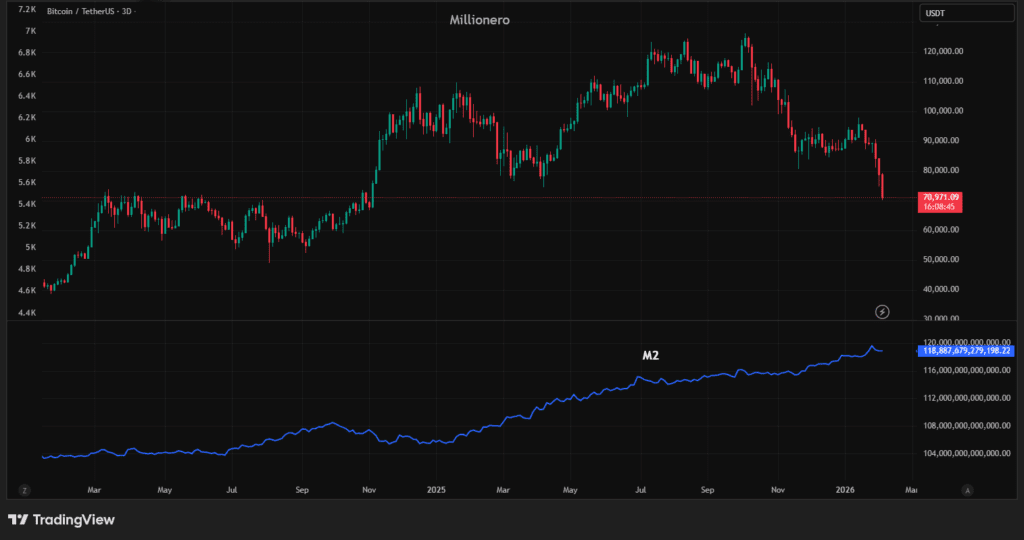
Historically, Bitcoin has demonstrated a tendency to peak before M2 money supply reaches its maximum. In the previous market cycle, Bitcoin actually found its bottom shortly after M2 topped out, not before. This temporal relationship matters because it suggests that Bitcoin may function as a leading indicator of liquidity conditions rather than simply riding the M2 wave upward. If the Dollar Index begins strengthening in the coming months as some data suggests it might, we could see M2 growth stall or reverse within a relatively short timeframe, potentially catching investors off guard who are positioned for continued monetary expansion.
Interest Rate Dynamics and Economic Restriction
The current interest rate environment tells an important story that often gets overlooked in bullish cryptocurrency narratives. US interest rates continue trading above the 2-year Treasury yield, which economists frequently use as a proxy for the neutral rate of interest. When actual rates exceed this neutral level, monetary policy remains in restrictive territory regardless of whether the Federal Reserve has paused rate increases.
This distinction matters tremendously. A pause in rate hikes doesn’t automatically translate to accommodative conditions. The market may be pricing in rate cuts, but the observable data doesn’t support imminent easing. The Federal Reserve needs concrete evidence of economic cooling before shifting policy, and that evidence needs to materialize in multiple data series, not just isolated reports.
Labor Market Softness and Seasonal Patterns
Employment data provides crucial insights into economic momentum, and several concerning trends deserve attention. The unemployment rate exhibits a historical pattern of rising into summer months, a seasonal dynamic that could become relevant in the near term. Beyond this cyclical pattern, underlying labor market health shows deterioration across multiple metrics:
- Hiring rates have declined substantially from previous highs
- Job openings, while still elevated by historical standards, have trended downward consistently
- Quit rates have fallen significantly, revealing worker confidence better than almost any other employment metric
This final indicator deserves special attention. When employees feel secure about finding new opportunities, they quit readily. When uncertainty rises, they hold onto current positions even if dissatisfied. The current low quit rate suggests workers perceive a more challenging environment ahead, which typically precedes broader economic weakness.
Equity Markets and Federal Reserve Constraints
The S&P 500’s position near all-time highs creates a genuine policy dilemma for the Federal Reserve. Central banks historically show great reluctance to provide aggressive liquidity support when equity markets trade at record levels. The political and economic optics of supporting already-elevated asset prices while inflation concerns persist simply don’t align with the Fed’s dual mandate of price stability and maximum employment.
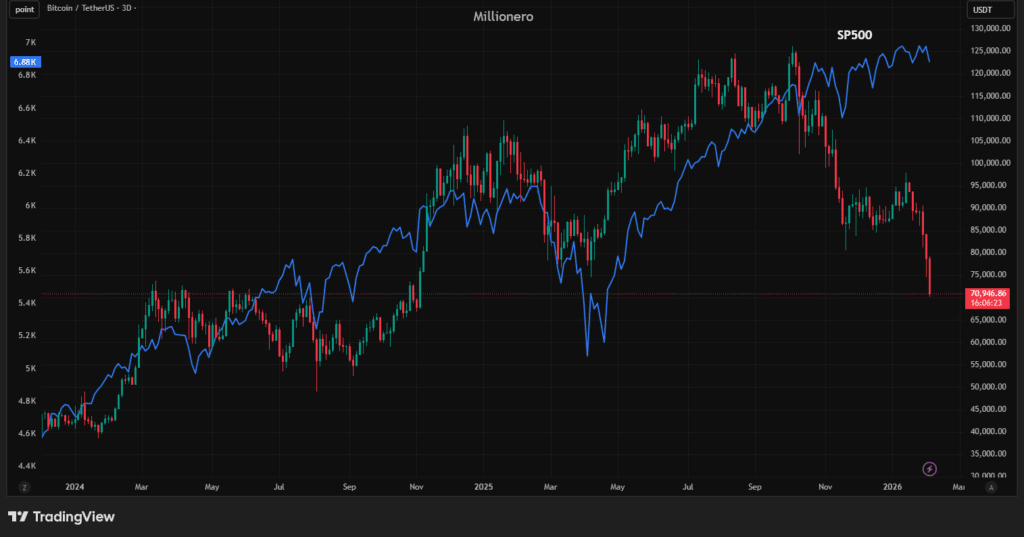
For cryptocurrency markets, this dynamic presents a significant headwind. Digital assets have historically required substantial liquidity injections to fuel major rallies. If the Federal Reserve feels constrained from providing such liquidity due to strong equity valuations, the fuel for a sustained cryptocurrency bull market may not materialize regardless of other favorable conditions.
The Quantitative Tightening Perspective
The recent end of quantitative tightening has prompted celebrations in some corners of the cryptocurrency community. However, historical precedent urges caution in interpreting this development as automatically bullish. When the Federal Reserve ended QT in 2019, Bitcoin didn’t immediately rally. Instead, it continued declining for a meaningful period before eventually finding a bottom.
The end of balance sheet reduction changes the rate of liquidity withdrawal, but it doesn’t immediately inject new liquidity into the system. The transition from tightening to stability represents progress, but the journey from stability to expansion involves additional steps that may take considerable time to materialize.
The Complexity of Macro Analysis
What emerges from examining these various indicators is a picture far more nuanced than any single narrative can capture. The macroeconomic environment consists of multiple forces pulling in different directions simultaneously:
- Global M2 expansion competes against dollar strength
- Interest rate stability competes against restrictive real rates
- Equity market strength competes against labor market softness
Reasonable analysts can examine identical data sets and reach different conclusions based on how they weight various factors and interpret temporal relationships. This doesn’t mean one side understands macro while the other ignores it. Rather, it reflects the genuine uncertainty inherent in complex adaptive systems like the global economy.
The challenge for cryptocurrency investors lies not in identifying which single indicator matters most, but in developing frameworks for synthesizing multiple data streams into coherent probabilistic assessments. Markets reward those who can update their views as new information arrives rather than clinging to narratives that no longer fit the evolving data landscape.
Moving Beyond Narrative Monopolies
No individual or group possesses exclusive claim to macroeconomic truth. The suggestion that bearish interpretations ignore macro fundamentals while bullish views incorporate them represents a false dichotomy that obscures rather than illuminates. Both perspectives can legitimately cite macroeconomic evidence. The disagreement centers on weighting, interpretation, and time horizons rather than whether macro matters at all.
Investors who positioned themselves for extended alt season over recent years certainly weren’t incorporating the restrictive monetary policy, rising rates, and quantitative tightening that dominated the macroeconomic landscape. Conversely, those maintaining bearish postures today can point to restrictive real rates, softening labor markets, and historical patterns around liquidity cycles.
The macro environment shapes cryptocurrency markets profoundly, but it does so through multiple channels operating on different timeframes. Success requires intellectual humility, continuous learning, and willingness to adjust views as conditions evolve rather than defending predetermined conclusions regardless of how the data develops.
This article is for informational purposes only and does not constitute financial advice. The cryptocurrency markets are highly volatile and complex. Always conduct your own research and consult with qualified financial professionals before making investment decisions. For more in-depth analysis and educational content, visit blog.millionero.com. When you’re ready to trade based on your own research and analysis, Millionerooffers both spot and perpetual futures trading to execute your strategy.