



Bitcoin (BTC) is not just “drifting lower.”
It is being pushed by a very specific mix of leverage, derivatives, politics, and macro panic.
In the last 24 hours alone, global markets bled almost $5 trillion:
- Gold dropped about 5–6%
- Silver crashed almost 20%
- Nasdaq, S&P 500, Russell 2000 all sold off
- Bitcoin fell around 8%, taking about $120 billion off its market value
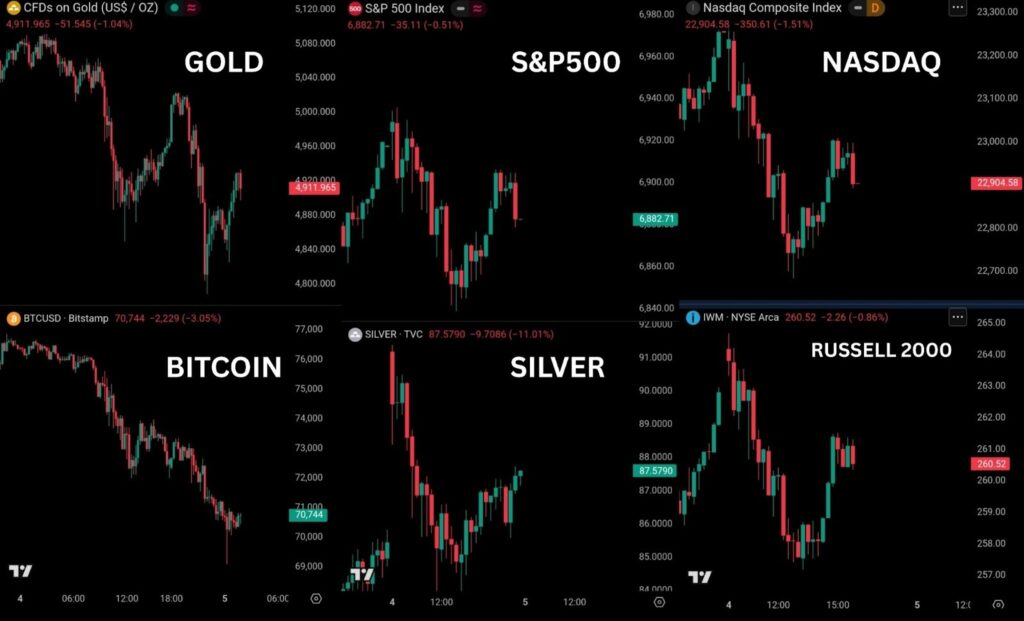
So this is not only a crypto story. But Bitcoin’s move does have its own special engines behind it.
From “21 Million Coins” to a Derivatives Playground
For years, the simple Bitcoin story was:
- There will only ever be 21 million BTC
- Coins cannot be printed like dollars
- No big bank can “rehypothecate” your BTC the way they do with dollars or Treasuries
That story started to crack once Wall Street built a full derivatives stack on top of Bitcoin:
- Cash-settled futures
- Perpetual swaps
- Options
- Spot and futures ETFs
- Prime broker lending
- Wrapped BTC on other chains
- Structured notes and total-return swaps
On paper, one real coin can now simultaneously “back”:
- An ETF share
- A futures position
- A perp position
- An options hedge
- A broker loan
- A structured product
Six different claims on the same coin.
This is what some analysts call a fractional-reserve price system wearing a Bitcoin mask.
The key idea here is the Synthetic Float Ratio (SFR) – how many synthetic claims exist per real coin.
When synthetic supply becomes huge, price stops reacting to genuine spot demand and starts reacting mainly to:
- Positioning
- Hedging flows
- Liquidations
That is the world Bitcoin is trading in today.
The Liquidation Map: A Market That Is One-Sided Short
If you look at the latest liquidation maps, something jumps out immediately:
- The chart is almost empty on the long side
- Short liquidations are stacked like a wall above price
- Around current levels, there are only small long clusters
- Higher up, there are tens of billions in potential short liquidations, stretching all the way toward the six-figure area
In other words:
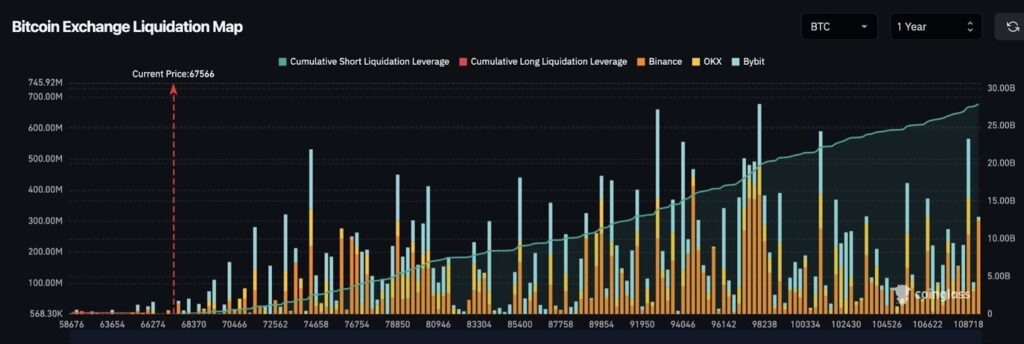
The market is extremely, historically tilted to the short side.
There are estimates of roughly $30 billion in leveraged short positions versus almost no meaningful leveraged longs.
Price only has to move a few thousand dollars up before those shorts start to feel real pain.
Right now the game is:
- Short into every bounce
- Push price lower
- Trigger forced selling from over-leveraged players
- Buy back (“cover”) cheaper
- Repeat
That’s why the price action feels mechanical and brutal.
It is less about “weak hands” and more about position hunting.
At the same time, heatmaps from major exchanges show dense clusters of limit bids in the $60k–63k area that appeared before the final flush under $60k.
Big players clearly had a plan to let price fall into their buy zone.
“Paper BTC Killed Scarcity”… Or Did It?
There is a strong narrative right now that “derivatives killed Bitcoin’s scarcity” and that synthetic BTC has turned the asset into another lifeless paper market.
But there is a serious pushback from other analysts.
Their main points are:
- Gold has lived with extreme leverage and paper claims for decades.
Futures, options, ETFs, and unallocated accounts are stacked many-to-one against real bars.
Yet gold is trading at all-time highs, not at zero. Scarcity survived the derivatives boom. - Spot Bitcoin ETFs are physically backed.
The large US funds hold real coins in cold storage.
Together, they already lock away close to 7% of total BTC supply.
That removes liquid supply from the market, it doesn’t create new supply. - Cash-settled futures never print new BTC.
They open and close in dollars.
The blockchain never sees them.
So they can distort price in the short term, but they do not magically increase the number of coins. - Self-custody still exists.
Any holder can verify their coins on-chain in minutes.
That is very different from gold bars in a vault you will never see.
From this side of the debate, derivatives are not the death of Bitcoin.
They are just another layer that can create wild leverage cycles, without changing the core scarcity underneath.
BTC Dominance and the 2019 Echo
Another important chart is Bitcoin dominance – BTC’s share of total crypto market cap.
The current pattern looks a lot like 2019–2020:
- Back then, altcoins had already been destroyed.
- When the bear market really hit, BTC then dumped faster than alts, so dominance fell.
- Later, as the market bottomed and Bitcoin recovered first, dominance moved back up.
Today, analysts see something similar:
- Bitcoin looks post-top after a long rally during tight monetary policy.
- Quantitative tightening has ended, and markets are adjusting to a new macro mix.
- BTC is now dragging the whole market down with it.
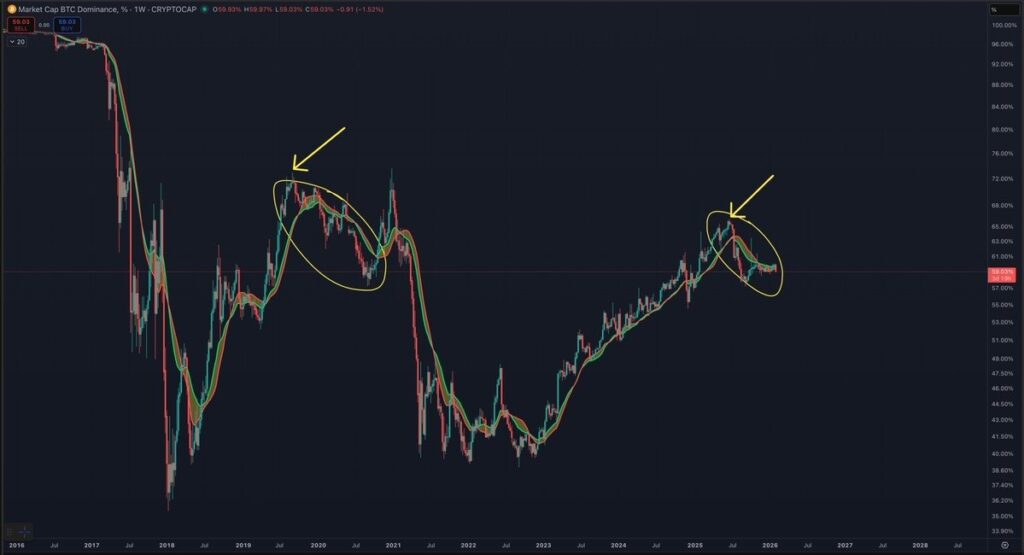
The view here is that this process may run through the rest of this year:
a long, grinding phase where Bitcoin bleeds, altcoins bleed, and dominance will matter less than raw drawdown.
Politics, Laws, and a Delayed Rulebook
While all of this is happening on the charts, Washington is stuck.
A major US crypto market-structure bill has hit a wall:
- The White House wants to rush the bill through to give the US a clear crypto framework.
- At the same time, it is resisting any ethics clauses that would restrict trading by senior officials and their families.
- Democrats insist on those limits.
- The bill needs 60 votes in the Senate, which is very hard in a polarized pre-election environment.
- If there is no deal by the end of February, the bill could die and be pushed back to spring 2026.
This means regulatory clarity for Bitcoin and Ethereum remains uncertain.
Big long-only institutions do not love stepping into an asset class while the rulebook is still being fought over on live TV.
A Global De-Risking, Not Just a “Crypto Problem”
The last day was a perfect example of system-wide de-risking:
- Gold, silver, US equities, small caps, and crypto all sold off together.
- There was no single huge headline that explains $5 trillion in vanished value.
When many assets dump at once with no clear trigger, it usually signals:
- Funds cutting risk across the board
- Margin calls forcing sales of whatever can be sold
- Systematic strategies reacting to volatility spikes
In that world, Bitcoin is treated less like “digital gold” and more like high-beta liquidity – the thing you sell when you need to raise cash fast.
So Why Is Bitcoin “Nonstop Dumping”?
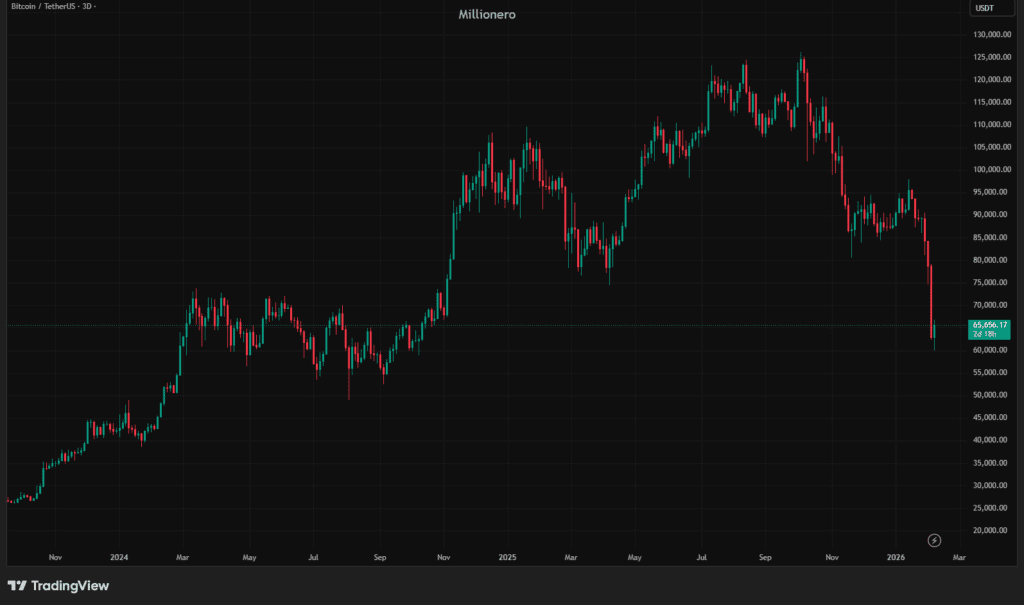
Putting it all together:
- Derivatives now dominate short-term price discovery.
Synthetic positions and liquidation flows matter more day-to-day than spot holders. - The liquidation map is heavily short-tilted, so aggressive selling can push price into zones where big players want to buy, then possibly spark sharp short squeezes.
- A loud group believes “paper BTC” killed scarcity, while another group argues that scarcity is alive, ETFs are accumulating, and futures don’t mint new coins.
This clash of narratives adds confusion and fear. - Macro markets are in a shock move.
Bitcoin is part of a broad sell-off, not an isolated collapse. - Regulation in the US is delayed again, just when large pools of capital were starting to take crypto seriously.
Political drama adds another layer of uncertainty.
None of this means Bitcoin is “finished.”
It does mean that the old, simple story, 21 million coins, line goes up, is no longer enough to explain what is happening on your screen.
Nothing in this article is financial advice.
Markets are brutal, especially in phases like this.
Please always do your own research. You can DYOR on blog.millionero.com and when you’re ready, come trade on Millionero.