



The past week has delivered one of the most consequential periods in cryptocurrency markets in recent memory. What unfolded wasn’t simply a price correction, it was a revealing stress test that exposed the fundamental transformation happening beneath the surface of this market. From billions in liquidations to regulatory developments and contrasting institutional movements, the events of this week offer critical insights into where crypto markets stand today and where they might be heading.
The Anatomy of a Market Collapse
The week was dominated by a severe market correction that erased hundreds of billions of dollars across multiple asset classes, sending shockwaves through both traditional and digital markets. Bitcoin tumbled to approximately $60,000, representing levels not witnessed in months, while Ethereum plummeted to around $1,700. The selloff wasn’t confined to cryptocurrency, traditional markets suffered equally brutal losses, with gold and silver collectively shedding $10 trillion in just three days.
What distinguished this correction from typical market pullbacks was the devastating role of leverage throughout the system. Over a compressed six-day period, more than $7 billion in leveraged positions were forcibly liquidated. The carnage peaked on January 31st, when $2.56 billion evaporated in a single day, marking the largest daily liquidation event since the notorious crash of October 10th. During that chaotic session, Bitcoin suddenly plunged to $75,600 while Ethereum crashed to $2,200 in a span of merely five minutes. The velocity and severity of these moves caught countless traders off guard, triggering cascading liquidations that fed on themselves.
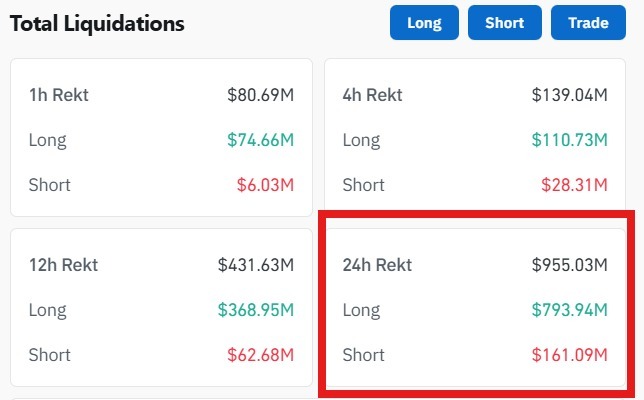
Since that initial shock, the broader cryptocurrency market has hemorrhaged more than $442 billion in total value. The liquidations continued their relentless march throughout the week. By February 5th, another $772 million had been wiped out within 24 hours, with the overwhelming majority representing long positions, traders betting on price increases. The following day brought even more pain, with $955 million in additional liquidations, again predominantly from the long side.
A Critical Technical Threshold Breached
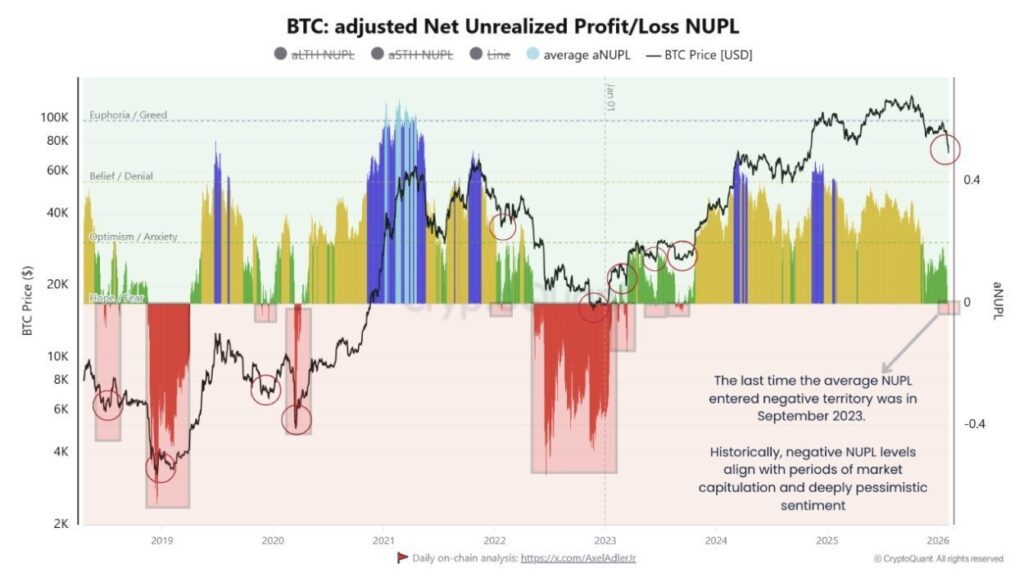
Adding psychological weight to the financial losses, Bitcoin crossed a significant technical threshold that hadn’t been breached in years. The cryptocurrency entered negative territory on the Net Unrealized Profit/Loss (NUPL) indicator for the first time since 2023, according to data from CryptoQuant. This metric essentially measures whether the average Bitcoin holder is sitting on gains or losses. When NUPL turns negative, it signals that the typical investor is now underwater on their position, a psychological inflection point that often marks important turning points in market cycles and can trigger further selling as pain intensifies.
The Hidden Forces Reshaping Bitcoin’s Market
While many observers fixated on price charts and liquidation figures, the more profound story lies in understanding how Bitcoin’s fundamental market structure has been transformed. The cryptocurrency market we trade today bears little resemblance to the relatively simple supply-and-demand environment of previous cycles. Bitcoin has been systematically converted into a sophisticated financial instrument through the introduction of institutional products, derivatives, and complex hedging strategies.
Several interconnected factors now influence price movements in ways that simply didn’t exist during earlier bull markets, and understanding these dynamics is crucial for anyone hoping to navigate current market conditions successfully.
The Rise of “Paper Bitcoin” and Derivatives
Thanks to the proliferation of Bitcoin ETFs and CME futures contracts, a single Bitcoin can now support multiple layers of financial claims. This phenomenon, sometimes called “paper Bitcoin”, means that derivatives and financial products referencing Bitcoin can absorb enormous amounts of capital and significantly impact price discovery without requiring any movement of actual coins. When institutions can gain exposure through regulated futures, options, and ETF shares, the relationship between physical supply and price becomes far more complex and potentially distorted.
Institutional Hedging Dampens Volatility
Hedge funds and sophisticated institutions now employ Bitcoin as a component within intricate trading strategies designed to generate fees, manage risk, or achieve specific portfolio outcomes. These hedging activities have a dampening effect on price movements, particularly reducing the explosive upward surges that characterized earlier bull markets. When large players can hedge their exposure through derivatives, they’re less likely to engage in the kind of aggressive buying that historically drove Bitcoin’s most dramatic rallies.
The Centralized Liquidity Problem
Perhaps most concerning for long-term holders is the reality that coins remaining on centralized exchanges can be leveraged and used against the interests of their owners. As long as significant Bitcoin and Ethereum quantities sit on exchange platforms, those assets become available as collateral for positions that work against prevailing market direction. Exchanges can lend these coins to short sellers or use them to facilitate leveraged trading, creating artificial pressure that suppresses prices during bull phases and amplifies selling during corrections.The message from experienced market observers has remained consistent throughout these developments: self-custody represents the only permanent solution to this problem. By withdrawing coins from exchanges and holding them in personal wallets, investors ensure their assets cannot be weaponized against them in derivatives markets. This isn’t merely ideological preference, it’s a practical strategy for protecting the value of your investment in an increasingly financialized market structure.
Institutional Capital: A Tale of Two Strategies
The institutional investment landscape during this week painted a striking picture of divergence, with capital flowing in completely opposite directions depending on the sophistication and conviction of different players.
The Great ETF Exodus
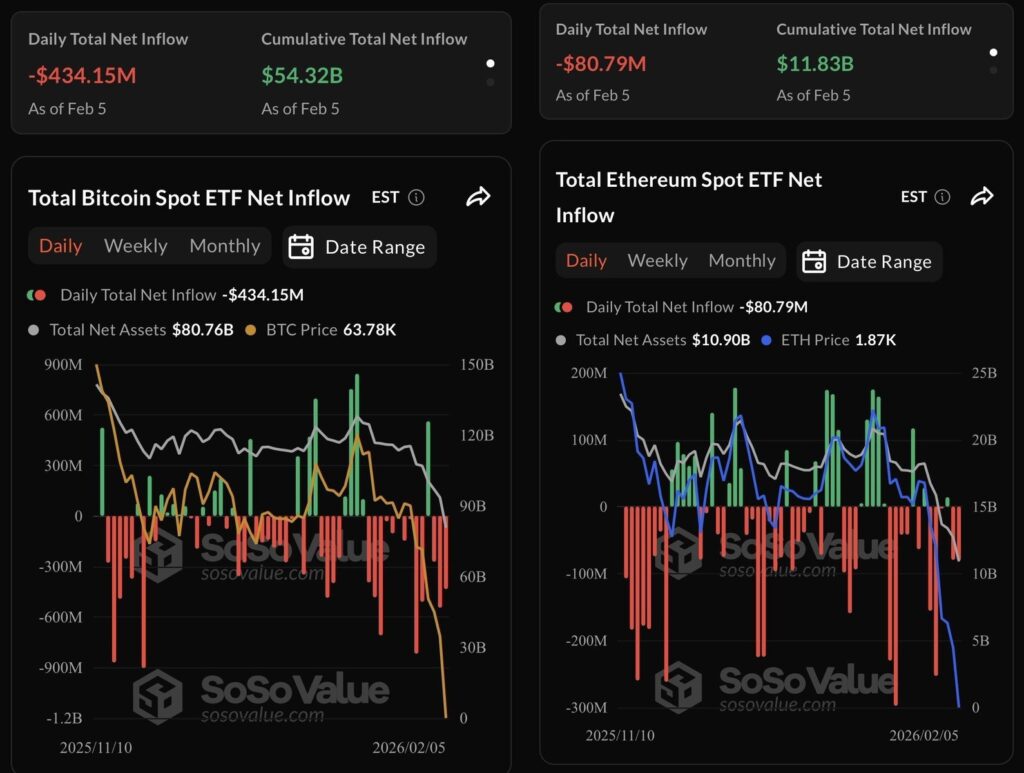
On the outflow side, spot Bitcoin ETFs in the United States recorded combined outflows of $430 million, with BlackRock’s IBIT fund leading the exodus at $175 million in redemptions. Simultaneously, spot Ethereum ETFs bled an additional $80 million, extending a concerning downward trend as institutional selling intensified. When examining the seven-day average, Bitcoin ETF outflows had reached $171 million per day, a sustained level of selling that clearly indicated institutional nervousness.
Contrarian Accumulation by the World’s Largest Asset Manager
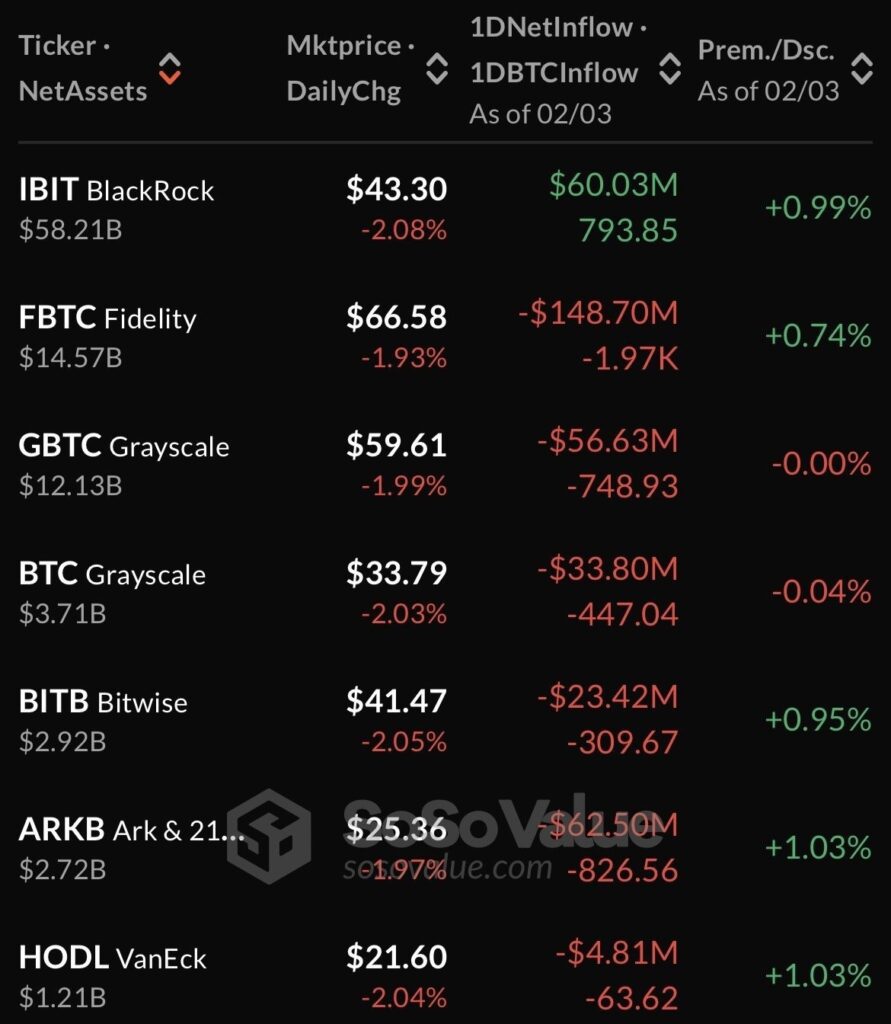
Yet beneath this surface-level selling, a fascinating counter-narrative emerged. While most ETFs experienced hemorrhaging outflows, BlackRock, the world’s largest asset manager with over $10 trillion under management, was actively buying during the chaos. On February 3rd, as other Bitcoin ETFs collectively shed $272 million, BlackRock’s IBIT fund recorded $60 million in fresh inflows. This wasn’t a one-time anomaly either. The firm also transferred substantial quantities of assets to Coinbase Prime, including 3,900 BTC worth $273.95 million and 27,197 ETH valued at $56.68 million.
Traditional Finance Giants Join the Accumulation
The pattern of sophisticated accumulation extended beyond BlackRock. UBS, Switzerland’s largest and most prestigious bank, purchased an additional 3.23 million shares of Michael Saylor’s Strategy company (formerly MicroStrategy), bringing their total holdings to 5.76 million shares with an approximate value of $805 million. This represents a massive bet on Bitcoin exposure through equity markets.
Similarly, Vanguard, managing more than $12 trillion in assets and known for conservative investment strategies, disclosed adding 4.17 million shares of Strategy to their holdings, bringing their total position to 24.06 million shares valued at roughly $3.42 billion. When the two largest index fund providers in the world are simultaneously increasing their Bitcoin exposure through equity vehicles, it sends an unmistakable signal about long-term institutional conviction.
Grant Cardone, the real estate magnate, also doubled down on his Bitcoin accumulation at $76,000, continuing his publicly stated strategy of systematically converting monthly cash flows from his $5 billion real estate portfolio directly into Bitcoin. His company, Cardone Capital, now holds approximately 1,000 Bitcoin and has set an ambitious target of reaching 3,000 Bitcoin by the end of 2026.
The contrast couldn’t be clearer: while retail-oriented ETF holders panicked and withdrew capital, the largest and most sophisticated institutional players in the world quietly accumulated during the dip.
On-Chain Movements Reveal Capitulation
Beyond the visible ETF flows, blockchain analysis revealed dramatic movements that told the story of genuine capitulation by some large holders while others continued their accumulation strategies.
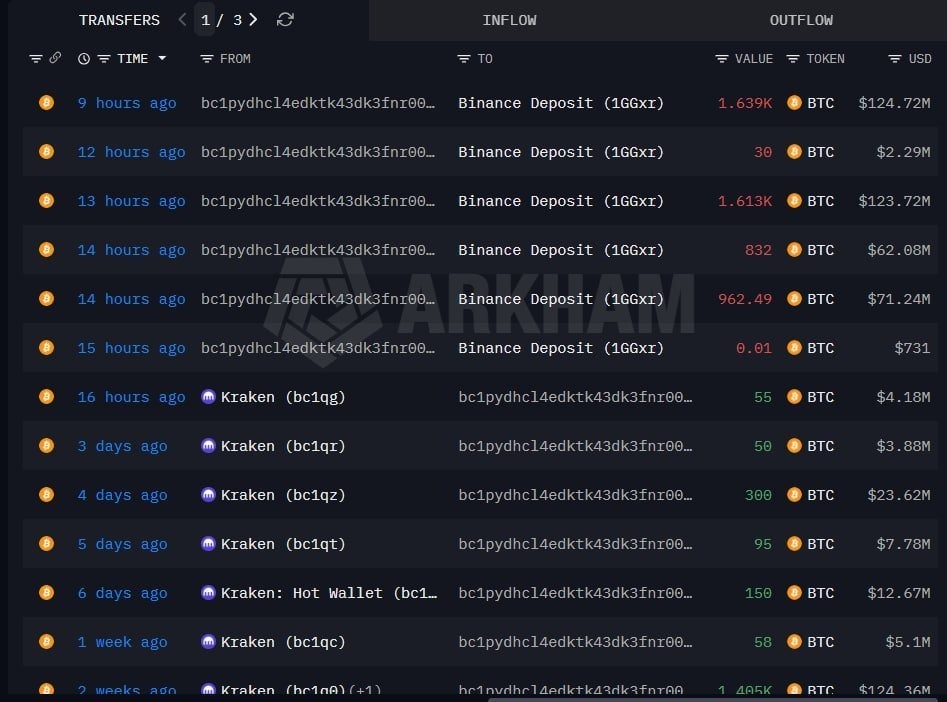
One particularly striking example involved a whale who completely liquidated an entire position of 5,076 BTC over a twelve-hour period, representing approximately $384 million in value. The kicker? This sale locked in a realized loss of $118 million. This wasn’t strategic portfolio rebalancing or tactical profit-taking, this was pure capitulation under intense psychological and financial pressure. When whales sell at massive losses, it often signals that we’re approaching local bottoms, as even the strongest hands finally break.
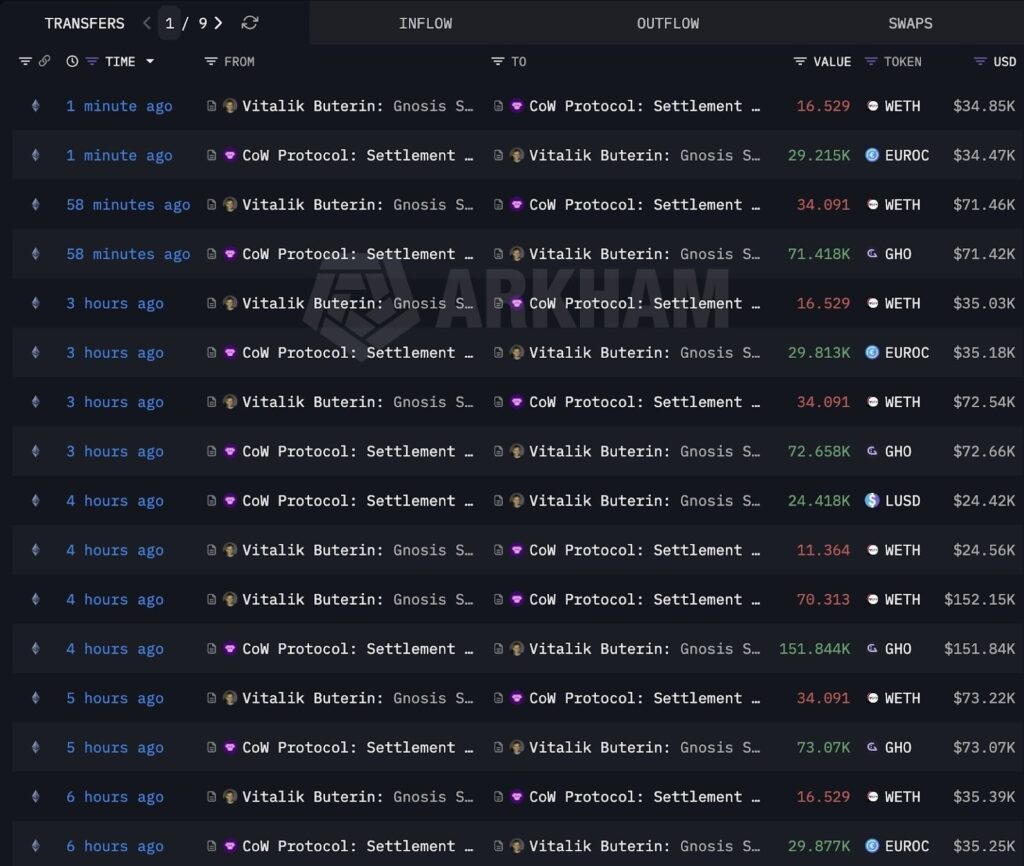
In another closely watched movement, Vitalik Buterin, Ethereum’s co-founder, sold 2,961.5 ETH over three days, worth approximately $6.6 million at an average price of $2,228 per coin. While Buterin has a long history of periodic sales for various charitable and operational purposes, the timing and persistence of these transactions drew significant market attention. Every move from Ethereum’s founder is scrutinized for potential signals about his confidence in the network’s trajectory, though it’s worth noting that such sales have been a consistent pattern throughout Ethereum’s history without necessarily predicting price direction.
The Washington Shuffle: Regulatory Progress and Political Obstacles
On the regulatory front, the week delivered a complex mixture of encouraging progress, frustrating setbacks, and concerning political entanglements that may shape the industry’s trajectory for years to come.
The CLARITY Act Hits a Political Wall
The most significant disappointment emerged from Washington, where the White House effectively vetoed the crypto market structure bill in its current form. The Trump administration has expressed strong desire to see cryptocurrency legislation passed quickly, but with a critical caveat. The administration refuses to accept any “ethical provisions” that might restrict the US President or his family members from engaging in cryptocurrency activities.

Democratic lawmakers have pushed for provisions that would prevent senior government officials from trading cryptocurrencies during their tenure, pointing to obvious conflicts of interest. The White House characterized these demands as political targeting rather than legitimate governance concerns, creating an impasse that threatens to derail the entire legislative effort.
The mathematics of Senate procedure make this particularly challenging. The bill requires 60 votes to overcome a filibuster, and with partisan divisions deepening as midterm elections approach, finding that supermajority becomes increasingly difficult. Senator Cynthia Loomis, one of the Senate’s strongest cryptocurrency advocates, confirmed that the market structure bill has been postponed until spring 2026 at the earliest. This delay leaves regulatory clarity for Bitcoin, Ethereum, and the broader cryptocurrency ecosystem in continued limbo.
If no agreement materializes before the end of February, the entire legislative project could collapse entirely, forcing the industry to wait potentially years for another opportunity at comprehensive federal legislation.
WLFI Investigation Opens New Political Front
The political complications multiplied when the House of Representatives launched an investigation into World Liberty Financial (WLFI), the Trump family-associated cryptocurrency venture. The investigation was triggered by reports indicating that an entity connected to the United Arab Emirates acquired a $500 million stake in the project.
The congressional inquiry is focusing on several critical questions: the ultimate source of the funding, the precise nature and extent of foreign ownership, and whether any national security risks or potential for foreign influence exist. This investigation represents the cryptocurrency file moving beyond market dynamics and regulatory policy into the realm of direct political and security scrutiny, a development that could have far-reaching implications for how cryptocurrency projects with political connections are treated going forward.
Treasury Secretary Applies Pressure
Adding to the regulatory momentum, Treasury Secretary Scott Bessent issued a public call for Congress to accelerate passage of cryptocurrency market structure legislation. In pointed remarks, Bessent stated that lawmakers need to get the CLARITY Act “across the finish line.” This public pressure from a Cabinet-level official confirms that cryptocurrency regulation remains a genuine priority for the administration despite the political complications around family involvement and ethical provisions.
SEC Hamstrung by Government Shutdown
Compounding the regulatory uncertainty, the Securities and Exchange Commission is currently operating with severely limited staff due to a partial government shutdown. This operational constraint has created a cascade of problems: the agency has halted processing of cryptocurrency exemption requests and frozen all filings related to tokenized securities. The SEC’s contingency plan has particularly affected its Division of Trading and Markets and Division of Corporation Finance, precisely the units most relevant to cryptocurrency oversight.
This bureaucratic paralysis comes at one of the most critical moments for the industry in years, creating a regulatory vacuum just when clarity is most needed.
International Regulatory Evolution
While Washington struggled with political dysfunction, several other major jurisdictions made significant regulatory progress that could reshape global cryptocurrency markets.
South Korea’s Historic Reversal
In perhaps the most dramatic international development, South Korea officially ended a nine-year ban on institutional cryptocurrency investment. The Financial Services Commission completed rules that lift the longstanding prohibition, opening the door for approximately 3,500 institutional entities, including public companies and professional investment firms, to legally enter the cryptocurrency market with proper compliance frameworks.
This policy reversal represents far more than symbolic change. It’s a core component of South Korea’s economic growth strategy for 2026, designed explicitly to halt the massive capital outflow that reached an estimated $110 billion during 2025. When one of Asia’s most sophisticated economies reverses a near-decade prohibition on institutional crypto investment, it signals a fundamental recalculation of cryptocurrency’s role in modern financial systems.
Canada Establishes Custody Standards
The Canadian Investment Regulatory Organization announced implementation of a comprehensive Digital Asset Custody Framework, establishing clear and binding standards for how cryptocurrency trading platforms must handle customer assets. This framework addresses several critical areas: mandatory separation of client assets from platform operational funds, strict security and governance requirements, systematic reduction of counterparty risk, and enhanced investor protection mechanisms.
This represents Canada’s transition from regulatory ambiguity toward concrete, enforceable rules for cryptocurrency infrastructure, exactly the kind of measured, thoughtful approach that can provide industry clarity while protecting consumers.
Ripple Secures European Authorization
In the European Union, Ripple obtained a full Electronic Money Institution (EMI) license in Luxembourg, following earlier preliminary approval. This authorization is particularly significant because it grants Ripple the legal capacity to provide regulated payment services throughout the entire European Union, expand deployment of blockchain-based payment solutions, and substantially strengthen its institutional presence across European markets.
The EMI license represents one of the most comprehensive regulatory approvals available in European financial services, effectively treating Ripple as a legitimate financial institution rather than an unregulated technology experiment. This legitimization matters enormously for enterprise adoption and cross-border payment applications.
Ecosystem Development Accelerates Despite Market Chaos
Remarkably, despite the severe market turbulence and regulatory uncertainties, ecosystem development and product innovation continued at an impressive pace throughout the week.
MetaMask Bridges Traditional and Crypto Finance
MetaMask announced the launch of tokenized stocks and ETFs available directly through its wallet interface, implemented via a partnership with Ondo Finance. This development represents a genuinely significant step in the convergence of traditional and decentralized finance. Users can now access tokenized versions of traditional equity assets directly from their cryptocurrency wallet, trade on blockchain rails without traditional intermediaries, and seamlessly combine conventional investment products with DeFi protocols in a unified experience.
The implications extend beyond mere convenience. When stocks move onto blockchain infrastructure and cryptocurrency wallets evolve into comprehensive investment platforms, the boundaries between “traditional finance” and “crypto” begin to dissolve. We’re witnessing the emergence of a genuinely hybrid financial system.
Polymarket Upgrades Infrastructure
Polymarket announced a strategic partnership with Circle focused on upgrading its stablecoin infrastructure and introducing direct USDC settlement for prediction markets. The technical improvements promise faster and more reliable settlement mechanisms, enhanced institutional liquidity through native USDC integration, and a more efficient overall trading experience for users.
Prediction markets represent one of cryptocurrency’s most interesting use cases, leveraging blockchain transparency and global accessibility to create information aggregation mechanisms that can sometimes outperform traditional polling and forecasting. As these platforms mature with institutional-grade infrastructure, they’re likely to play an increasingly important role in how we gather and synthesize information about future events.
Artificial Intelligence Meets Cryptocurrency Markets
In a development that signals the emerging intersection of two transformative technologies, Elon Musk’s xAI company began actively recruiting cryptocurrency experts with the specific goal of training artificial intelligence models to understand and trade cryptocurrency markets. This isn’t academic research, it’s practical development work aimed at creating AI systems capable of making real trading decisions in live markets.
The convergence of artificial intelligence and cryptocurrency trading represents a fascinating frontier. As AI systems become more sophisticated in pattern recognition, they may identify market dynamics and opportunities that human traders miss entirely. Simultaneously, the transparency of blockchain data provides an unusually rich training dataset for machine learning systems. Whether AI becomes a stabilizing or destabilizing force in crypto markets remains an open question that we’ll likely begin answering in the coming years.
Industry Leaders Weigh In
Throughout the week’s turbulence, several prominent figures offered perspectives that help contextualize current market conditions and future trajectories.
JPMorgan’s Remarkable Assessment
In perhaps the most striking institutional statement, JPMorgan declared that Bitcoin has become “more attractive than gold even” as a long-term investment. Coming from one of the world’s most influential traditional financial institutions, this assessment represents a dramatic evolution in how establishment finance views digital assets. The bank specifically highlighted Bitcoin’s mathematically limited supply contrasted against continuous global monetary expansion, and its increasingly established role within diversified institutional portfolios.
When the largest bank in the United States publicly states that Bitcoin has surpassed gold in investment attractiveness, we’re witnessing something far beyond fringe speculation, we’re seeing fundamental recalibration of how alternative stores of value are evaluated by mainstream finance.
Armstrong Points Toward Convergence
Brian Armstrong, CEO of Coinbase, offered a forward-looking perspective, stating that cryptocurrency and artificial intelligence are both just beginning their transformative journey. His comments pointed toward a massive technological intersection ahead, where decentralized financial infrastructure converges with artificial intelligence in ways we’re only beginning to imagine. The implication is clear: what we see today in both technologies represents early chapters rather than mature final forms.
Buterin Criticizes Blockchain Proliferation
Vitalik Buterin delivered characteristically blunt criticism of current blockchain development trends, stating emphatically: “We don’t need more copied EVM chains, and we certainly don’t need more L1 networks.” His point cuts to the core of a genuine problem in the ecosystem, too many projects focus on replicating existing infrastructure rather than solving actual problems or building genuine usage on what already exists.
The statement reflects growing frustration among serious technologists that speculative token launches and infrastructure duplication have crowded out meaningful innovation. Real progress, Buterin suggests, comes from building applications that serve real needs rather than launching the hundredth slightly-modified blockchain network.
Silbert Frames the Correction as Cleansing
Veteran investor Barry Silbert offered a more philosophical take on market conditions, arguing that the current correction is performing necessary market hygiene: liquidating excessive leverage that had built up, removing weak projects with poor fundamentals, and resetting overall market structure to healthier foundations. He predicted that the next phase would involve substantial capital rotation toward stronger digital assets with solid underlying fundamentals and real utility.

This perspective, that painful corrections serve a productive function by clearing away speculation and refocusing capital on quality, provides useful context for long-term investors weathering current volatility.
The Contrarian Indicator Flashes
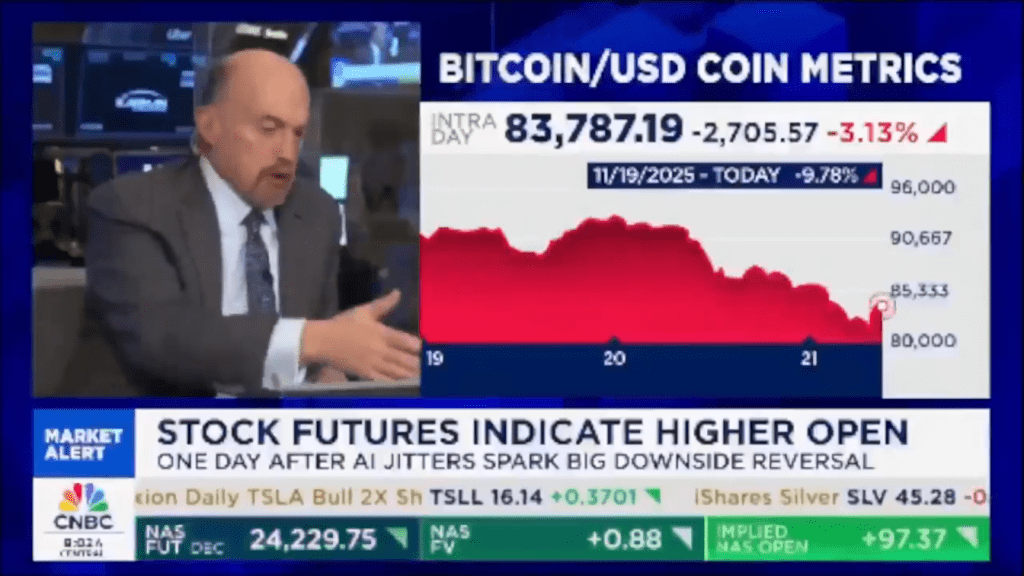
In a moment of dark humor, many in the cryptocurrency community celebrated when Jim Cramer, often jokingly referred to as a contrarian indicator due to his historically poor market timing, declared: “Everything is not okay with Bitcoin… people need to get out.” The cryptocurrency community’s running joke is that Cramer’s predictions so consistently prove wrong that inverse strategies based on doing the opposite of his recommendations would be profitable. His bearish call was thus interpreted by many as a bullish signal that a bounce might be imminent.
Security Developments and Vulnerabilities
The week wasn’t without security concerns and technical developments that highlighted both advancing protection measures and persistent vulnerabilities.
Saylor Announces Quantum Computing Initiative
In a forward-looking announcement, Michael Saylor revealed that MicroStrategy will launch a dedicated Bitcoin security program specifically designed to address potential threats from quantum computing. The initiative will coordinate with cybersecurity experts and the global cryptocurrency community to develop protective measures against quantum computers’ theoretical ability to break current cryptographic assumptions.

Saylor emphasized that this work represents necessity rather than optional enhancement. The challenge lies in Bitcoin’s fundamental decentralization and consensus mechanisms, which make coordinated upgrades extraordinarily difficult. This is precisely why early action is essential, developing and testing solutions must happen long before quantum computers pose actual threats, because implementing changes to Bitcoin’s core protocol requires years of careful coordination across a decentralized global network.
Hacks and Compromises Continue
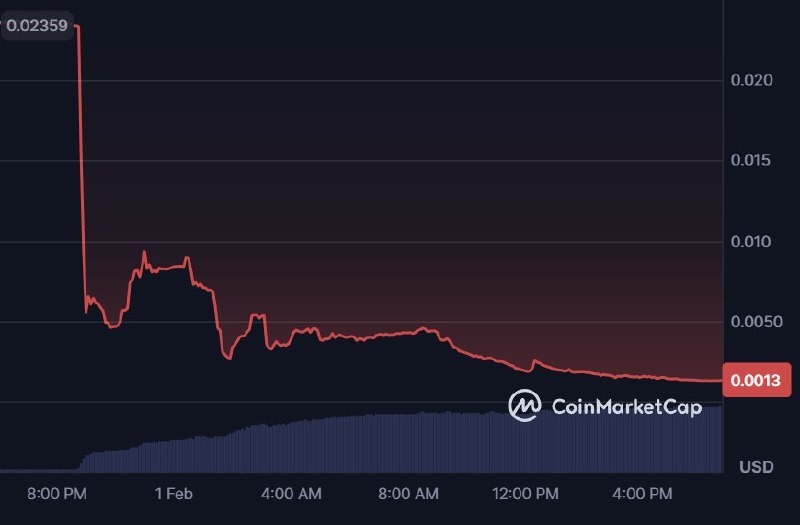
The week saw several concerning security incidents that served as reminders of persistent vulnerabilities. Step Finance suffered a treasury hack worth $27 million, causing the STEP token to crash more than 90% in immediate aftermath. Such dramatic collapses demonstrate the catastrophic impact that smart contract vulnerabilities and security breaches can have on project valuations and community trust.
The Arbitrum governance account on Twitter was compromised but was subsequently secured after the breach was detected. The team indicated they’re conducting thorough reviews of protection procedures and implementing additional safeguards to prevent similar incidents in the future. These social media account compromises have become increasingly common vectors for scams, as attackers use trusted accounts to promote fraudulent token schemes or phishing websites.
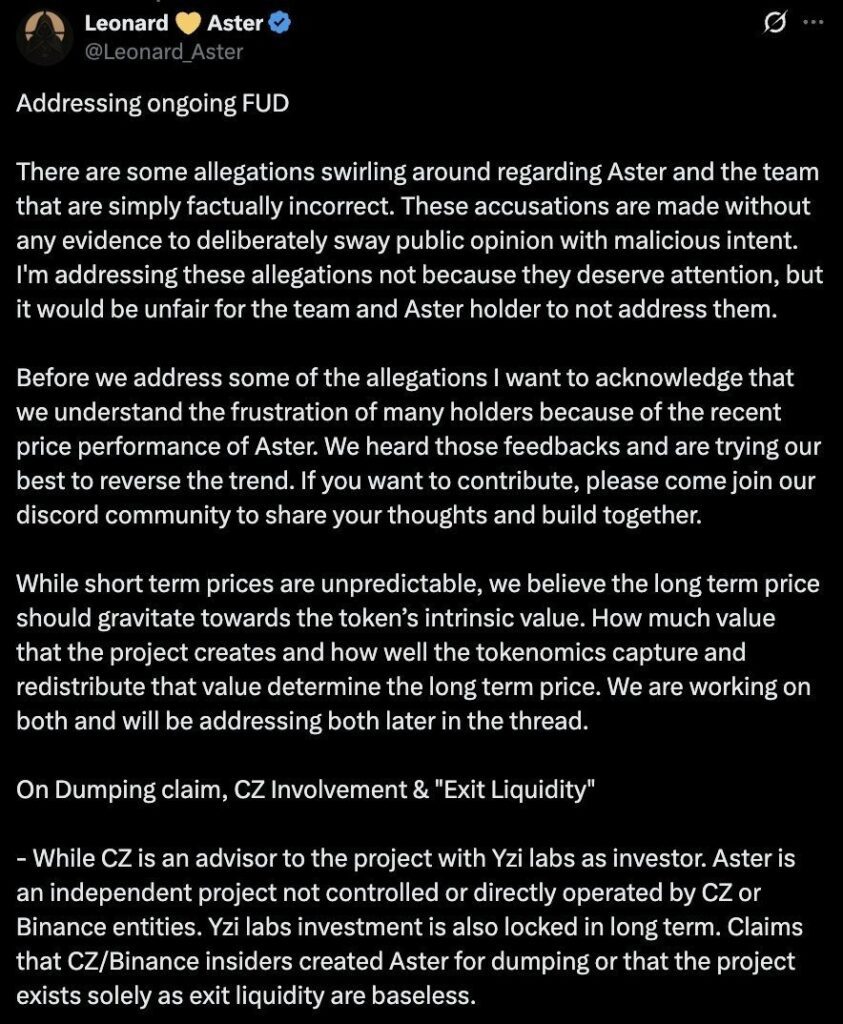
The Aster DEX CEO was forced to publicly deny allegations of insider dumping after on-chain data raised questions about large sales from wallets potentially connected to the project team. The CEO confirmed that the project operates independently and strictly adheres to its published tokenomics without violations. However, the incident highlights growing sophistication in community surveillance, on-chain transparency means that suspicious wallet movements are quickly identified and scrutinized by vigilant community members.
What’s Really Driving the Broader Selloff?
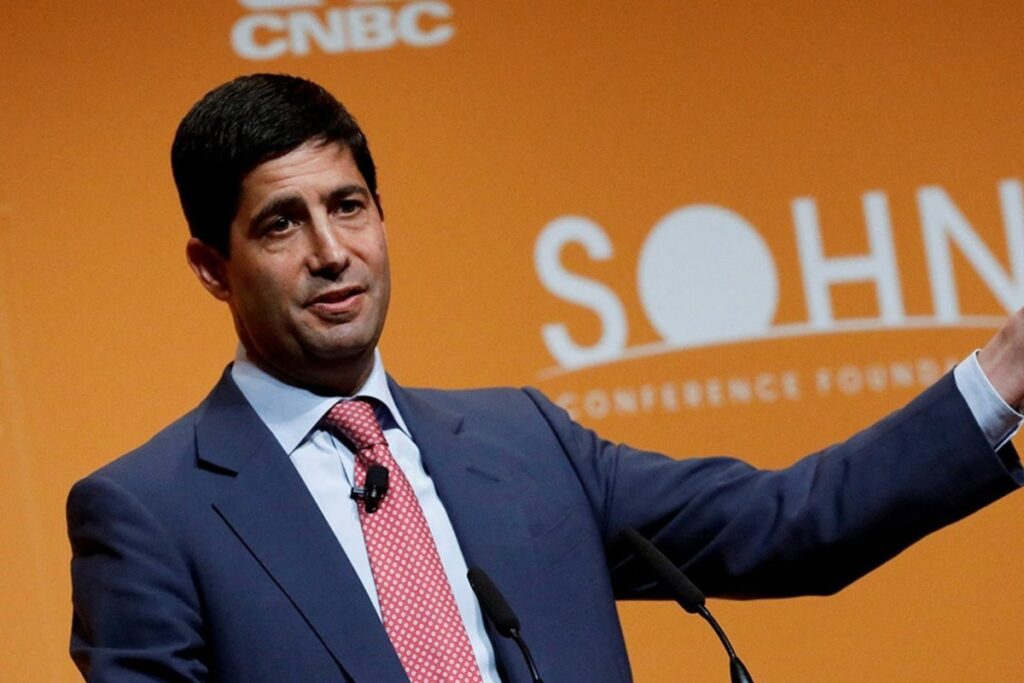
Many market participants struggled throughout the week to identify a clear fundamental catalyst for the severity of the selloff that affected not just cryptocurrency but also precious metals and traditional equity markets. The most plausible explanation centers on how markets are pricing in expectations around the potential appointment of Kevin Warsh as the next Federal Reserve chairman.
Warsh has articulated clear views on monetary policy, specifically stating that “the Fed should reduce its balance sheet” and that the current Federal Reserve balance sheet of approximately $7 trillion is “trillions larger than it should be.” For those unfamiliar with central bank operations, the Fed’s balance sheet represents assets purchased during quantitative easing, essentially money creation that injected liquidity into financial systems. Reducing this balance sheet means the opposite: removing liquidity from the system.
Why This Matters for All Asset Prices
The chain of causation runs as follows: A smaller Federal Reserve balance sheet necessarily means reduced system-wide liquidity. Reduced liquidity creates downward pressure on all risk assets including stocks, commodities, and cryptocurrencies. When less money circulates through financial markets, asset prices tend to fall as the pool of available capital shrinks.
Markets appear to be preemptively pricing in this monetary tightening scenario. If Warsh’s perspective guides future Federal Reserve policy, we may be entering an extended period of liquidity reduction that creates persistent headwinds for asset appreciation. Under this interpretation, current market weakness isn’t responding to immediate news, it’s discounting a potentially challenging multi-year environment ahead.
US President Trump himself commented on his Federal Reserve nominee, stating: “I hope he will cut rates. Kevin Warsh is very good, and he might even get votes from Democrats. He has to do what he sees fit.” These remarks suggest presidential preference for accommodative policy, but also acknowledgment that the Fed chair must exercise independent judgment.

Notably, Ray Dalio, the legendary hedge fund manager, praised Warsh as “an excellent choice because he understands the risks of the Fed’s policy being too accommodative, just as he understands the risks of tightening it too much”, suggesting that Warsh might strike an appropriate balance.
However, economists at major banks including Barclays and Morgan Stanley believe Warsh’s appointment is unlikely to fundamentally alter monetary policy trajectory during 2026, since decisions flow from collective deliberation within the Federal Open Market Committee rather than individual preference. Both institutions still forecast two rate cuts in June and December, with major directional changes unlikely before 2027.
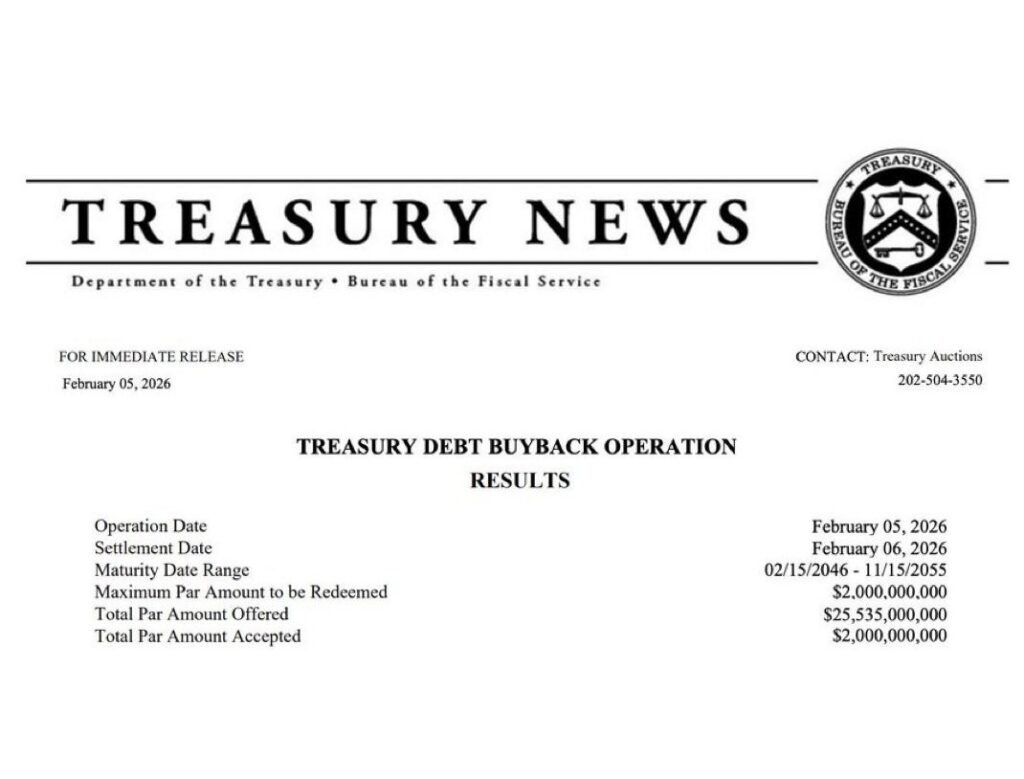
Meanwhile, the US Treasury continued its debt management operations, completing an additional $2 billion debt buyback on February 6th as part of ongoing balance sheet optimization efforts.
Political Markets Signal Shifting Expectations
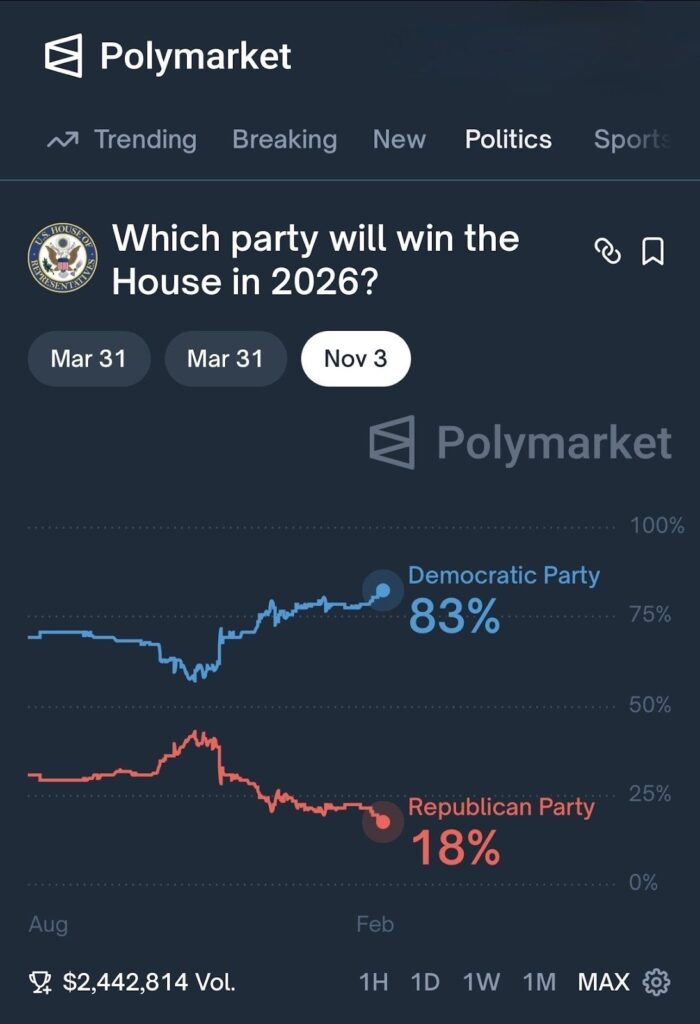
In prediction markets, the probability of Democrats winning the 2026 midterm elections surged to 83%, reflecting a dramatic shift in political expectations. This matters for cryptocurrency markets because midterm outcomes significantly influence regulatory approach, fiscal policy orientation, and the political viability of crypto-friendly legislation over the subsequent two years.
US President Trump himself addressed cryptocurrency policy directly in recent remarks, stating: “My sons are handling this. The reason I believe in crypto is that if we don’t do it, China will. It’s like artificial intelligence… we’re ahead of it by a large margin.” However, he also acknowledged criticism, adding: “The problem is he and his sons messed everything up”, an apparent reference to controversies around his family’s cryptocurrency business ventures.

Market Data Reveals the Damage
Several revealing statistics crystallized just how severe the correction has been when measured against recent peak valuations:
Bitcoin has fallen 37% from its all-time high. Ethereum is down 52% from peak levels. BNB has declined 43%. XRP sits 55% below its recent top. Solana has dropped 64%. TRON is down 34%. Dogecoin has plummeted 85% from its highs.
These figures serve as stark reminders that corrections never distribute pain equally across the ecosystem. The differentiation between assets with genuine fundamental value and those driven primarily by speculation becomes painfully clear during these periods. Projects with strong developer activity, real usage, and defensible value propositions tend to demonstrate relative resilience, while purely speculative tokens often suffer catastrophic declines from which they never recover.
Tether’s Continued Dominance
Amid all this turmoil, one data point stood out as remarkably stable: Tether’s continued absolute dominance in the stablecoin ecosystem. The company recorded its highest-ever monthly active user count during Q4 2025, accounting for a staggering 68.4% of all monthly active users across the entire stablecoin market.
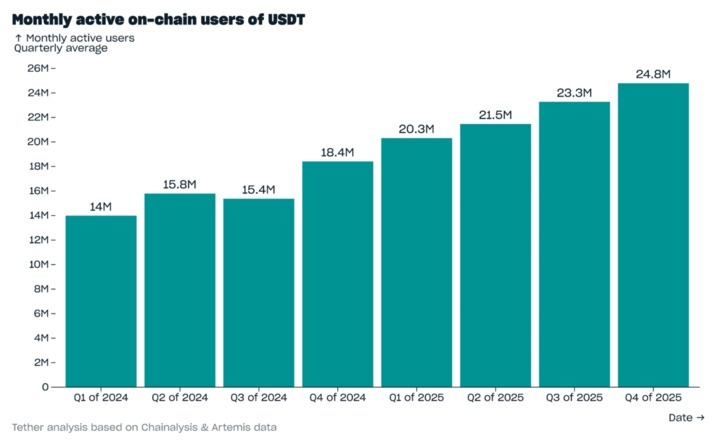
This statistic reveals something crucial about market infrastructure. USDT isn’t merely one stablecoin among many, it has become the fundamental liquidity layer for global cryptocurrency trading. Its ubiquity across exchanges, its deep integration into DeFi protocols, and its acceptance in both regulated and unregulated markets have created powerful network effects that competing stablecoins struggle to overcome. Understanding USDT’s central role is essential for grasping how liquidity actually flows through crypto markets.
Voices of Perspective and Caution
Charles Hoskinson, founder of Cardano, offered a sobering personal testimony about the realities of cryptocurrency volatility, stating: “I’ve lost more money than anyone listening to me now… I lost more than $3 billion.” This frank admission from one of the industry’s most successful founders serves as powerful reminder that even founders with deep technical expertise and insider information face enormous financial volatility. The path through cryptocurrency markets isn’t paved with certainty even for those who built the underlying systems.
One experienced trader shared a measured perspective on current price levels, noting: “Selling at these levels makes no sense now. Patience is key. The bounce is coming soon, God willing, and we may see prices between $84,000-$90,000. If you want to exit the market, the bounce zones are more appropriate in my opinion… not now. The decision is yours in the end, and this is my opinion honestly, I could be wrong.”
This trader had previously identified key technical levels to monitor: the previous cycle peak around $69,000-$70,000 and the critical 200-week moving average in the $58,000-$60,000 range. The suggestion is that a meaningful bounce might occur before these levels are tested, making current deeply oversold conditions potentially attractive for those with conviction and appropriate risk tolerance.
The Transformation Is Complete: Understanding the New Market Structure
What this extraordinary week ultimately revealed is that cryptocurrency markets have undergone a fundamental structural transformation. The relatively simple days when retail sentiment primarily drove price discovery are definitively over. Bitcoin and Ethereum now exist within a sophisticated global financial system incorporating ETFs, futures markets, options chains, institutional hedging strategies, and massive capital flows from traditional finance seeking exposure or yield.
The Challenge for Individual Investors
This evolution creates both opportunities and challenges for individual investors trying to navigate these markets successfully. The traditional cryptocurrency playbook, buying dips, holding through volatility, and maintaining conviction, may still prove effective over multi-year time horizons. However, the journey has become significantly more turbulent, and the forces influencing short-term price action are far more complex than simple supply and demand dynamics.
Institutional players now possess the tools and sophistication to move markets in both directions through derivatives positioning and hedging strategies, creating volatility that may have little relationship to actual supply and demand for underlying assets. When large institutions can hedge Bitcoin exposure through options while simultaneously gaining leveraged long exposure through futures, their trading can create price movements that confuse and liquidate retail traders who lack visibility into these complex positioning dynamics.
The Self-Custody Imperative
The solution advocated by long-time observers remains remarkably simple despite market complexity: self-custody of your assets. By withdrawing coins from exchange platforms and holding them in wallets where you control the private keys, you ensure those assets cannot be lent to short sellers, used as collateral for leverage that bets against price appreciation, or otherwise deployed in ways that work against your interests as a holder.
This isn’t merely an ideological commitment to decentralization, it’s a practical strategy for protecting investment value in an increasingly financialized market structure. As long as significant coin quantities remain on centralized platforms, those exchanges can and will use them to facilitate trading activity that dampens upward price movements during bull markets while amplifying downward pressure during corrections.
Looking Forward: What This Week Means for the Road Ahead
This week serves as a crucial reminder that cryptocurrency market maturation doesn’t mean stabilization, it means evolution toward new complexities, new participant types with different incentive structures, and new dynamics that require time and attention to properly understand.
The institutions are definitively here. They’re buying dips when retail panics. They’re building substantial positions with multi-year time horizons. But they’re also playing a fundamentally different game than individual investors, with access to hedging instruments, derivatives strategies, and risk management tools that create different decision-making frameworks.
For investors hoping to navigate these markets successfully moving forward, several principles emerge from this week’s events:
Understanding that short-term volatility has become more severe while potentially being less meaningful for long-term trajectories is essential for emotional stability during periods like this week. The development of paper markets and derivatives means price can disconnect from physical supply/demand for extended periods, but these disconnections ultimately resolve as physical constraints reassert themselves.
Recognizing that institutional accumulation often occurs during maximum fear provides context for contrarian positioning, when retail capitulates, sophisticated capital frequently accumulates. Maintaining awareness of regulatory developments and their potential to shift market structure helps anticipate major changes before they fully materialize.
Perhaps most importantly, taking self-custody seriously as a risk management strategy rather than an ideological position protects against your own assets being used to suppress prices. The correlation between major liquidation events and sharp price movements has become increasingly clear, leverage destroys capital and creates volatility that benefits exchanges and sophisticated traders while harming less experienced participants.
The cryptocurrency market has matured into something far more complex than what existed even two years ago. Understanding these new dynamics isn’t optional for serious participants, it’s essential for survival and success in an environment where the rules have fundamentally changed while the opportunity remains as compelling as ever for those who navigate wisely.
Note
This article is for informational and educational purposes only and does not constitute financial advice. Always conduct your own research (DYOR) before making any investment decisions.
For more in-depth analysis, market insights, and educational content, visit blog.millionero.com where you can continue your research and stay informed about the latest developments in cryptocurrency markets.
When you’re ready to trade based on your own analysis and risk assessment, you can access both spot and perpetual futures trading on Millionero – your platform for professional cryptocurrency trading.