



The Economy Is Speeding Up, Not Slowing Down
If the mood in markets this weekend had a theme, it was acceleration. David Sacks, the White House’s AI and Crypto Czar, made a case that the American economy is not heading into a cooldown, it is actually picking up speed. GDP growth came in above 4% in Q3 and crossed 5% in Q4, numbers that were not widely expected. On top of that, January’s jobs report added 172,000 new positions, more than double the 70,000 that forecasters were penciling in. The unemployment rate dipped to 4.3%.
What is driving all of this? Sacks points squarely at capital expenditure, specifically the race to build AI infrastructure. The four largest cloud computing companies are collectively on track to spend close to $600 billion this year alone, much of it going toward data centers. That kind of spending doesn’t just create jobs in tech. It ripples out into construction, energy, real estate, and logistics.
The broader implication, if Sacks is right, is that we may be at the beginning of a new AI-driven expansion cycle rather than in the middle of an uncertain plateau. In that scenario, you would expect to see:
- Stable liquidity conditions across credit and equity markets
- Higher risk appetite from both retail and institutional investors
- Capital rotating into growth assets, including crypto and AI-adjacent equities
That framing matters a lot for how people interpret everything else that happened this weekend.
Institutional Money Is Still Buying Bitcoin’s Dips
BlackRock’s head of digital assets weighed in on the recent Bitcoin sell-off with a message that was clearly meant to calm nerves: institutions are not running away from Bitcoin, they are buying the dip. He also denied speculation that hedge funds connected to BlackRock’s own iShares Bitcoin Trust ETF were behind the recent wave of selling. The implication is that what looked like institutional pressure on the way down was not what it appeared to be.
This matters because the narrative around Bitcoin’s legitimacy as an institutional asset class lives or dies on whether big money stays committed through volatility. BlackRock’s statement is essentially a vote of confidence that demand from large players remains intact, which supports the idea that any downward moves are being absorbed rather than amplified by the institutions themselves.
Tokenized Gold Quietly Crossed $6 Billion
Away from the Bitcoin headlines, tokenized gold, real physical gold represented as tokens on a blockchain, crossed $6 billion in total market value. That is a $2 billion increase since January alone, with more than 1.2 million ounces of actual gold sitting behind these digital representations. Two products dominate the space almost entirely:
- Tether Gold (XAUT)
- Paxos Gold (PAXG)
Together, they hold roughly 96.7% of the total market.
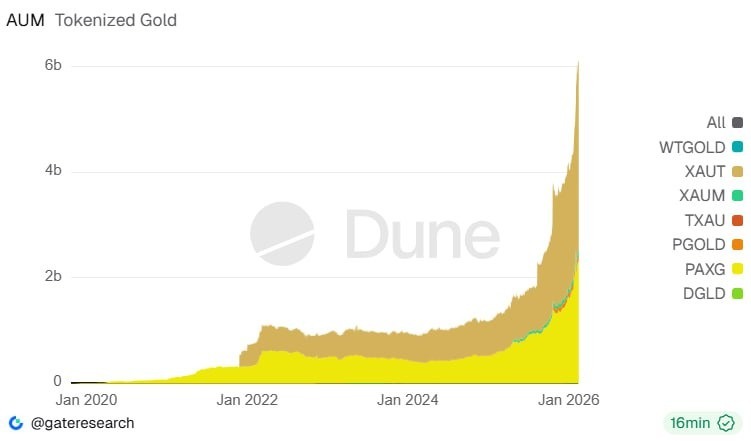
This is worth paying attention to because it represents a slow but steady merger between the oldest store of value in human history and the newest financial infrastructure. Gold is not losing relevance, it is migrating to digital rails.
The Regulatory Battle Over Crypto Is Getting Messy
Treasury Secretary Scott Bessent made a pointed comment this weekend, accusing some crypto companies of deliberately blocking the CLARITY Act, a piece of legislation that would create a clearer legal framework for digital assets. His claim is that certain industry players would rather operate in a legal gray zone than accept rules they do not fully control.
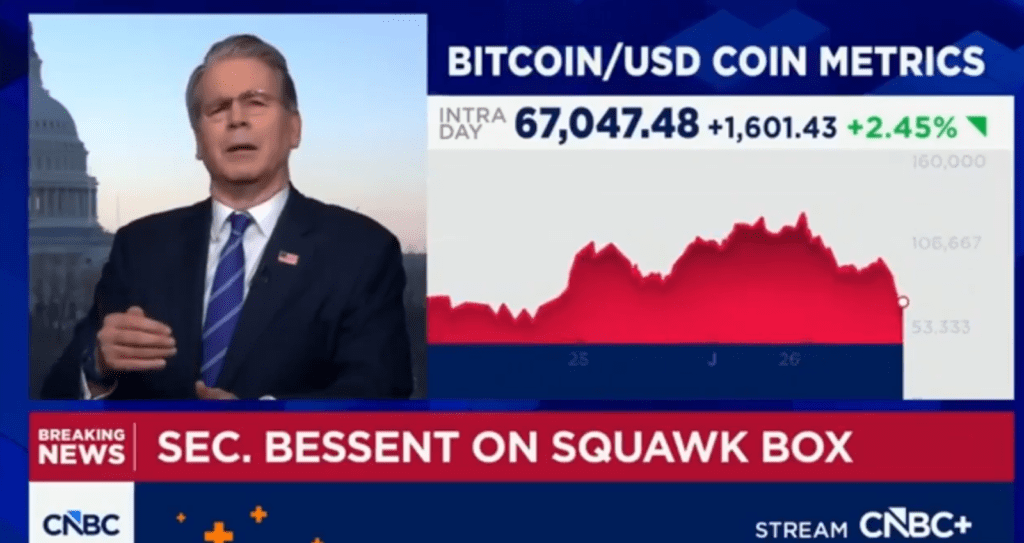
This aligns with what Coinbase CEO Brian Armstrong said publicly: the company prefers no law to a bad law. On the surface, that sounds principled. In practice, it means the industry remains fragmented on how to handle regulation, which leaves everyone, businesses, investors, and users, in ongoing uncertainty. Bessent’s comments signal that the administration is watching this dynamic closely, and the outcome of this standoff will likely define the regulatory landscape for years.
Big Tech Is Borrowing at a Historic Pace to Fund AI
The bond market is flashing a signal that deserves more attention than it is getting. Technology companies now account for 11.8% of all private debt issuance in 2026, the highest share since 1999. That is three times what it was in 2023, and it surpasses even the previous high from 2020 by 4.6 percentage points. The reason is straightforward: AI infrastructure is enormously expensive, and companies are borrowing to build it.
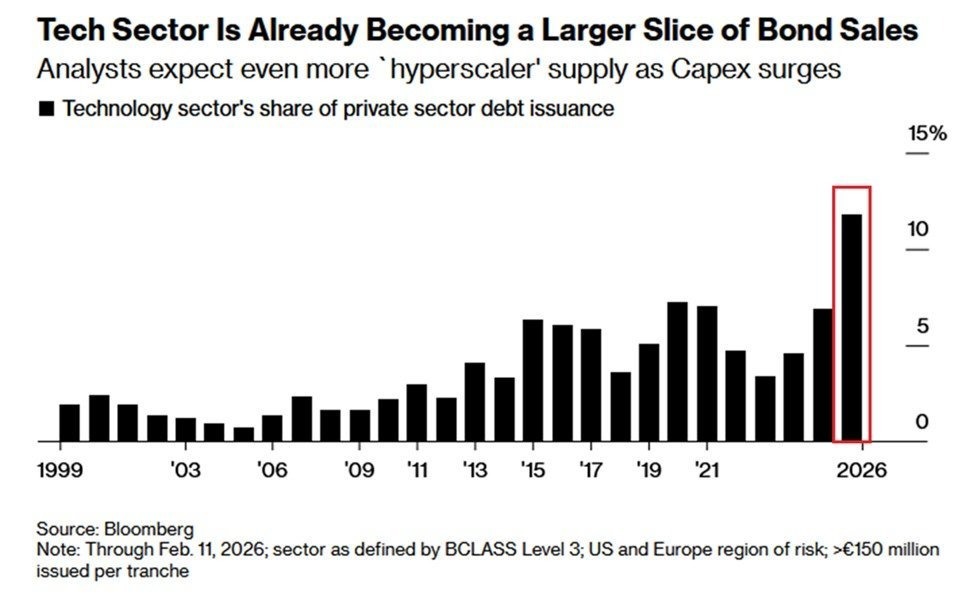
The most eye-catching move came from Alphabet, which issued roughly $33 billion worth of bonds across three markets in a single week. Among those was a 100-year bond, meaning investors are lending to Google’s parent company with a maturity date in 2126. The last time a tech company issued a century bond was Motorola in 1997. It is a rare instrument, and it signals that Alphabet is thinking about its financial footing on a very long time horizon. The broader takeaway is that AI is not just a technology story, it is rapidly becoming one of the defining forces in credit markets.
Polymarket Launches 5-Minute Crypto Prediction Markets
Prediction market platform Polymarket announced the launch of ultra-short-term crypto prediction markets, allowing users to bet on whether a given cryptocurrency will go up or down within a 5-minute window. The feature is powered by Chainlink’s oracle technology, which provides the real-time price data needed to settle these short-duration contracts accurately.
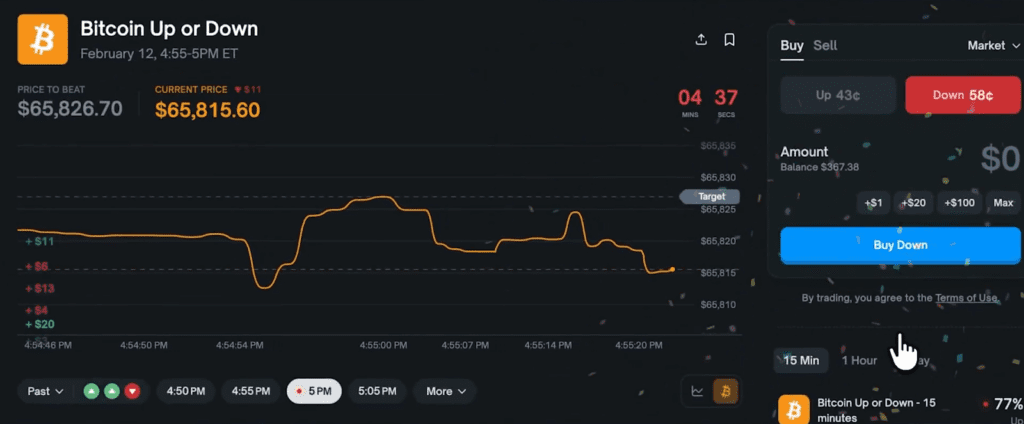
This is a notable development in how speculation and market mechanics interact. Five-minute windows are closer to trading than forecasting, and combining that with the inherently volatile nature of crypto creates a very different product from the longer-horizon political or macro prediction markets Polymarket is known for. Whether this brings in a new kind of user or fundamentally changes the platform’s character remains to be seen.
JPMorgan Says a Weaker Dollar Won’t Kill the Stock Market
With $4 trillion in assets under management, JPMorgan has the kind of weight that makes its statements move markets. This weekend, the bank reassured investors that a weakening US dollar would not derail equity markets. It is a meaningful statement at a moment when dollar weakness is a live concern, partly because of geopolitical realignments and partly because of fiscal pressures at home.
Speaking of fiscal pressures, Treasury Secretary Bessent also issued a warning that the US is “on the verge of another government shutdown.” A shutdown would add another layer of uncertainty to an already complex macro picture, potentially weighing on consumer and business confidence in the short term.
Geopolitics: Everyone Is Playing Their Own Game
The weekend’s geopolitical news was a good reminder that in global politics, alliances are fluid and interests drive decisions. After Russia signaled it might be open to using US dollars and could be heading toward a major trade deal with the United States, China announced it would provide energy aid to Ukraine, limited in scope, but symbolic in timing.

At the same time, China is calling for stronger cooperation with the European Union. The pattern here is a kind of three-dimensional chess: Russia pivoting toward Washington, China hedging by supporting Kyiv and engaging Brussels, and the US navigating all of it simultaneously. No country is simply responding, each is positioning.
OpenAI Picks Up the Founder of OpenClaw
In a notable personnel move, Peter Steinberger, the founder of OpenClaw, widely known online as “ClawdBot”, is joining OpenAI. The announcement drew significant attention online, suggesting Steinberger has a meaningful following within the developer and AI community. No specific role was named in the announcement, but his background in AI tooling makes this a clear signal about where OpenAI is investing its team-building energy.

What’s Coming This Week: Fed Minutes, PCE, and Earnings Season
US markets are closed Monday for Presidents’ Day, which gives everything a slower start to the week. After that, the calendar gets busy fast. The key events to watch are:
- Wednesday, December Durable Goods Orders data + Fed Meeting Minutes
- Friday, December PCE Inflation data
- All week, 10 separate Fed speaker events
- Earnings, approximately 15% of S&P 500 companies report this week
These numbers carry real weight in the context of where the Federal Reserve stands right now. The Fed has been in a holding pattern, waiting to see whether inflation is truly under control before making any moves on interest rates. PCE inflation, Personal Consumption Expenditures, is the Fed’s preferred measure of price changes, which makes Friday’s print especially important.
Here is how the two scenarios break down relative to rate decisions:
- If PCE comes in lower than expected: it supports the case for eventual rate cuts, which would be bullish for risk assets including crypto, growth stocks, and speculative positions broadly.
- If PCE comes in hot: it reinforces the “higher for longer” interest rate environment, which tends to put pressure on leveraged bets, speculative assets, and long-duration growth equities alike.
The Fed minutes on Wednesday will offer a window into how policymakers were actually thinking behind closed doors at their last meeting. Markets will be parsing those minutes for any shift in tone, whether the committee is leaning more cautious or more open to cuts. With 10 Fed speaker events spread throughout the week, there will be no shortage of signals to interpret, and individual comments can move markets meaningfully on their own.
Major Token Unlocks This Week
Aster (ASTER)
Date: Feb 17, 2026
Unlock Value: 57.20M USDT
% of Circulating supply: 3.17%
Number of Tokens: 78.48M ASTER
Yooldo (ESPORTS)
Date: Feb 19, 2026
Unlock Value: 14.52M USDT
% of Circulating supply: 24.85%
Number of Tokens: 37.72M ESPORTS
Arbitrum (ARB)
Date: Feb 16, 2026
Unlock Value: 11.20M USDT
% of Circulating supply: 1.82%
Number of Tokens: 92.65M ARB
YZiY (YZY)
Date: Feb 17, 2026
Unlock Value: 20.60M USDT
% of Circulating supply: 17.24%
Number of Tokens: 62.50M YZY
LayerZero (ZRO)
Date: Feb 20, 2026
Unlock Value: 49.10M USDT
% of Circulating supply: 5.98%
Number of Tokens: 25.71M ZRO
Kaito (KAITO)
Date: Feb 20, 2026
Unlock Value: 10.60M USDT
% of Circulating supply: 10.64%
Number of Tokens: 32.60M KAITO
River (RIVER)
Date: Feb 22, 2026
Unlock Value: 4.60M USDT
% of Circulating supply: 1.82%
Number of Tokens: 356,720 RIVER
Multibank Group (MBG)
Date: Feb 22, 2026
Unlock Value: 8.30M USDT
% of Circulating supply: 10.96%
Number of Tokens: 27.15M MBG
The unlock that stands out most from a supply pressure standpoint is Yooldo (ESPORTS), where nearly a quarter of the entire circulating supply is set to enter the market in one go. YZY is also notable at 17.24%. These are the two most likely to see short-term price impact if holders decide to sell into the unlock.
This article is not financial advice. Always do your own research (DYOR) before making any investment decisions. You can also DYOR on blog.millionero.com, and when you’re ready, trade spot and perpetuals on Millionero.