


The Tariff Mess Got More Complicated
If you were hoping trade policy would get clearer this week, it didn’t. In fact, it got noisier on both ends.
The U.S. Supreme Court reportedly canceled Trump’s “global tariffs,” ruling that the law used to impose them, originally designed for national emergencies, was being stretched too far. That sounds like good news for markets, right? Not quite. Almost immediately, a separate headline emerged saying Trump is preparing to sign an executive order for a 10% global tariff under a different law entirely (Section 122). So while one door closes, another opens.
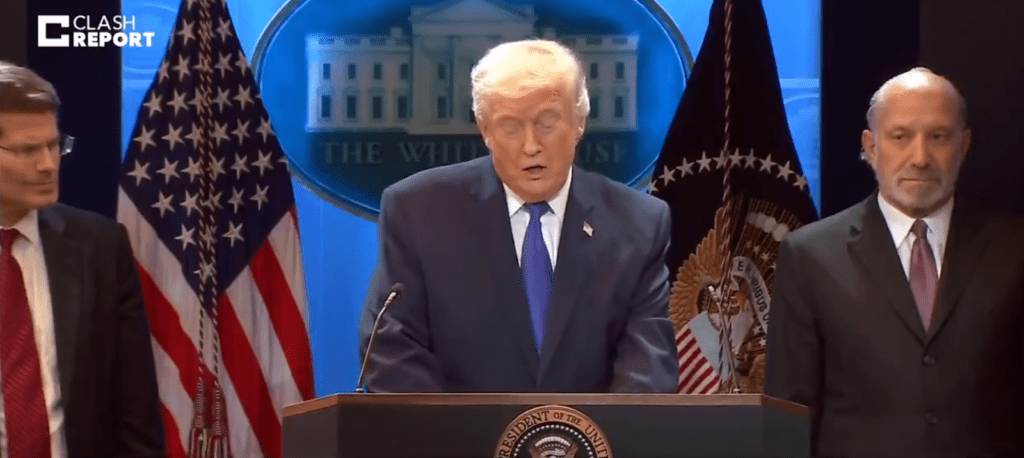
For traders and investors, that back-and-forth creates a specific kind of stress: you can’t plan around policy if the policy keeps shifting every 48 hours. Higher tariffs generally mean higher prices for imported goods, squeezed corporate margins, and slower global trade, all things markets hate.
There was one softer note: an Indian trade official said the U.S. is expected to cut tariffs on India to 18% sometime this week. Even if true, it shows how uneven the picture is becoming, some countries may get easier terms while the global baseline gets harder.
The Middle East Is Back in Focus
Geopolitical risk returned in a big way, and the region at the center of it is the Middle East, specifically Iran.
Reports described unusual U.S. and Israeli military repositioning in the Gulf, including refueling aircraft and stealth fighters moving from Europe toward the region. Analysts compared the scale of the movement to the buildup before the Iraq War, while also noting that no official military action has been announced. Still, markets don’t wait for official announcements. They price in the possibility of disruption as soon as the signs appear.

Trump added a countdown element by saying the U.S. would know within 10 days whether Iran is ready for a “real deal”, and warned that if talks fail, the U.S. might “go a step further.” That kind of language creates deadline-driven tension, where every new headline on Iran can move oil prices, the U.S. dollar, and risk assets.
Meanwhile, Russia, China, and Iran held joint naval drills in the Strait of Hormuz, the narrow passage through which a huge share of the world’s oil flows. Even framed as routine exercises, it sends a signal: the most critical energy chokepoint on the planet is also being used as a stage for geopolitical posturing. Any hint of disruption there, real or perceived, can spike volatility fast.
The Fed: Hikes Aren’t Off the Table
The minutes from the latest Federal Reserve meeting came out this week, and the market read them as cautiously hawkish, meaning, leaning toward keeping rates higher, not cutting them.
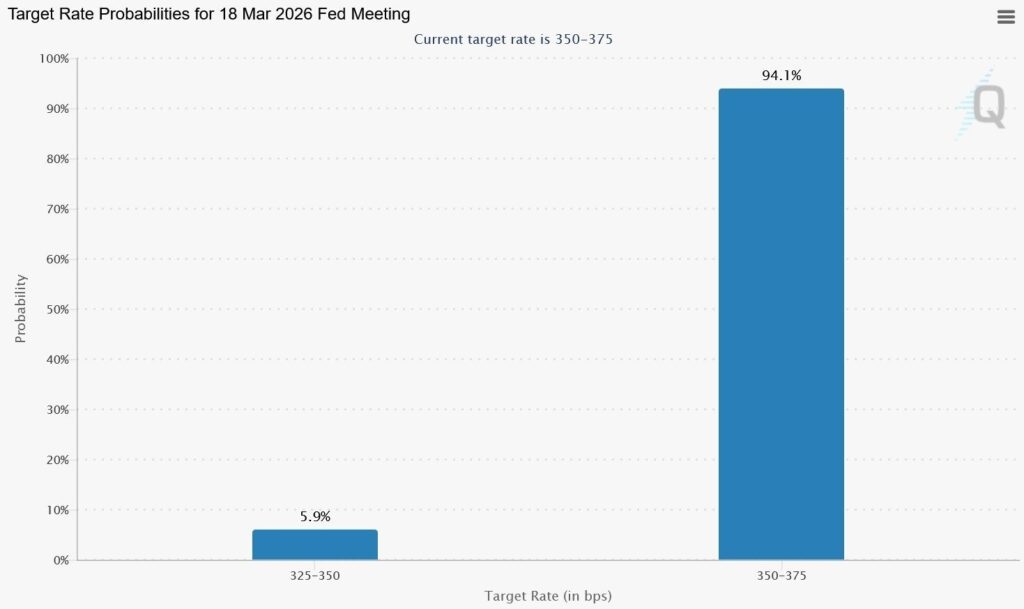
Several Fed officials said they’d be open to raising rates again if inflation doesn’t keep cooling. Some wanted the Fed’s public message to be “two-way,” meaning it should signal that hikes are still possible, not just cuts. That nuance was enough to push the probability of a March rate cut down to its lowest level in over a month.
On top of that, there’s a political subplot building. The White House reportedly wants to fast-track Senate approval for Kevin Warsh as the next Fed Chair, which is making traders think not just about the next data print, but about who will be running monetary policy in the months ahead. Meanwhile, Jamie Dimon publicly said there’s “no chance at all” he’d take the Fed Chair role, though he left the door open for Treasury Secretary, under the right conditions.
Adding to the gloomy backdrop: some analysts called this the worst start to a year in eight years, with rising volatility and falling confidence. The feeling in markets right now is that liquidity is tight and patience is thin.
Crypto Regulation: The CLARITY Act Is Gaining Speed
This was one of the biggest weeks in U.S. crypto policy in a long time, and the story has several moving parts.
The CLARITY Act Could Change Everything
The CLARITY Act is being described not just as a stablecoin bill, but as a full market-structure overhaul for the entire crypto industry. The key idea is ending the long-running turf war between the SEC (which treats most tokens as securities) and the CFTC (which treats them more like commodities). If passed, CLARITY would:
Define a clear category called “Digital Commodity” for sufficiently decentralized tokens, require federal registration for crypto exchanges under clearer rules, introduce the concept of a “Mature Blockchain” as a legal designation, and reduce heavy disclosure burdens for decentralized networks, which would matter a lot for DeFi projects.
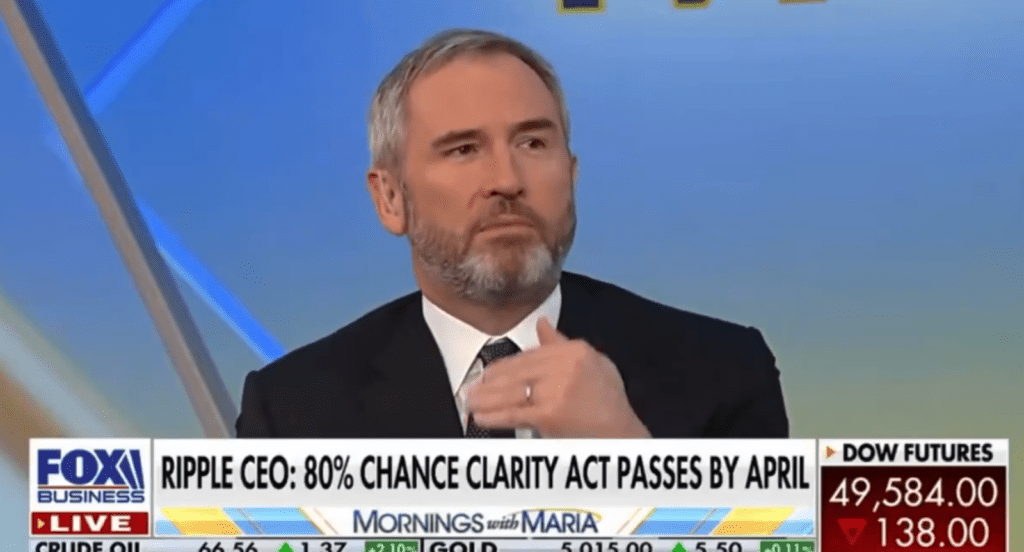
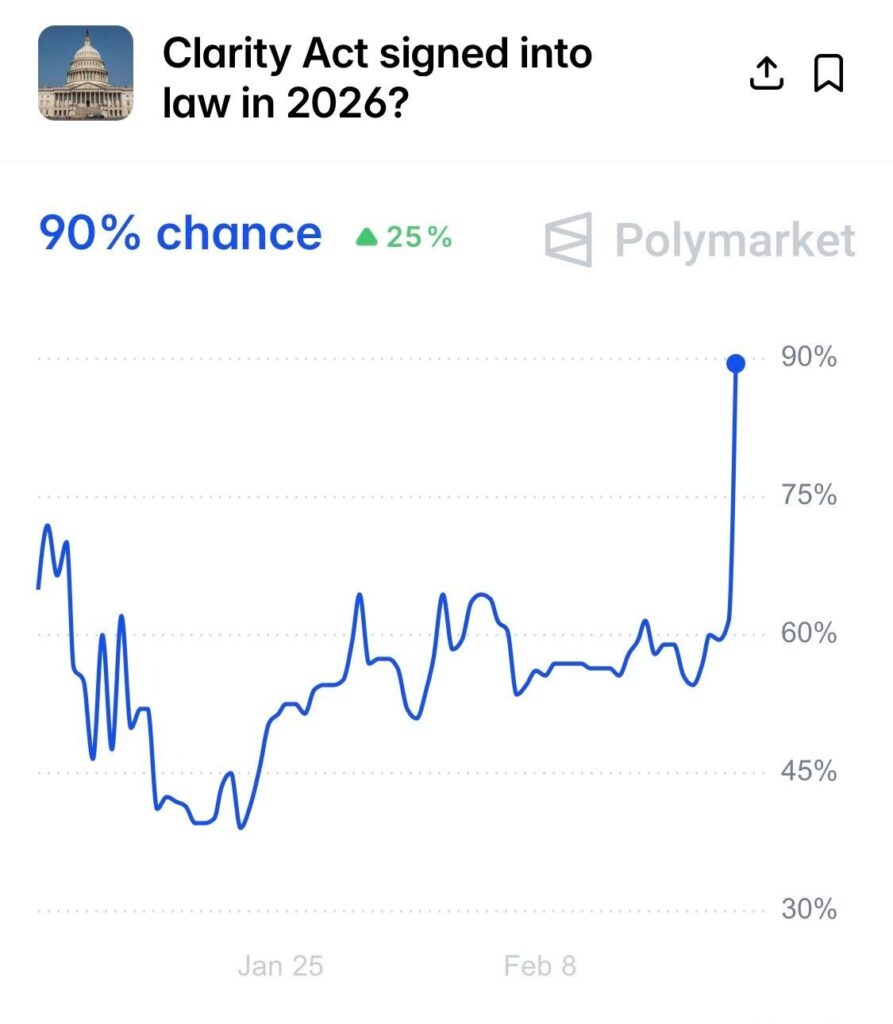
Estimates of CLARITY passing jumped this week from 60% to 90%, according to some observers. Ripple CEO Brad Garlinghouse echoed that optimism, saying he sees a 90% chance a market-structure bill passes by end of April, and that meetings between crypto leaders and the banking sector in Washington are intense right now.
The March 1 Stablecoin Deadline
There’s one bottleneck holding things up: a White House deadline of March 1 to resolve a dispute over whether stablecoins should be allowed to pay interest or rewards to holders. Until that’s settled, CLARITY can’t move forward cleanly. This deadline was flagged as the single most important near-term gating factor for the entire bill.
Interestingly, not everyone in crypto wants the bill to pass. Some firms reportedly prefer no law over a bad law, a stance Brian Armstrong of Coinbase has also taken publicly. The argument is that if the first major regulatory framework gets the structure wrong, it could lock in bad rules for years.
Prediction Markets: A New Turf War
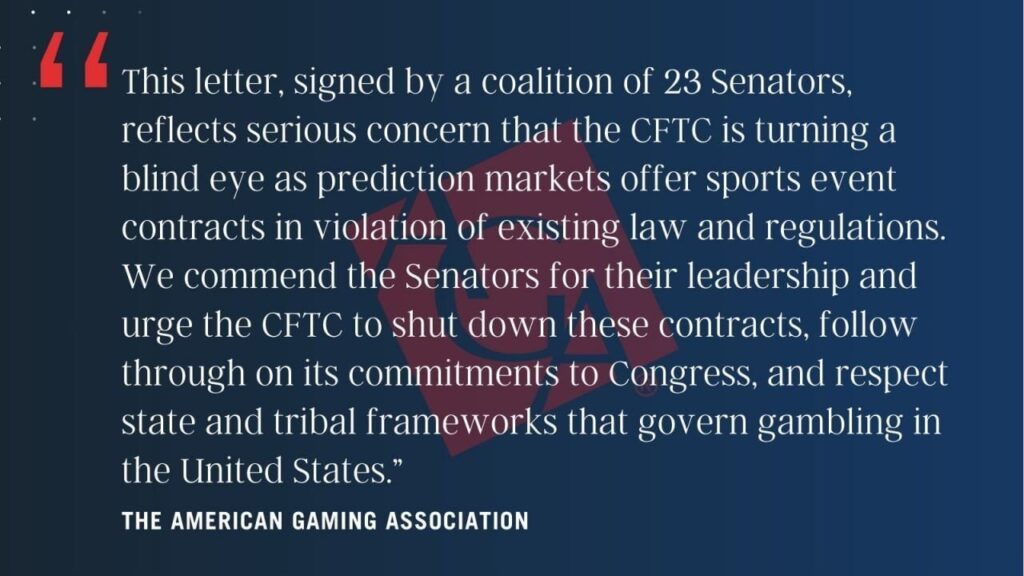
Outside of traditional crypto, there’s a rising battle over prediction markets in the U.S. Former New Jersey Governor Chris Christie and the American Gaming Association have been pushing to restrict or ban them. On the other side, advocates like Michael Selig are fighting back hard. This is essentially old-school betting companies versus tech-based markets, and the outcome will shape how large this sector can get in America.
ETF Outflows and Tighter Liquidity
One of the clearest signs of stress this week was money leaving the market, not slowly, but in large chunks.
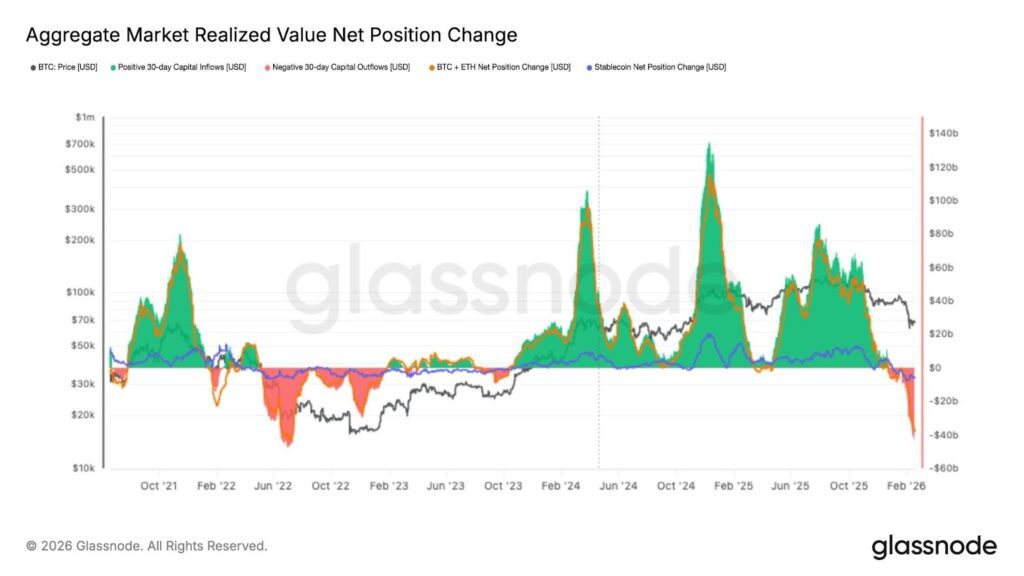
U.S. spot Bitcoin ETFs saw a drop of roughly 100,300 BTC from holdings, the biggest pullback since the October 2024 peak. Glassnode described the broader picture as the largest crypto outflows since 2022, with both Bitcoin and Ethereum positions shrinking. Stablecoin growth also nearly flatlined, which matters because stablecoin growth is usually a sign of fresh money entering the ecosystem. When that stops, prices become more sensitive to any shock.
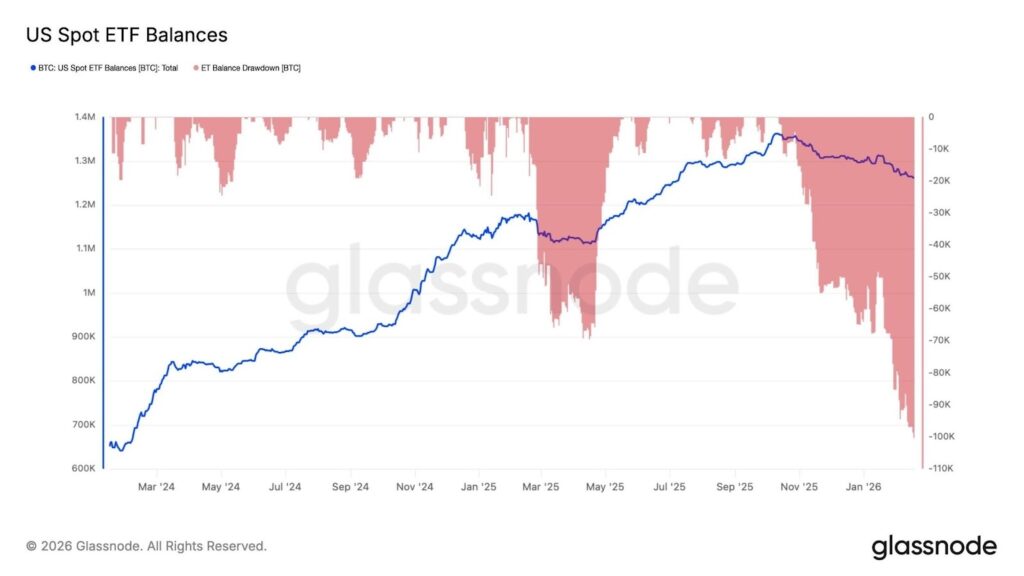
At the same time, short positions are growing crowded. That combination, heavy ETF outflows plus crowded shorts, creates a volatile setup. It can push prices down further if selling continues, or it can trigger a sudden sharp rally if those shorts get squeezed by a surprise move upward.
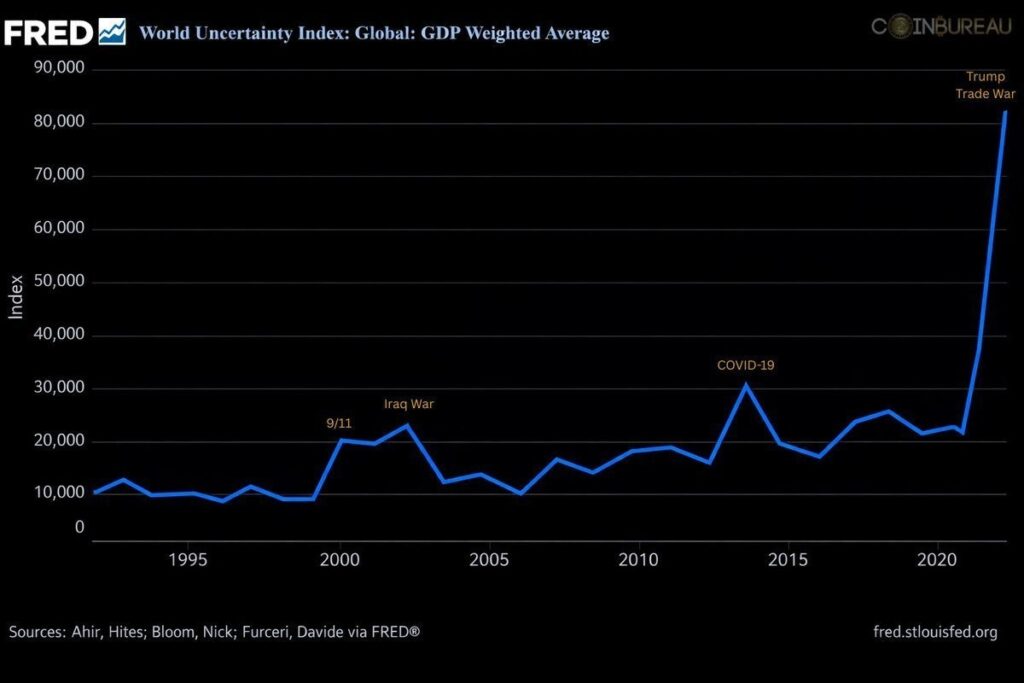
One headline captured the broader mood well: the Global Uncertainty Index reportedly surged to 106,862 in February 2026, higher than during 9/11, the Iraq War, or COVID. When uncertainty is that high, liquidity dries up, narratives shift fast, and forced sellers appear, but so do opportunistic buyers looking for sharp bounces.
Bitcoin: Key Levels, Liquidation Math, and MicroStrategy
Where Bitcoin Could Flip
Short-term Bitcoin holders (people who bought in the last one to three months) are sitting on an average unrealized loss of about -20%. Historically, that level tends to show up near local bottoms, not cycle tops, because it reflects panic among newer buyers whose resolve cracks first.
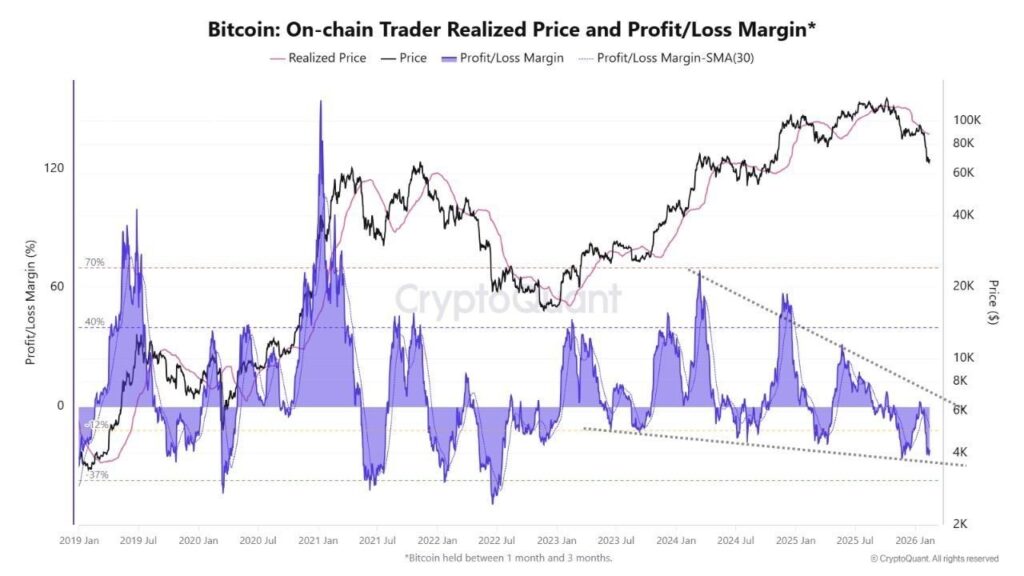
The price level everyone is watching is around $88,000, which is roughly the average cost basis for short-term holders. Staying below it means continued sell pressure. Getting back above it could shift sentiment quickly, and this point was highlighted multiple times in this week’s market commentary, which tells you how seriously it’s being watched.
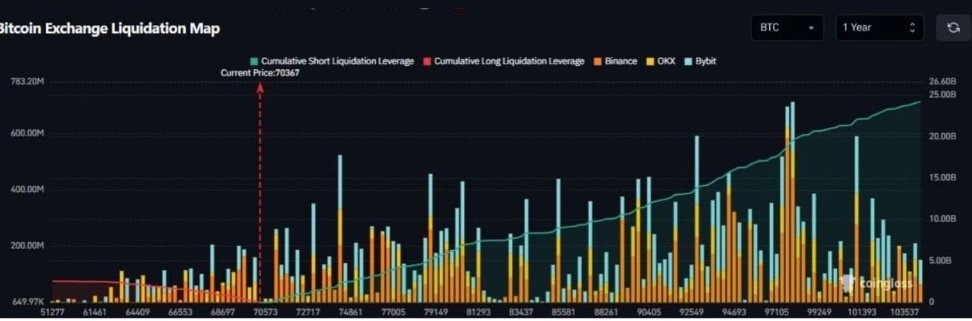
On the derivatives side, a 10% move up in Bitcoin could trigger roughly $4.34 billion in short liquidations, while a 10% move down would trigger about $2.35 billion in long liquidations. The imbalance suggests the short side is more crowded or more leveraged, meaning an upside surprise could be more violent than a downside move.
MicroStrategy Keeps Buying
MicroStrategy (now rebranded “Strategy”) bought another ~$168.4 million in BTC this week, bringing its average cost basis down slightly to $76,027 per coin, the first time its average buy price has dropped since September 2023. The company also announced plans to convert $6 billion in convertible debt into equity over three to six years, aiming to reduce financial pressure even if Bitcoin stays weak.
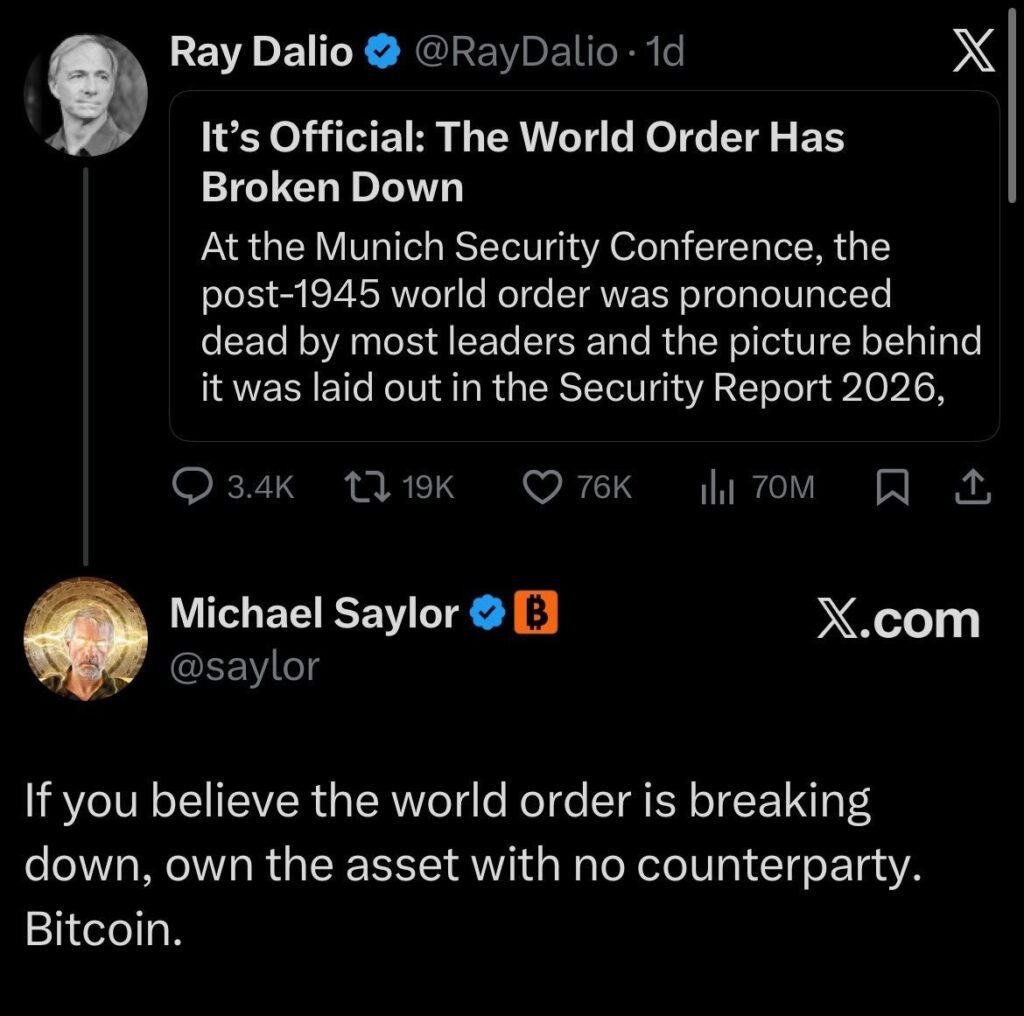
Michael Saylor also went on record telling Ray Dalio that if you believe the global financial system is breaking down, Bitcoin, as an asset with no counterparty, is the logical safe haven.
Ethereum: Institutional Buying and Protocol Upgrades
While Bitcoin was seeing ETF outflows, Ethereum had its own quieter accumulation story developing.
Bitmine, linked to analyst Tom Lee, reportedly bought 10,000 ETH (worth about $19.49 million) directly from Kraken. Separately, Sharplink, backed by Consensys, reportedly holds 867,798 ETH (roughly $1.68 billion), with most of it staked, meaning they’re earning yield on it while holding, which changes how long they’re willing to hold it.

On the protocol side, the Ethereum Foundation laid out its 2026 roadmap across three priorities: Scale (handle more transactions), Improve UX (make it easier for regular users), and Harden the L1 (keep the base layer secure). Two major upgrades are planned: Glamsterdam in the first half of 2026 and Hegotá later in the year.
One detail investors should note: BlackRock’s regulatory filing around an Ethereum fund with staking revealed it could keep up to 18% of staking rewards as fees. That’s not small, it matters when comparing the net yield you’d actually receive versus what the protocol generates.
L2s: Base Breaks Away, OP Token Drops 22%
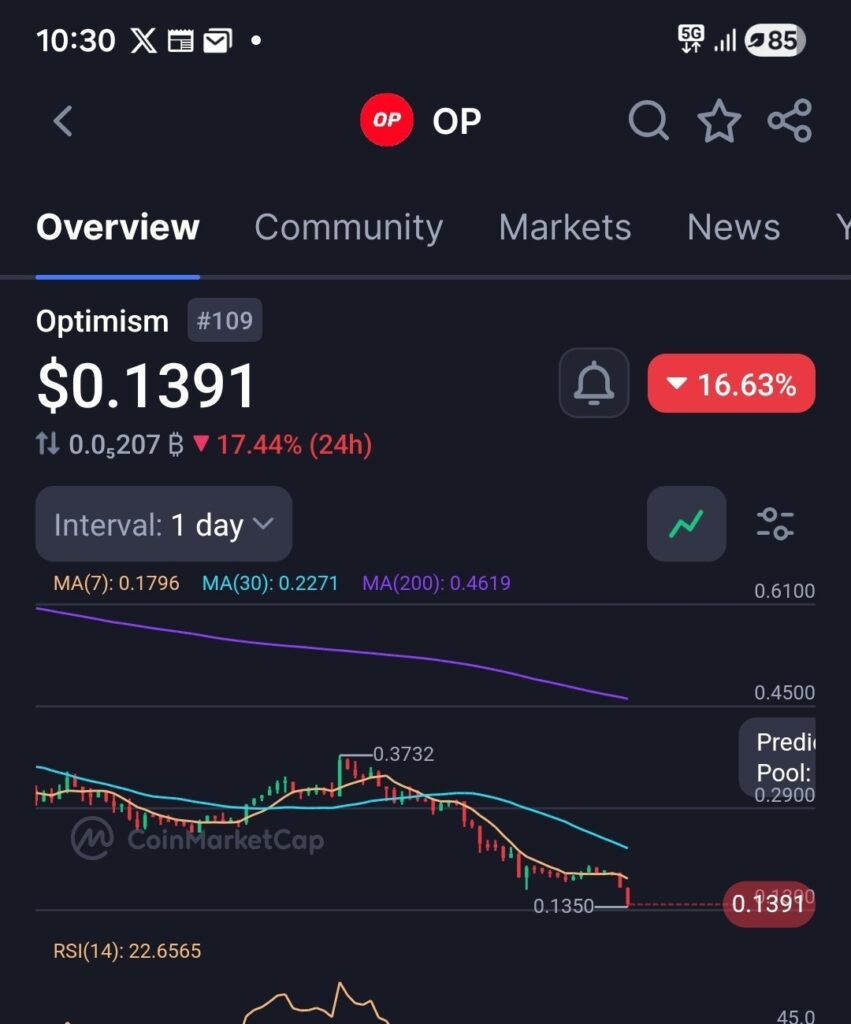
The Ethereum Layer 2 world had a dramatic moment this week. Base, Coinbase’s L2 network, announced it’s moving its infrastructure into its own codebase and asking node operators to follow its official versions. More importantly, it said it plans to gradually move away from the OP Stack (the technology stack built by Optimism), while still treating Optimism as an enterprise client rather than an operational partner.
The market reacted immediately: OP’s token fell more than 22% after the announcement, as investors worried about what Base’s growing independence means for Optimism’s long-term relevance and revenue. One widely-shared commentary noted that while L2s in general have been a mixed investment, Base stands out because of its deep ties to Coinbase, and also that Base has no token, with the focus firmly on building the network itself.
Other Chains: Aptos Goes Deflationary, SUI Gets ETFs
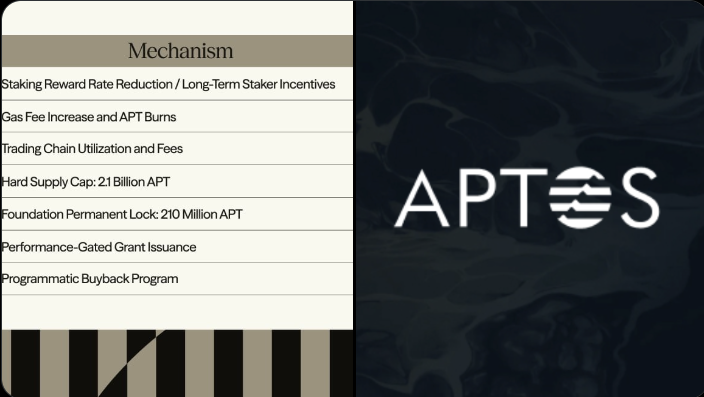
Aptos proposed a major shift in its token economics. The idea is to make $APT deflationary by introducing a hard cap of 2.1 billion tokens, lowering staking reward emissions, permanently locking 210 million coins, and expanding burn mechanisms. If adopted, this would fundamentally change how investors model the token’s long-term supply and value.
SUI reached a milestone for mainstream adoption: Grayscale and Canary Capital launched the first spot SUI ETFs, listed on both Nasdaq and NYSE Arca, with staking included. That combination of regulated access plus yield is exactly the kind of packaging that tends to attract institutional money.
Real-World Assets Are Growing Through the Downturn
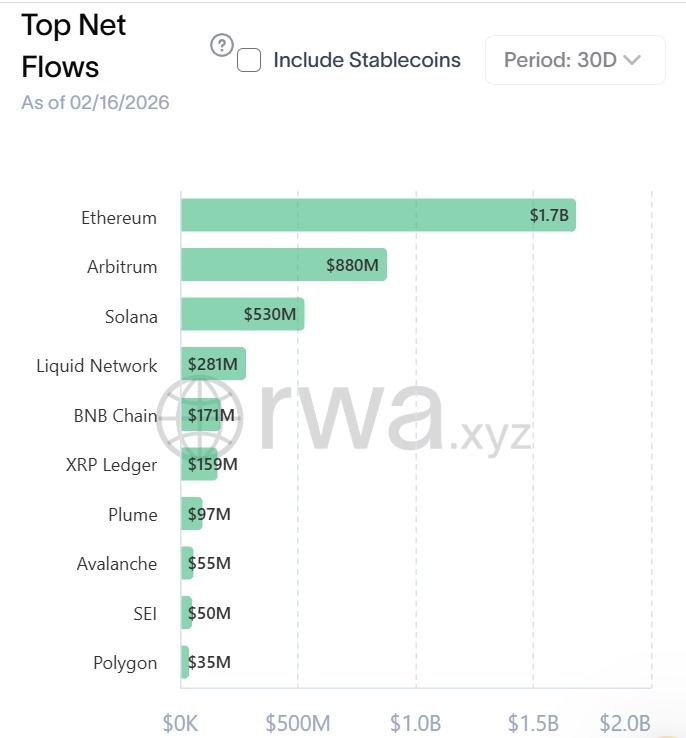
Even as the broader crypto market lost roughly $1 trillion in total value over recent weeks, real-world asset (RWA) tokens bucked the trend, growing 13.5% over the last 30 days. That suggests some capital is rotating toward asset-backed or yield-generating tokens when pure risk assets feel unstable.
Tokenized gold is one of the clearest examples of this. The total market cap for tokenized gold passed $6 billion, adding about $2 billion since the start of the year, with more than 1.2 million ounces of physical gold linked to these tokens. The market is very concentrated though, Tether Gold (XAUT) and Paxos Gold (PAXG) together hold about 96.7% of it. Wintermute also launched a new service this week for institutions to trade tokenized gold, adding another professional-grade entry point to the space.

Sovereign and Institutional Money: Still Present, But Shifting
The institutional picture this week was genuinely mixed, and that’s kind of the point.
Abu Dhabi’s sovereign wealth fund Mubadala raised its stake in BlackRock’s Bitcoin ETF (IBIT) by 46% in Q4 2025, bringing its position to roughly $488 million. Abu Dhabi Investment Council also increased its IBIT exposure. Clear signal: sovereign money isn’t leaving.
But Harvard University cut its IBIT holdings by 21% in Q4, while simultaneously adding about $86.8 million to the iShares Ethereum Trust. Even after trimming, Bitcoin remained Harvard’s largest disclosed crypto position at $265.8 million, so it’s a rotation, not an exit.
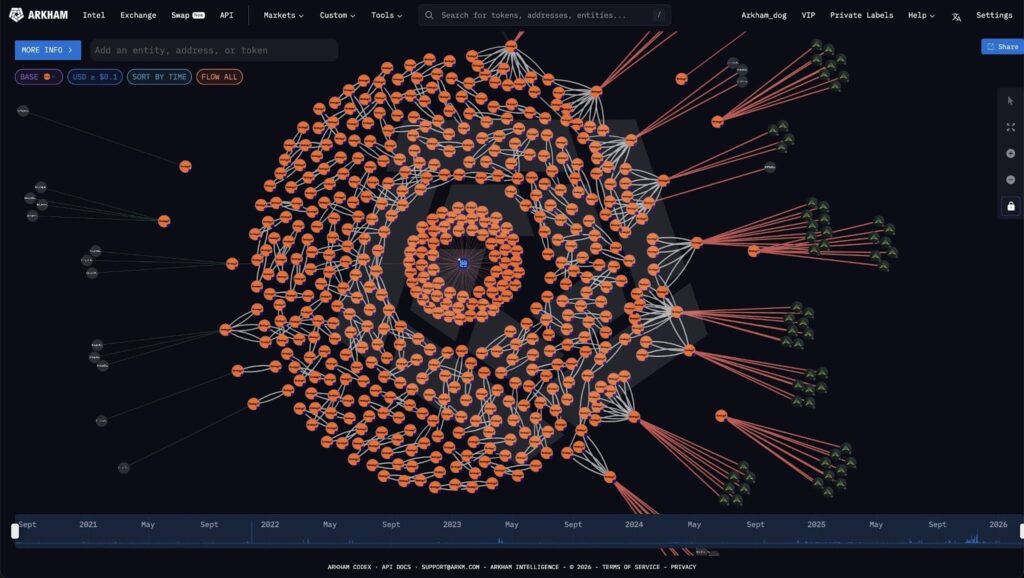
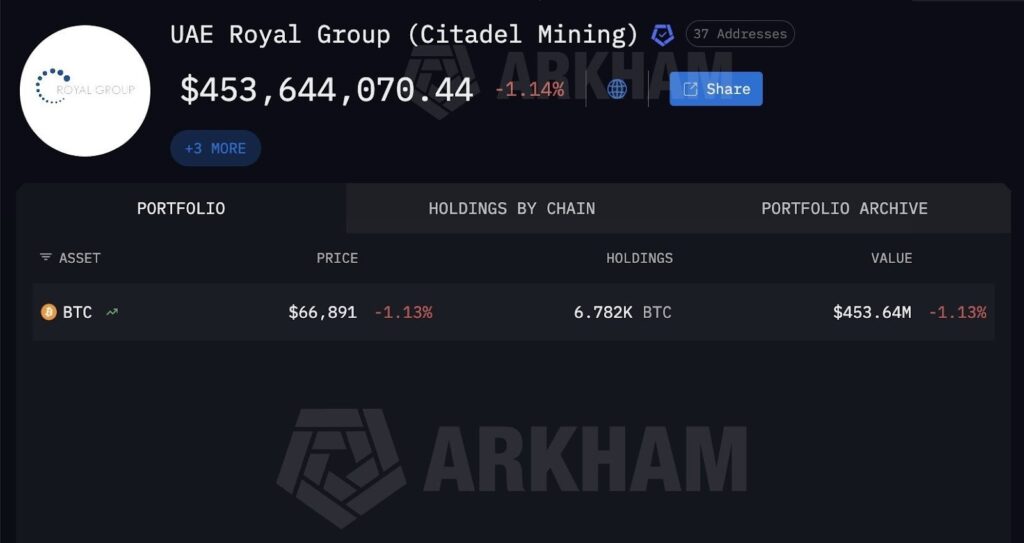
The most striking headline of the week: Arkham data suggested the UAE mined approximately $453.6 million in BTC through partnerships with firms including Citadel, and appears to be holding most of what it produces. Estimated profit (excluding energy costs) was around $344 million. Whether you read that as strategic reserve accumulation or industrial mining monetization, the message is the same: some of the world’s largest capital pools are treating Bitcoin like long-term inventory.
Tech and the AI Spending Wave
Markets are watching NVIDIA earnings on February 25 very closely, with $1.46 GAAP EPS as the key threshold. AI optimism has driven a lot of the market’s gains, but actual earnings are what validate (or deflate) that story.
On the macro side, David Sacks made a bullish case for the U.S. economy this week, citing GDP above 4% in Q3 and 5% in Q4, 172,000 jobs added in January versus a 70,000 expectation, and unemployment down to 4.3%. He attributed much of the strength to AI-driven capital spending, estimating the top four hyperscalers could collectively spend around $600 billion this year on infrastructure. If true, that supports a risk-on case, unless tariffs and interest rates undercut it.
Security Warning: Watch Out for Fake Hardware Wallet Mail
A practical reminder that has nothing to do with macro but everything to do with protecting yourself: scammers are now sending physical mail designed to look like official communications from hardware wallet companies like Trezor and Ledger. The letters include QR codes that link to phishing sites built to steal your seed phrase.
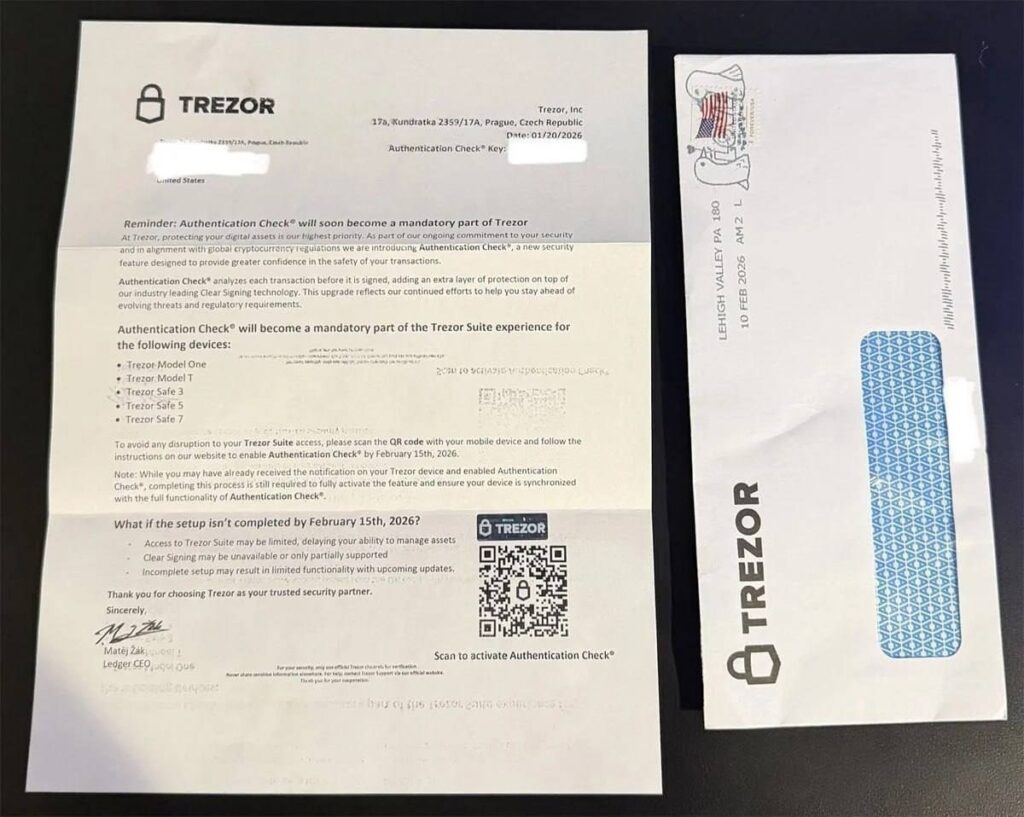
The rule is simple and unchanging: no legitimate wallet company will ever ask for your recovery phrase. Any request to enter it anywhere, physical mail, email, QR code, or website, is an attack. Ignore it and report it.
Two Big-Picture Perspectives to Close the Week
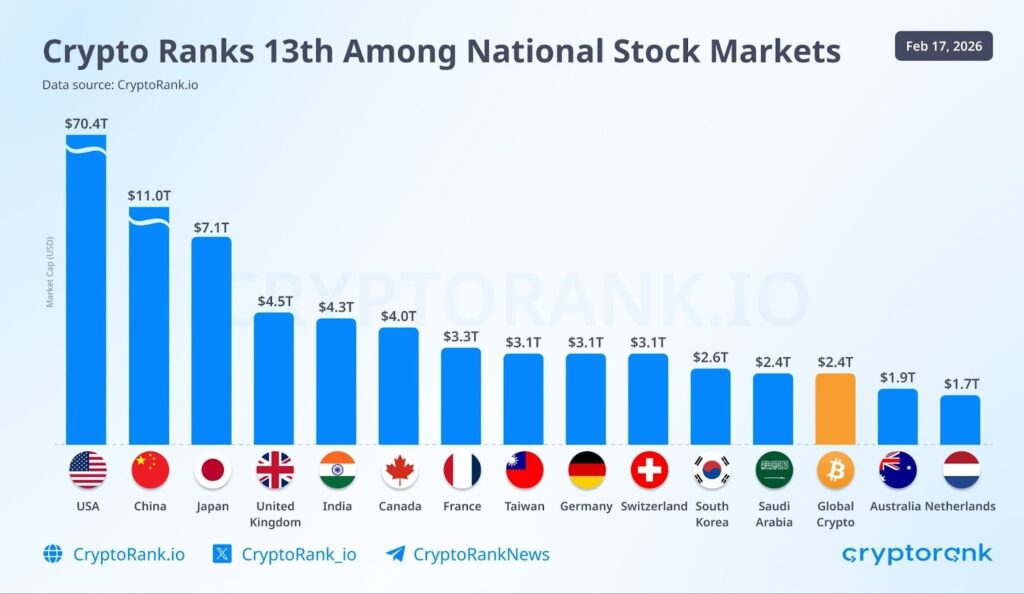
First, a sense of scale: if crypto were its own independent stock market, it would rank roughly 13th in the world by size. That’s big enough to matter and attract serious capital, but small enough to get moved around significantly by liquidity waves, which is exactly what we’re seeing right now.
Second, a counterintuitive data point from the DeFiLlama founder: projects with real product-market fit (over $10 million in TVL or $1 million in monthly fees) that chose to launch a token had a 50% higher failure rate than comparable projects that didn’t. The lesson isn’t that tokens are bad, but that launching one before you need to can introduce financial pressure, regulatory risk, and distraction that kills otherwise healthy projects.
The Bottom Line
This week’s overall mood can be summed up in three phrases: tighter liquidity, louder politics, and faster narrative swings. Institutional money is moving in contradictory directions at the same time. Regulatory clarity is close but still not here. Geopolitical risk is rising on a countdown clock. And the market’s positioning, crowded shorts, weak hands sitting on losses, and drying stablecoin inflows, means the next major move could be sharp in either direction.
In environments like this, the winners tend to be people who manage their risk well and stay close to the data, not the headlines.
This weekly recap is for information only and is not financial advice. Crypto markets are volatile, do your own research and manage risk. If you trade, use proper position sizing and stop-loss rules. Trade spot and perpetuals on Millionero if you choose, and never risk more than you can afford to lose.