



The new week is starting with markets still trying to digest a very heavy weekend. The biggest story was the combination of war, oil, shipping risk, and then the way Bitcoin and risk assets reacted once futures reopened.
Over the weekend, the focus stayed on Iran, the Strait of Hormuz, and Kharg Island. Kharg Island matters because it handles the vast majority of Iran’s crude exports, and fresh reporting on Monday said the Trump administration is trying to build an international coalition to reopen the Strait of Hormuz while also considering stronger action around Kharg Island. Reuters, citing Axios and other reporting, said Trump is pressing allies and major energy-consuming countries to help secure the waterway. Reuters also reported that Japan is not yet planning an escort mission, which shows that coalition-building may be harder than Washington wants.
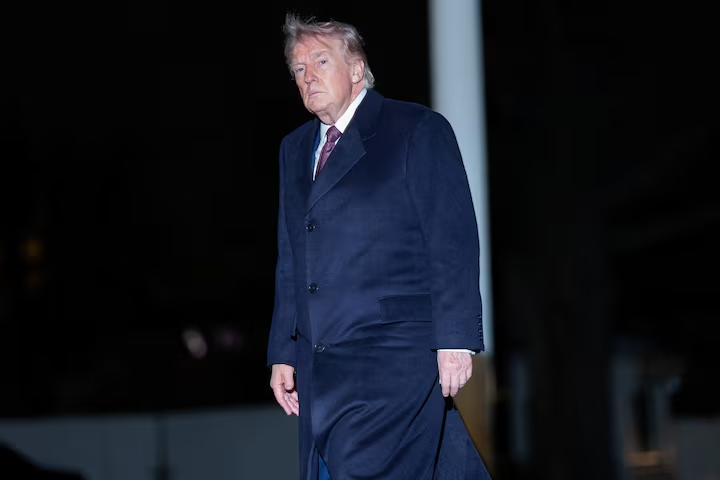
U.S. President Donald Trump walks as he arrives back at the White House in Washington, D.C., U.S., March 15, 2026. REUTERS/Aaron Schwartz
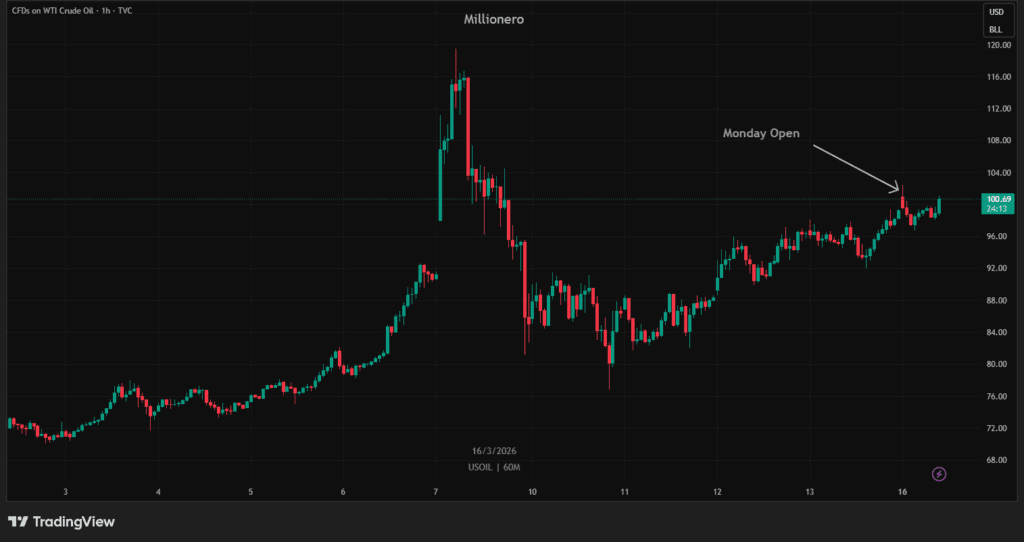
That is why oil immediately became the market’s first signal. U.S. oil opened above $100 a barrel as futures reacted to the weekend escalation, after Kharg Island again became central to the market narrative and shipping through Hormuz remained under pressure. The Strait handles roughly one-fifth of global oil and LNG flows, so even the threat of disruption is enough to hit inflation expectations, growth expectations, and risk appetite at the same time.
The war story spread far beyond oil
The geopolitical headlines came in layers.
Trump said the U.S. helped NATO with Ukraine, so NATO should now help the U.S. with Iran. Reuters separately reported that he warned allies that failing to help secure Hormuz would be “very bad” for NATO’s future. At the same time, reports said the White House plans to announce a coalition of countries to escort ships through the Strait of Hormuz, even though no broad public commitment has really taken shape yet.
Another major weekend talking point was Trump’s language around Kharg Island. The island has become one of the most sensitive oil-related pressure points in the conflict because it has historically handled around 90% of Iran’s crude exports. That is why every new report around Kharg now feels like a direct macro headline, not just a war headline.
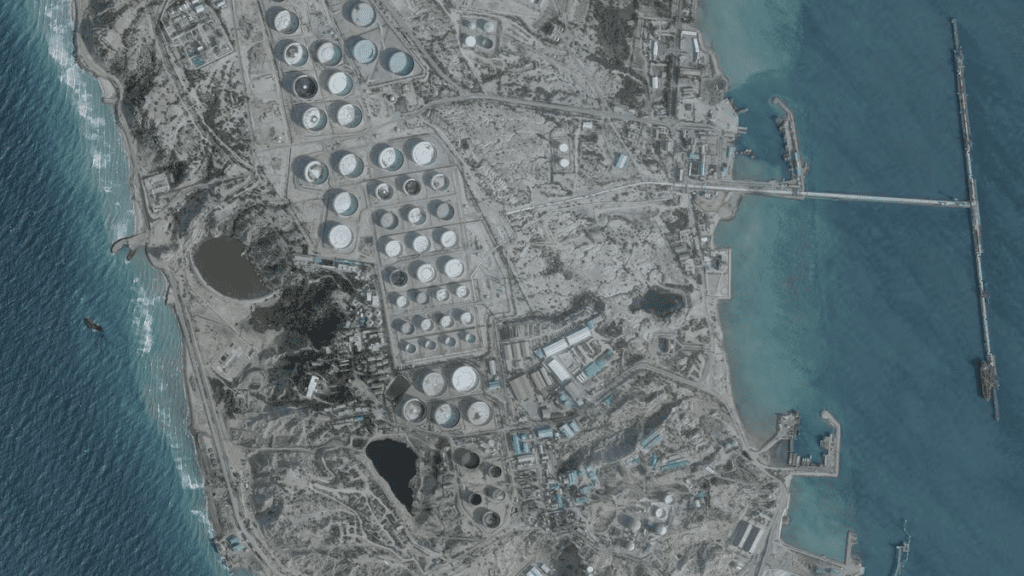
Kharg Island, Iran
At the same time, there were also claims that Tehran was signaling the Strait was open to every country except the U.S. and Israel. If that line holds, it matters because it could allow large buyers such as China and India to bring back a meaningful part of the oil supply currently stuck offline. That would be one of the few clear bearish factors for oil in the middle of all this chaos. For now, though, markets are still trading the disruption risk first.
There were also political fractures around the conflict. Italy publicly distanced itself from U.S. war participation, while Iran laid out very hard conditions for ending the war, including full compensation and a full U.S. military withdrawal from the Gulf. That tells you the diplomatic path still looks extremely difficult. Meanwhile, a federal judge blocking the Trump administration’s subpoenas to Jerome Powell added another layer of tension between the White House and the Fed just days before a rate decision.
Bitcoin climbed anyway
In the middle of all of this, Bitcoin still pushed higher.
It first moved above $73,000 as U.S. stock futures turned green, and then later rose above $74,000, its highest level since February 4. That move tells us something important: Bitcoin is still reacting to macro stress in a more complicated way than a simple “risk-on” or “risk-off” asset. It sold off hard during the earlier panic, but once the weekend flow turned into a mix of war hedging, oil volatility, and expectations that the Fed would not tighten into a fragile environment, Bitcoin found buyers again.
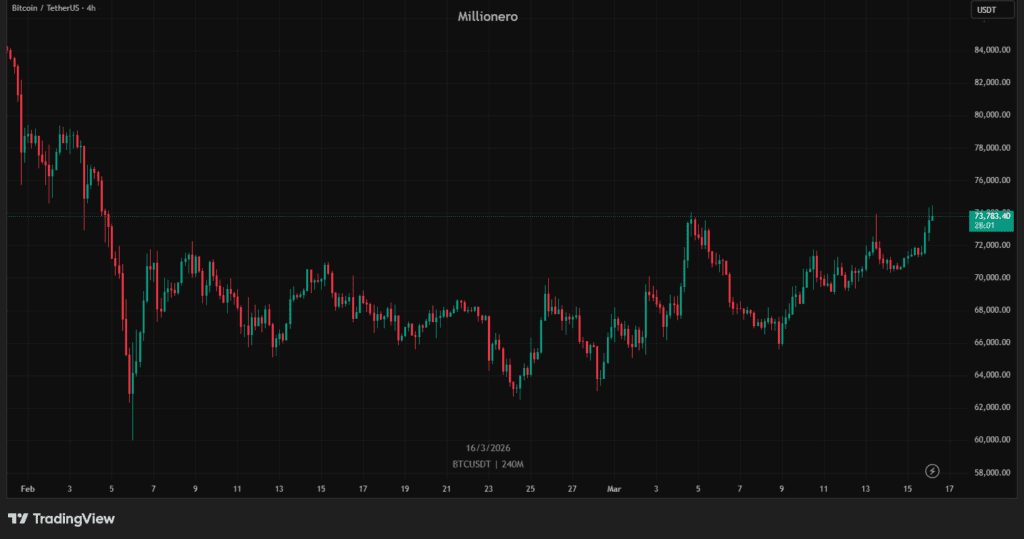
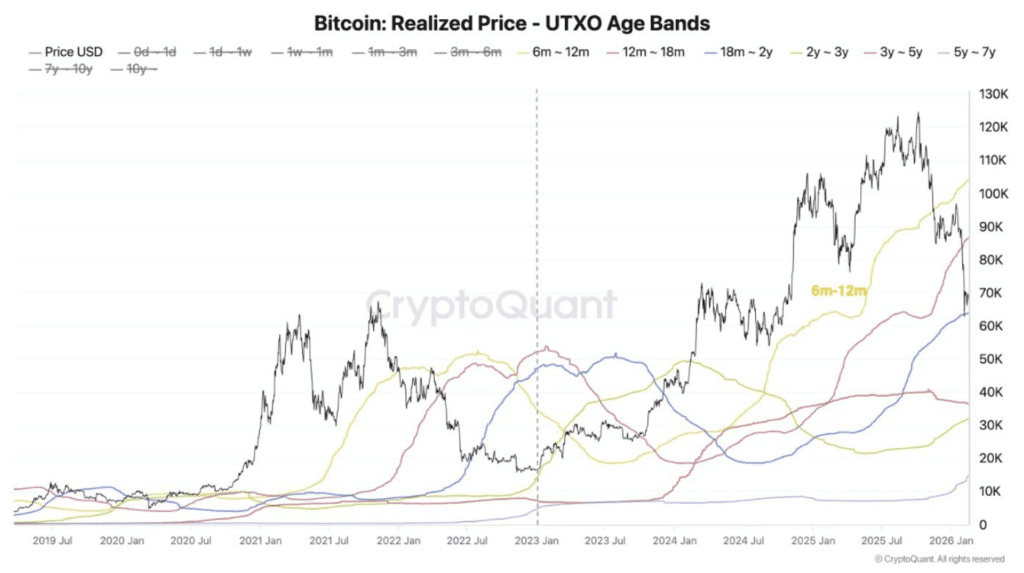
There was also a more cautious on-chain view over the weekend. CryptoQuant’s message was basically that Bitcoin may have entered a fair-value zone for gradual long-term accumulation, but a true structural bottom still has not clearly formed. In simple terms, that means some analysts see value here, but they do not yet think the market has fully completed a classic bottoming process. The range being discussed was roughly $60,000 to $70,000, which helps explain why every move above that area is being watched so closely.
Crypto did not escape the regional shock
The war was not only a macro problem. It also started hitting the crypto industry directly.
Dubai was supposed to host major crypto gatherings, but the conflict disrupted that too. Reuters reported that TOKEN2049 Dubai was postponed because of the regional security situation, and TON’s Gateway Dubai event was also canceled. That is important because Dubai has been one of the biggest physical hubs for crypto conferences, founders, funds, and exchange executives. The message from the weekend was clear: war does not only move prices, it can also interrupt the industry’s real-world infrastructure. (Reuters)
There were also some notable crypto-specific developments:
- The Ethereum Foundation completed an OTC sale of 5,000 ETH to BitMine at an average price around $2,042.

- Stanley Druckenmiller said he believes the global payments system could run fully on stablecoins within 15 years, which kept the long-term digital dollar and tokenized payments story alive.
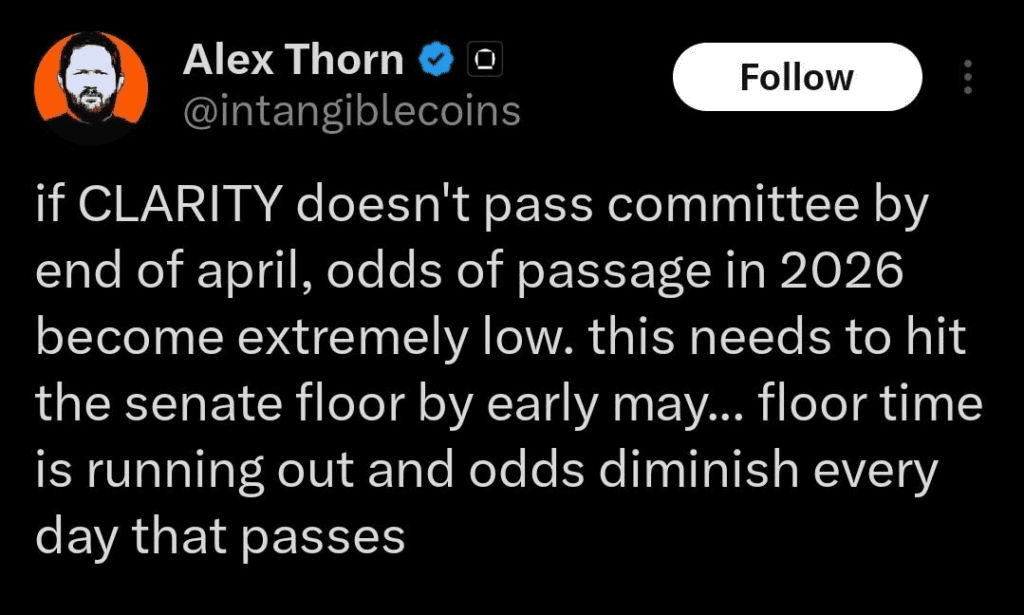
- Alex Thorn warned that the CLARITY Act could effectively die this year if it does not get out of committee before April, which matters for the U.S. crypto regulatory outlook.
So even as traders watched candles and oil futures, the weekend also reminded the market that crypto still sits inside much bigger policy, legal, and geopolitical systems.
Stocks, software debt, and AI pressure
Outside crypto, the weekend flow also brought a more fragile picture for equities.
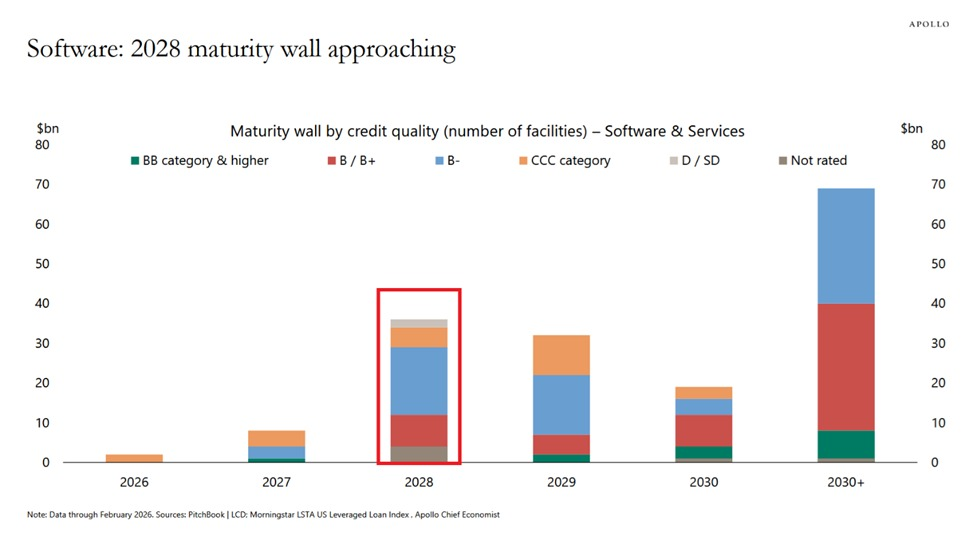
One warning came from the software sector. A large debt wall is approaching over the next few years, with a big concentration in 2028 and much of it rated deep in junk territory. That matters more now because rates remain high, refinancing is harder, and AI disruption is creating new pressure on the same companies that private credit had been lending to aggressively. It is not today’s crisis, but it is becoming a background risk.
Then there was the Meta story. Reuters reported that Meta is considering layoffs that could affect 20% or more of the company as it tries to offset expensive AI infrastructure bets. That shows a bigger pattern across tech: AI is still the growth narrative, but it is also becoming a cost and margin story.
Goldman Sachs also warned that the S&P 500 could fall toward 6,300 if growth weakens, which fits the broader market mood. Higher oil does not just hit inflation. It can also hit consumer spending, margins, sentiment, and therefore equity multiples.
The Fed is the next giant test
Now the market moves from weekend shock into policy week.
The Federal Reserve’s next meeting is on March 17–18, with the statement and Powell press conference due on Wednesday. Polymarket is pricing no change as essentially a certainty, at about 100%. Official Fed calendars also confirm this is one of the meetings tied to new projections, which means traders will watch not only the rate decision, but also the tone of the statement, the dot plot, and Powell’s language around inflation and growth.
This is where the week becomes tricky.
Normally, softer growth data would support the case for rate cuts. But oil above $100 complicates that. Higher energy prices can push inflation expectations up again, and that makes it harder for Powell to sound comfortably dovish. Reuters reported that both Goldman Sachs and Barclays have already pushed back their rate-cut calls because the Middle East war has increased inflation risks.
So the Fed is walking into a bad mix:
growth concerns on one side, oil-driven inflation risk on the other.
That is why this week’s U.S. data matters so much.
What the market is watching this week
Monday
Markets react to the U.S. strikes on Kharg Island and the wider weekend escalation.
Tuesday
Pending home sales for February.
Wednesday
Producer Price Index (PPI) for February, then the Fed rate decision, statement, projections, and Powell press conference. The BLS calendar lists the PPI release for Wednesday morning, and the Fed calendar shows the decision and press conference later that day.
Thursday
Philadelphia Fed manufacturing data and new home sales. The Census Bureau says the January 2026 new home sales release was rescheduled for March 19.
The big question is not really whether the Fed moves this week. It almost certainly does not. The real question is how Powell describes the balance between slowing growth and renewed inflation pressure from oil. If he leans too cautious on inflation, risk assets could struggle. If he leaves the door too open for cuts, markets may wonder whether the Fed is underestimating the inflation side of the war shock.
Token unlocks
Arbitrum (ARB)
Date: March 16, 2026
Unlock Value: 9.61M USDT
% of Circulating supply: 0.93%
Number of Tokens: 92.63M ARB
Aster (ASTER)
Date: March 17, 2026
Unlock Value: 56.53M USDT
% of Circulating supply: 0.98%
Number of Tokens: 78.41M ASTER
Cronos (CRO)
Date: March 17, 2026
Unlock Value: 90.67M USDT
% of Circulating supply: 1.17%
Number of Tokens: 1.16B CRO
Lombard (BARD)
Date: March 18, 2026
Unlock Value: 12.2M USDT
% of Circulating supply: 1.14%
Number of Tokens: 11.35M BARD
ZKsync (ZK)
Date: March 19, 2026
Unlock Value: 3.38M USDT
% of Circulating supply: 0.83%
Number of Tokens: 173.41M ZK
LayerZero (ZRO)
Date: March 20, 2026
Unlock Value: 53.10M USDT
% of Circulating supply: 2.47%
Number of Tokens: 24.68M ZRO
KAITO (KAITO)
Date: March 20, 2026
Unlock Value: 6.51M USDT
% of Circulating supply: 1.76%
Number of Tokens: 17.60M KAITO
SPACE ID (ID)
Date: March 22, 2026
Unlock Value: 3.05M USDT
% of Circulating supply: 3.63%
Number of Tokens: 72.65M ID
In short, this week begins with war risk, oil risk, and Fed risk all stacked on top of each other. Bitcoin’s rebound above $74,000 shows that crypto still has room to move higher even in a messy macro environment, but the next leg will depend heavily on whether oil keeps climbing, whether the Hormuz situation calms down, and whether Powell sounds patient, worried, or boxed in.
This article is for informational purposes only and does not constitute financial advice. Always do your own research before making any investment decisions. You can also explore more market insights on blog.millionero.com. When you are ready, you can trade spot and perpetuals on Millionero.