



Bitcoin is walking into one of those market moments where two very different worlds crash into each other at the same time. On one side, nearly $15B in Bitcoin options are set to expire on Deribit on Friday at 8:00 UTC. On the other side, the five-day diplomatic window tied to US President Donald Trump’s delay of possible strikes on Iranian power plants is ending almost at the same time.
Most retail traders will look at this setup and stop at the headline: big expiry equals volatility. That is only half the story. The bigger issue is that Bitcoin is not dealing with just one catalyst. It is dealing with an options event that can pull price in the short run, while a geopolitical headline can hit from the side and break that mechanical flow in seconds.
That is why this is not a clean “max pain” story. It is a collision between dealer hedging, weak but still present spot demand, slowing U.S. ETF flows, negative U.S. exchange premium, and a macro tape that is moving with every Iran headline.
The expiry is huge, but the number alone does not tell the full story
Deribit is set to settle about $14.16 billion in Bitcoin options on Friday, which is close to 40% of the exchange’s total BTC open interest. Across the broader market, total Bitcoin open interest has climbed to about $112 billion, according to Coinglass data.
That sounds massive, and it is. But normal retail usually misses one important point: notional value is not the same thing as one-way market pressure. A $14 billion options expiry does not mean $14 billion of real spot buying or selling has to happen. What matters more is where the open interest sits, who is short options, who is long them, and how dealers hedge as price moves into settlement.
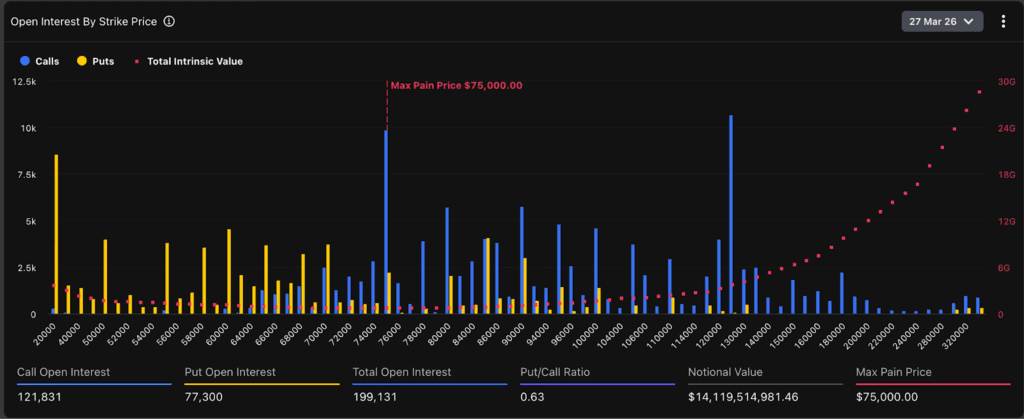
Right now, the key number is the so-called max pain level near $75,000. That is the strike where the largest share of options would expire worthless. Bitcoin has been trading near $70,000 to $71,000, which leaves a noticeable gap between spot and that strike.
Why $75,000 matters even if it does not hold after Friday
The market can get pinned before it gets free again
Max pain gets talked about too casually online, like it is some magic magnet that always works. It is not. But it does matter when the expiry is this large and market makers are actively hedging around it.
Deribit executives say the $75,000 level could act like a pull on price because market makers often buy or sell spot and futures as they try to stay neutral. If enough hedging flow builds in that direction, Bitcoin can drift toward the strike even without a fresh wave of real conviction buying.
That is the part retail usually sees too late. A move toward $75,000 into expiry would not automatically mean the market has turned fully bullish. It could just mean the options market is forcing price into a temporary zone.
After settlement, the market can behave very differently
The more important move may come after the contracts are gone. Nexo analyst Iliya Kalchev told Decrypt that the bigger question is what happens once the options overhang clears. That matters because expiry can keep price boxed in, but once that pressure is removed, Bitcoin often starts trading on the next real driver.
That next real driver this time is not hidden. It is the Iran headline risk hanging over the weekend.
The Iran deadline is the wild card most crypto traders still underprice
Bitcoin’s recent move back toward $71,000 came after Trump delayed possible strikes on Iranian power plants for five days. That pause helped calm the market for a moment. Oil cooled off, stocks found some footing, and Bitcoin bounced with the rest of the risk complex.
But the deadline now lands almost on top of the options settlement window. That creates a nasty setup. If talks look real, the expiry could pass in an orderly way and let Bitcoin breathe higher after the event. If talks break down, the options expiry stops being the main story and turns into dry wood sitting next to a spark.
Oil, the dollar, and risk assets are all part of this Bitcoin story
Retail crypto traders often talk about Bitcoin like it trades in its own world. Right now it clearly does not. Earlier this month, Brent crude hitting $114 while Oman crude pushed toward $150 as the conflict heated up. The Fed held rates steady, which helped the U.S. dollar and added pressure to risk assets.
That mix matters because higher oil can feed inflation fear, a stronger dollar can weigh on risk trades, and thinner weekend liquidity can make any late headline hit harder. In simple terms: if energy jumps and the dollar stays firm, Bitcoin has a harder time acting like a clean safe haven.
This is one of the biggest blind spots for retail. A lot of traders will stare at crypto charts while the real clue may be in crude oil, the dollar, and equity futures.
Under the surface, Bitcoin demand is holding up, but it is not clean strength
This is where the setup gets tricky. Bitcoin has actually shown real resilience. It has kept finding buyers around the $70,000 area even with war risk, oil swings, and fading hopes for Fed cuts.
That sounds bullish, and partly it is. But the demand picture is more mixed than it looks on the front page.
U.S. spot demand is softer than the price action suggests
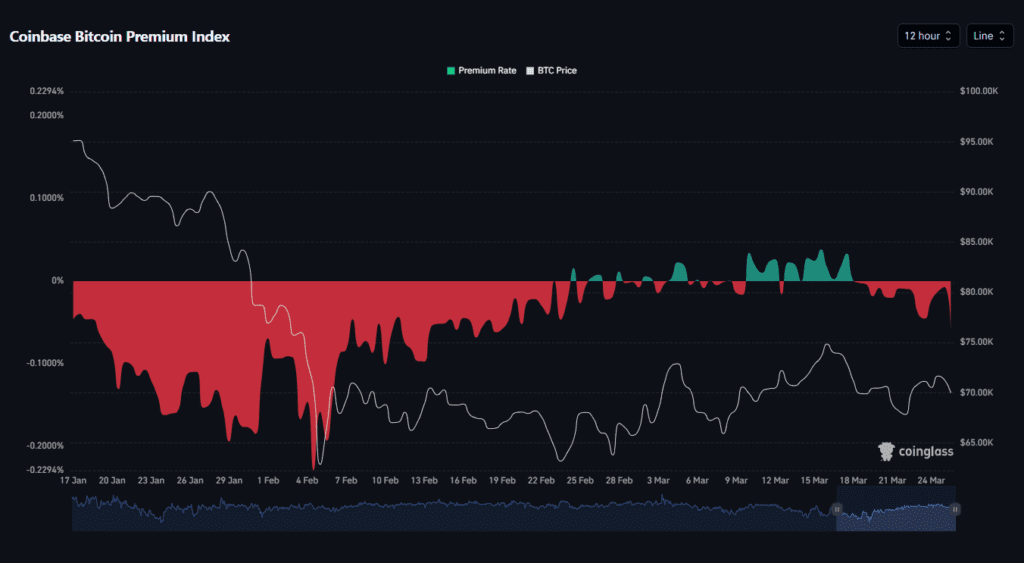
Coinbase Premium has turned deeply negative, the weakest in over a month. That means Bitcoin is trading at a discount on Coinbase relative to other exchanges, which usually points to softer US demand. In past stronger runs, Coinbase often traded rich because US buyers were more aggressive.
ETF flows tell a similar story. The 11 US-listed spot Bitcoin ETFs have seen net inflows this month, but the pace slowed hard in the second half of March. Nearly $1.3 billion of the month’s inflows came early, while only about $195 million arrived after that. So the money has not disappeared, but it is no longer coming in with the same force.
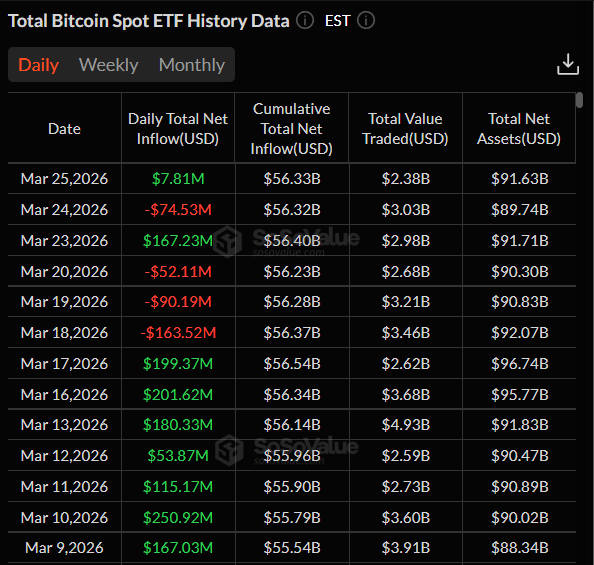
That is a big deal. Retail often sees price stability and assumes fresh demand is flooding in. Sometimes price just holds because supply is being managed and nobody wants to hit bids too hard yet.
Quiet selling can still lean on the market
Another piece that does not get enough attention is state-linked selling. Bhutan (a small country with a ton of BTC) moved another 519.707 BTC to an external address, taking its 2026 outflows to about $152 million so far. The pattern suggests steady, structured selling instead of random panic dumping.
That kind of supply rarely becomes a loud headline on crypto Twitter, but it matters. When a market is trying to hold a major support zone, quiet sellers can cap upside without creating a dramatic crash candle.
What smart traders are really watching into Friday
This market is sitting between a pin and a release.
Before expiry
The main question is whether dealer hedging keeps dragging Bitcoin toward the $75,000 area. If that happens, many people will call it a breakout, but it may just be expiry mechanics doing their job.
After expiry
The main question flips fast: does spot demand step in once the options pressure is gone, or does geopolitical risk take over and force a new round of downside hedging?
Through the weekend
The real watchlist is simple: Iran headlines, oil, the dollar, ETF flows, and whether Coinbase demand improves. If those line up well, Bitcoin can finally trade on relief. If they line up badly, the post-expiry window can get much rougher than current implied volatility suggests.
The working hypothesis
The base case is a relatively orderly expiry with price still leaning toward the $75,000 zone into settlement, followed by a more honest move after the event clears. But the more important bet is that the real move probably comes after Friday, not during it.
If the Iran situation cools down, Bitcoin has room to hold its resilience story and maybe finally turn that $70,000 floor into a stronger launch pad. If the diplomacy window closes without progress, then this big expiry may end up being remembered less for pinning price and more for setting the stage for a violent weekend repricing.
That is the piece most retail still does not fully account for. The options market may shape the road into Friday morning. The headline tape may decide where Bitcoin goes next.
This content is for informational purposes only and should not be taken as financial advice. Always do your own research, read our blogfor more market insights, and trade responsibly on Millionero.