


DeXe is getting the kind of attention that usually brings retail in fast. On the surface, the story looks strong. It is a DAO governance platform that has been around since 2020, it says it has helped launch 100+ DAOs, it reached roughly $500 million in TVL by the end of 2024, and its token is listed on major exchanges.
When you add in AI plans, Telegram exposure, a Swiss legal structure, multiple audits, and a leading spot on BNB Chain, DeXe starts to look like a project that has already moved beyond the early idea stage.
But once you look past the headline numbers, the story becomes more interesting. The main question is not whether DeXe has built something real. It clearly has. The bigger question is whether the market is valuing real governance infrastructure, or mostly reacting to treasury size, exchange listings, and future narrative.
That matters, because it changes how the DeXe story should be read from here.
Why DeXe is getting real attention now
The visible numbers are strong enough to stand out
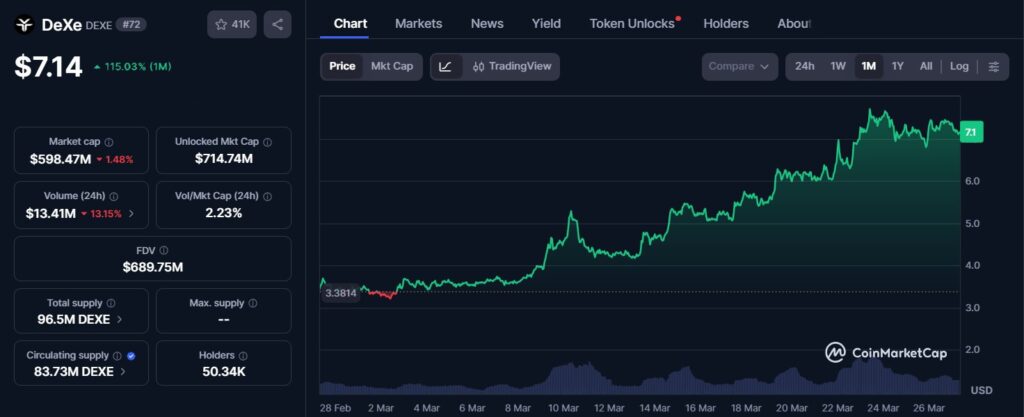
Retail usually starts with the easiest numbers to spot, and DeXe has plenty of them. The protocol says it became the largest DAO on BNB Chain and a top-10 DAO globally by treasury size. It also has roughly 50,000 token holders, about $13 million in 24-hour trading volume, and a live ecosystem built around DAO Studio, modular governance tools, delegation systems, and reward features.
That already puts DeXe in a stronger position than many DAO projects that never moved beyond the idea stage. DeXe is not just selling a concept. It has a working product, a live token, and real ecosystem data behind it. In crypto, that already puts it ahead of many projects in the same category.
It is also working in a part of the market that still feels useful even after a lot of last cycle’s hype faded. Most people think about meme coins, L2s, or AI tokens. Fewer people think about the layer underneath all that: who helps communities organize, vote, manage treasury, and keep governance from becoming messy? That is the space DeXe is trying to lead.
What normal retail usually misses
TVL is not the same as direct token strength
One of the biggest things retail can miss is that TVL and treasury size are not the same as strong token value capture. A DAO platform can manage a large amount of assets and still need more time to prove how much value flows back to the token itself.
In simple terms, a large amount of money inside the system does not automatically mean the token benefits from all of it in a direct way.
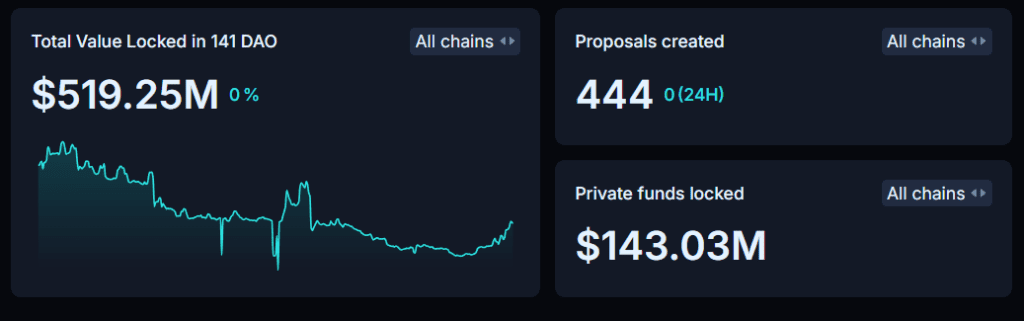
So the $500 million TVL number should be seen as a sign of relevance and trust, which is important. But on its own, it does not automatically prove that DEXE is undervalued.
That is one of the easiest places for retail to misunderstand the story. A big treasury number can look very powerful, but it does not always tell the full story about the token.
The unlock story is mostly behind it now
There is no big future unlock story here. DeXe’s supply is already unlocked.
That changes what people should watch.
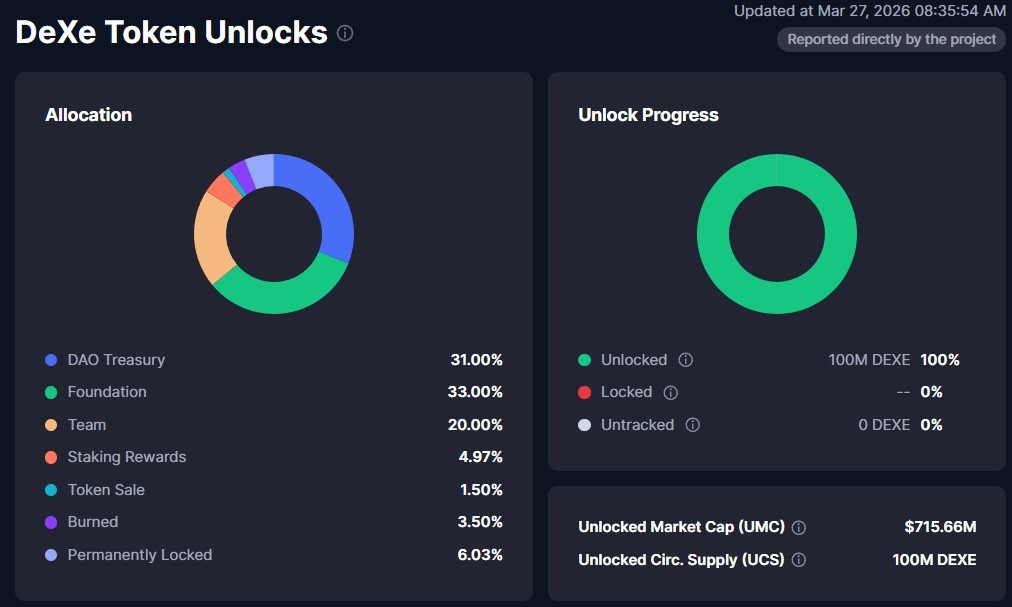
The main question is no longer about a future wave of tokens entering the market. The more important question is who already holds a large share of the supply, and how much influence they may have over governance, liquidity, and price action.
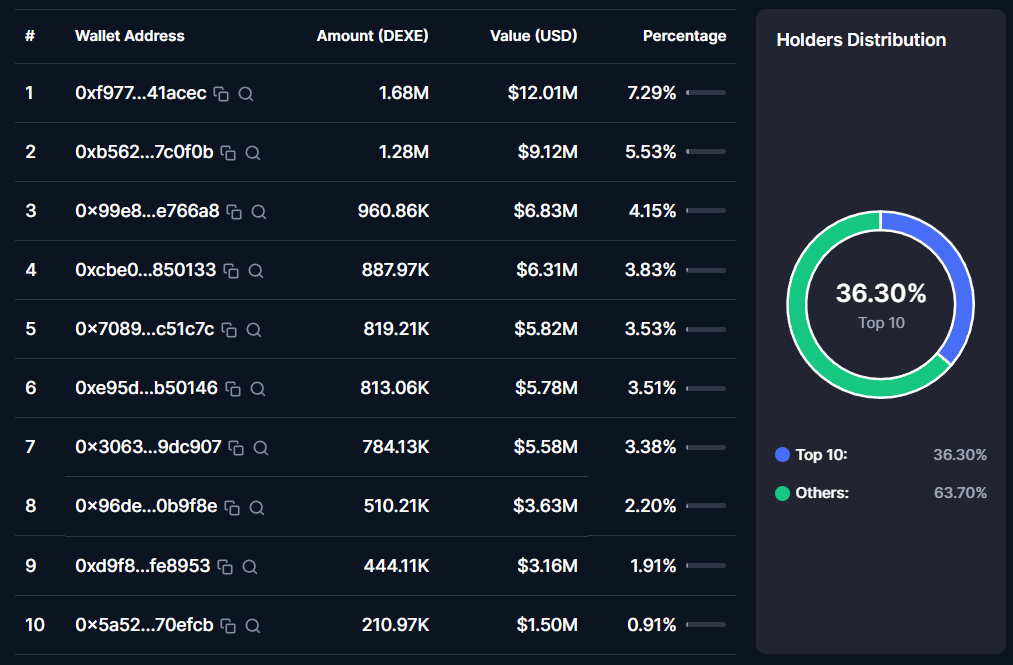
A lot of retail traders still focus on future unlock dates, but in DeXe’s case, that may not be the most useful thing to track anymore. The more important issue is how concentrated the already unlocked supply may be.
There is also a small mismatch in the token story
One small but important detail from our research is that some sources say the public sale allocation was 1.5%, while others mention 2.5% of supply unlocked at TGE. This may simply be a documentation difference, but it is still worth noticing.
That does not mean something is wrong. It just means that when a project presents itself as transparent and merit-based, even a small mismatch in token numbers makes careful investors want to double-check the source documents.
So this is less of a red flag and more of a reminder: retail should not repeat tokenomics numbers blindly without checking them first.
The partnership list looks strong, but each one plays a different role
Some partnerships help the product, others help the story
The DeXe partnership list is long enough to catch attention quickly: Hacken for audits, DWF Labs for liquidity, HOT Protocol for Telegram wallet integration, RAK DAO for the regulatory angle, Kattana for data, and Unicornverse for AI-focused DAO ideas.
That is a solid list, but not every partnership means the same thing.
The Hacken side of the story matters because it supports one of the most important parts of DAO infrastructure: security. The research summary says there have been no major security incidents, and that is a meaningful point in DeFi. In this category, surviving without a major exploit is part of proving the product works.
The DWF Labs partnership matters in another way. It may improve liquidity and market presence, which helps the token trade better. But retail should remember that better market structure is not the same as organic user growth.
The HOT Protocol integration may be one of the most interesting parts of the forward story if it works well. Telegram-based distribution gives DeXe access to a much wider social layer, and that matters because governance tools often struggle to move beyond crypto-native users.
Still, it is worth keeping one thing in mind:
- Access to millions of users is not the same as millions of active users
- A big partnership headline is not always the same as deep product adoption
So the opportunity is real, but what matters most is whether that exposure turns into actual usage over time.
The real test is not just features, but whether people keep using them
DeXe’s position looks clearer than many rivals, but the category is still difficult
Compared with projects like Aragon, DAOstack, and DAOhaus, DeXe’s pitch is fairly easy to understand. It wants to be more modular, more social, more layered, and eventually more AI-assisted. It is trying to make governance feel less technical and more like running an actual online organization.
That is a strong direction. It may even be the right one.
But DAO tooling has always faced one big challenge: people often like the idea of governance more than the day-to-day reality of governance. Launching a DAO is one thing. Keeping members engaged, making good decisions, managing treasury well, and keeping voting useful over time is much harder.
So the long-term test for DeXe is not only whether it can help launch more DAOs. It is whether those DAOs stay active, useful, and worth following months later.
The working view
The best way to look at DeXe right now is this: it is more than just another governance token, but it is still in the process of proving how strong its long-term token value can become.
The bullish case is clear. DeXe could become a real picks-and-shovels play for DAO infrastructure, especially if cross-chain support, Telegram distribution, and AI-assisted governance grow into everyday tools people actually use. If that happens, the market may slowly start treating DEXE less like a niche governance token and more like core infrastructure for on-chain communities.
The more careful view is also reasonable. Some of today’s strength may still come from treasury optics, major listings, concentrated ownership, and future narrative more than from fully proven token value capture. That does not cancel the story, but it does mean the next stage of growth likely depends on deeper and more measurable usage.
That is the part many retail traders do not fully price. DeXe’s product looks real. Its security work looks serious. Its roadmap is ambitious. But the next chapter probably will not be decided by just one more listing or one more partnership announcement.
It will likely be decided by whether DeXe can turn governance infrastructure into something people use again and again, not just something that sounds good on paper.
And if that happens, the real upside may come not from the headline numbers everyone already sees, but from the quieter signal underneath them: DeXe becoming the default operating layer for online communities that actually last.
This article is for informational purposes only and should not be taken as financial advice. Always do your own research before making any investment decision.
For more market explainers, crypto news, and weekly updates, visit blog.millionero.com.
You can also explore and trade spot and perpetuals on Millionero.