


For years, Saylor gave Bitcoin holders a clean sentence to believe in. Buy Bitcoin. Hold Bitcoin. Protect the coins. Let time do the work. The message was simple, emotional, and powerful enough to turn Strategy into the most watched corporate Bitcoin holder in the world.
Now that message has entered a different chapter.
During Strategy’s Q1 2026 earnings discussion, Saylor opened the door to selling some Bitcoin to help fund dividends and calm fears around the company’s capital structure. He reportedly said Strategy would “probably sell some Bitcoin to fund a dividend” and described the move as a way to “inoculate” the market.
For Wall Street, this sounds like capital management. For Bitcoin maxis, it sounds like a crack in the old religion.
The “Never Sell” Image Had Years Behind It
Saylor’s latest comments matter because the old message carried real weight.
During our research, we found at least 21 broader public no-sell instances from Saylor before the May 2026 sale discussion. These included public lines such as “Never sell your Bitcoin,” “You do not sell your Bitcoin,” and similar messages across interviews and X posts. We also found one strong corporate-style instance where Saylor was reported saying Strategy was “not going to be selling” Bitcoin and would keep buying every quarter.
That history shaped Saylor’s public image. He spoke with the confidence of someone turning Bitcoin holding into a philosophy. Strategy became the public-market version of that philosophy: raise money, buy Bitcoin, hold it, and repeat.
In February 2026, that message was still fresh. Saylor was reported saying Strategy was “not going to be selling Bitcoin” and expected to keep buying every quarter.
| Date / context | Statement type | Why it counts |
| July 2021, Coin Stories interview coverage | No forced-sale framing | Reported as Saylor saying no BTC price would force him or MicroStrategy to sell. |
| August 2024, Bloomberg Open Interest coverage | Personal-holding framing | Saylor said he had not sold his personal bitcoin and continued to acquire more. |
| February 10, 2026, CNBC interview coverage | Direct Strategy no-sell framing | Saylor was reported saying Strategy was not going to be selling bitcoin and would keep buying quarterly. |
| Multiple X posts/replies from 2021-2026 | Slogan framing | Repeated lines include “You do not sell your Bitcoin,” “Never sell your Bitcoin,” and “Don’t Sell the Bitcoin.” |
That is why the new comments feel larger than a normal treasury update.
What Saylor Is Really Signaling
Saylor has not turned bearish on Bitcoin. Strategy still holds a massive BTC position, and the company remains built around Bitcoin exposure.
The signal is different.
Saylor is showing that Strategy may treat Bitcoin as an active balance-sheet tool when the capital structure requires it. That means BTC can support dividends, reassure preferred-stock investors, or help the market understand that Strategy has several ways to manage obligations.
This is a major change in tone. The old language was emotional and absolute. The new language is financial and flexible.
For Bitcoin maxis, the difference matters. “Never sell” carried moral force. “Sell when advantageous” belongs to the world of corporate finance.
Strategy’s Q1 Numbers Explain the Pressure
Strategy’s latest financial results give the story its context.
For Q1 2026, the company reported a $12.54 billion net loss, driven mainly by a $14.46 billion unrealized loss on its digital assets. Revenue reached $124.3 million, up from $111.1 million a year earlier, yet Bitcoin’s price movement dominated the quarter.
As of May 3, 2026, Strategy held around 818,334 BTC, with an original cost basis of $61.81 billion and a market value of $64.14 billion. Its average purchase price stood near $75,537 per Bitcoin.
Those numbers show the scale of the machine. Strategy’s software business still exists, yet Bitcoin now controls the company’s public story. A move in BTC can create a multi-billion-dollar accounting swing. A financing decision can affect both MSTR investors and Bitcoin market sentiment.
The company’s Q1 report also highlights the growth of its capital-raising model, including billions raised through at-the-market offerings and preferred products.
From the MSTR Flywheel to the STRC Machine
Saylor’s earlier strategy was easier to understand.
When MSTR traded above its Bitcoin net asset value, Strategy could issue common shares, raise dollars, and buy more BTC. The idea was direct: use the market premium to grow Bitcoin per share when the math worked.
That was the classic flywheel:
- Issue MSTR at a premium
- Raise cash
- Buy Bitcoin
- Grow the Bitcoin story
- Repeat
Now STRC has become a larger part of the picture.
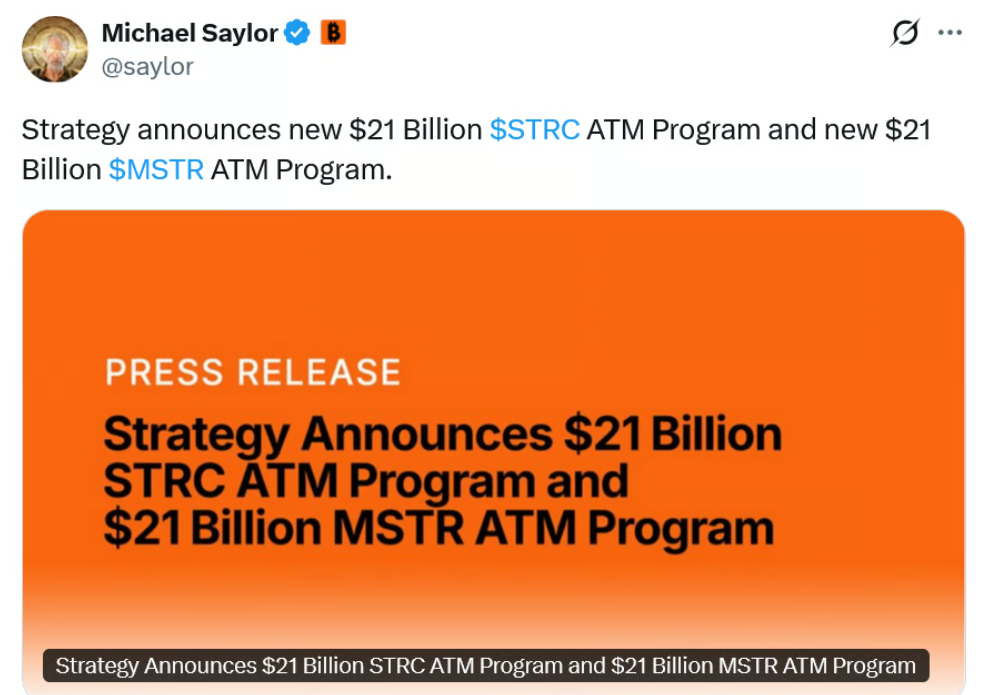
STRC is Strategy’s preferred-stock product. It gives investors a dividend and gives Strategy another way to raise capital. The model adds a new layer to the Bitcoin strategy because dividends require ongoing support. Strategy must keep the preferred structure attractive, liquid, and credible.
This creates a more complex flywheel. Strategy raises capital through preferred shares, uses that capital inside its Bitcoin-centered model, pays dividends to keep investors interested, and may use small BTC sales if those sales protect the structure.
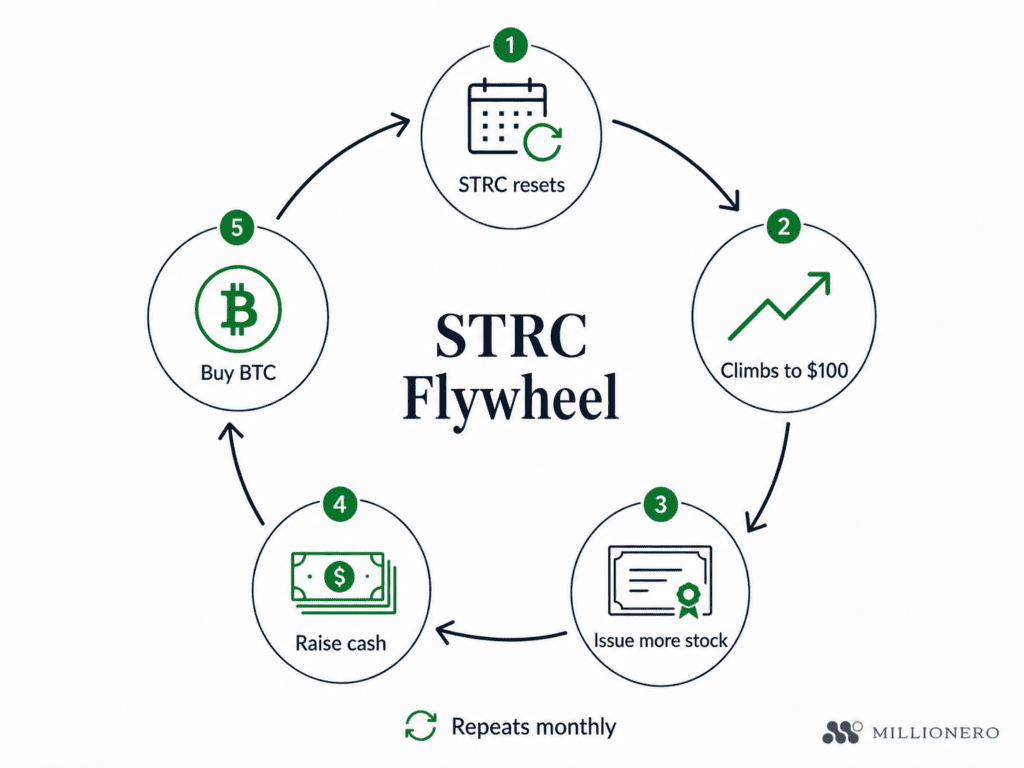
That explains the change in tone. Saylor’s old strategy sounded like a Bitcoin manifesto. His new strategy sounds like a Bitcoin-backed capital machine.
Why Bitcoin Maxis May See a Reversal
Bitcoin maxis care about language because Bitcoin culture is built around conviction.
“Never sell” means discipline. It means long-term belief. It means refusing to trade hard money for weaker money. For years, Saylor used that language better than almost anyone.
A possible BTC sale for dividends changes the emotional meaning. Even a small sale would give the market a new image: Strategy selling some of the asset it spent years telling others to hold forever.
The company can still argue that this move strengthens Bitcoin per share. It can still say it plans to remain a net buyer. It can still claim the sale is tactical, limited, and accretive.
The emotional shift remains.
Saylor’s brand was built on simplicity. Strategy’s new structure demands complexity.
A New Chapter for Strategy
Saylor still speaks as one of Bitcoin’s strongest public believers. Strategy still holds one of the largest Bitcoin piles on earth. The company’s future still depends heavily on Bitcoin’s price, investor demand, and access to capital.
The change sits in the strategy itself.
The old Saylor message was clean: buy Bitcoin and never sell.
The new message is colder, sharper, and more financial: use Bitcoin when it strengthens the machine.
That may become the real story of Strategy’s next phase. The company spent years proving it could buy Bitcoin at historic scale. Now it may try to prove that it can manage a Bitcoin-backed capital empire without losing the faith of the people who believed in the original rule.
As always, this is not financial advice. Bitcoin, MSTR, and Strategy’s preferred-stock products all carry risk, especially when market sentiment can change quickly. Do your own research, follow the data, and keep learning through the latest market explainers on the Millionero blog. You can also explore crypto trading through spot and perpetuals on Millionero.