


Many traders lose money after being right because they never decide when a winning trade should become a protected result.
That is one of the quietest mistakes in trading. It begins with confidence. The entry works. The chart moves in the expected direction. The position turns green. The trader watches the number grow and feels the warm comfort of being correct.
Then the market slows.
A candle rejects. Momentum weakens. Profit shrinks. The trader waits for another push. The move fades again. Soon, the trade that once looked clean is sitting near entry, and the trader feels a strange kind of frustration. The idea was right. The direction was right. The reward was there.
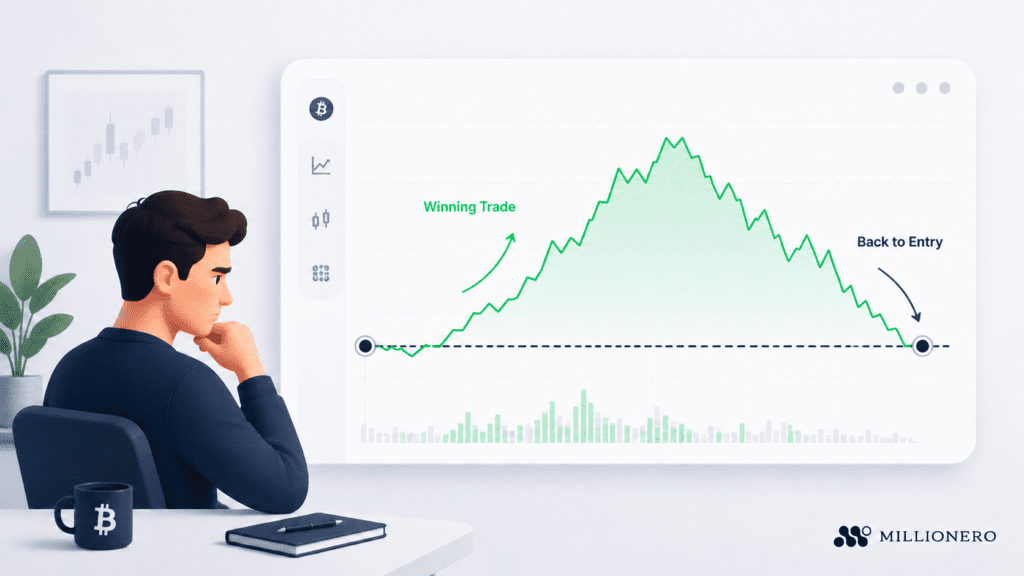
The missing part was the decision to protect it.
Taking profit is part of risk management. It gives structure to a winning trade before emotion begins to negotiate with the chart.
Unrealized Profit Still Belongs to the Market
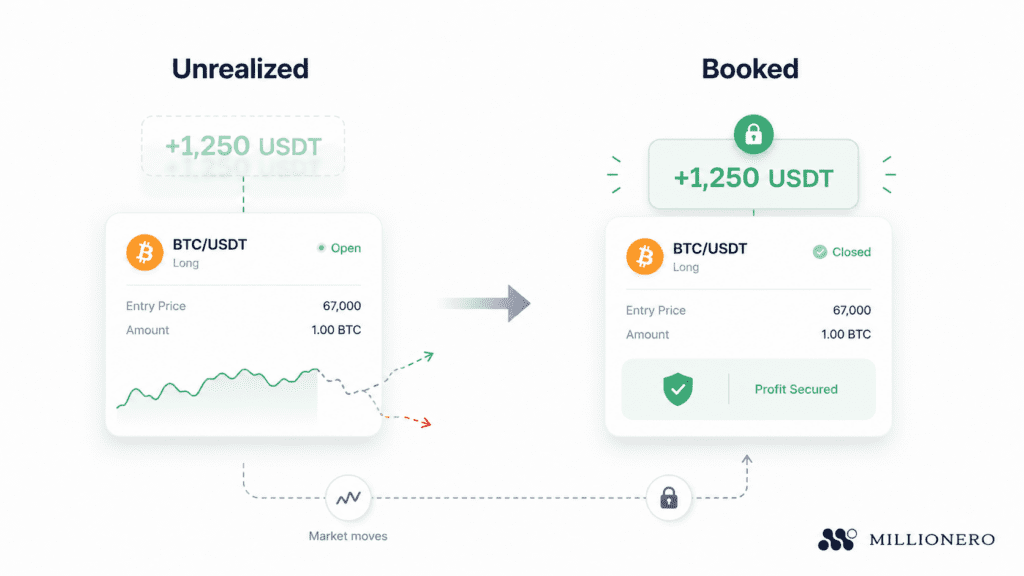
Unrealized profit looks powerful on the screen, but it remains exposed until part of the position is closed. A green number can create comfort, yet the market can still reduce it, erase it, or turn the entire trade red.
Imagine a trader enters BTC and price moves strongly in his favor. The trade is working. The setup has delivered. At that moment, the trader has a choice. He can book part of the profit and turn a piece of the move into a real result, or he can keep the entire position open and leave the full reward exposed.
The trader may still believe in the direction. That belief can be correct. The problem comes when belief replaces management.
A good entry creates opportunity. Profit-taking protects part of that opportunity before the market changes character.
The Perfect Exit Is a Dangerous Fantasy
Many traders delay profit-taking because they want the cleanest possible exit. They imagine closing near the top, capturing the full move, and looking back at the chart with perfect timing.
That mindset creates pressure. It turns a profitable trade into a guessing game.
Crypto rarely moves in a straight line. Price climbs, pauses, rejects, retests, and sometimes continues. Other times, the rejection becomes the beginning of a deeper pullback. During the trade, certainty is limited. The trader cannot know every next candle.
This is why profit-taking should focus on reasonable reward, not perfect prediction.
If ETH moves from an entry area toward a clear resistance zone, the trader does not need to know whether the absolute top is higher. The practical question is simpler: has the trade already offered enough profit to protect some of it?
That question keeps the trader grounded. It replaces hope with process.
Partial Profit-Taking Creates Breathing Room
Partial profit-taking is one of the simplest ways to manage a winning trade. The trader closes part of the position at a planned level and leaves the rest open for continuation.
This creates balance. Some profit becomes real. Some exposure remains if the market keeps moving.
For example, a trader enters SUI and price moves sharply in the expected direction. Instead of holding the full position for one final target, the trader may close 30% or 50% at the first profit area. The remaining position can continue if momentum stays strong.
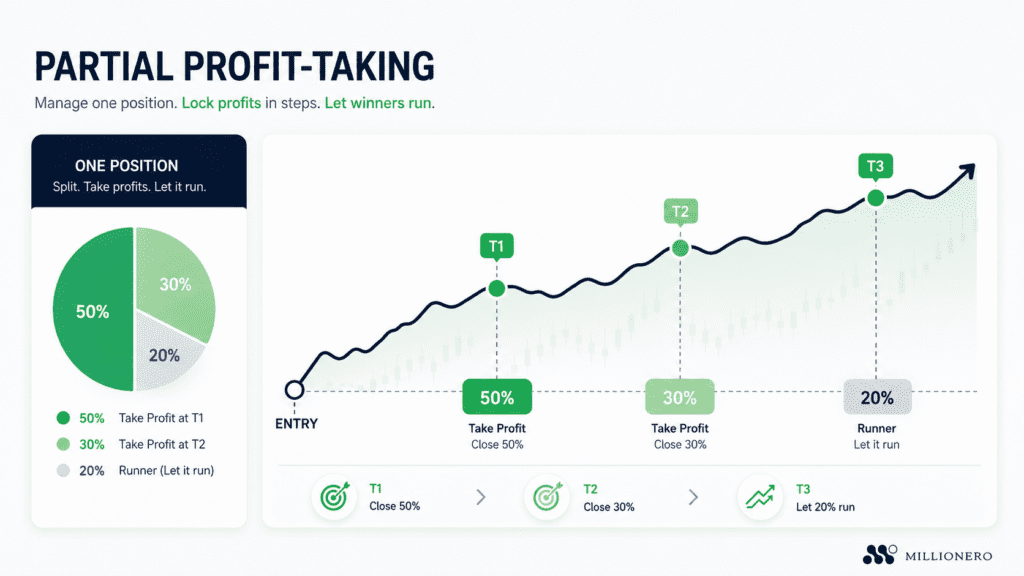
This method lowers emotional pressure. Once part of the profit is booked, the trader no longer feels trapped between greed and fear. The trade has already produced a result. The rest can be managed with a cleaner mind.
A simple structure can work well:
- Take partial profit at the first planned target.
- Move the stop after price confirms strength.
- Leave a smaller position open if the trend continues.
The exact percentages depend on the trader’s system. The important part is the decision itself. A trade becomes easier to manage when the trader already knows what to do when price reaches profit.
Moving the Stop Protects the Trade
Moving the stop-loss is another simple way to protect a winning position. After price moves in the trader’s favor, the stop can be adjusted closer to entry or above entry, depending on the setup.
This changes the risk profile of the trade. A position that once carried full downside risk can become a position with reduced risk or protected profit.
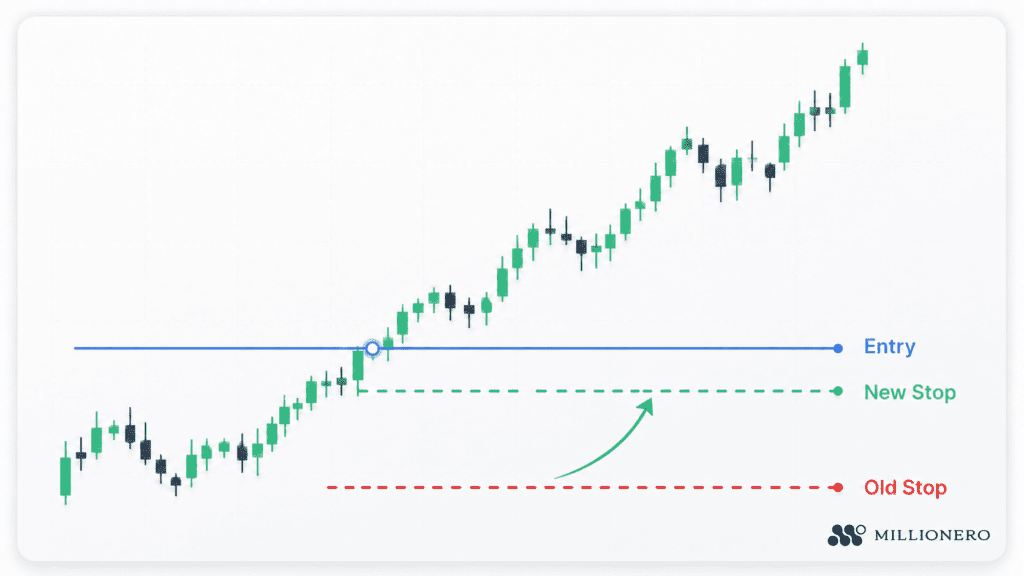
The stop should move with structure. Moving it too early can close the trade during normal market noise. Moving it too late can allow too much profit to disappear. A practical trader waits for a clear reason: the first target is reached, price breaks a major level, or a new support zone forms above entry.
This keeps the decision connected to the chart instead of emotion.
Leaving a Runner Keeps Upside Alive
Profit-taking does not require closing the whole trade at once. Many traders leave a smaller final position open, often called a runner.
The idea is simple. Close part of the position. Protect the rest with a better stop. Allow a smaller piece to continue if the move becomes larger than expected.
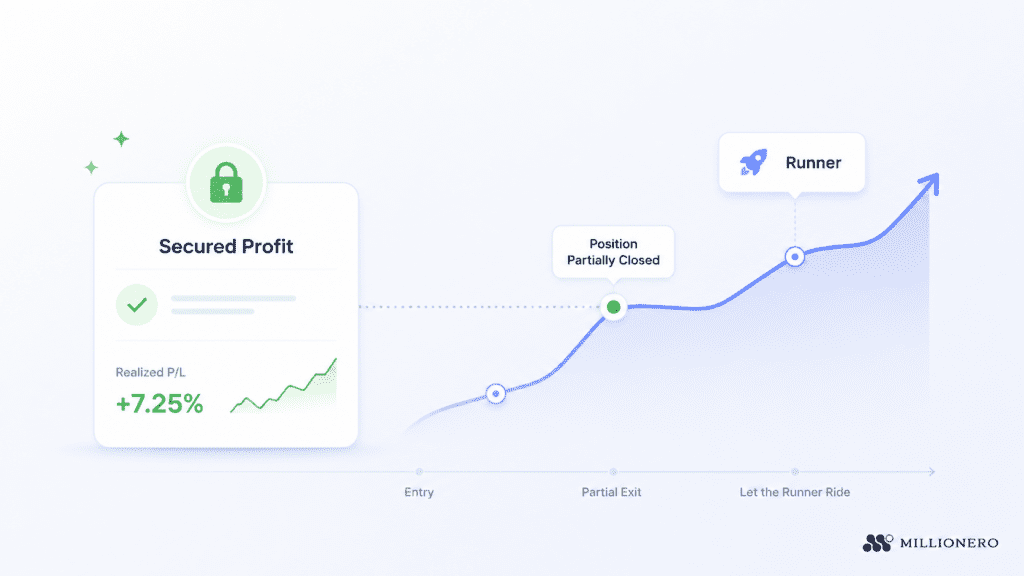
This approach fits crypto well. Strong moves can stretch further than expected, especially during high momentum. Sharp reversals can also happen quickly. A runner allows the trader to stay involved while reducing the damage of a sudden pullback.
The trade no longer depends on one perfect exit. It has stages, protection and room.
The Plan Comes Before the Position
The best profit-taking decisions are made before the trade begins.
Once a position is open, emotions become louder. Green numbers create excitement. Pullbacks create doubt. Fast candles create pressure. Social media adds noise. A written plan gives the trader something stable to follow.
Before entering, a trader can decide the first profit area, the percentage to close, the level where the stop should move, and the amount that can remain open for continuation.
These decisions turn profit-taking into a process. The trader no longer debates every candle. The plan already carries the weight of the decision.
Conclusion: Protect the Reward
Taking profit is a discipline. It helps traders turn correct ideas into protected outcomes.
A winning trade becomes valuable when the trader manages it with structure. Partial exits, stop adjustments, and runners help protect capital while keeping space for continuation.
The market will always tempt traders to wait for more. Sometimes the move continues. Sometimes it gives everything back. A profit-taking plan gives the trader a calmer path through both outcomes.
In the end, the goal is simple: when the market gives a reward, know how much of it you are willing to protect.
Crypto trading carries risk, and every trader should do their own research before making any decision. For more beginner-friendly crypto market education, visit the Millionero Blog. To explore crypto trading with spot and perpetual markets, you can visit Millionero Exchange.