


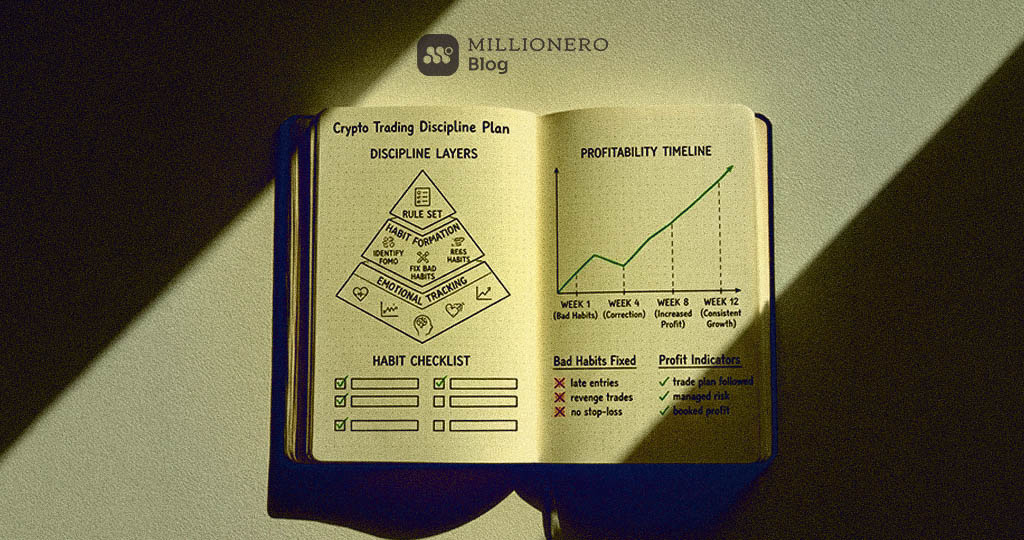
The market teaches fast. Traders forget faster.
A beginner opens a trade, watches price move against them, feels pressure build in the chest, and promises to act better next time. Maybe the entry came too late. Maybe the position was too large. Or maybe the stop-loss moved because accepting the loss felt too heavy in the moment.
The lesson feels clear after the damage. Then another setup appears.
A green candle forms. The chart starts moving. Social media sounds confident. The old emotion returns with a new face. The trader enters again, breaks the same rule again, and later calls it a different mistake.
A trading journal gives the lesson somewhere to stay after the emotion fades.
Bad Habits Hide Inside Normal Decisions
Most trading habits begin quietly. They rarely arrive as obvious disasters. They appear as small choices that feel acceptable in the moment.
A trader enters because the move looks strong. Another increases size after a loss to recover faster. Someone closes a winner too early because a small profit feels comforting. Someone else ignores the original plan because the chart “still looks fine.”
Each trade may feel separate. The journal connects them.
Without a record, memory protects the trader. A rushed entry becomes “bad timing.” A loss becomes “the market reversed.” An oversized position becomes “confidence.” The mind softens the mistake until the pattern disappears.
A journal removes that fog. It shows the entry, the reason, the emotion, the size, the exit, and the result. It turns regret into information.
That change matters. Vague regret creates stress. Specific information creates improvement.
What a Trading Journal Should Track
A useful journal does not need to look complex. Beginners need clarity, not a spreadsheet that feels like homework. The goal is to capture the parts of the trade that explain behavior.
At minimum, record these:
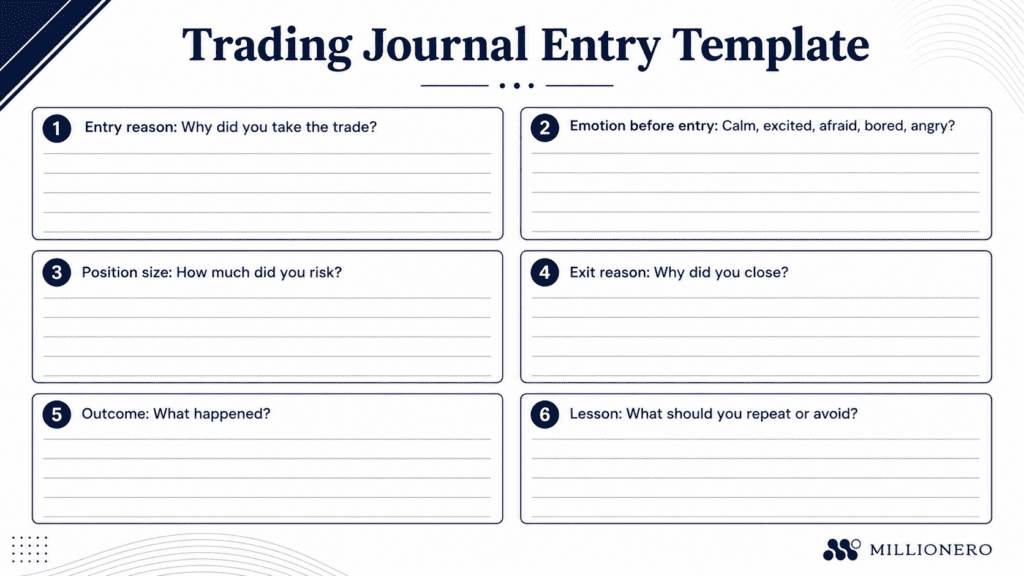
These details expose the real mistake. A trader may understand support and resistance and still enter because of fear. Another may have a good setup and damage it with poor sizing. The chart matters, but the decision matters too.
A simple journal entry can say: “Entered after three green candles because I felt the move was leaving without me.”
After a few weeks, that same sentence may appear again and again. The issue becomes clear. The trader does not have a mysterious strategy problem. The trader has a late-entry FOMO habit.
That is the power of the journal. It gives the mistake a name.
How Journaling Changes Behavior
Journaling improves discipline because writing slows the mind down. It forces the trader to explain the trade in plain language.
A weak entry reason looks weak on the page. Oversizing after a loss becomes visible. Panic exits start forming a pattern. Boredom trades reveal themselves. Friday afternoon mistakes begin to stand out. The journal shows where the plan broke and where emotion entered.
This creates a healthier relationship with losses. A loss still matters, but it becomes data. The trader can study it without turning it into self-attack.
The best habit is a weekly review. At the end of the week, read every entry and ask:
- What mistake repeated the most?
- Which trades followed the plan?
- Which trades came from emotion?
- What one habit should improve next week?
One habit is enough. A beginner who tries to fix everything at once creates pressure. A trader who fixes one repeated mistake begins to build discipline in a real way.
A Simple Trading Journal Template
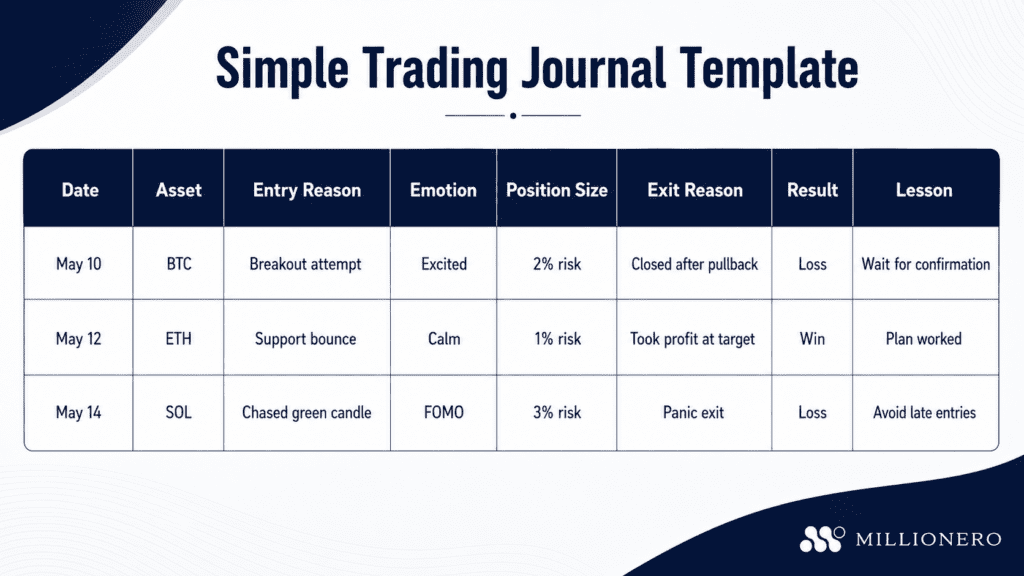
This format works because it keeps the focus on behavior. Profit and loss matter, but the deeper question is simple: Did the trade follow a clear plan?
The Page Remembers
A trading journal records the trade before pride edits the win and frustration rewrites the loss.
It keeps the lesson on the page. It shows where emotion entered, where discipline weakened, and where the plan held firm. Over time, it becomes a mirror for trading behavior.
Some patterns may feel uncomfortable at first. That discomfort has value. A hidden mistake can keep damaging the account. A written mistake can be studied, reduced, and replaced.
The market will keep teaching. A trading journal helps the trader keep the lesson.
Trading habits improve through awareness, patience, and consistent review. This article is for education only and should not be treated as financial advice. Always do your own research, manage risk carefully, and use platforms that support your learning journey. You can explore crypto markets through Millionero Exchange and keep building your knowledge with Millionero Blog.