



Markets are in Extreme Fear right now. In early June 2026, the Fear and Greed Index sank to readings as low as 11. Bitcoin trades in the low 60,000s, down roughly 50 percent from its October 2025 peak near 126,200. On a single day, forced liquidations topped 1.7 billion dollars, and longs took most of the damage.
That last number is the one traders should study. A liquidation cascade is the mechanism that turns an ordinary pullback into a violent crash. It also explains why so many accounts get wiped out at the same moment. Understanding how it works is one of the most useful skills a leveraged trader can build.
This guide breaks down what a liquidation is, how a cascade builds, and how disciplined traders manage the risk.
What a Liquidation Actually Is
A liquidation happens when an exchange force closes a leveraged position. The trader no longer has enough margin to keep the trade open, so the system closes it automatically.
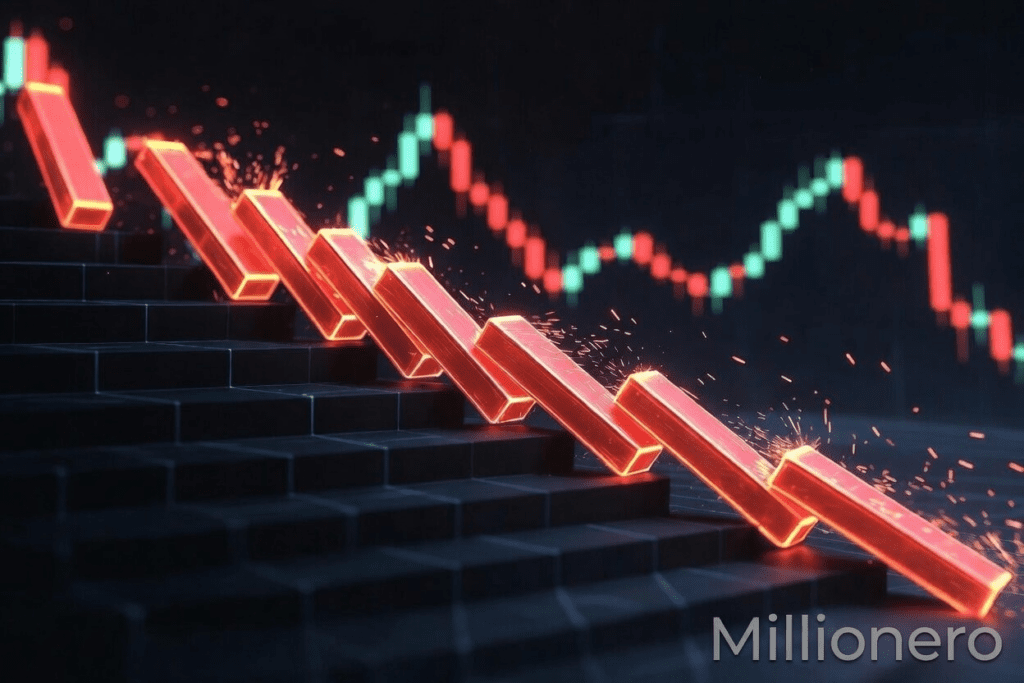
Leverage is the trigger. When you trade perpetual futures, you post a fraction of the position value as margin. Ten times leverage means a 100 dollar margin can control a 1,000 dollar position. That magnifies gains. It also magnifies losses.
Every leveraged position has a liquidation price. If the market reaches that level, your margin can no longer cover the loss. The exchange steps in and closes the trade to protect itself. You keep the loss. The position is gone.
The higher the leverage, the closer that liquidation price sits to your entry. A small move can end a large trade.
How a Liquidation Cascade Builds
A cascade is a chain reaction. One wave of forced selling creates the conditions for the next wave. It feeds on itself.
Leverage stacks up during calm markets
Cascades are built long before they fire. During quiet, rising markets, traders grow confident. They add size. They raise leverage. Open interest climbs, and most of it sits on the long side.
This is the setup. A large stack of leveraged longs is fuel waiting for a spark.
Forced selling triggers more forced selling
Then a catalyst hits. In early June, it was a mix of Strategy selling Bitcoin, heavy ETF outflows, and rising tension around the Strait of Hormuz.
Price drops. The first batch of overleveraged longs reaches its liquidation price. The exchange closes those trades by selling into the market. That selling pushes price lower.
The lower price now triggers the next batch of liquidation levels. More forced selling follows. Price falls again. The loop repeats. Each step pushes the market into the next cluster of stops and liquidations.
This is why a 4 percent move on paper can feel like a 10 percent crash on the screen.
Thin liquidity makes it worse
Liquidity tends to vanish exactly when traders need it. In a panic, buyers step back. Order books thin out.
Forced sell orders then hit a market with few willing buyers. Price gaps down fast. The same sell volume that barely moves price in calm conditions can crater it during a cascade.
Why Cascades Cluster at the Same Levels
Liquidations are not random. They bunch up around obvious price zones.
Round numbers attract them. So do recent support levels and popular entry points. Many traders use similar leverage and similar stops, so their liquidation prices land close together.
When price reaches one of these clusters, a large block of positions liquidates at once. That is why selloffs often accelerate sharply at a specific level, then pause. The market just cleared a pocket of leverage.
Data services track these zones as liquidation heatmaps. They show where leverage is concentrated. Large clusters act like magnets, because the forced selling there creates the very move that fills the gap.
What the June 2026 Selloff Shows
The current tape is a textbook example. The drop did not come from one headline. It came from leverage meeting a string of catalysts.
Long positions accounted for the bulk of the 1.7 billion dollars in forced selling. That tells you the crowd was positioned one way. When the move went against them, the exits were narrow and the cascade did the rest.
Sentiment confirms the picture. A Fear and Greed reading near 11 reflects a market where leverage has been flushed and confidence has drained. Extreme Fear often appears near local lows, though it is a sentiment gauge, not a timing tool.
The lesson is simple. The crash was not magic. It was leverage, catalysts, and forced selling working together.
How Traders Manage Liquidation Risk
You cannot stop cascades. You can avoid being the fuel. Here are the controls disciplined traders rely on.
Size for the real move, not the dream
Position size matters more than leverage settings. Ask how far price can move against you before your margin is gone. If a normal daily swing can liquidate you, the position is too large.
Sizing for the actual volatility of the asset keeps you in the game. It is the difference between a drawdown and a wipeout.
Know your liquidation price before you enter
Check your liquidation price the moment you open a trade. Then look at the chart. If that level sits inside a zone where price trades often, you are exposed.
Move your size or your leverage until the liquidation price sits outside normal noise. A liquidation should require a real structural break, not a routine wick.
Respect funding and volatility
Funding rates reveal crowd positioning. When longs pay shorts heavily, the market is crowded long. That is the exact setup that cascades punish.
Volatility deserves the same respect. When ranges expand, stops and liquidation prices need more room. The same leverage that felt safe in a calm week becomes dangerous in a violent one.
Reading Sentiment Without Being Ruled by It
Extreme Fear is loud. Headlines scream. Accounts bleed. The temptation is to react with emotion.
Sentiment tools like the Fear and Greed Index capture the mood, but they do not predict the next candle. Use them as context, not as a signal. Extreme readings show where leverage and emotion have stretched. They do not promise a bounce.
The traders who survive cascades are rarely the smartest in the room. They are the ones who sized correctly and respected their liquidation price before the storm arrived.
A liquidation cascade is one of the clearest forces in crypto. Learn how it works, and you stop being its raw material.
Trade on Millionero exchange.
This article is for educational purposes only and does not constitute financial, investment, or trading advice. Cryptocurrency trading carries significant risk, including the potential loss of capital. Always do your own research and consider your risk tolerance before trading. Read more blogs on Millionero Blog.