



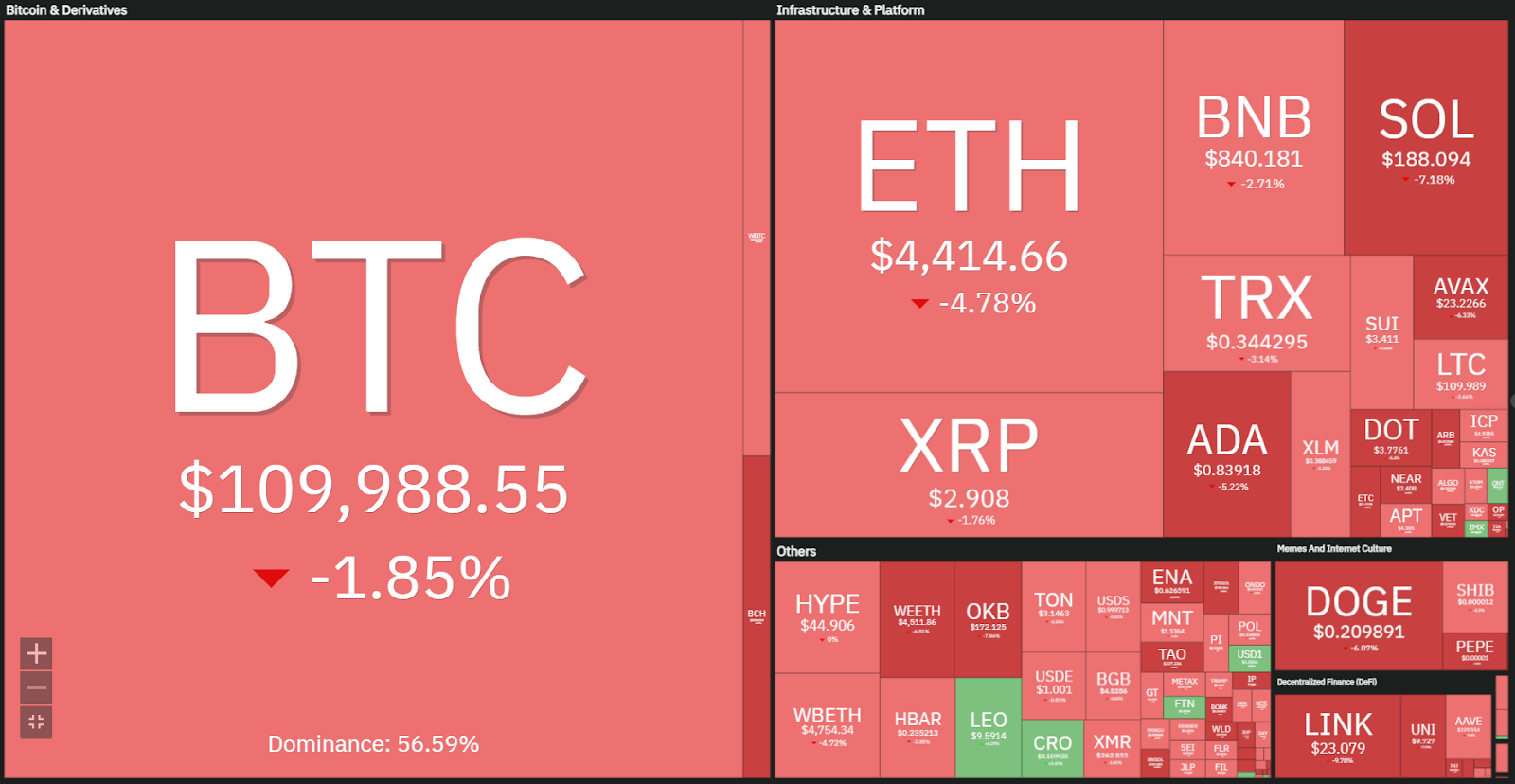
The new trading week opened with a sharp wave of red across the crypto markets. Bitcoin dropped below $110K, Ethereum slid under $4,500, and altcoins from Solana to Cardano suffered double-digit losses at their intraday lows. For traders, this selloff looked especially puzzling because only a few days earlier the Fed’s Jackson Hole meeting had been taken as dovish, hinting at a softer monetary path ahead. So, why did the market ignore that “good news” and tumble anyway? The answer lies in a mix of whale activity, political drama, and looming risk events.
The Whale That Moved the Sea
Yesterday morning, markets were shaken when a single whale unloaded around 24,000 BTC within minutes. That sudden selling wave sent Bitcoin tumbling from around $115K straight down to under $110K. For a market that had been coiling up on expectations of looser policy, this was a brutal reminder of how one large move can cascade through liquidity.
Although Bitcoin clawed back a portion of those losses quickly, the damage was already done. Market confidence was rattled, stop-losses were triggered, and altcoins began following Bitcoin’s lead. Instead of stability, the opening bell felt like an ambush, setting the tone for the rest of the session.
Politics Takes Center Stage
If the whale dump was the spark, U.S. politics poured gasoline on the fire. The biggest shock came from Donald Trump’s decision to fire Fed Governor Lisa Cook.
Why does this matter? Because the Federal Reserve is supposed to operate independently of the White House. Investors, both in traditional markets and crypto, rely on that independence to believe monetary policy decisions are based on economics rather than politics. When Trump attempted to remove Cook, it raised the possibility that future Fed actions could be politicized. Markets hate that kind of uncertainty.
Adding more fuel, Cook responded immediately by saying the move was illegal, and her legal team vowed to fight it. Now we’re looking at what could become a constitutional showdown: the Fed versus the White House. Even if the courts ultimately decide against Trump, the very fact of this clash is unsettling for investors.
Trump’s Rhetoric and Geopolitical Jitters
It didn’t stop there. Trump made several comments that shook global risk sentiment:
- He threatened 200% tariffs on China.
- He boasted he could “destroy China” but wouldn’t.
- He mentioned Russia-China denuclearization talks.
- And on Ukraine, he declared, “We spend no money on Ukraine anymore.”
These statements may have been off-the-cuff, but markets read them as signs of policy unpredictability and rising geopolitical risk. When traders can’t gauge what direction leadership is headed, they derisk. That means selling volatile assets like crypto first.
The Fed’s Balancing Act
On top of this, the Fed itself is now caught in a strange position. While Powell’s speech at Jackson Hole last week leaned dovish, signaling possible rate cuts later this year, the institution now has to fight for credibility after the political firestorm. Investors know monetary easing supports risk assets, but if the Fed’s independence is questioned, those signals lose weight.
That explains why the market didn’t rally on the dovish tone. Instead, the narrative shifted from “Fed might cut soon” to “Can the Fed even act without interference?” That is enough to turn optimism into caution.
Tech Earnings Loom Over Crypto
Another layer adding pressure: NVIDIA reports earnings tomorrow. Historically, NVDA’s numbers have been massive volatility events, not just for tech stocks but also for crypto. The reason is straightforward: NVIDIA is the backbone of AI and GPU demand, which links closely with investor appetite for risk, speculative assets, and even mining.
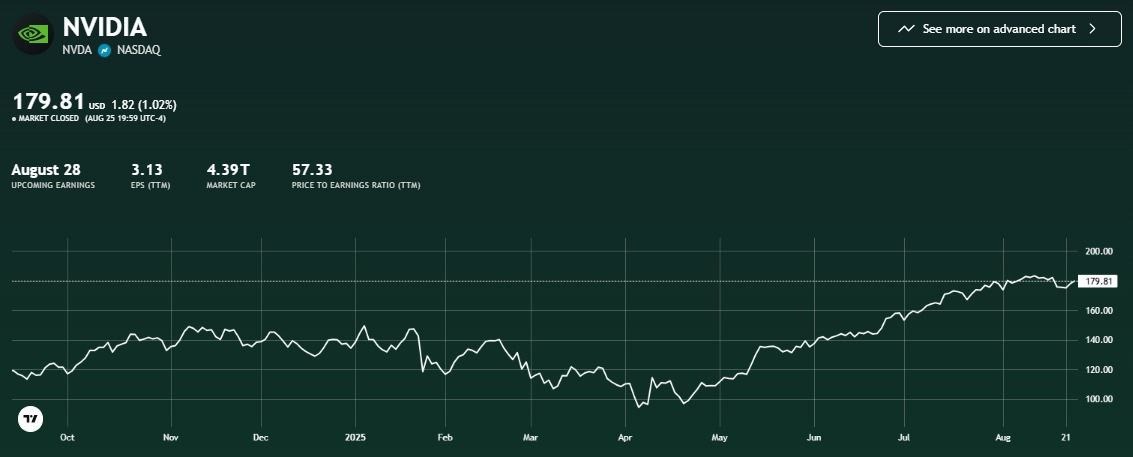
With so much uncertainty already swirling, many investors decided to pull exposure ahead of the earnings print. In simple terms, they’d rather sit out a potentially stormy 24 hours than risk more downside.
Putting It All Together
So the “sea of red” wasn’t about one factor, it was the collision of several. A whale selloff shook Bitcoin’s footing, politics eroded confidence in U.S. institutions, Trump’s remarks added geopolitical stress, and traders de-risked ahead of a key earnings release.
Even though Jackson Hole offered a dovish signal last week, that optimism couldn’t outweigh the sudden flood of uncertainty. For now, crypto traders find themselves in a classic push-pull environment: structurally bullish signals on the one hand, but short-term shocks on the other.
The key takeaway? Markets don’t move on a single headline, they move on the sum of everything happening in real time. And yesterday, that sum leaned heavy to the downside.
This article is an explanation, not financial advice. Always DYOR (do your own research). Stay informed on blog.millionero.com, and when you’re ready, trade spot and perpetuals on Millionero.