


Debt Game: Sometimes the biggest financial moves happen in plain sight. But they’re so big and so strange that people don’t believe them. This is one of those stories.
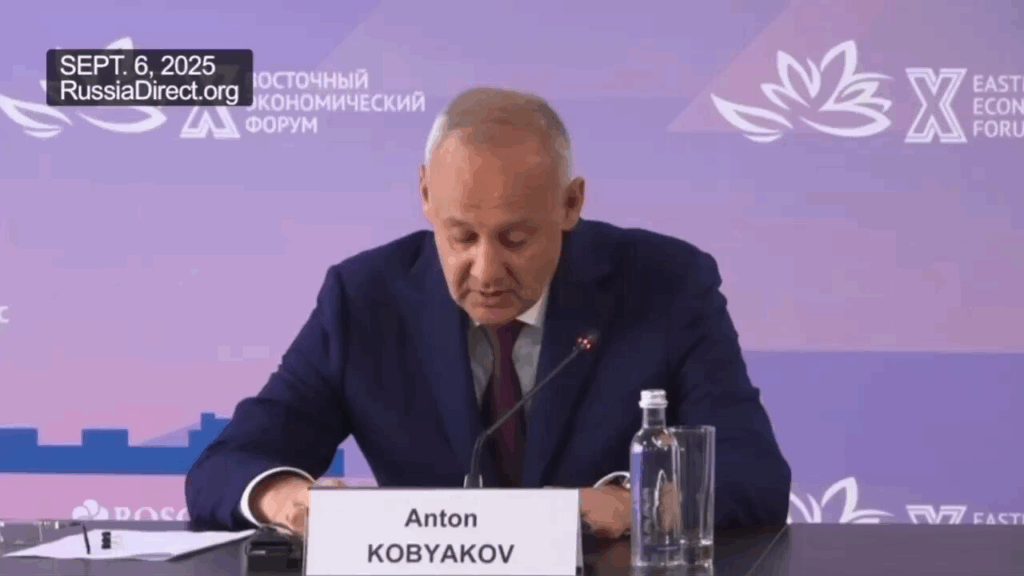
In September this year, Anton Kobyakov, one of Vladimir Putin’s closest advisers, stood at the Eastern Economic Forum and made a shocking claim. He said the United States was planning to move its $37 trillion debt into a “crypto cloud,” reduce its real value, and start again from zero.
At almost the same time, Michael Saylor, the outspoken head of MicroStrategy, urged Donald Trump to sell all of America’s gold reserves and buy Bitcoin instead. According to Saylor, doing so would “destroy your enemies” and turn US assets into trillions of dollars.
These two statements may sound crazy. But together they open a door to understanding what could be the biggest financial trick in history.
The Classic Play: Printing Debt Away
To see how this game works, imagine a simple story. Ten years ago, you lent your friend a million dollars to buy a house. Back then, a million dollars could buy a whole house. Today, he repays you exactly one million dollars, on paper, you’re whole.
But because of inflation, that million now buys only a single room in the same house. You got back your money, but not its real value.
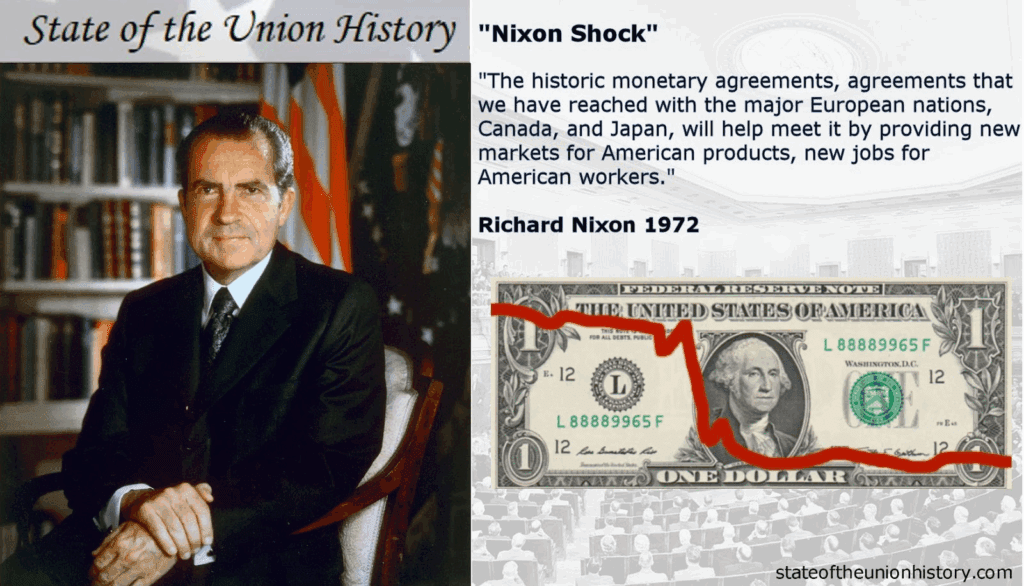
This is exactly what America has done for decades. In the 1970s, when debt ballooned from the Vietnam War and welfare programs, President Nixon broke the dollar’s link to gold overnight. That “Nixon Shock” meant the dollar was no longer backed by anything except US government promises. Inflation quietly ate away the real value of US Dollar.
The same trick happened after World War II and again after the COVID-19 crisis, when trillions of dollars were printed from nothing. The pattern is clear: borrow in dollars, print more dollars later, and repay in money that’s worth much less. Lenders lose, borrowers win.
The World Starts Catching On
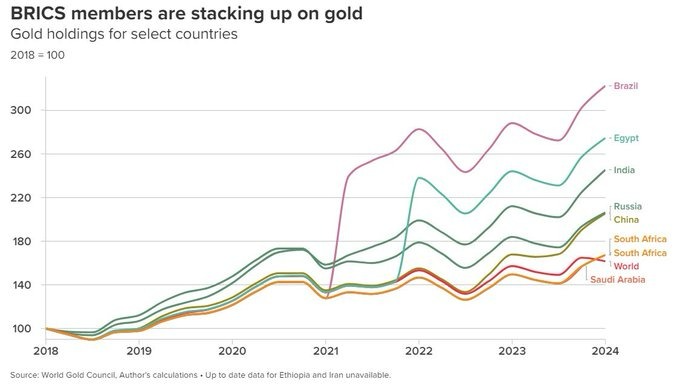
For decades, the world went along. But recently, countries have begun to rebel. China, Russia, India, Poland, Singapore, Kazakhstan, all have been buying gold at record levels, over 1,000 tons a year since 2022.
Meanwhile, the dollar’s share of global reserves has fallen from 70% in the 1990s to about 57% today. China alone has cut its US Treasury holdings by 40% since 2018. This is a silent vote of no confidence.
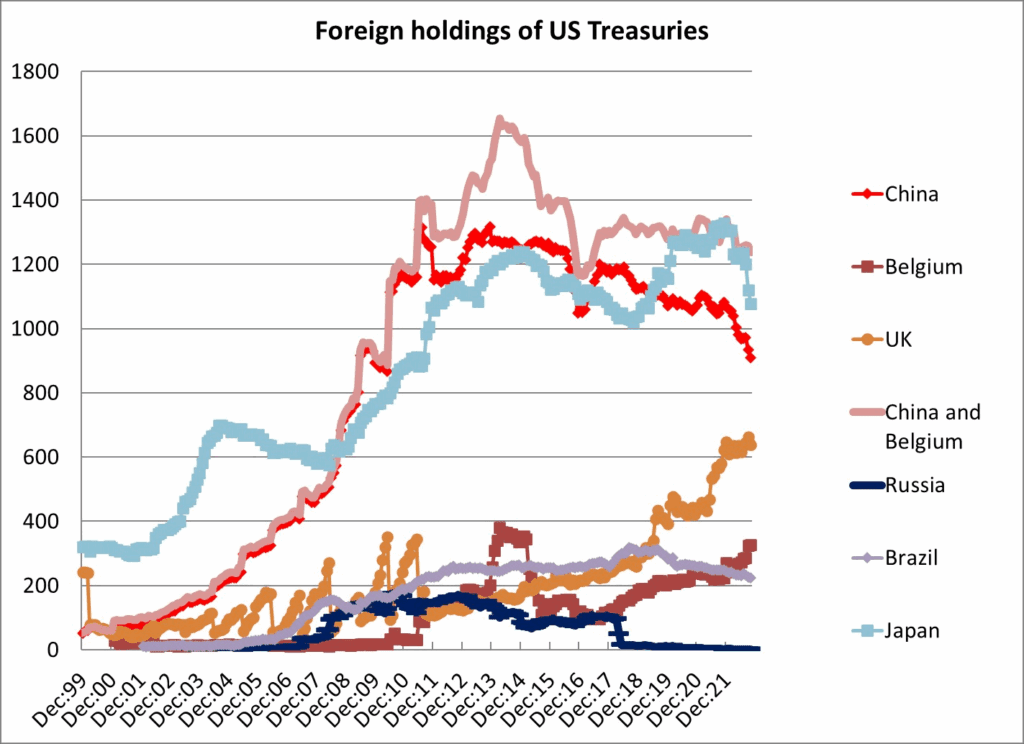
The message is simple: we don’t trust your promises anymore. And that creates a huge problem for America. How do you export inflation and shift your debt onto others if they no longer want your dollars?
Enter Crypto: The New Trojan Horse
Here’s where crypto comes in, not the wild, speculative side of crypto, but its most boring, trusted corner: stablecoins.
On the surface, stablecoins like USDT (Tether) and USDC (Circle) look like digital dollars, harmless, neutral, convenient. In reality, they are backed by US Treasury bills. Every time someone buys a stablecoin, they are indirectly lending money to the US government.
Together, Tether and Circle now hold more than $200 billion in Treasuries, making them bigger US debt holders than Norway or Brazil. As stablecoins spread through Asia, Africa, and Latin America, the demand for US debt quietly rises. This gives America more room to borrow.
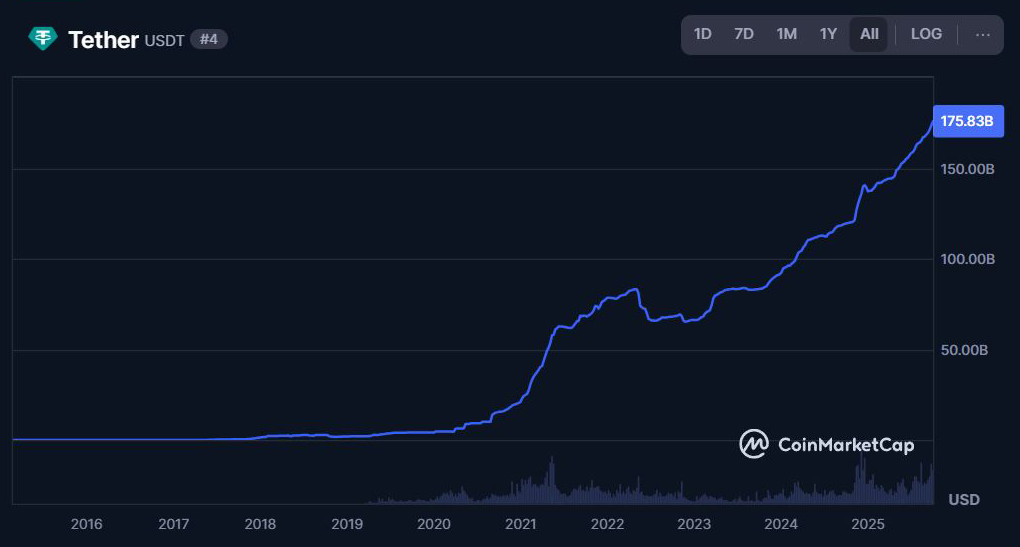
And when the US prints more dollars, reducing the real value of its debt, everyone holding those stablecoins shares the cost of that inflation, without ever voting for it or even noticing.
It’s a brilliant move: a private tech wrapper for a very old government strategy.
From Plan B to Plan C
It gets even more interesting. In July, Donald Trump signed the “Jenius Act,” which allows tech giants like Apple, Meta, Microsoft, and Amazon to issue their own digital stablecoins. Imagine an Apple Coin built into your iPhone, or a Meta Coin built into Facebook and Instagram. Billions of people worldwide could end up using them for everyday payments.
Each coin would be “backed” by US Treasuries. Each payment would increase America’s borrowing power. People would think they’re just using a cool new app. In reality, they’d be plugging into a massive financial pipeline that shifts US debt onto the world.
This is the true scale of what Kobyakov hinted at in his speech, not some science-fiction “crypto cloud,” but a real network of digital dollars controlled by US interests.
Michael Saylor’s Wild Card
And then there’s Michael Saylor’s idea: sell America’s 8,000 tons of gold and buy Bitcoin instead. Doing so would crush gold prices, hurting Russia, China, and others who hold large gold reserves, while sending Bitcoin to levels nobody imagined.
It’s an extreme plan, but it fits the larger pattern: use digital assets to trap rivals and shift wealth. In Saylor’s vision, Bitcoin becomes the new “hard asset” of the US, replacing gold, while the rest of the world gets stuck holding the bag.
Three Possible Futures
What happens next? There are three broad scenarios:
- America wins the digital game.
It successfully pushes its stablecoins and corporate coins worldwide, moves its debt into this network, and keeps control of global finance. Everyone using these coins unknowingly helps carry the cost of US debt. This is “smart hegemony.” - The world breaks away.
BRICS countries launch their own gold-backed or commodity-backed currencies. Russia’s already experimenting with a ruble-gold stablecoin. China is rapidly rolling out its digital yuan. If enough countries refuse to play, the current system could fracture. Gold regains its throne. Bitcoin becomes a neutral store of value. The dollar’s power fades. - A messy mix of both.
The most likely scenario. America spreads its digital dollars but faces strong competition. China, Europe, and BRICS issue their own coins. Gold remains the ultimate safe haven. We get a multi-currency world, more complex, less predictable, but less dominated by any single power.
A Time of Big Shifts
We are living through a historic change in the nature of money itself. Blockchain technology has given governments and corporations new tools. Old rules are fading.
Whether America succeeds or fails, whether gold or Bitcoin wins, one thing is certain: the money in your pocket will not work the same way tomorrow as it does today. The rules of the game are changing, and like all great shifts in history, it begins quietly, in a contest between giants, and ends with a new order that nobody voted for.
That’s the real story behind the shocking claims and bold ideas: a struggle for trust, power, and control, fought not with tanks but with digital dollars.
Millionero does not provide financial advice. Always do your own research (DYOR). Trade spot and perpetuals responsibly on Millionero.