


The Story Everyone Missed
One post on Truth Social. Three lines. That’s all it took. Before the day ended, investors had lost $1 trillion. Billions evaporated across every market. American companies? Don’t even get me started. But everyone talked about the financial losses and ignored the real question, the one that matters most: Why would the American president cancel a meeting with China the entire world was waiting for?
A meeting scheduled just one week away in South Korea with China at the APEC summit. The meeting where America and China were supposed to announce the comprehensive trade deal Trump had promised for months.
The Official Story (And Why It’s Wrong)
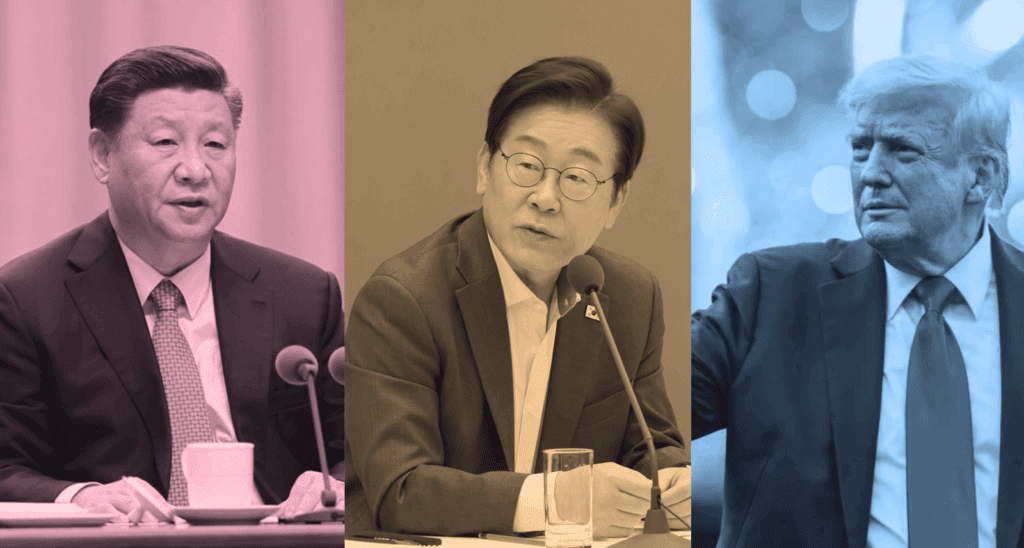
The official narrative says China became hostile. That Trump is taking a firm stance.
That’s not the truth. It’s the story they want you to believe.
The real story? It’s much deeper. And much more painful for American pride.
Six Months Ago: The Promise
To understand what happened, we need to go back. Not to yesterday, to six months ago.
In May 2025, Trump stood in Geneva after negotiation rounds with the Chinese delegation. The smile on his face said everything. He told reporters that China agreed to ease restrictions on rare earth minerals, and things were moving in the right direction.
Then in June, after the London meeting, he wrote on his platform with absolute confidence: “Our deal with China is done. Full magnets and any necessary rare earth minerals will be provided upfront from China.”
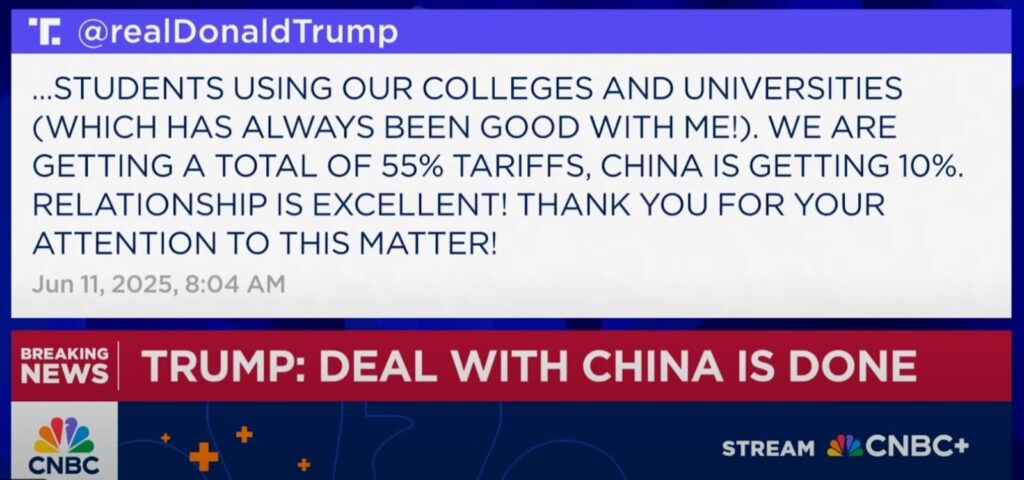
The markets rose. Analysts cheered. It looked like the deal of the century between America and China was about to happen.
The APEC summit in South Korea, scheduled for one week from now, was supposed to be the perfect stage for Trump’s official victory announcement.
Behind Closed Doors: A Different Reality
But in the boardrooms of major American companies, there was a completely different story.
CEOs at Apple, NVIDIA, and Boeing knew something: China talks a lot but does nothing.
The rare earth minerals they promised? They never arrived. Or they came in tiny, sporadic amounts.
Every time they called Chinese suppliers, the answer was the same:
- “Administrative delays”
- “New customs procedures”
- “We need additional approvals”
The result? American stockpiles of critical rare earth minerals started running out. Production lines began slowing down gradually. Worry turned into alarm.
But publicly? Everyone smiled and said negotiations were fruitful and the future looked bright.
This is where the first thread unravels.
China Wasn’t Negotiating, It Was Playing a Different Game
China wasn’t negotiating at all. It was playing a game called “gradual erosion.”
Every day that passed without minerals arriving was a day America grew weaker and China grew stronger.
Beijing knows this well because it studied history. When Arab countries imposed an oil embargo in 1973, they didn’t need to fire a single bullet to bring the West to its knees. They just closed the tap and waited.
China is doing the same thing now, but smarter.
They didn’t close the tap completely. They reduced the flow gradually, smiled, and said they were working on solving “administrative problems.”
October 9th: The Real Blow
Then came October 9th, exactly 22 days before the scheduled Korea meeting.
Pay close attention to the timing. It’s not a coincidence.
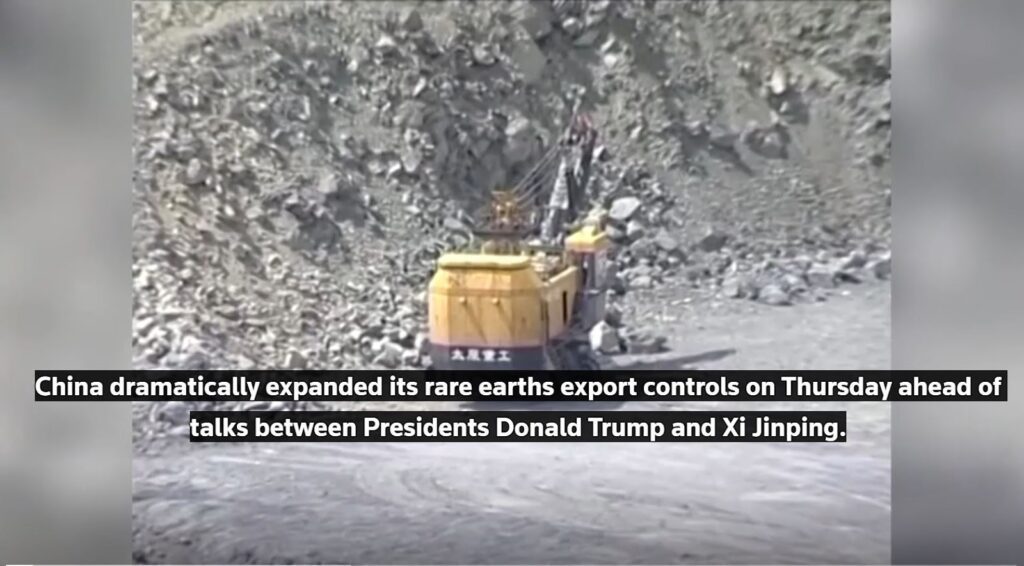
China’s Ministry of Commerce announced a crazy decision. The American media called it a “precautionary measure.”
It wasn’t. It was a calculated strategic strike at the perfect moment.
What Did China Actually Do?
China added five new elements to its list of rare earth minerals banned for export to America. These joined seven other elements that had been restricted since April.
Total: 12 elements under complete Chinese control.
But the problem isn’t the number, it’s the critical importance of these elements.
Why These Minerals Matter
Without these 12 elements, you cannot manufacture:
- A Tesla car
- An F-35 fighter jet
- The hard drive in your computer or phone
Literally. Without these elements, American tech, defense, and energy companies cannot operate.
The Genius (And Danger) of China’s Move
But China didn’t just ban exporting these minerals. They did something smarter and far more dangerous:
They banned exporting the technology and equipment used to mine, process, and refine these minerals.
This means even if America found a huge mine in its own territory tomorrow, it couldn’t extract or process the minerals without Chinese technology.
Processing rare earth minerals isn’t like drilling for oil. It’s an extremely complex chemical process requiring decades of expertise.
That expertise exists only in China.
China controls 90% of the global rare earth industry.
They also banned any cooperation or partnerships in rare earth projects with foreign entities without official approval, approval that will never be granted.
The Chokehold Strategy
China knows companies like TSMC, Samsung, and Intel that manufacture chips cannot operate without a continuous flow of rare earth minerals from China.
By cutting or even reducing this flow, China can paralyze the entire American industry. Not immediately, gradually.
And that’s smarter because it gives the illusion that America has time to find solutions, while in reality, time is running out.
The Message to Trump
What China did on October 9th was a clear, direct message to Trump:
“We don’t need this upcoming meeting more than you do. If you want to come to South Korea, you’ll come begging, not negotiating from strength. We won’t offer any concessions. We want you to understand that we control the lifeblood of your tech industry. When you’re ready to talk realistically, we’re here.”
Trump received the message loud and clear.
The Two Bad Options
After this blow, Trump had only two choices:
- Say nothing and go to the meeting in a week, trying to negotiate from obvious weakness
- Cancel the meeting and pretend (along with his media) that this is a position of American strength
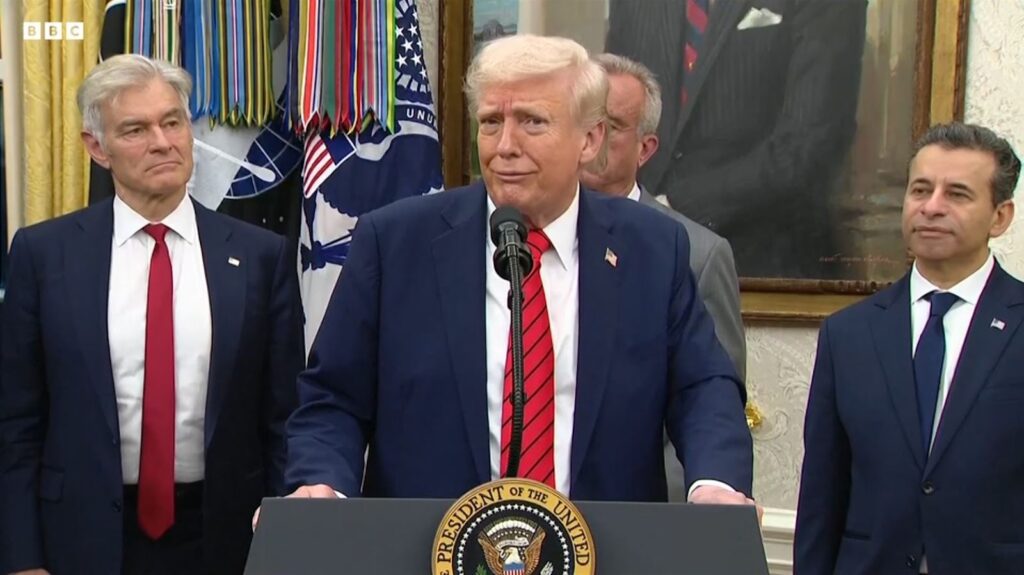
On October 10th, yesterday, he chose option two.
Why Option One Was Impossible
Imagine the headlines if he went to South Korea, met with China’s president, and came back with nothing. Or worse, came back with a deal where China imposed its terms.
The American press would destroy him. Political opponents would call him weak, saying he surrendered to China.
Why Option Two Isn’t Actually Strength
But canceling the meeting isn’t strength, no matter how the White House tries to spin it.
It’s an implicit admission that he has nothing to bargain with.
The 100% Tariff Panic Move
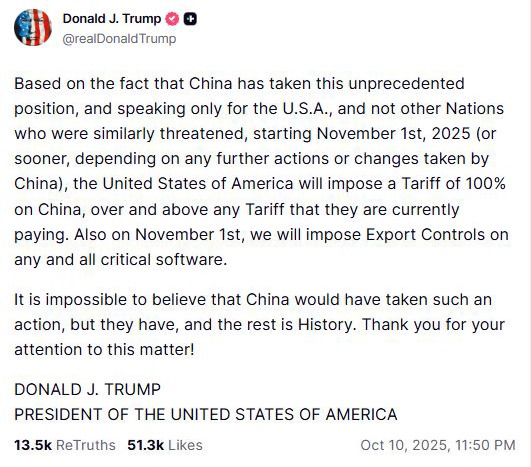
Hours after canceling the meeting, Trump announced 100% tariffs on all Chinese imports.
Double the price on everything coming from China.
When you heard this number, you probably thought Trump was attacking.
The truth is the exact opposite.
This isn’t an attack, it’s the reaction of a cornered man swinging his fists in the air.
Why Tariffs Don’t Work Here
Tariffs are only effective when the other side needs your market more than you need their products.
But with rare earth minerals and China’s 90% control? The situation is completely reversed.
America needs China.
Think about it: When you impose 100% tariffs on rare earth minerals, who pays the increase? Not China, American companies.
Apple will pay double the price for the minerals it needs to make iPhones. And it can’t stop buying because it needs these minerals and there’s no alternative.
The result:
- Apple pays more
- Apple’s profits drop more
- Apple’s product prices rise more
This is exactly what Trump wants it to look like, punishment for China. In reality, he’s punishing American companies, American consumers, and American investors.
China knows this. That’s why they won’t care about the threat.
The Real Problem
The worst part? These tariffs won’t solve the fundamental problem.
The problem isn’t price, it’s availability.
Even if you paid 1,000% tariffs, it won’t:
- Create new rare earth mines in America
- Build alternative processing technology
- Provide the minerals companies need
Trump is trying to solve a strategic problem with the wrong economic tool, one that only hurts the economy and markets.
It’s like trying to put out a fire with gasoline.
The Market Massacre
The proof came immediately.
The moment Trump announced his tariffs, the volatility index spiked above 35%. Markets collapsed in a way we haven’t seen in years.
The Damage:
- S&P 500: Started down 1% in the morning, ended down more than 4%
- NASDAQ: Lost nearly 5.5%
- Semiconductor stocks: Absolute carnage
- Philadelphia Semiconductor Index crashed over 7%
- NVIDIA lost more than 8%
- AMD down 9%
- Intel down 6%
These aren’t just numbers. These are trillions of dollars vanishing from the American economy.
Crypto Got Crushed Too
The crypto market? Over $300 billion wiped out.
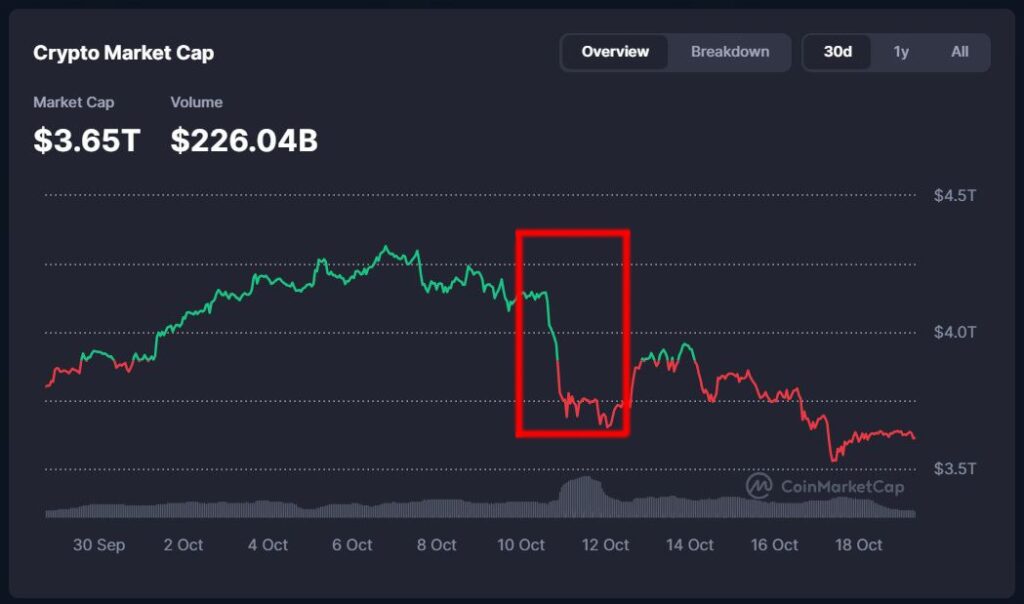
And here’s the thing, crypto has nothing to do with this conflict. But it doesn’t matter. When fear spreads, everything gets sold.
Why This Crash Was Different
You might be thinking: We’ve seen worse trade wars before. Why was this crash so severe?
Because professional investors aren’t stupid.
They understand the language of power. If the tariffs were a strong position for America, markets would have risen, or at least stayed stable. Investors love American strength against China.
But the opposite happened.
What Smart Money Saw
Investors read between the lines. They understood:
- The tariffs aren’t a weapon, they’re desperation
- Trump has no real strategy
- American companies and citizens will pay the price dearly
- The trade war won’t end soon, it will escalate
100% tariffs mean the price of everything from China will roughly double. And America is China’s biggest customer.
This will reflect directly in consumer prices, meaning higher inflation.
The Federal Reserve’s Nightmare
The American economy is already in trouble:
- Government shutdown (no data for the Fed to make decisions)
- Accelerating inflation
- Slowing job market
- Crushing debt
Now Trump adds the disaster of extreme tariffs.
Any decision the Fed makes won’t be good. Investors know this. They know things aren’t going well.
Because what we’re witnessing is nothing less than the formation of a parallel economic system, an American bloc and a Chinese bloc.
The Only Winner: Gold
This explains why gold surged while everything else collapsed.
Gold jumped more than 2% to new record highs.
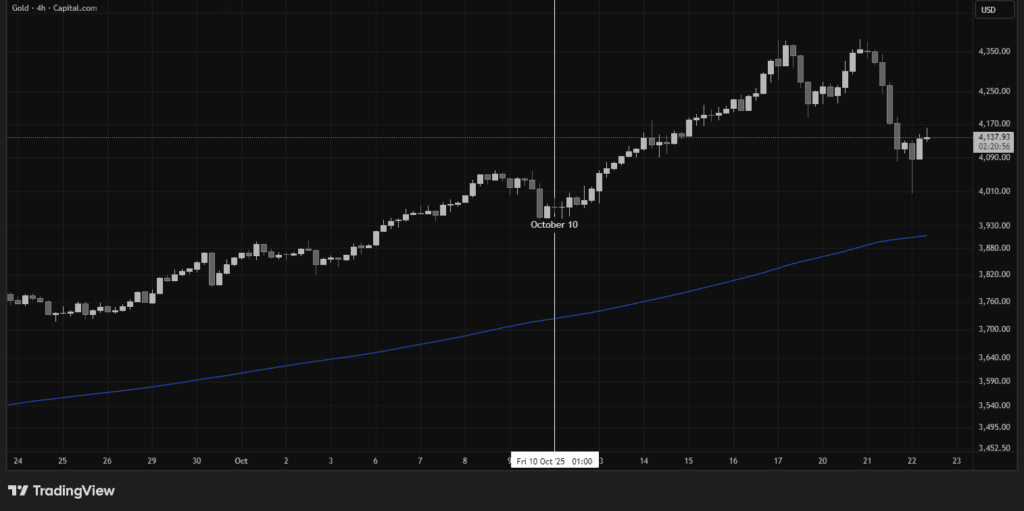
This makes perfect sense. Gold is the classic safe haven. When investors feel the world is entering long-term chaos and uncertainty, they flee to gold.
Because gold is the only asset that can’t be printed, can’t be canceled, and doesn’t depend on trust in any government or company.
What Trump Didn’t Know (Until Now)
There’s a deeper layer to this story that nobody talks about:
Trump himself probably didn’t realize the size of the problem until very recently.
For months, his advisors told him the deal was close, that China would surrender soon. He believed them because China was lying to him.
When the October 9th announcement came, when he clearly saw that China wasn’t just unwilling to concede but was actually advancing and tightening restrictions more, and had been lying for months, the truth was revealed.
He’s not negotiating from strength at all. He’s negotiating from weakness.
China didn’t become hostile today. It was hostile the entire time. It was just smiling and speaking politely while slowly tightening the grip.
Trump discovered this far too late.
His tariff reaction wasn’t a calculated strategy, it was a scream in the dark.
China’s Brilliant Move
China knew he would cancel the meeting. They probably wanted him to cancel it.
Because Trump canceling serves China’s narrative perfectly.
Beijing can now tell the world: “We were ready for dialogue, but America withdrew. Then they imposed unreasonable tariffs.”
This puts the blame on Washington, not Beijing. It portrays China as the rational party that wants peace, while America is the reckless party escalating without reason.
This narrative matters immensely, especially to developing countries watching the conflict, trying to decide which side to stand with when the economy splits into two blocs.
The Investment Opportunities
From all this chaos, there are real investment opportunities for those who know where to look.
1. American Rare Earth Mining Companies
Companies like:
- MP Materials
- Energy Fuels
- USA Rare Earth
- Others
These companies will now receive unprecedented government support because American national security requires it.
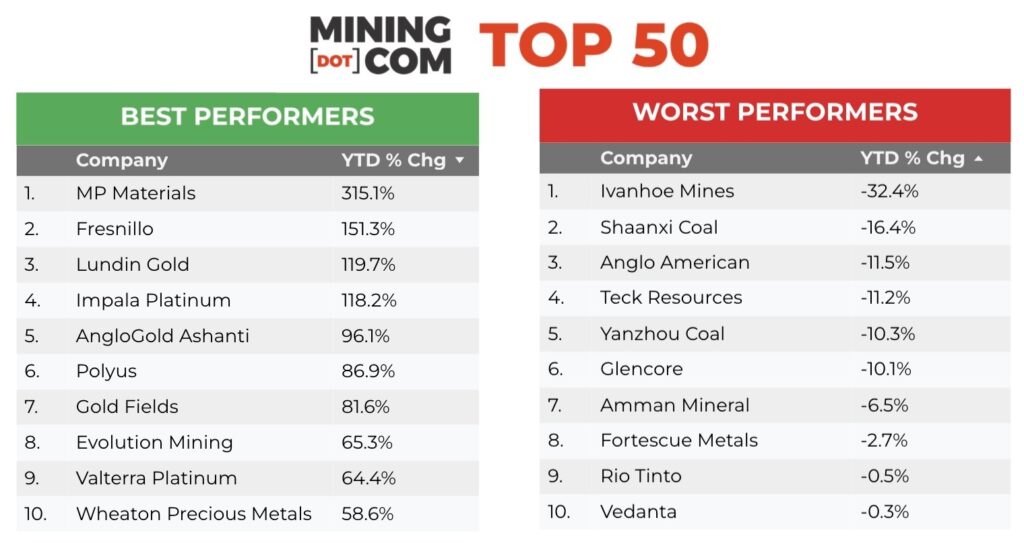
They’ll find themselves protected from Chinese competition by a 100% tariff wall. Result? They can raise prices and increase profits.
That’s why we saw these stocks surge yesterday while the rest of the market collapsed.
This trend will continue. Whoever owns the alternative to China becomes king in the American market.
2. E-Waste Recycling Companies
Look for companies that recycle waste from phones and batteries to extract rare earth minerals instead of mining them.
This sector will also benefit massively, especially since America doesn’t have rare earth mines.
3. Gold (The Long-Term King)
Gold will remain king for a very, very long time.
It’s the only beneficiary of all this chaos.
What This Means for Bitcoin and Crypto
Now let me connect the dots to what matters for us.
The De-Dollarization Accelerates
When the global economy splits into two blocs, countries in the middle need a neutral settlement layer. They need something that doesn’t belong to America or China.
That’s exactly what Bitcoin is.
While short-term panic selling hit crypto markets (like it hit everything), the long-term thesis for Bitcoin gets stronger with every step toward a bipolar economic world.
Inflation Is Coming
100% tariffs + supply chain disruptions + rare earth shortages = massive inflation.
The Fed is trapped:
- Can’t raise rates (would crash the economy)
- Can’t lower rates (would fuel inflation)
- Can’t print more money (would destroy the dollar further)
Bitcoin was literally designed for this scenario. Fixed supply. No central authority. Can’t be inflated away.
Safe Haven Narrative Strengthens
Notice how gold surged while everything collapsed?
Bitcoin is increasingly being seen in the same category, a safe haven from government monetary chaos and geopolitical uncertainty.
Yes, it’s more volatile than gold. But the direction is clear: When trust in institutions crumbles, people flee to assets governments can’t control.
Altcoins: The Wild West Just Got Wilder
For altcoins, this environment is treacherous.
Risk-off sentiment means capital flows out of speculative assets. Most alts will suffer in the short to medium term.
But: The projects building real infrastructure for a decentralized, censorship-resistant financial system? The ones solving actual problems in a fragmenting world?
Those could emerge as massive winners when the dust settles.
Focus on utility. Focus on adoption. Ignore the noise.
The Bottom Line
What happened isn’t just another trade dispute. It’s a fundamental restructuring of global power and economic systems.
America just learned it doesn’t control the chessboard anymore. China does, at least when it comes to the physical materials that power our digital age.
The response will be messy, painful, and inflationary.
For us in crypto, this validates everything we’ve been saying:
- ✓ Decentralization matters
- ✓ Governments can’t be trusted with absolute monetary control
- ✓ Neutral, global assets become essential in a multipolar world
Gold is having its moment. Bitcoin’s moment is coming.
The question isn’t if anymore. It’s when.
And if you’ve read this far, you’re already ahead of 99% of investors who still think this is just about tariffs.
Stay sharp. Stay positioned. The world is changing faster than most people realize.
As always, this article reflects market observations, not financial advice. For deeper insights, visit blog.millionero.com and when you’re ready, trade spot and perpetuals confidently on Millionero.