


The Federal Reserve’s December meeting delivered what markets expected: a 25 basis point rate cut, bringing the federal funds range down to 3.50–3.75%. The Fed described growth as “moderate,” noted that job gains have slowed, and said inflation is still “somewhat elevated.” It also signaled only one more cut in 2026 and no rate hikes on the horizon, while restarting Treasury bill purchases to keep bank reserves comfortable.
Inside the room, the decision was not unanimous. The vote was 9–3: one member wanted a bigger 50 bp rate cut, while two preferred no change at all. That split tells us the Fed is easing, but still arguing about how fast.
Bitcoin’s “Buy the Rumor, Sell the News” Move
In the days before the meeting, traders piled into risk. Bitcoin pushed toward ~$94k, as markets positioned for the cut that almost everyone expected.
Once the decision arrived, the classic pattern showed up:
- the news hit,
- the rumor trade was over,
- and Bitcoin slipped 2–3%, drifting back into the low $90k range.
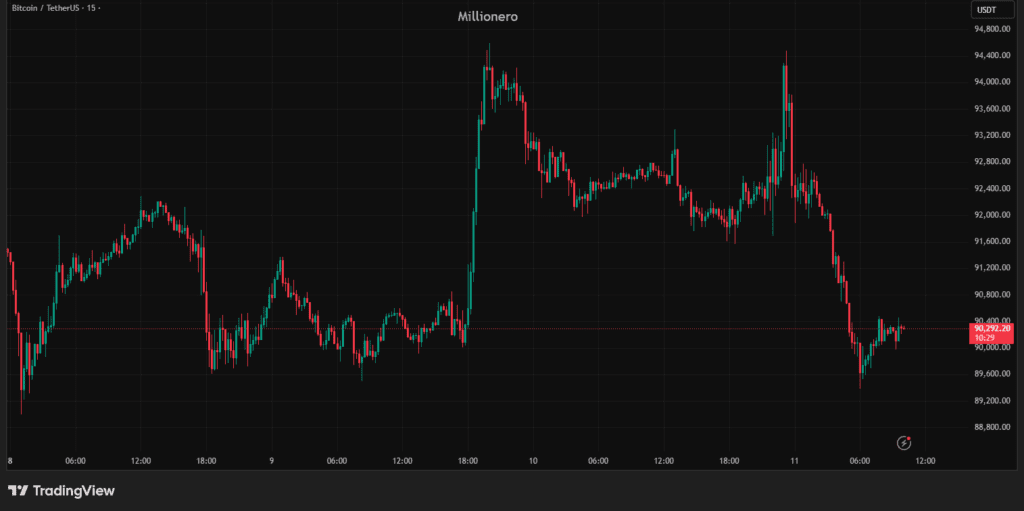
On-chain and derivatives data show a simple story: leveraged longs built up into the event, then were forced out as price faded. This is a textbook “sell the news” phase, not yet a clear change in the long-term trend.
A Market That Still Needs to “Catch Up”
So far this year, Bitcoin has lagged other major assets: it is slightly negative year-to-date while the S&P 500 is up strongly and gold has surged more than 60%.
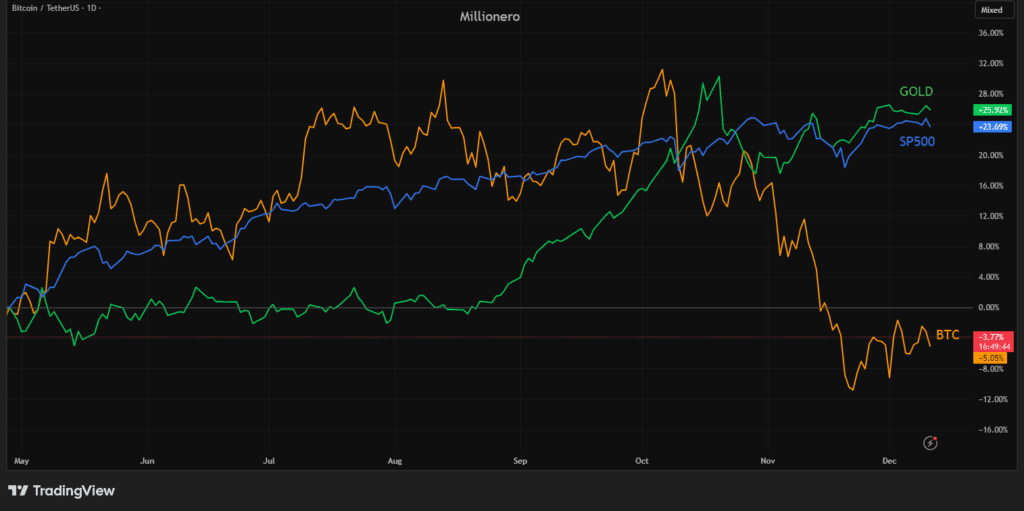
That gap matters. If Fed policy keeps shifting toward easier money and liquidity improves, Bitcoin may eventually need to “catch up” to those assets, especially if its digital-gold narrative holds. But in the short term, the market is still digesting:
- profit-taking after the pre-FOMC rally,
- unwinding of over-leveraged positions,
- and whales selling into retail enthusiasm.
Most observers see this as a pullback inside a broader easing cycle, not a structural breakdown. But the next move will likely depend on the next catalysts, not this single cut.
Catalysts Beyond Fed Rate Cuts
Fed decisions still matter, but they are no longer the only driver of Bitcoin. Several other forces could shape the next leg of the cycle.
1. Global Liquidity and Other Central Banks
Even if the Fed slows its cuts, policy in Europe, Japan, and emerging markets can shift the global liquidity tide. Changes in bond markets, fiscal stimulus, and currency pressures all affect how much “spare” capital can flow into crypto. Recent analysis highlights how a weakening macro backdrop and shifting rate expectations worldwide are already pulling liquidity back and forth around Bitcoin.
2. ETF Flows and Institutional Access
Spot Bitcoin ETFs have pulled in tens of billions of dollars since launch, creating a new, steady channel of demand from pensions, wealth managers, and family offices.
Banks are now starting to open the door wider. For example, Bank of America will soon allow its private-bank and Merrill advisors to actively recommend crypto ETPs to clients, rather than just execute trades on request.
At the same time, banks like Standard Chartered have reduced their near-term price targets but still keep very high long-run projections, suggesting they see a slower path, not the end of the story.
The key here is simple: ETF flows and bank channels can quietly turn on new demand, even in a choppy macro environment.
3. Regulation, Stablecoins, and Legal Clarity
Another major catalyst is regulation that finally clarifies the rules. In the U.S. and Europe, lawmakers are working on frameworks for tokens, DeFi, and stablecoins. Analysts expect clearer rules to reduce legal risk and lower costs for both retail users and institutions.
Stablecoins, in particular, are becoming a kind of “Banking 2.0”, a new layer of dollar-like money that moves 24/7 across borders. A recent whitepaper argues that large-scale stablecoin use could reshape how banks handle payments, lending, and reserves, making crypto rails part of everyday finance.
If stablecoin regulation settles in a friendly way, it could unlock much broader on-chain dollar use, which tends to benefit Bitcoin as the main reserve asset of the ecosystem.
4. Technology, DeFi, and Tokenization
On the tech side, Ethereum upgrades and Layer-2 networks keep pushing fees down and throughput up, while DeFi becomes more efficient and less fragile.
At the same time, tokenization of real-world assets, bonds, funds, and even private credit, has turned into a serious business line for large asset managers. This tightens the link between traditional markets and blockchain rails, and keeps attention on the broader crypto stack where Bitcoin is still the flagship asset.
What Markets Will Watch Next
From here, the story is less about one rate cut and more about the sequence:
- incoming inflation and jobs data that could confirm or challenge the Fed’s path,
- the next FOMC meeting and any hint that cuts might speed up or pause,
- ETF flow data, do inflows return, or do outflows deepen?
- and signs of regulatory progress, especially on stablecoins and exchange rules.
Bitcoin is now sitting in a typical post-event cooldown, with traders asking a simple question:
What is the next rumor worth buying before the next piece of news hits?
Until that answer is clear, expect more noise than trend. But the deeper forces, liquidity, regulation, technology, and institutional access, are slowly rewriting how Bitcoin trades, and they may matter more than any single Fed press conference.
This article is not financial advice. Markets are complex, and every investor’s situation is different. Please do your own research and think carefully about risk before you act.
If you want to dig deeper into crypto, macro, and market structure, you can explore more educational content on blog.millionero.com. And when you feel ready to turn research into action, you can trade spot and futures on Millionero, but always with a plan, and always within your risk limits.