



Bitcoin Outlook: Over the last few days, three signals have been flashing at the same time: retail traders are leaning bearish, big U.S. banks are building Bitcoin access, and Fidelity is openly asking whether Bitcoin’s famous 4-year rhythm is changing. On the surface, these ideas can feel unrelated. But together, they describe one big theme: crypto is still emotional in the short run, yet it is getting more “institutional” in the long run, and that can reshape how markets move.
Retail mood turns negative (and why that can matter)
Santiment’s social data tracks what people are saying in public, especially whether the crowd is calling for prices to go “higher” or “lower.” This chart from Santiment shows a clear shift: talk about prices going lower/below starts to dominate. In plain words: more people expect downside.
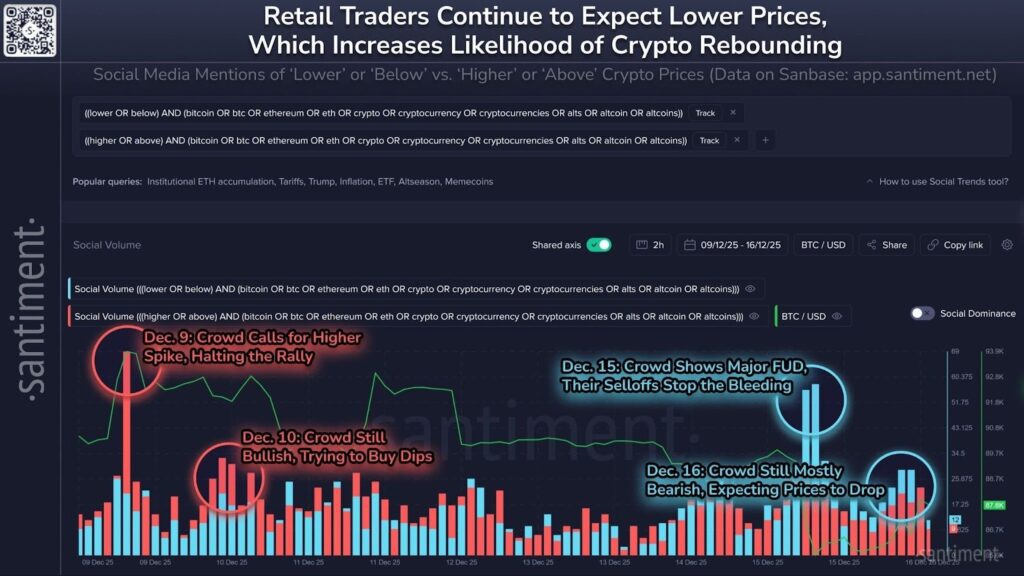
That matters because markets often punish the majority’s comfort. When everyone feels safe being bullish, rallies can run out of fuel. When fear spreads, selling can become overdone. That is why traders call extreme retail pessimism a contrarian indicator: it can be a setup for a rebound, not a guarantee of one.
The chart’s annotations make the psychology even clearer:
- When the crowd loudly called for higher prices (early in the window), the rally struggled.
- When FUD grew and the crowd turned defensive (later in the window), the selling pressure started to cool off.
This does not mean “bearish tweets = number go up.” It means something more subtle: when most people are positioned for pain, the market needs fewer buyers to stabilize. Even small pockets of demand can start to lift price, because there are fewer confident sellers left.
Fear can be a brake on risk. But once fear becomes crowded, it can also become fuel for a bounce.
Big banks: from “ignore” → “resist” → “adopt”
This image from River is the opposite side of the same story. It lists “Bitcoin products by top 25 banks in the U.S.” and it shows a steady shift away from “not yet.”
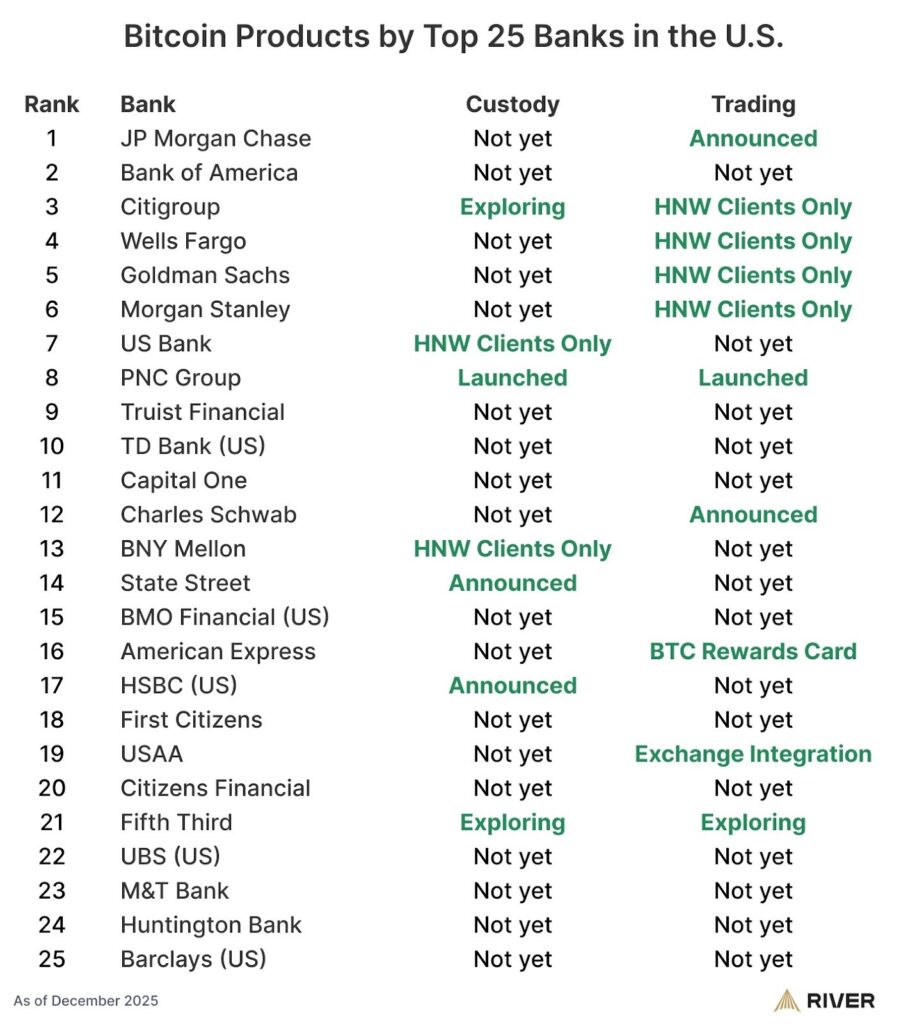
The key point is simple and powerful: 14 of the top 25 banks are developing some form of Bitcoin product for clients after years of ignoring it, then pushing back against it. The pattern is familiar in finance:
Ignore → Resist → Adopt
And adoption here does not always mean “full crypto mode.” It often starts with controlled, limited access:
- Trading for HNW clients only (high-net-worth clients)
- Custody being explored instead of fully launched
- Announcements before full rollout
- Product “edges” like a BTC rewards card rather than direct spot buying
- “Exchange integration” instead of a bank rebuilding everything in-house
This is how conservative institutions move. They do not jump in to look cool. They move when clients keep asking, when competitors move first, and when the risk of doing nothing becomes bigger than the risk of doing something.
The bigger implication is not about one bank. It’s about distribution. If Bitcoin access becomes normal inside traditional banking apps and advisory channels, that changes who the marginal buyer is. It can also change how dips behave: not every dip becomes a panic. Some dips become a scheduled allocation opportunity for people who think in quarters and years.
Fidelity’s question: are the 4-year cycles ending?
This one frames a question many investors are now asking: could Bitcoin’s 4-year cycles be over? The classic story is tied to the halving and to reflexive bubbles, big run-ups, big crashes, then repeat.
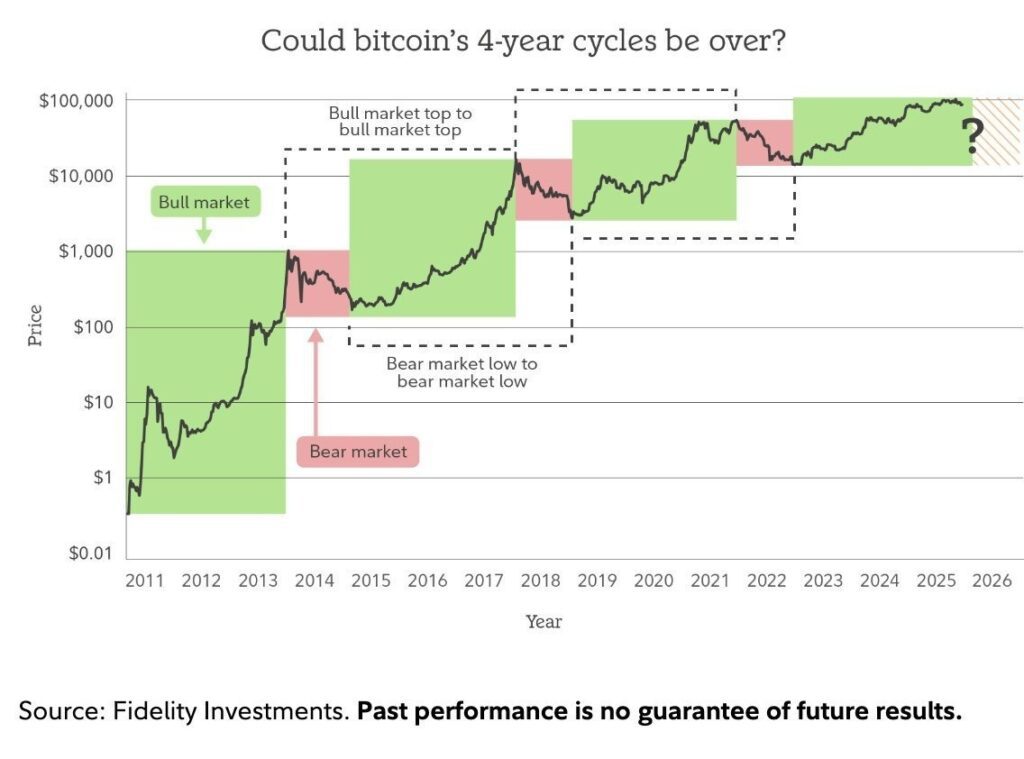
Fidelity is pointing to a new possibility: a “supercycle” mindset, where Bitcoin behaves less like a repeating meme and more like a long adoption curve. This idea is not magic. It comes from real structural changes:
- Bitcoin is more integrated into mainstream finance than in early cycles.
- More capital can access it through institutional rails (funds, custody solutions, bank platforms).
- Market participants are more diverse: not only retail leverage, but also long-only holders, advisors, and corporate-style treasury logic.
Still, “cycles are over” is a strong claim. A more realistic version is this: the halving may matter less than before, while macro liquidity and institutional positioning matter more. That can stretch cycles, soften some drawdowns, or create new kinds of volatility, especially around policy, rates, and risk sentiment.
So the real takeaway is not “the 4-year cycle is dead.” It’s: the market is maturing, and the old map may not perfectly fit the new terrain.
4) Putting it together: what this mix can signal
When you combine these three signals, you get a coherent picture:
- Retail sentiment is bearish → short-term pressure and fear, but also contrarian potential.
- Banks are building products → longer-term adoption keeps advancing, even when price mood is ugly.
- Cycle assumptions are being questioned → because the buyer base, access points, and “drivers” are changing.
If you want a simple framework, watch for this tension: weak mood now vs. stronger structure later. Markets can stay weak longer than people expect, but structural adoption often keeps moving quietly in the background.
A few practical things to watch next
- Is bearish retail talk getting extreme (peaking), or just starting?
- Do dips get bought faster than they did earlier in the year?
- Are institutions expanding access (more “launched,” fewer “not yet”)?
- Does macro news dominate price moves more than halving narratives?
In crypto, the crowd’s emotions can turn on a dime. But the slow building of financial infrastructure is harder to reverse. And that is why this moment feels important: retail is nervous, while institutions are preparing.
This article is pure speculation and not financial advice. It is meant to help you understand the market and think more clearly, not to tell you what to do.
Always do your own research (DYOR) and make sure any decision fits your risk level and your personal situation. You can find more simple guides and deep market explainers on blog.millionero.com. When you feel ready and informed, you can trade spot and futures on Millionero in a careful, step-by-step way, never with money you cannot afford to lose.