



From Sunday evening (Jan 18, 2026) through today (Jan 21, 2026), crypto didn’t just “dip.” It slid, then fell faster, because the market was carrying too much leverage at the exact moment traditional markets got hit by a shock from Japan’s bond market.
This is the clean way to read what happened: a macro stress wave arrived first, and crypto’s leverage made the move violent.
The first crack: Sunday evening risk-off shows up in crypto
Bitcoin had been holding near $95K over the weekend, but Sunday night is when the mood shifted. The market suddenly started pricing a more cautious world: people reduced risk, and crypto, being one of the easiest “risk trades” to exit, moved first.
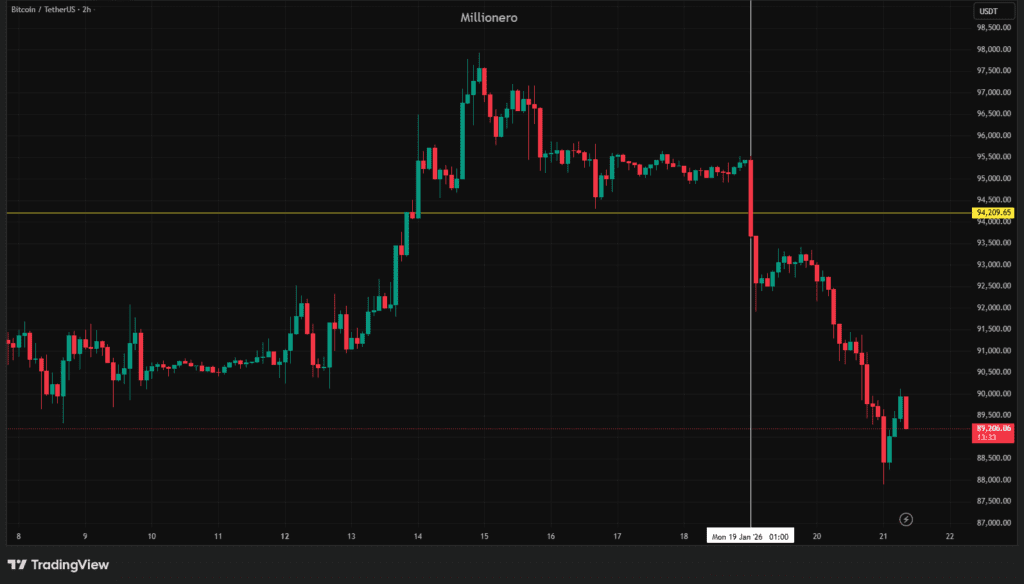
By Monday (Jan 19), BTC was already under pressure, and a lot of traders who were positioned for a calm continuation got punished. With total liquidations around $875M in 24 hours, with longs taking the bulk (roughly $788M longs vs $88M shorts).
That matters because when longs get liquidated, it’s not a normal sell. It’s forced selling.
Why liquidations make drops feel like “falls off a cliff”

So a normal drop can turn into a cascade.
That’s exactly why Sunday night’s move didn’t stay “small.” Once BTC slipped, it started stepping on leverage.
“It’s Japan”: the bond shock that spilled everywhere
Now zoom out. While crypto traders were busy watching charts, rates traders were watching Japan.
At Davos, U.S. Treasury Secretary Scott Bessent framed the selloff as a global bond shock, saying Japan’s market saw a “six standard deviation” move, and that it was pushing yields higher beyond Japan, Germany, France, and the U.S.

A big, abnormal move happened in Japanese government bonds, and it leaked into global borrowing costs.
Why does that hit crypto?
Because when yields jump, the “safe” option starts paying more. Investors don’t need to reach as hard for risk. Money shifts toward cash-like assets, short-duration bonds, and safe havens. Risk assets, from tech to crypto, often get sold in that kind of environment.
Japan’s bond market stress was also tied to domestic politics and fiscal fears. Reuters described long-dated Japanese yields jumping to record highs as election-linked tax-cut promises revived worries about already-strained public finances.
And the 20-year JGB auction showed weaker demand than usual, with a bid-to-cover of 3.19, down from 4.1 at the prior auction.
When bonds wobble like that, global portfolios rebalance. And crypto, again, tends to be the easy thing to trim.
The yen trade added fuel
At the same time, positioning in the Japanese yen turned more bearish.
The CFTC’s leveraged-funds data shows that between Jan 6 and Jan 13, leveraged funds:
- increased yen shorts by 31,391 contracts
- and reduced yen longs by 4,029 contracts
That’s a net shift of roughly 35K contracts toward betting against the yen, very close to the “biggest weekly jump in years” type of move people were talking about.
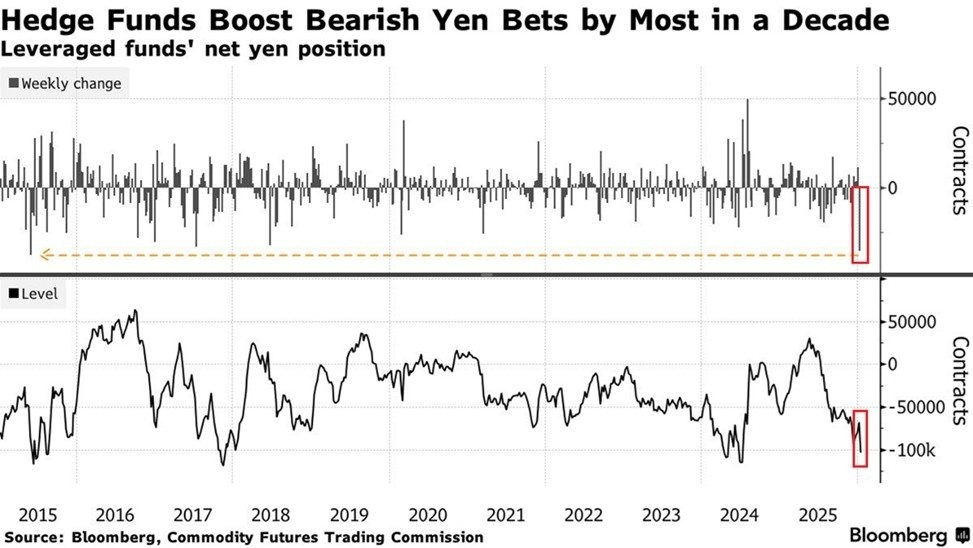
When the yen weakens and Japan’s yields jump, you start hearing the same fear in different words: “something is breaking in global funding.” And when funding feels unstable, leverage everywhere gets cut.
Crypto felt that.
Tuesday to Wednesday: the second leg down, and the bigger flush
By Tuesday (Jan 20) and into Wednesday (Jan 21), the selling pressure didn’t fade, it intensified.
BTC pushed down toward $90K, and then broke lower. One widely-circulated read of the move was: BTC dropping to around $89,000 triggered about $1.09B in liquidations, with roughly 92% coming from long positions.
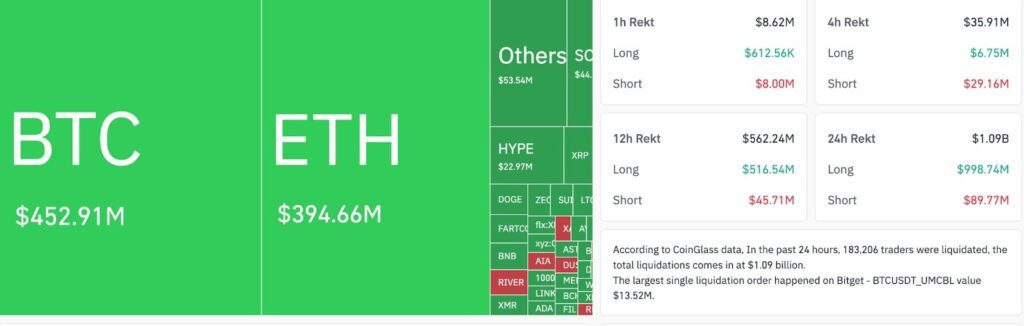
That’s the leverage story, fully grown up: once the market started leaning the wrong way, it wasn’t just traders “choosing to sell.” A lot of it was positions being closed for them.
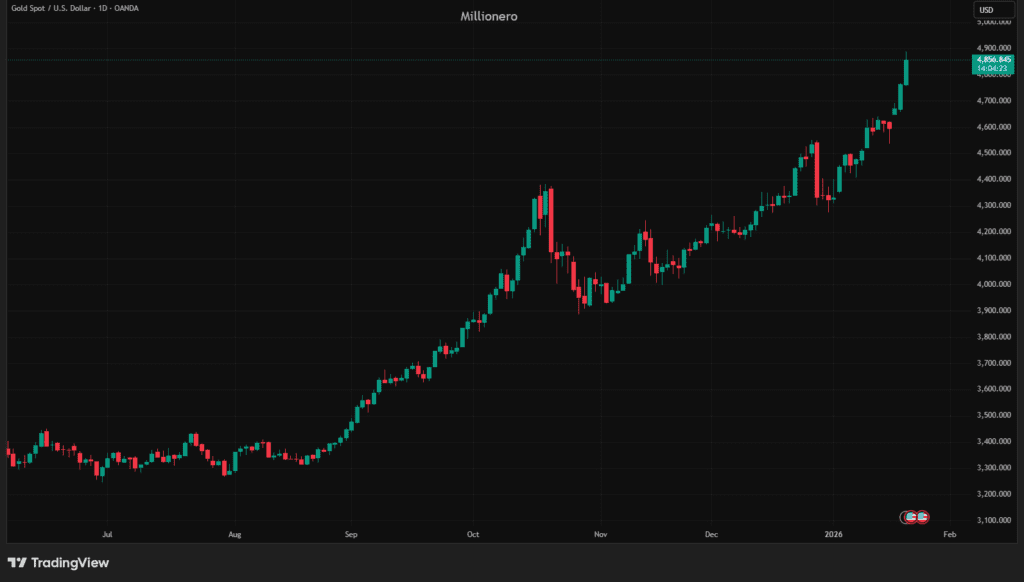
At the same time, the broader “fear trade” got loud. Gold surged above $4,800/oz for the first time on Jan 21, as investors rushed into traditional safe havens.
That kind of gold move is usually the opposite of what you see in a relaxed, risk-on market.
So what actually “caused” the crash?
It wasn’t one thing. It was a sequence:
- Risk mood weakened (Sunday night) → BTC slipped.
- Leverage got exposed → liquidations accelerated the move.
- Japan’s bond volatility pushed global yields higher → risk assets got trimmed.
- Yen positioning turned more bearish → another sign that global funding stress was rising.
- Safe havens ripped (gold over $4,800) → confirming the “get defensive” flow.
Crypto didn’t fail because it’s “bad.” It dropped because it’s high-beta and high-leverage, and those two features are a nasty combo when macro conditions tighten.
Millionero note
Not financial advice. Do your own research (DYOR).
For more market explainers and weekly recaps, read blog.millionero.com. If you trade, use Millionero spot for simple buys/sells, and perpetuals only if you understand leverage and have real risk control.