


Crypto This Week: The first week of September 2025 was packed with drama, announcements, and big shifts across crypto, traditional markets, and politics. From on-chain Pokémon cards outpacing stocks, to WLFI’s controversial launch, to gold nearing $3,600, the stories this week all pointed to one thing: finance is changing fast, and not always fairly. Let’s break it down by topic.
Tokenization and On-Chain Markets
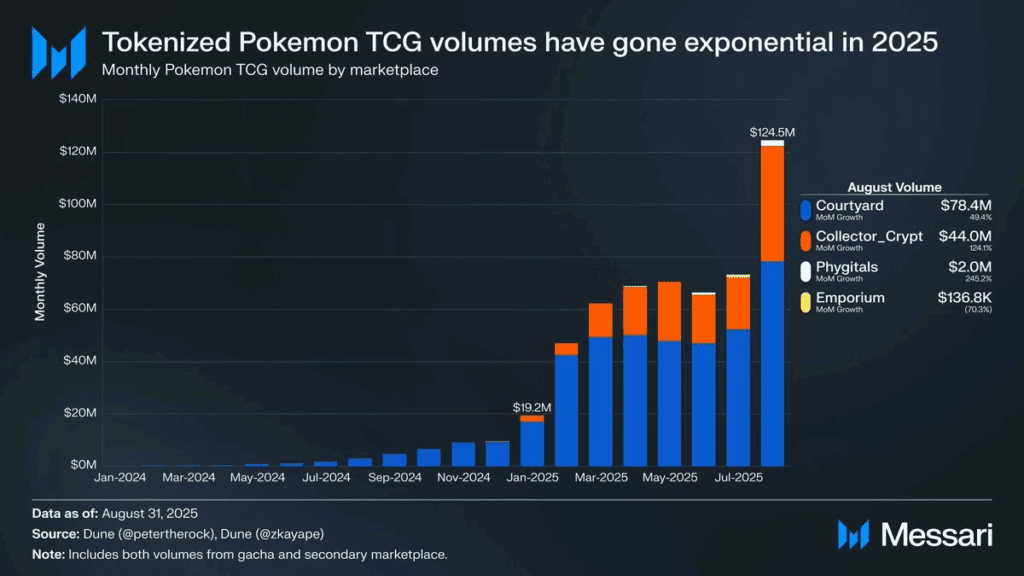
A surprising highlight this week came from the entertainment world. In August, on-chain trading volume of tokenized Pokémon cards actually surpassed xStocks, the tokenized stock platform. This raised an important question: could entertainment assets one day outperform traditional financial products?
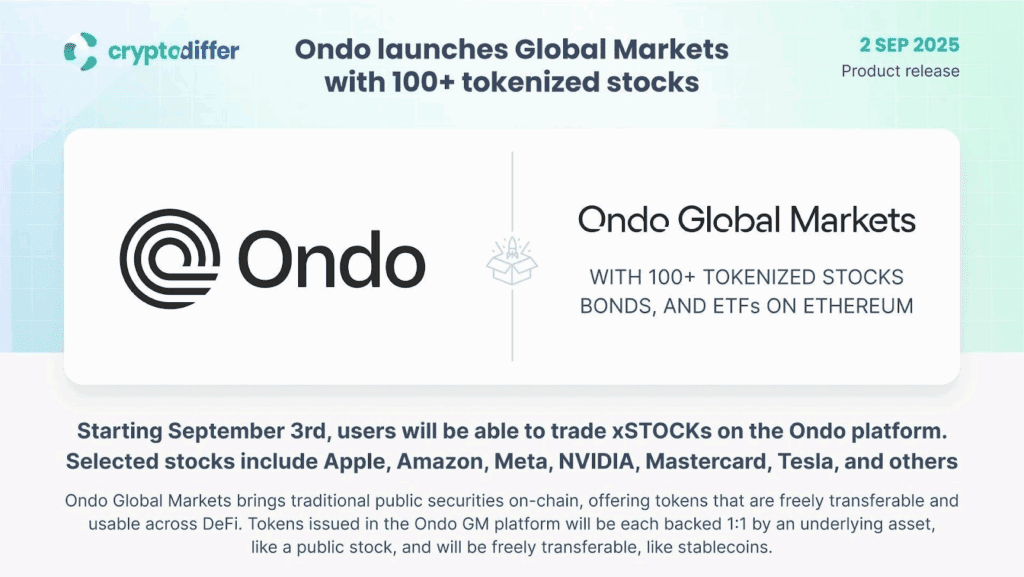
Meanwhile, xStocks officially launched on Ethereum, listing 60 tokenized shares of giants like Nvidia, Amazon, Tesla, Meta, and Walmart. It was a big step toward merging stock markets with blockchain. And it’s not stopping there, ONDO Global Markets announced the launch of over 100 tokenized stocks and ETFs, set to open markets to everyone, directly on Ethereum.
Galaxy Digital also made history as the first Nasdaq company to tokenize its SEC-registered shares on Solana, offering over 32,000 shares for 24/7 trading with instant settlement. These moves showed how tokenization is steadily bridging the old and new financial worlds.
WLFI’s Turbulent Launch
The biggest drama was around World Liberty Financial (WLFI). The token launched on September 1st, but instead of the promised 5% community allocation, only 4% was actually available. Liquidity and marketing also ended up at 2.8%, not 1.6%. That made 6.8% of the supply tradable at launch, while the rest wasn’t locked by smart contracts, though not circulating either.
Justin Sun owned 3% of the total supply, with only 20% of his share unlocked. He claimed he wouldn’t sell. Yet, trading action told a different story. The token launched at $0.20 with a $1B market cap, billions in volume, and huge hype, but the price fell fast even though the community wasn’t selling. The suspicion: exchanges may have sold from the 2.8% pool. Sun used his exchange HTX to offer 20% APY deposits on WLFI, which gave him a way to unload while making it look like users were “staking.” Reports later suggested he used customer deposits to cover his locked coins. His wallet was frozen, and small investors paid the price once again.

Sun responded by saying his WLFI coins were “unfairly frozen” and demanded they be released, claiming early investors deserved equal rights. Whether the project was right to freeze his tokens is now a heated debate. But the outcome is clear: another example where retail investors were left holding the bag while insiders played the game.
Institutional Moves and Country-Level Bitcoin Plans
Institutions and nations also made headlines. Sora Ventures launched a $1B Bitcoin fund, planning to acquire the entire amount in just six months. In South America, Paraguay’s Vice President is holding a meeting on creating a strategic Bitcoin reserve. The plan could leverage the country’s huge hydropower surplus, producing three times more electricity than it consumes, to fuel mining operations.
MicroStrategy also stayed in the spotlight. Michael Saylor’s strategy won’t be included in the S&P 500 index, even as his firm purchased 4,048 more BTC worth $449M, bringing total holdings to 636,505 BTC. Meanwhile, Robinhood ($HOOD) joined the S&P 500, showing how mainstream finance is willing to embrace some firms but not others.
Ethereum, Solana, and Network Growth
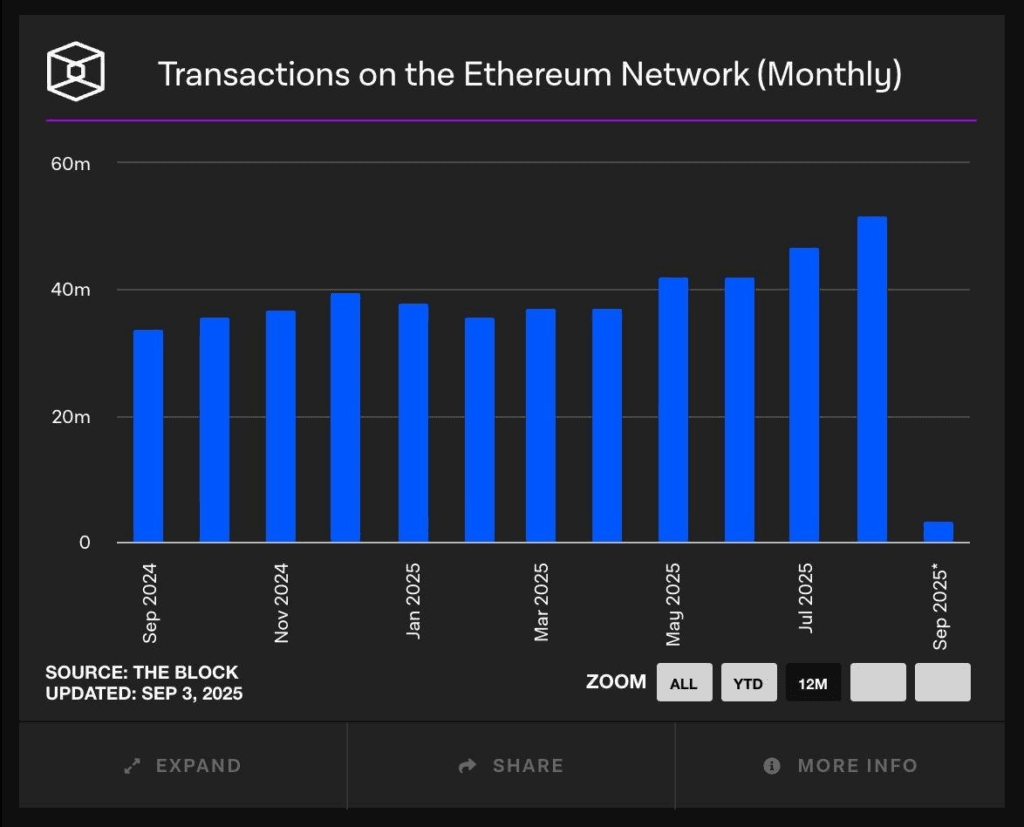
Ethereum had a massive week. More than 50M transactions were recorded in a single month, the highest in its history.
On top of that, over 860,000 ETH (about $3.7B) is now in line to be staked, showing huge demand for network security and yield.
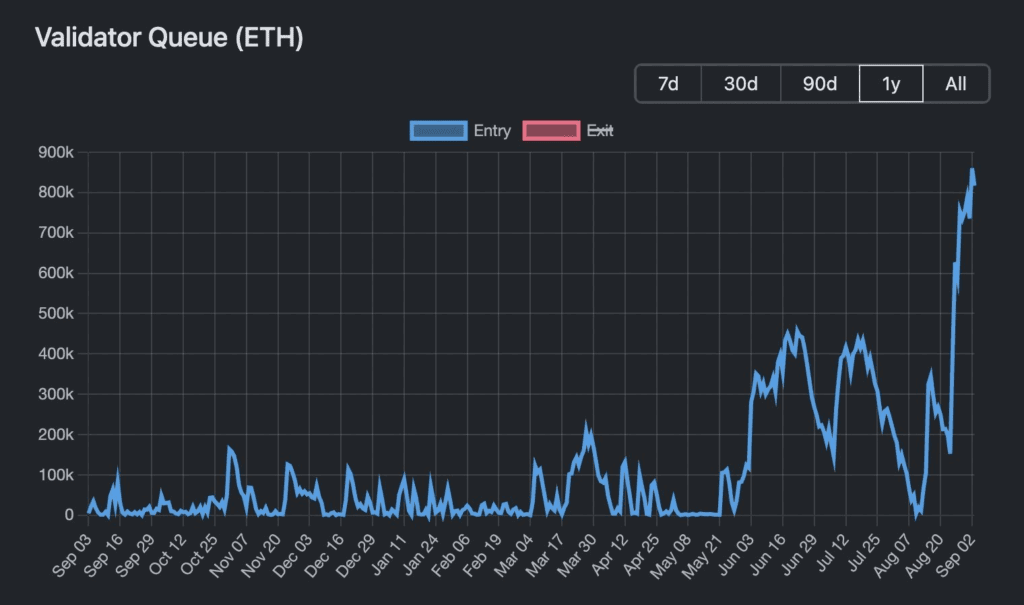
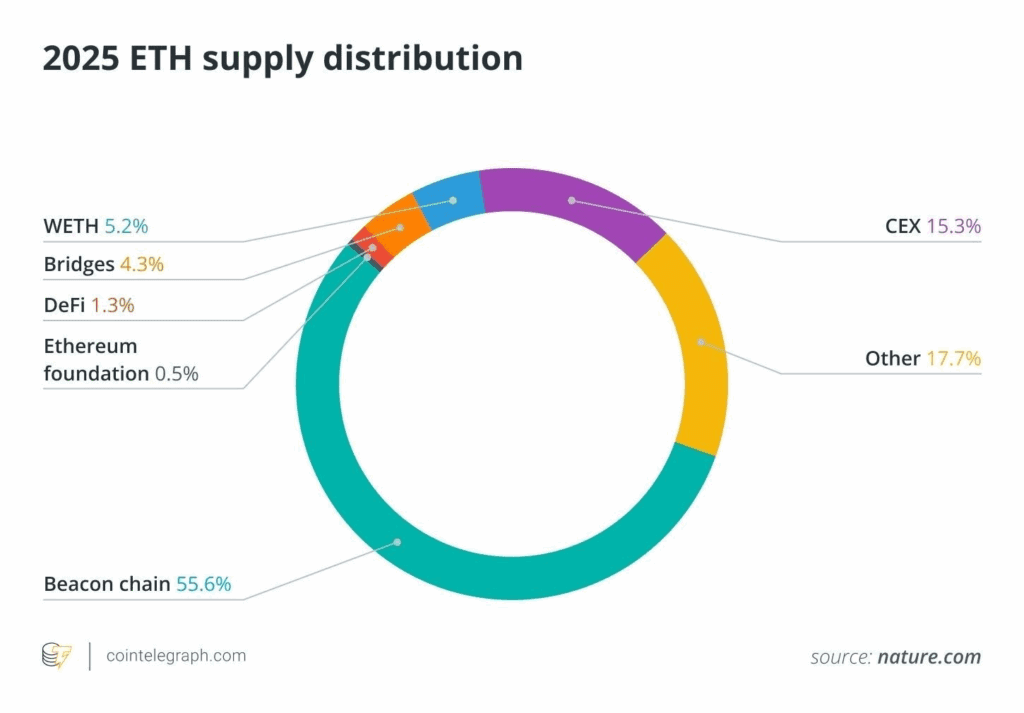
And large players are consolidating power, over 60% of ETH is now held by just 10 wallets, raising questions about stability versus whale control.
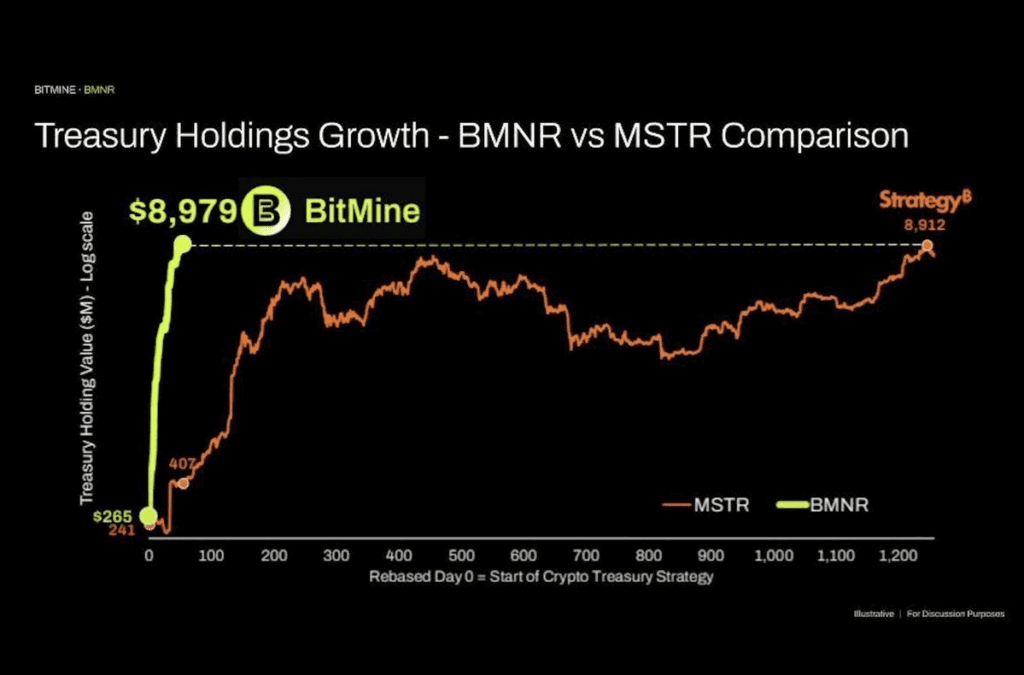
Bitmine also kept buying, adding 14,665 ETH worth $65.3M, bringing its stash to nearly 1.9M ETH valued at $8.4B. Their speed of accumulation is striking, especially compared to MicroStrategy’s slow BTC buildup.
On Solana, a major upgrade is on the way. The SIMD-0326 Alpenglow proposal passed with 98.27% approval, aiming to cut confirmation times to just 150ms, edging closer to instant speed. At the same time, Pump.fun launched “Project Ascend”, a new update to make memecoins more sustainable and community-driven.
Stablecoins, DeFi, and Regulation
Stablecoins also moved into new territory. Wyoming announced the launch of FRNT, the first state-issued stablecoin backed by USD and U.S. Treasuries, built on Hedera. This is a first for a U.S. state and could set an example for others.
The Federal Reserve announced a Payment Innovation Conference for October 21st, where DeFi, stablecoins, AI, and tokenization will be key topics. At the same time, U.S. regulators moved closer to full adoption: the SEC and CFTC opened the door for spot crypto trading on major exchanges like NYSE, Nasdaq, and CME. If realized, this would be another huge step for institutional adoption.
Etherealize, a new Ethereum project, raised $40M in a round led by Electric Capital and Paradigm, with support from Vitalik Buterin and the Ethereum Foundation. It’s being seen as one of the next big experiments in the ecosystem.
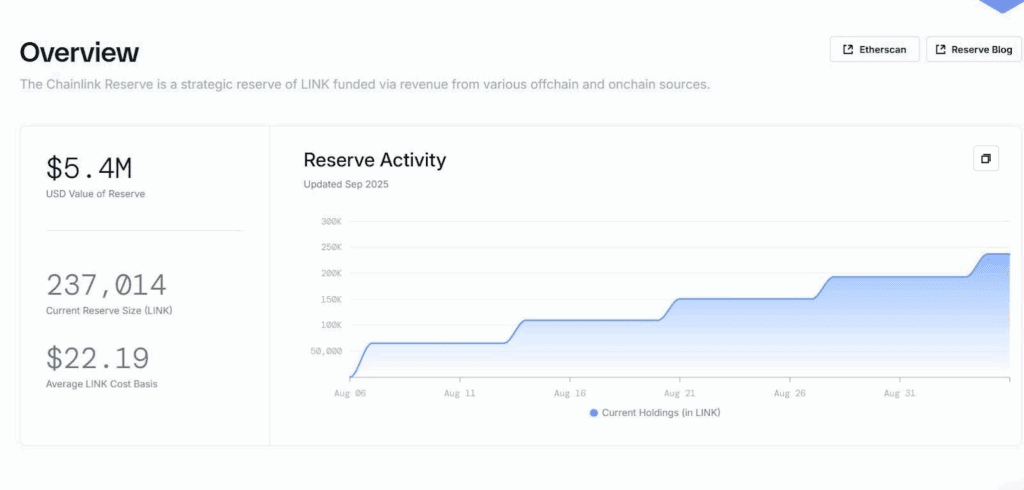
Chainlink also continued its quiet, steady march. Its reserves added another 43,937 LINK, now totaling over $5M worth. Charles Hoskinson of Cardano even admitted he wanted to integrate Chainlink but found the price “too high,” calling founder Sergey Nazarov a man “sitting on a golden egg.”
Macroeconomics and Politics
The U.S. economy delivered mixed signals. The latest non-farm payrolls came in at 54K, far below the expected 73K, while unemployment stayed at 4.3%. Jobless claims ticked up to 237K. The data suggested a cooling labor market, which could push the Fed closer to easing. Reflecting this, Bank of America revised its forecast, now expecting two Fed rate cuts in 2025.
At the same time, the 30-year Treasury yield rose back to 5%, a level not seen since July. This raised concerns about liquidity and its effect on both stocks and crypto. Meanwhile, the White House confirmed a 15% tariff on most Japanese imports, while opening Japan’s markets to U.S. firms.
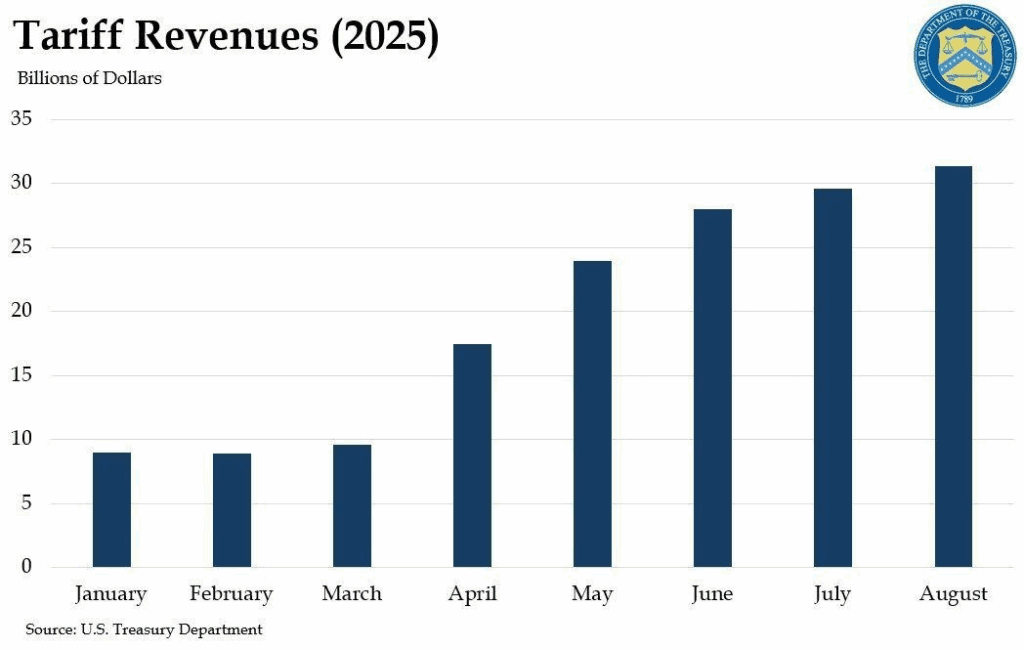
The U.S. also collected $31B in tariff revenue in August, the highest monthly figure this year. Trump suggested tariffs could one day replace federal income tax and warned of heavy tariffs on semiconductor firms not moving to the U.S.
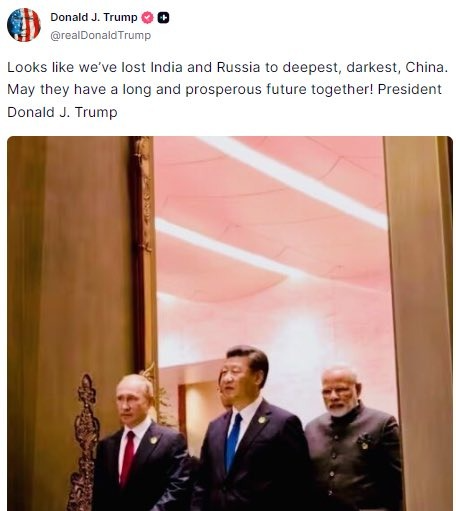
He also criticized losing India and Russia to “deep and dark China,” with sharp geopolitical undertones.
Gold hit $3,600 per ounce for the first time ever, fueled by rate cuts worldwide. It also rose in importance as a global reserve: its share of international reserves climbed to 24%, the highest in 30 years, surpassing the euro and standing just behind the dollar. Bitcoin and gold together sent a clear message, confidence in fiat currencies continues to erode.
Adoption, Real Estate, and Global Integration
Crypto adoption spread into unexpected areas. RAK Properties in the UAE began accepting Bitcoin, Ethereum, and USDT for international real estate payments, showing how digital assets are entering traditional industries. On a larger scale, Central Exchanges targeted Australia’s $2.8T retirement market, aiming to give self-managed super funds (SMSFs) easier access to crypto. These funds already hold $1.7B in digital assets, seven times higher than in 2021.
Closing Thoughts
This week showed two very different sides of crypto. On one side, progress is accelerating. Ethereum transactions hit all-time highs, Solana raced toward near-instant settlement, and nations like Paraguay looked at Bitcoin reserves. On the other side, projects like WLFI reminded everyone of the risks when power concentrates in the hands of insiders.
At the same time, gold and Bitcoin both strengthened their positions as alternatives to fiat, while tokenization blurred the lines between traditional finance and blockchain. The future feels like it’s being pulled in two directions: built by innovators who want to open doors, and shaped by powerful players who still know how to close them.
This recap is not financial advice. At Millionero, we believe knowledge should empower you, not pressure you. Always do your own research (DYOR), explore more insights on blog.millionero.com, and if you choose to trade, know that you can trade both spot and perpetuals on Millionero — built for traders, available 24/7.