



Federal Reserve FOMC weeks often bring a unique rhythm to the crypto markets, especially for Bitcoin (BTC) and Ethereum (ETH). Intermediate traders know that the days surrounding an FOMC (Federal Open Market Committee) meeting can shift from eerily calm to explosively volatile in a matter of hours.
This article breaks down what typically happens during FOMC weeks – from the pre-FOMC “chop” (rangebound, low-volatility price action) to the sudden volatility pockets around the Fed’s decision, and finally the post-FOMC trends or fakeouts that follow.
We’ll explore recent examples (March 2024 and July 2024 FOMC weeks) to illustrate these patterns, and provide a simple playbook on how to trade these scenarios.
What Happens During FOMC Weeks for BTC and ETH?
During an FOMC week, crypto traders tend to adjust their behavior in anticipation of the Fed’s interest rate decision. Bitcoin and Ethereum often experience a distinct three-phase pattern:
- Before the FOMC decision: Markets often turn cautious and rangebound. Traders “de-risk” by reducing leverage or closing positions ahead of the announcement. This can lead to lower volatility and choppy, sideways price action (the pre-FOMC chop).
- During the FOMC announcement and press conference: Volatility spikes. Prices can whip around violently in “volatility pockets” as algorithms and traders react to headlines and Fed Chair Jerome Powell’s comments. It’s common to see sharp moves (and even whipsaws) in BTC and ETH when the news hits.
- After the FOMC decision: Once the dust settles, a more directional move often materializes. Sometimes Bitcoin and Ether embark on a sustained post-FOMC trend in one direction; other times the initial move proves to be a fakeout that reverses course after a few hours or days.
Understanding this typical sequence can help traders prepare a game plan for FOMC weeks. Let’s dig into each phase in detail and look at how these played out in March and July 2024.
Pre-FOMC Rangebound “Chop”: The Calm (and Trap) Before the Storm
Historically, open interest in Bitcoin futures tends to fall before FOMC meetings, indicating traders are reducing leverage and risk exposure. With fewer aggressive positions, price action can become subdued and directionless.
For example, crypto prices often “stall out” and move sideways in the run-up to Fed Day. It’s not unusual to see Bitcoin and Ethereum volume drop and volatility hit short-term lows prior to the announcement.
In some cases, there might even be a slight drift or slow grind up or down, but without commitment. Traders sometimes refer to this low-volatility, rangebound action as “chop” because it can chop up unwary traders – rapid small oscillations trigger false breakouts and stop-outs.
Why does this chop occur? Markets hate uncertainty. With a critical Fed decision looming, both bulls and bears become hesitant. Traders cut risk heading into FOMC meetings, and large players often wait to see the outcome before deploying capital. As a result, BTC and ETH may bounce between support and resistance levels.
Avoiding the chop: In these pre-FOMC conditions, it’s wise to be cautious:
- Don’t overtrade a flat market. If Bitcoin is stuck in a $500 range or Ethereum in a $20 range with no momentum, avoid taking large positions on every tiny breakout attempt. These are likely to be fakeouts that revert back into the range.
- Use range-bound strategies or stay sidelined. If you do trade, consider tactics like short-term scalping at the range boundaries (e.g., fading moves near support/resistance) with tight risk management, or simply wait for the FOMC to pass.
- Keep position sizes smaller. With lower volatility, you might be tempted to leverage up, but remember that a volatility spike is coming. It’s better to reduce size ahead of the event to avoid getting caught wrong-footed by an unexpected pre-Fed rumor or leak.
Real-world example – March 2024: In the week before the March 20, 2024 FOMC meeting, Bitcoin was relatively rangebound, but with a slight bearish bias as some traders anticipated a hawkish stance. In fact, BTC dropped about 11.8% in the lead-up to that meeting, reflecting pre-Fed jitters. Ethereum similarly drifted lower alongside Bitcoin. This cautious pullback set the stage for the drama to follow once the Fed’s decision hit the wires.
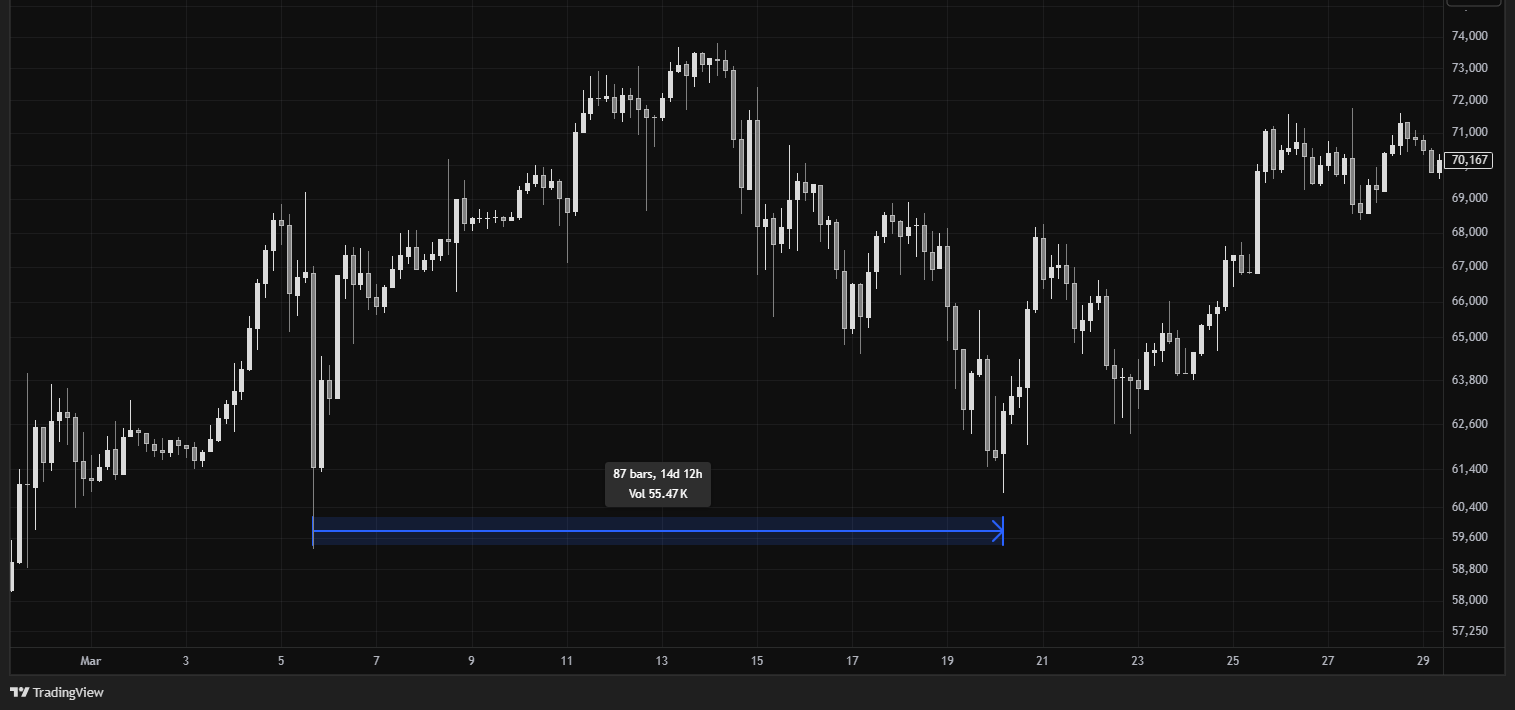
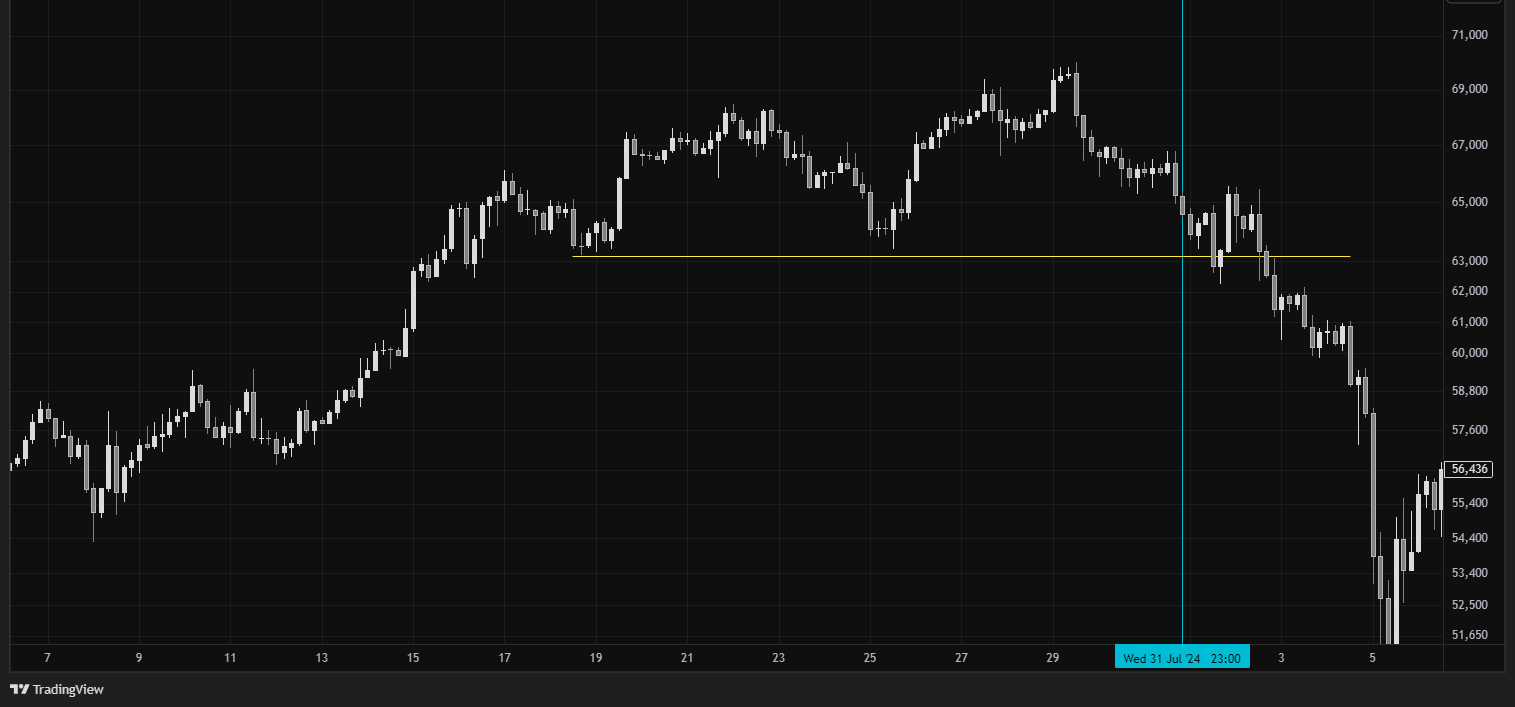
Real-world example – July 2024: Going into late July 2024, BTC and ETH had been rallying earlier in the month, but then stalled as the FOMC meeting approached. Just a few days before the July 31, 2024 Fed meeting, crypto markets suddenly sold off. This downturn mirrored weakness in equities, as investors grew cautious about the Fed and other macro data.
Volatility Pockets Around the Fed’s Decision
When the FOMC announcement finally arrives (typically at 2:00 pm or 2:30 pm Eastern Time on the meeting day), volatility explodes. The previously calm order book can suddenly see large orders hitting in both directions as the news is released.
What happens to BTC and ETH? Often, an initial move is triggered by the headline (e.g., “Fed hikes 25 bps” or “Fed holds rates steady”). Bitcoin and Ethereum might spike up or down within seconds, sometimes by several percentage points, only to swing the other way as the market digests the details. These whipsaws can be treacherous:
- Initial knee-jerk reaction: If the Fed’s move or tone surprises the market, BTC/ETH may lurch in one direction. For instance, a hint at future rate cuts could ignite a quick pump, whereas an unexpected hawkish comment could send prices tumbling in the first minute.
- Potential quick reversal: Just as often, that first move can reverse within minutes. Markets might realize, for example, that a seemingly good outcome (like a rate pause) came with a warning of future hikes, turning a rally into a rapid sell-off.
During the FOMC press conference (starting shortly after the initial announcement), Powell’s comments can create a second wave of volatility. It’s not uncommon to see another sharp move 30 minutes later if the Fed Chair’s tone differs from what traders inferred from the written statement.
How to handle the volatility spike: Trading during these moments is risky, but some strategies for seasoned traders include:
- Wait for the dust to settle: One simple play is not to trade the immediate announcement. Let the 5-minute craziness play out. The spread (difference between buy/sell price) widens and slippage is high in this moment. It’s often wiser to react after the initial spike than to predict it.
- Use stop orders carefully or not at all: If you are in a position, consider widening your stop-loss just before the announcement or using a mental stop. Tight stops can get wicked out in a flash crash/spike that later reverses. (Always reassess risk here – sometimes closing a position entirely before the FOMC is the safest route.)
- Observe key levels: Watch how Bitcoin and Ethereum behave around significant support/resistance levels during the volatility. These levels often act like magnets or turning points once volatility calms.
Post-FOMC Moves: Trends and Fakeouts
Once the immediate storm of the Fed announcement passes, crypto markets often settle into a new trend – at least for the short term (days to weeks). This is when the market’s true reaction crystallizes. Traders have processed the Fed’s decision and guidance, and reposition accordingly. Two main scenarios usually unfold post-FOMC:
- A Clear Directional Trend: The market chooses a direction (up or down) and runs with it. This can manifest as a strong rally or a steady sell-off in the days after the meeting. Often this trend aligns with the market’s interpretation of the Fed’s stance:
- If the outcome is viewed as dovish (favorable liquidity conditions, less tightening), BTC and ETH may trend upward.
- If viewed as hawkish or risk-negative, they may trend downward.
- If the outcome is viewed as dovish (favorable liquidity conditions, less tightening), BTC and ETH may trend upward.
- The Fakeout and Reversal: Sometimes the initial post-FOMC move is a head-fake. The market might spike one way on the day of the announcement, only to reverse course a day or two later.
The key takeaway is that post-FOMC trends can be powerful, but you must confirm that the first move is the real move. Don’t assume every Fed day pump will keep going, or every dump will continue unabated – always assess the context.
Identifying setups before/after the decision: Here are a few common patterns savvy traders watch for:
- Pre-FOMC tight consolidation ➞ post-FOMC breakout: If BTC or ETH was coiling in a tight range (low volatility) before the meeting, the eventual breakout after the news can kick off a sustained trend. A classic play is to trade the breakout of that range once the Fed decision is out, with a stop just back inside the range.
- False breakout (fakeout) and reversal: If a price pierces a key level immediately on the FOMC news but cannot hold it (e.g., BTC wicks above a major resistance and then falls back under), that’s a clue of a potential false breakout. A strategy here is to wait for the initial spike, then fade the move if the price falls back below the key level, signaling a possible trend reversal.
- Correlation with equities and dollar: After FOMC, watch stock indices and the USD. A risk-on rally in stocks alongside a Fed hold or cut can fuel additional upside in Bitcoin and Ether. Conversely, if stocks tank or the dollar soars post-Fed, crypto might struggle. In July 2024’s case, a stock market dip coincided with crypto’s pullback, confirming the fakeout was real.
A Simple Trader’s Playbook for FOMC Volatility
FOMC weeks don’t have to be intimidating. With the right approach, you can navigate the chop and volatility confidently. Consider this simple playbook as you plan your trades around a Fed meeting:
- 1. Avoid the Low-Vol Chop: In the 1–2 days before the Fed decision, recognize the high likelihood of rangebound markets. Patience is a position. Avoid over-trading during this lull. If you must trade, stick to the extremes of the range or very short timeframes. The goal is capital preservation for the real move later.
- 2. Plan Levels and Scenarios in Advance: Identify important support and resistance levels for BTC and ETH ahead of time. Also, outline a few scenarios for what the Fed might do and how the market could react. Having if-then plans can prevent emotional decisions.
- 3. Be Cautious During the Announcement: When the FOMC statement hits, consider sitting on your hands. Let the initial volatility play out. The spreads will be wide and unpredictable. It’s perfectly fine to wait 15-30 minutes after the announcement (or until after Powell’s press conference) to enter any trade. By then, you can gauge the market’s true direction with less noise.
- 4. Use Appropriate Tools for Volatility: If you choose to trade the volatility, use tools like limit orders (to control entry price in fast moves). Some traders straddle the event by placing one buy order above the range and one sell order below, aiming to catch a breakout – but be aware, slippage and false breaks can make this tricky.
- 5. Manage Risk Aggressively: Consider reducing position sizes going into the event – perhaps half your normal size or less – because the price can move much more than a normal day. Always set a stop-loss (even if mental) for any trade around FOMC, and honor it.
- 6. Watch for the Follow-Through (or Lack Thereof): After the initial reaction, pay attention to whether BTC and ETH hold their new levels into the next daily close. Strong follow-through (e.g., a big green daily candle on Fed day followed by another green day) confirms a trend – you might then look to “buy the dip” in that new uptrend or “sell the bounce” in a new downtrend.
Managing Risk Around the FOMC Statement and Press Conference
Risk management is paramount during FOMC volatility. Here are some practical tips to protect yourself while trading BTC and ETH in these scenarios:
- Know the Schedule: FOMC statements are typically released at a set time. Mark your calendar for those and for Powell’s press conference ~30 minutes later. Avoid having large, unhedged positions in the minutes around these releases.
- Use Alerts and Price Stops: If you’re not glued to the screen, set price alerts for key levels in case of a sudden move. Hard stop-losses are tricky due to slippage, but better to have an emergency stop (even a wide one) than nothing at all.
- Avoid FOMO and Emotional Trades: It’s easy to get caught up when you see BTC or ETH move $1,000+ in a few minutes. Stick to your plan. If you missed the first move, don’t impulsively jump in late – wait for a retracement or another setup. There’s always another trade.
- Hedge If Necessary: If you have a significant crypto portfolio, you might hedge around FOMC time using futures or options (e.g., buy a small put option as insurance, or temporarily convert some holdings to a stablecoin) to mitigate downside risk from a negative surprise.
- Post-Event Review: After the FOMC week, take notes. How did your plan perform? Did you avoid the chop and catch the trend, or did you get sliced up? Each Fed meeting is a learning opportunity.
Conclusion
FOMC weeks require a blend of patience, strategy, and quick adaptation. By studying examples like March 2024 (where traders who remained calm through the chop were rewarded by the post-Fed rally) and July 2024 (where a hoped-for rally flipped into a decline on the Fed’s tone), we see how critical it is to wait for confirmation and not get caught off guard.
Armed with this simple playbook:
- You’ll be prepared to avoid getting chopped up when the market is flat.
- You’ll know to brace for volatility pockets during the Fed announcement (perhaps even sit them out).
In essence, trading FOMC volatility with BTC and ETH is about balancing caution with opportunity. Volatility is both a hazard and an opening for profit. Stay safe, stay disciplined, and may your trades land on the right side of the post-Fed trend!
This article is educational only and not financial, legal, or tax advice. Do your own research start with blog.millionero.com, manage your own risk, and trade Spot or Perpetuals on Millionero only when it fits your plan.