


Bitcoin is not waiting for Powell anymore. It is waiting for oil, earnings, ETF flows, and the next inflation surprise.
That may be the cleanest way to read the market after the latest FOMC decision. The Fed did not surprise anyone with the move itself. Rates stayed unchanged, just as expected. But markets were never really trading the rate decision alone. They were trading the message behind it, and that message was less comfortable than many risk assets wanted.
The Fed still sees inflation as elevated. It still sees geopolitical uncertainty, especially from the Middle East, as a real risk. And Powell did not give traders the soft, confident signal they were hoping for. Instead, the Fed stayed in wait-and-see mode.
On paper, that sounds neutral.
In practice, it can feel hawkish when the market is leaning toward future cuts.
For Bitcoin, that matters because crypto moves on liquidity expectations. When traders believe easier policy is coming, Bitcoin usually gets more room to breathe. When that belief weakens, Bitcoin has to fight harder for every move higher.
The Fed Did Nothing, But the Message Still Moved
No change does not always mean no impact
The important thing about this meeting was not that the Fed held rates steady. That part was already priced in. The real signal was what the Fed refused to promise.
Markets wanted a clearer path toward easing. Instead, they got caution. Powell did not slam the door on cuts, but he also did not open it wide enough for risk assets to celebrate.
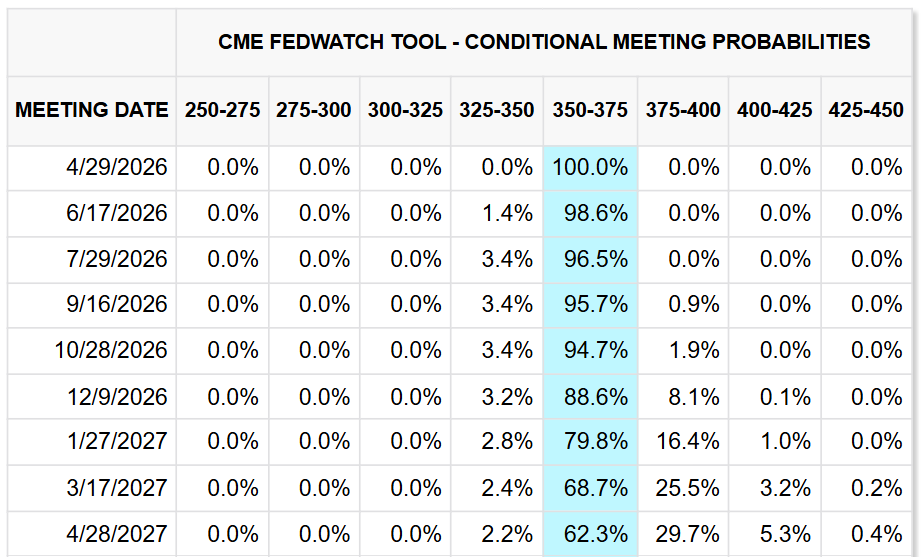
FED Rate change forecast remains at no-change for the foreseeable future
That leaves Bitcoin in an awkward place. The bullish argument based on lower rates and easier liquidity is still alive, but it is no longer clean. Inflation is still sticky. Oil is still a problem. The Fed is still divided. And traders now have to accept that the next few months may not be guided by one clear policy direction.
This does not mean Bitcoin has to break down. It means the market needs more proof before it can move with confidence.
Oil Has Become Part of the Bitcoin Story
Not because Bitcoin depends on oil, but because the Fed does
At first, oil and Bitcoin seem like separate stories. One is a traditional energy market. The other is a digital asset built around scarcity, liquidity, and belief. But right now, they are connected through inflation.
If oil keeps rising because of Middle East tension, the market has to think about higher energy costs, higher transportation costs, and a more difficult inflation picture. That makes the Fed’s job harder. And a Fed that is worried about inflation cannot easily sound dovish.
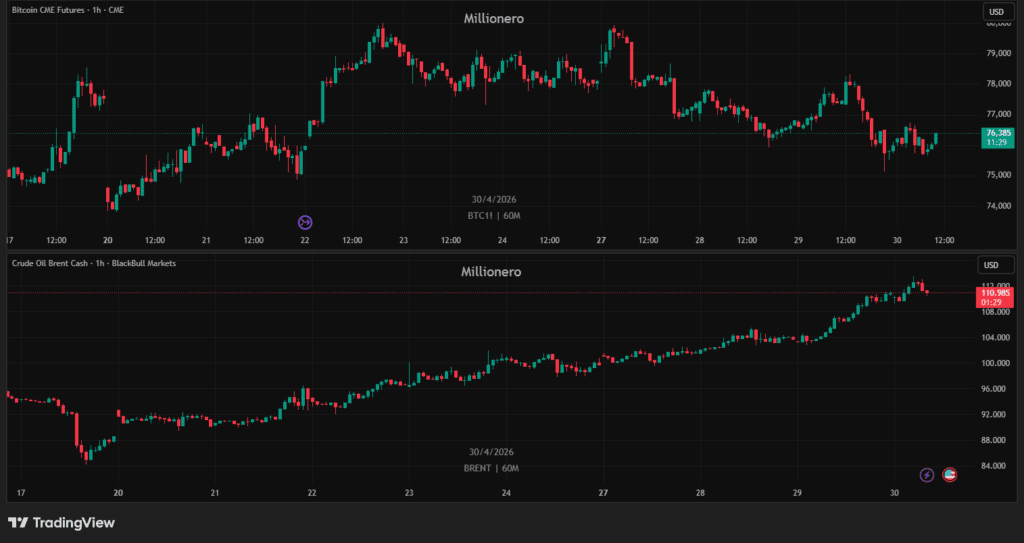
That is where the pressure reaches Bitcoin.
Bitcoin may have a long-term hard-money narrative, but in the short term, it still behaves like a liquid risk asset. When markets become nervous, traders often reduce risk first and ask bigger philosophical questions later.
So the oil story matters because it shapes the background Bitcoin is trading inside.
A cooler oil market would ease inflation fears and give Bitcoin more room. A hotter oil market would keep the Fed cautious and make the upside harder to trust.
Oil is helping decide how much oxygen the market gets.
Big Tech Is the Cushion, But Cushions Can Wear Thin
Strong earnings are helpful, but the reaction matters more
Big tech earnings are the other major pillar holding the risk mood together. Microsoft, Google, Amazon, and Meta all delivered solid results, and that should have been enough to calm the market. But the reaction was not purely bullish. Some names still weakened after hours, which says more about positioning than the earnings themselves.
That is an important distinction.
In a healthy market, strong earnings push prices higher. In a tired market, strong earnings only stop prices from falling harder.
Bitcoin is connected to this because crypto is not trading in isolation anymore. If equities remain steady, Bitcoin has a better chance of absorbing Fed caution and oil pressure. If equities start slipping even after good earnings, the market may be telling us that risk appetite needs a reset.
This matters even more for altcoins. When liquidity becomes selective, capital usually hides first in the strongest and most liquid asset. In crypto, that usually means Bitcoin. So if the macro environment becomes more defensive, Bitcoin may hold up better than smaller assets, but it would still feel the pressure.
The Midterm-Year Fractal Is a Warning, Not a Prophecy
History does not repeat perfectly, but it often rhymes loudly
The medium-term picture becomes more interesting when we look at midterm-year behavior.
Bitcoin has not always treated U.S. midterm years kindly. Previous midterm-year periods have often been difficult for crypto, with stronger risk appetite usually returning later in the cycle. There are different reasons in each case, but the broad rhythm is worth respecting.
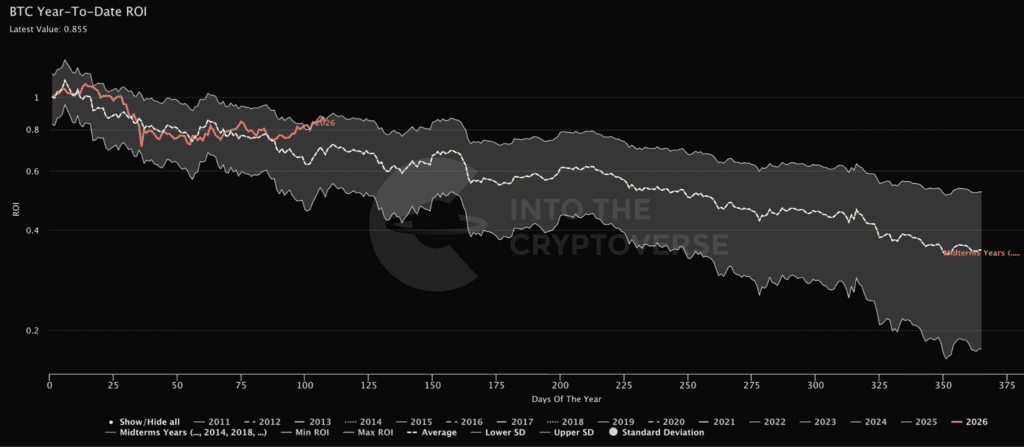
Bitcoin YTD ROI compared to the average of prior midterm years
This does not mean Bitcoin must repeat the past.
A fractal is not destiny. It is a warning sign. It tells us that this part of the cycle can be messy, emotional, and full of false confidence. Midterm-year environments often bring political uncertainty, tighter financial conditions, and weaker risk appetite before the market finds a clearer direction.
That feels relevant now.
Bitcoin still has long-term strength behind it, but it is moving through a market where the Fed is cautious, oil is pushing inflation fears higher, and equities are leaning heavily on big tech.
At the same time, this cycle is not a copy of 2014, 2018, or 2022. Bitcoin now has spot ETF demand, deeper institutional participation, and a more mature market structure. That changes the way the old pattern may play out.
So the balanced view is simple:
- The midterm-year fractal argues against blind bullishness.
- The ETF era argues against blind bearishness.
- The truth is probably somewhere in the uncomfortable middle.
ETF Flows Are the Market’s Temperature Check
They show whether institutional demand is still breathing
If oil is the inflation signal and big tech is the equity cushion, ETF flows are the Bitcoin-specific pulse.
Strong ETF inflows show that institutional demand is still willing to absorb supply. Weak or negative flows show that buyers are becoming more selective. They do not predict every move perfectly, but they help reveal whether Bitcoin has real support behind the scenes.
Right now, the market does not need ETF flows to be explosive. It just needs them to be steady.
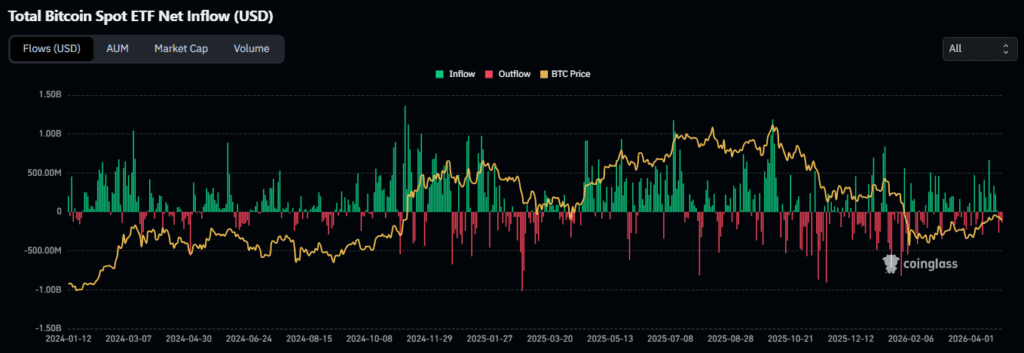
If ETF demand stays consistent while oil cools and equities remain stable, Bitcoin can slowly rebuild momentum. But if ETF flows weaken while oil stays hot and the Fed remains cautious, then Bitcoin may need more time before a stronger move develops.
That is why this market feels stuck. The long-term Bitcoin story is still alive, but the short-term signals are arguing with each other.
Forecast: Bitcoin Needs Confirmation, Not Hype
The next phase may be choppy before it becomes clear
For the next few weeks, Bitcoin may remain uneven. That is not the most dramatic forecast, but it is the honest one.
The market has too many mixed signals right now. The Fed is not cutting, but it is not hiking either. Oil is rising, but big tech is still strong. ETF demand remains important, but macro pressure can slow it down. The midterm-year fractal warns of weakness, but this institutional cycle is not the same as the older ones.
Over the next few months, the direction likely depends on which pressure breaks first.
If oil cools, inflation fears soften, equities hold firm, and ETF flows recover, Bitcoin could gradually regain strength. In that environment, dips may stay relatively shallow because sidelined buyers would still be waiting for a chance to enter.
But if oil keeps rising, the Fed becomes more openly hawkish, and equities fail to hold even after strong earnings, Bitcoin may stay under pressure for longer. That does not necessarily mean a collapse. It may simply mean the market needs a cooler period before the next clean trend can form.
The Bottom Line
Bitcoin is not in a simple market anymore.
It is not just trading Powell. It is trading oil, inflation expectations, earnings reactions, ETF demand, and the memory of past midterm-year weakness. It is also trading a new institutional structure that makes this cycle different from the ones before it.
That is why the next phase may feel frustrating. Bitcoin is not waiting for one person to speak. It is waiting for the whole macro picture to stop arguing with itself.
As always, this is not financial advice. Crypto markets move quickly, and every trader should do their own research before making decisions. For more market updates and crypto education, visit the Millionero blog, and trade crypto spot and perpetuals on Millionero.