


Lighter has quickly become one of the most talked-about perpetual DEXs in the market, thanks to its zero-fee trading experience on-chain. But under the hood, a lot of its long-term story depends on one thing: the design of its native token, LIT. In this article, we break down how LIT works, how supply is structured, and where Lighter stands versus other perp DEXs today.
Fixed Supply and a Clean Split
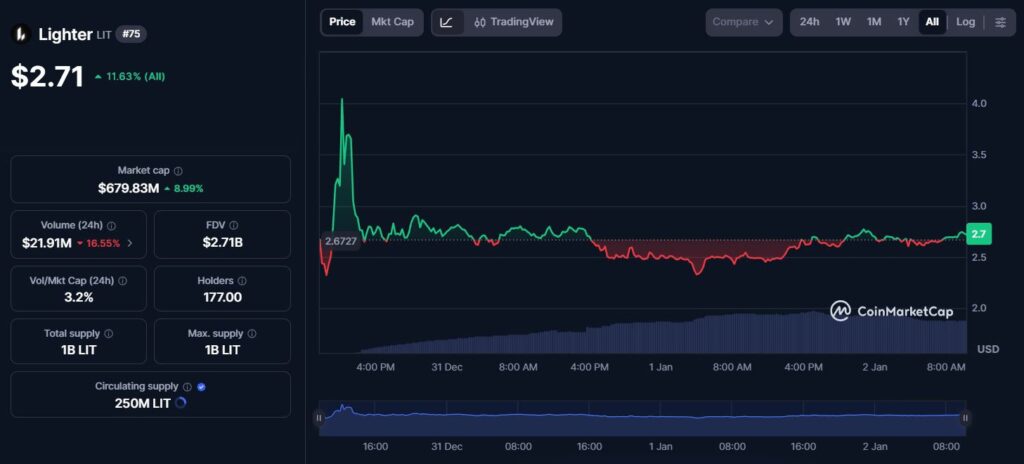
LIT has a fixed supply of 1,000,000,000 tokens. There is no ongoing inflation or emissions schedule beyond this initial mint, which already puts it in the “hard-capped” category.
That supply is split very cleanly into two halves:
- 50% for ecosystem and community
- 50% for insiders (team + investors)
On the community side, 25% of the total supply (250M LIT) has already been airdropped to early users through Lighter’s points campaigns and early seasons. The other 25% is reserved for future incentives: partnerships, liquidity programs, and ongoing rewards for new and existing users.
On the insider side, the split is:
- 26% for the team
- 24% for investors
Both of these buckets are subject to a 1-year lockup, followed by 3 years of linear vesting. In practice, that means team and investor tokens enter the market gradually over several years instead of suddenly appearing as sell pressure.
This structure tries to balance three things at once: rewarding early users, keeping builders and backers aligned long term, and avoiding constant inflation that eats into holders over time.
Utility: More Than Just a Governance Token
LIT is designed to sit at the center of Lighter’s trading ecosystem, not just as a speculative asset but as something that actually does work inside the protocol. Its main utilities include:
- Governance – LIT holders can vote on protocol parameters like fees, listings, and upgrades.
- Staking and revenue share – users can stake LIT and receive a portion of protocol revenue, giving them exposure to the platform’s trading activity.
- Fee discounts – traders who pay fees in LIT receive a discount.
These roles are meant to create organic demand: if you’re an active trader or a long-term believer in Lighter, holding and using LIT can directly improve your trading conditions or give you a share of platform income.
Deflationary Design: Buy-Back and Burn
To counteract the large supply held by insiders and the big initial airdrop, Lighter has added deflationary mechanics to the token design.
A portion of the protocol’s trading fees is earmarked for buy-back and burn of LIT. Over time, as trading volume grows, the protocol can purchase LIT on the open market and permanently remove it from circulation.
Combined with the fixed supply and vesting schedule, this creates a simple long-term story:
- No new tokens are minted beyond the original 1 billion.
- Circulating supply rises gradually as locked tokens vest.
- Buy-back and burn slowly push supply in the opposite direction.
If volume and fee generation keep growing, these buy-backs become a meaningful force in reducing supply and supporting long-term value accrual to active holders and stakers.
Lighter’s Trading Stack: zk-Rollup + On-Chain CLOB
Tokenomics alone doesn’t make a DEX relevant. Lighter leans heavily on its technical design to stand out from the crowded perp market.
The exchange runs on a custom Layer-2 (zk-Rollup) that is purpose-built for trading. Instead of being a general-purpose L2 where DeFi, NFTs, and games all compete for blockspace, Lighter’s rollup is tuned entirely for high-frequency, low-latency trading.
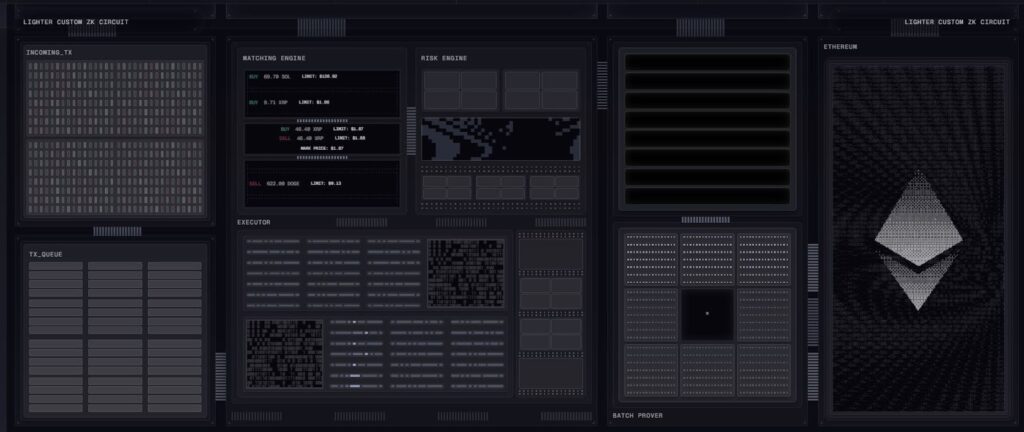
The core of the system is an on-chain central limit order book (CLOB) with price-time priority, meaning:
- Orders are matched strictly by best price first, then by time of arrival.
- Matching rules are enforced and proven via zero-knowledge proofs, so the engine cannot “cheat” or favor specific players.
- Settlement happens on-chain, while the sequencer handles off-chain order flow to keep the experience fast.
For users, the result is an experience much closer to an ideal exchange:
- Zero maker and taker fees for standard accounts on both spot and perps.
- Support for common order types like limit, stop-loss, and TWAP.
- Custody remains on-chain.
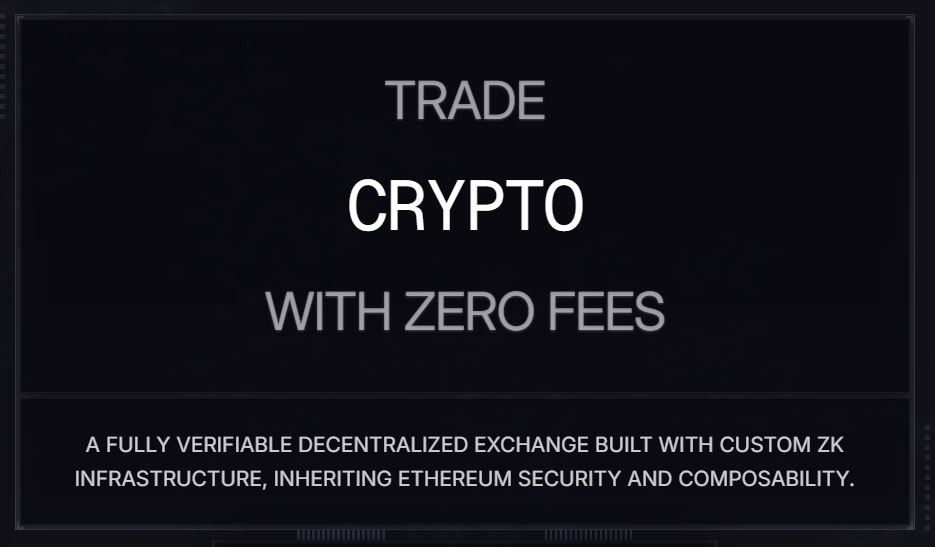
This mix of CEX-style UX and DEX-style transparency is a big part of why attention has shifted toward Lighter over the last months.
Where Lighter Stands Versus Other Perp DEXs
To understand how serious Lighter’s position is, it helps to look at the numbers. Recent DefiLlama data for weekly perp volume and open interest (OI) show Lighter trading alongside the largest names in the sector.
Over a recent 7-day window, approximate metrics looked like this:
- Lighter – around $22.7B in weekly perp volume, with $1.36B in open interest.
- Hyperliquid – roughly $24.6B in weekly volume and $7.46B in OI, still leading in depth and positioning.
- Aster – about $21.8B in weekly volume and $2.45B in OI.
- dYdX – roughly $1.4B in weekly volume and just under $100M in OI.
- GMX – under $0.5B in weekly volume with OI around $125M.
- Aevo – much smaller, with both volume and open interest still in the tens of millions.
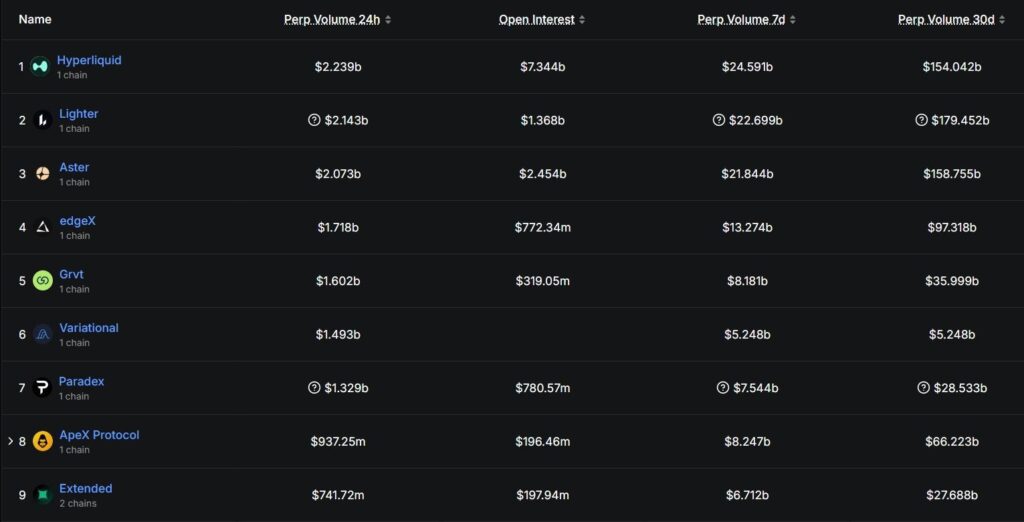
The main takeaway: Lighter is already trading in the same bracket as Aster and Hyperliquid by volume, and it has clearly overtaken older DEXs like dYdX and GMX in weekly activity. Hyperliquid still dominates in open interest, helped by its deep ecosystem and HYPE token, while Aster benefits from its presence in the BNB ecosystem.
Lighter’s progress is especially notable given its relatively recent launch and its aggressive zero-fee model, which is designed to attract professional market makers and high-frequency traders.
What This Means for LIT Holders
For traders and investors watching LIT, a few key points matter:
- Aligned incentives – a clean 50/50 split between community and insiders, plus long lockups and vesting, push the project toward long-term growth rather than short-term extraction.
- Real protocol linkage – staking, governance, and fee discounts link LIT’s value directly to the health and usage of the exchange.
- Deflationary pressure – buy-back and burn funded by trading fees can gradually reduce circulating supply if volume remains strong.
- Competitive positioning – Lighter is already competing with the top perp DEXs by volume, which gives real weight to its tokenomics story rather than leaving it as pure narrative.
Of course, the usual risks still apply: execution risk on the technical side, regulatory and market risk around perpetuals, and the simple reality that competition in perp DEXs is intense. Tokenomics can support value, but they can’t create it on their own, volume, liquidity, and continued product development will ultimately determine how LIT performs over time.
As always, none of this is financial advice. Traders and investors should do their own research, compare data across multiple sources, and understand both the tech and the token before committing capital, whether they are trading on Lighter, Millionero, or any other platform.