


Few things trigger childhood memories like pulling a shiny Charizard from a booster pack. But in 2025, those packs aren’t just in dusty closets or card shops anymore, they’re on the blockchain. Yes, Pokémon cards have gone on-chain, and collectors are trading them on Solana like never before. It’s nostalgia powered by decentralization, wrapped in a 24/7 global marketplace.
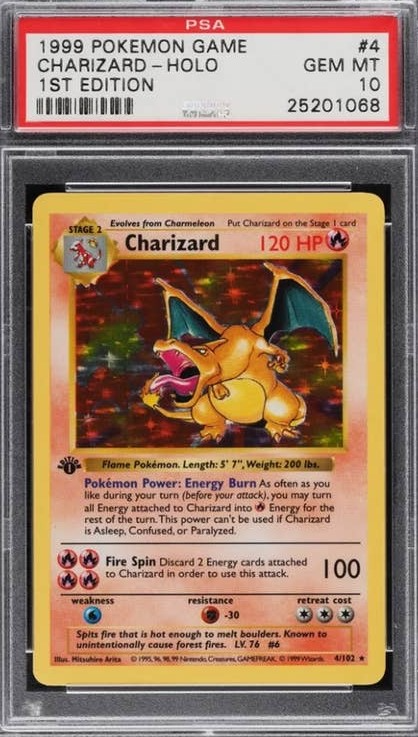
From Shoebox to Blockchain
For decades, collectors kept cards in binders and traded them at school lunch tables or local shops. The rise of eBay added a global twist, but also risk, fake cards, shady sellers, endless waiting for delivery. Now, Solana’s speed and low fees are reshaping how trading happens.
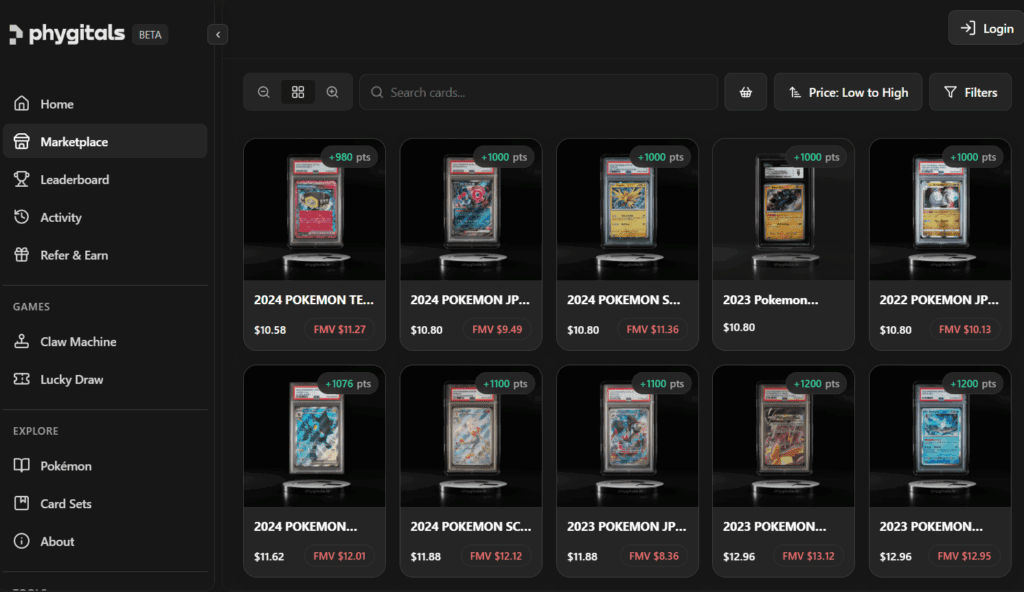
Here’s the twist: real, graded Pokémon cards are being tokenized as NFTs. Each NFT represents a physical card, safely locked away in a vault. Think of it as a digital twin of your favorite card, but liquid, transparent, and always accessible.
How It Works: Catch ’Em All, Digitally
The process is surprisingly simple:
- Vaulting the Card – A collector sends a graded Pokémon card (say a PSA 10 Pikachu) to a secure vault. The card is authenticated and locked up.
- Minting the NFT – A unique Solana NFT is created, tied 1:1 to that card. Metadata includes scans, grade, and details.
- Trading on Solana – That NFT can now be listed, bought, or traded just like any digital collectible. Transactions cost fractions of a cent, and ownership updates in seconds.
- Redemption – If someone wants the physical slab, they burn the NFT and the vault ships the card to them.
It’s a smooth blend of traditional collecting and blockchain transparency. No middlemen, no waiting for escrow, just instant trades backed by blockchain certainty.
The Fun Part: Gacha and Pack Openings
The most popular feature? Digital gacha machines. Imagine paying a few SOL to spin for a random card NFT, with the thrill of possibly pulling a $10,000 Charizard. Platforms have sold millions of these digital packs, turning Pokémon cards into a blockchain version of a slot machine, except you always win something.
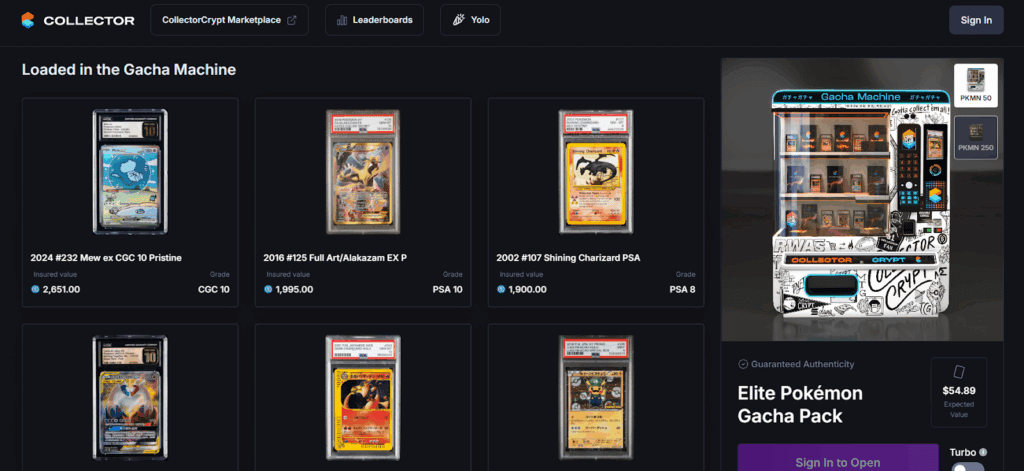
Collectors love it for the entertainment; traders love it for the liquidity. Open a pack, hit a rare, sell it instantly on-chain, or cash out to SOL. It’s a game and a marketplace rolled into one.
Why Solana?
The magic works on Solana for three reasons:
- Speed: Transactions confirm in ~0.4 seconds.
- Cost: Fees are less than $0.01, perfect for micro trades.
- Scale: Solana can handle thousands of trades per second, so even a frenzy of card openings doesn’t slow the network down.
Other blockchains can’t really compete here. Try running a gacha machine on Ethereum with $20 gas fees, no thanks.
Not Official Pokémon… Yet
Here’s the important bit: these on-chain Pokémon cards are not licensed by The Pokémon Company. Officially, Pokémon has stayed away from NFTs, even shutting down fan projects that used their IP without permission. What’s happening on Solana is different: it’s about reselling real, authentic Pokémon cards through blockchain tech.
Think of it like eBay, but on-chain. The cards are genuine, the NFTs are just digital claim tickets. Still, it’s a legal gray zone. If Pokémon ever launches its own NFT strategy, it could shake up the space.
A New Market for Collectors and Traders
The rise of on-chain cards is creating a fresh kind of hybrid community:
- Collectors enjoy peace of mind knowing their cards are vaulted, insured, and globally tradable without shipping hassles.
- Crypto traders see an opportunity to speculate on collectibles with real-world demand, backed by decades of cultural value.
- Communities on Twitter, Discord, and Telegram buzz with stories of big pulls, rare finds, and instant flips.
In just months, weekly trading volumes have hit tens of millions of dollars. A childhood hobby has become a serious blockchain asset class.
Risks and Realities
Like everything in crypto, it’s not without risks:
- IP Concerns: Pokémon could tighten legal screws at any time.
- Platform Trust: You’re relying on vault operators to store and ship real cards properly.
- Speculation: Just because it’s on-chain doesn’t mean card prices always go up, values still depend on collector demand.
Still, for many, the blend of nostalgia and innovation is worth it.
The Bigger Picture: Real-World Assets on Solana
On-chain Pokémon cards are part of a larger trend: bringing real-world assets (RWAs) into crypto. Solana’s infrastructure is making it possible, and Pokémon cards just happen to be the most fun example.
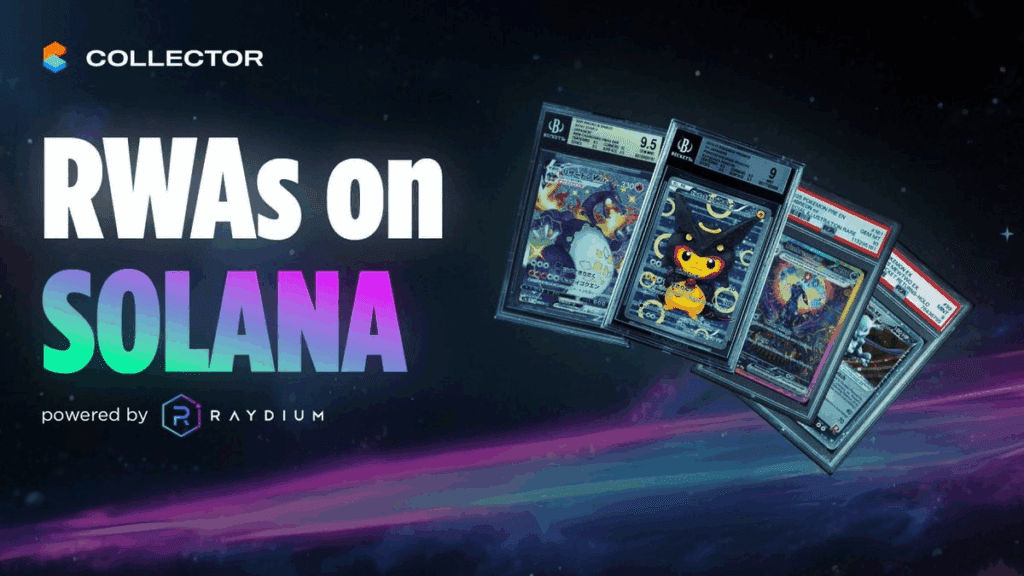
It’s a gateway for traditional collectors into Web3, and for crypto natives into tangible, culture-rich assets. And it might just be the bridge that brings the next wave of users into decentralized finance.
Conclusion: A New Way to Play
Pokémon taught us to “catch ’em all.” In 2025, that motto has a new twist, catch ’em on-chain. Trading card NFTs on Solana merge childhood wonder with blockchain efficiency, offering collectors instant liquidity and traders a new asset class.
It’s playful, fast, and a little bit rebellious. Whether it stays unofficial forever or one day gets the blessing of Pokémon itself, the on-chain card market shows how deeply blockchain can reshape even the most nostalgic corners of culture.
This article is for educational purposes only. Always DYOR before trading. And if you’re ready to explore crypto trading beyond collectibles, check out Millionero’s spot trading and perpetuals.