


A comprehensive look at the project that’s challenging Chainlink’s dominance in the oracle space
The world of decentralized finance (DeFi) depends on one critical component: reliable price data. Without accurate, real-time information about asset prices, lending protocols, derivatives platforms, and automated trading systems would collapse overnight. This is where oracle networks come in, and Pyth Network is rapidly emerging as a major player in this space.
What Is Pyth Network?
At its core, Pyth is a first-party oracle network that delivers high-frequency price updates to blockchain applications. But what makes it different from existing solutions like Chainlink is its unique approach to data collection and distribution.
Instead of relying on third-party aggregators, Pyth works directly with exchanges, market makers, and other financial institutions who publish their own signed price data. This data flows into Pythnet, a specialized blockchain built on Solana’s codebase, before being distributed across multiple blockchains through the Wormhole bridge.
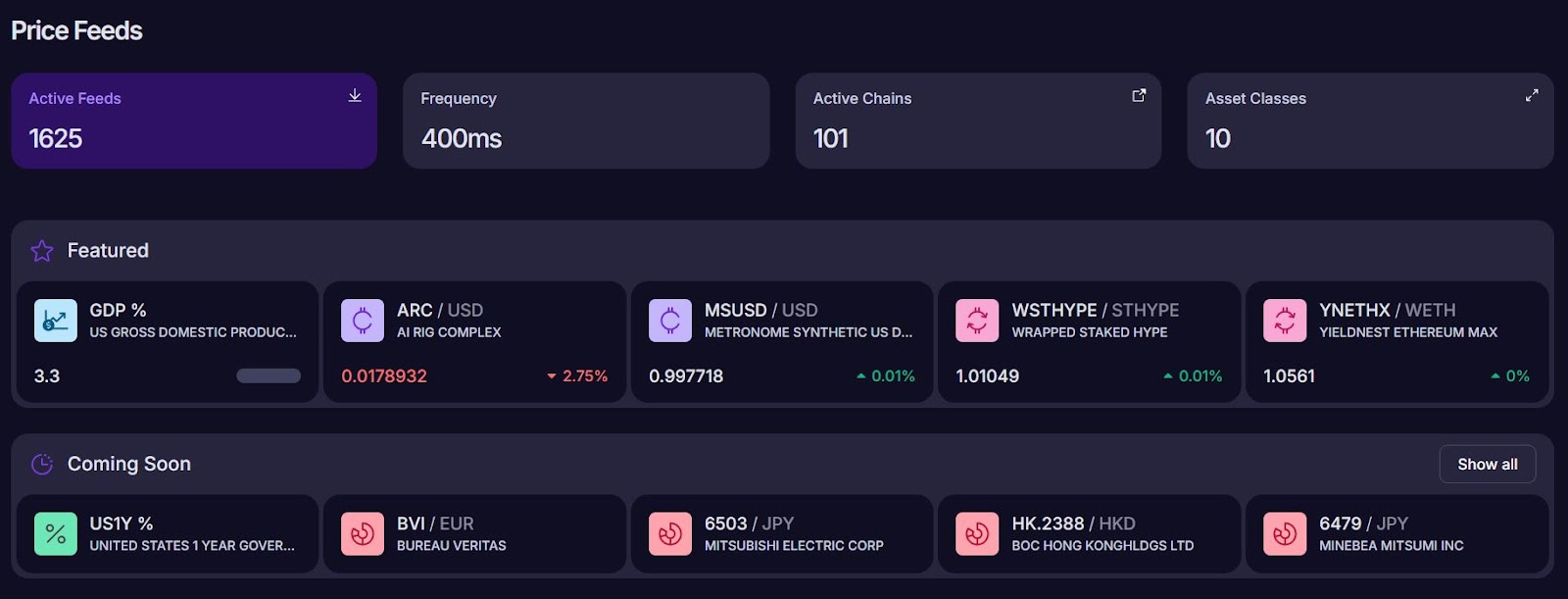
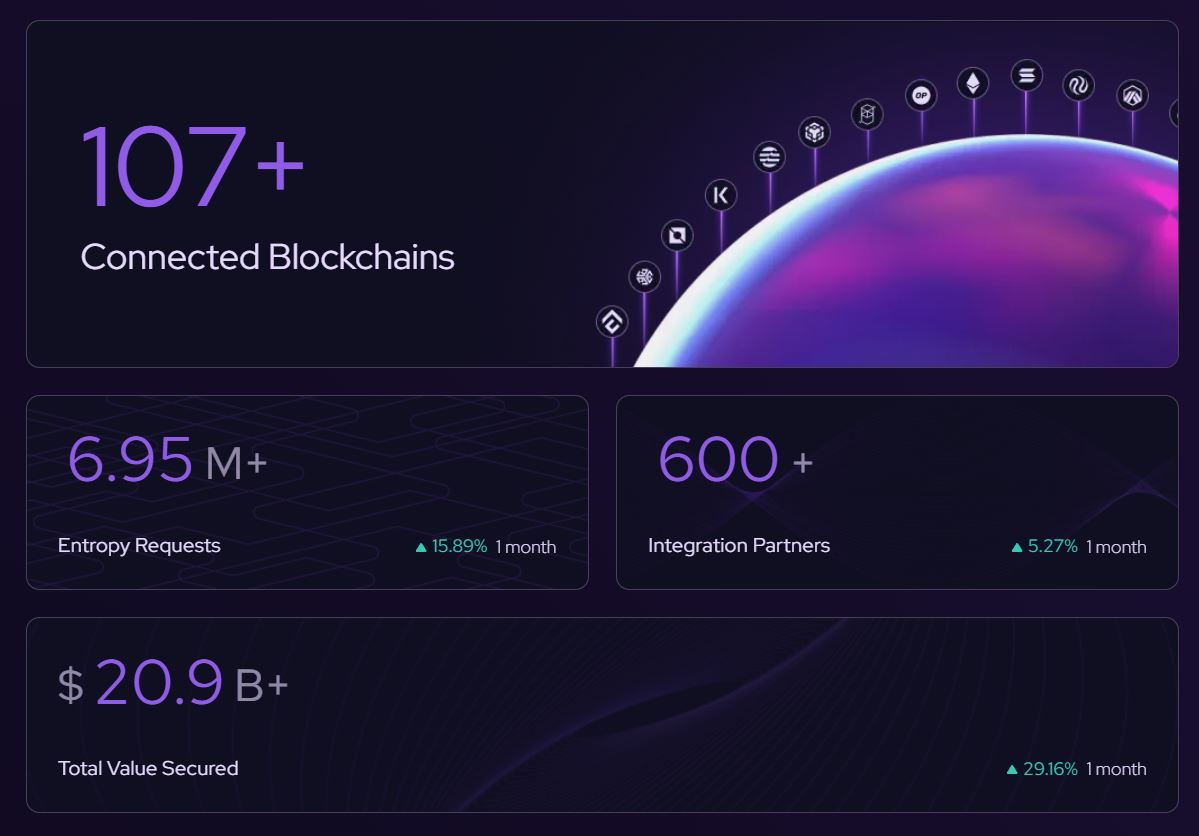
The numbers speak for themselves: Pyth currently provides over 1,900 price feeds across 100+ blockchains, working with 125+ data providers and securing more than $20 billion in total value.
How Pyth Actually Works
Pyth operates on what’s called a “pull model”, a fundamental departure from traditional oracle designs. Here’s how it works:
- Data publishers (exchanges, market makers) continuously post signed price updates to Pythnet
- These updates remain off-chain until needed
- When a DeFi application needs fresh price data, it submits a single transaction that both pulls the latest price and uses it immediately
- The application only pays for data when it actually needs it
This approach offers several advantages:
- Lower baseline costs (you only pay when updating)
- Higher frequency updates possible
- Better scalability across multiple blockchains
- Built-in confidence intervals that show price uncertainty
The Economics Behind PYTH Token
Understanding Pyth’s tokenomics is crucial for anyone considering the project from an investment or governance perspective.
Token Distribution and Supply
Pyth launched in November 2023 with a maximum supply of 10 billion PYTH tokens. At launch, only 15% was circulating, the remaining 85% was locked under a structured vesting schedule.
The token allocation breaks down as follows:
- Ecosystem Growth: 52%
- Publisher Rewards: 22%
- Protocol Development: 10%
- Private Sales: 10%
- Community & Launch: 6%
The Unlock Schedule That Matters
Pyth’s vesting follows a four-cliff structure at 6, 18, 30, and 42 months post-launch. The project already hit its major unlock in May 2025 (the 18-month cliff), which released approximately 2.13 billion PYTH tokens into circulation.
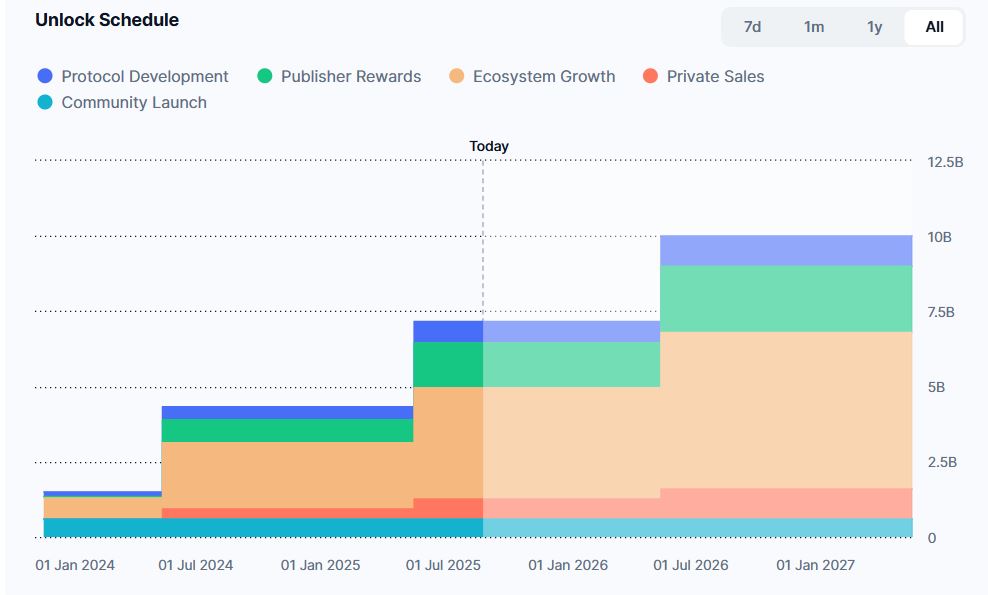
Mark your calendars: The next major unlocks are scheduled for:
- May 2026: 30-month cliff
- May 2027: 42-month cliff (final unlock)
These dates are critical for anyone tracking PYTH’s price movements or planning governance strategies.
Pyth vs. Chainlink: The Technical Differences
The oracle space has been dominated by Chainlink for years, but Pyth presents a genuinely different approach. Understanding these differences is key to evaluating both projects.
Data Update Models
Chainlink’s Push Model: Oracle nodes continuously aggregate data from multiple sources and proactively push updates to on-chain contracts based on pre-set deviation thresholds and time intervals. This ensures data is always available but requires constant gas payments.
Pyth’s Pull Model: Price data exists off-chain as signed updates. Applications pull this data on-demand, paying only when they need fresh information. This reduces baseline costs but requires active management by consuming applications.
Data Sources and Quality
Chainlink aggregates data from multiple third-party sources, creating redundancy through diversification. This approach has proven reliable across thousands of protocols over several years.
Pyth focuses on first-party data from exchanges and market makers who publish their own quotes. This potentially offers higher quality data since it comes directly from price-setting entities, but with different redundancy assumptions.
Coverage and Maturity
Chainlink has the longest track record and deepest integration across established DeFi protocols. It’s often the default choice for new projects.
Pyth has expanded rapidly across Layer 1 and Layer 2 networks, optimizing for low-latency updates and scalability. Many sophisticated applications now support both oracles.
The Confidence Interval Advantage
One unique feature of Pyth is its confidence intervals, each price update comes with a measure of uncertainty. This allows smart contracts to implement more sophisticated risk management, potentially pausing operations when price confidence is low.
Why PYTH Token Recently Surged
In late August 2025, PYTH tokens experienced significant price appreciation following major news: the U.S. Department of Commerce announced plans to publish macroeconomic data on-chain, selecting both Chainlink and Pyth as distribution partners.
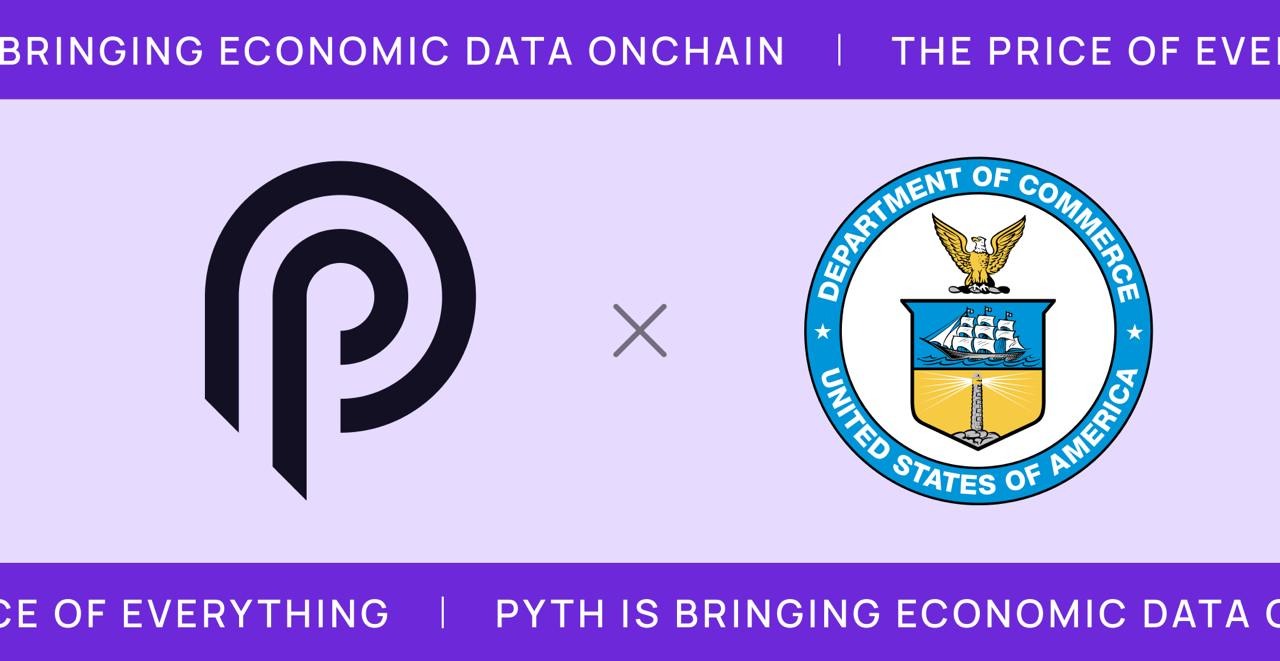
This development represents more than just another integration, it signals institutional adoption of oracle infrastructure beyond crypto-native use cases. When official GDP data, inflation statistics, and other government economic indicators become available on-chain, it opens entirely new markets for oracle providers.
For the oracle sector, this represents a massive total addressable market expansion, from DeFi pricing to public data infrastructure serving fintech, risk management, and payment applications.
What This Means for Different Stakeholders
For Developers and Builders
Choose Pyth if your application is:
- Latency-sensitive (derivatives, perpetuals, options trading)
- Cost-conscious about oracle updates
- Benefiting from confidence interval data
- Operating across multiple chains
Choose Chainlink if you:
- Prefer battle-tested infrastructure
- Want extensive ecosystem tooling
- Need broad protocol compatibility
- Value the mature push model
Many sophisticated projects now integrate both oracles to maximize reliability and feature sets.
For Token Holders and Investors
Key considerations for PYTH holders:
- Major supply events are scheduled for May 2026 and May 2027
- Governance participation will shape fee structures and reward mechanisms
- Narrative momentum around traditional finance adoption could drive further appreciation
- Competition with Chainlink remains intense but non-zero-sum
For the Broader Ecosystem
Pyth’s success validates the multi-oracle future where different networks optimize for different use cases. Rather than winner-take-all competition, we’re seeing specialization and complementary adoption.
The U.S. government’s blockchain data initiative suggests institutional oracle adoption is accelerating, potentially benefiting the entire sector.
Looking Ahead
Pyth Network represents a significant evolution in oracle design, prioritizing first-party data, pull-based updates, and cross-chain scalability. While Chainlink maintains its position as the established leader, Pyth’s rapid growth and technical innovations have created a genuine alternative for builders seeking different trade-offs.
The recent government data announcement validates the oracle sector’s expansion beyond DeFi into traditional finance and public infrastructure. For Pyth, this represents both opportunity and pressure to execute flawlessly as institutional adoption accelerates.
Whether Pyth can sustain its growth trajectory while maintaining data quality and network security will largely determine its long-term position in the increasingly competitive oracle landscape.
This content is provided by Millionero for educational purposes only and should not be considered financial advice. Cryptocurrency investments carry significant risks, including the potential loss of your entire investment. Market conditions can change rapidly, and past performance does not guarantee future results.
Always conduct your own research (DYOR) before making any investment decisions. For additional educational content and market analysis, visit blog.millionero.com.
When you’re ready to trade, Millionero offers both spot and perpetual futures trading with competitive fees and advanced tools. Trade responsibly and never invest more than you can afford to lose.