



Weekend On-Chain Drama: Pump.fun, Solana and Big Cash Outs
Over the weekend, one of the biggest crypto moves and talking points was fresh data about Pump.fun and how much money has actually moved through it.
Since 15 October, Pump.fun has reportedly withdrawn 436.5 million USDC and sent it straight to Kraken. Over the same period, about 537.6 million USDC left Kraken and went on to Circle, which shows a very large chain of liquidity moving from a meme-coin launch platform, through a centralized exchange, and back to the stablecoin issuer.
On the Solana side, the numbers are also heavy. Between 19 May 2024 and 12 August 2025, Pump.fun is said to have sold:
- 4.19 million SOL, worth about 757 million dollars,
- at an average selling price of 181 dollars per SOL.
Inside that total, about 264,373 SOL were sold directly on-chain for 41.64 million dollars, and roughly 3.93 million SOL worth 715.5 million dollars went into Kraken before being sold there. All of this together explains why people feel that a lot of exit liquidity has already been taken from retail and from the Solana ecosystem during this cycle.
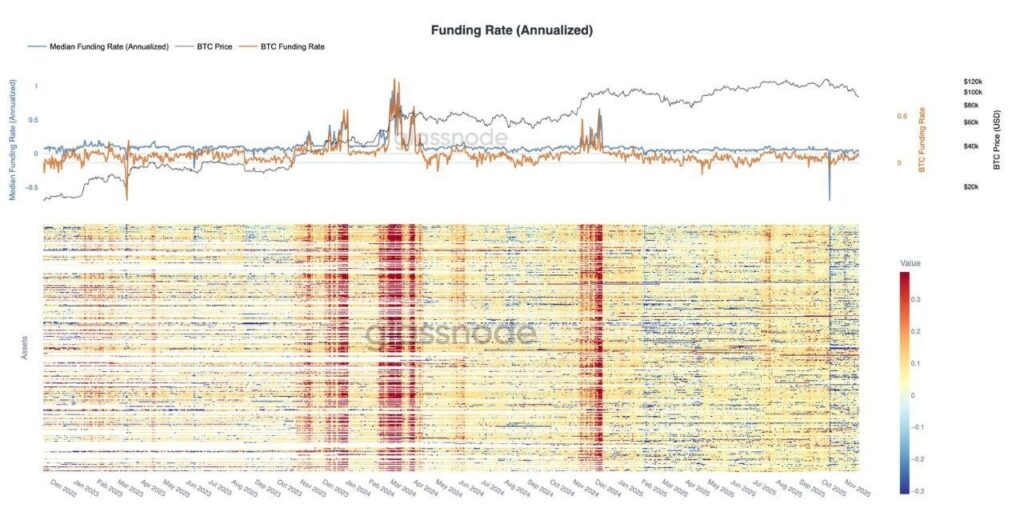
These flows also connect to the broader risk-off mood in the market. Funding rates have dropped to the lowest levels of this cycle, and open interest (OI) in futures keeps falling. Traders are closing positions and cutting leverage instead of adding more. When funding flips neutral or negative across many large coins, it usually means speculative leverage is being washed out. The weekend data shows exactly that: the market is in strict risk-off mode, with many over-leveraged positions already forced out.
Sentiment on Bitcoin: Fear, Profit-Taking and Loud Predictions
On Bitcoin itself, multiple signals point to a market that is tired and scared at the same time.
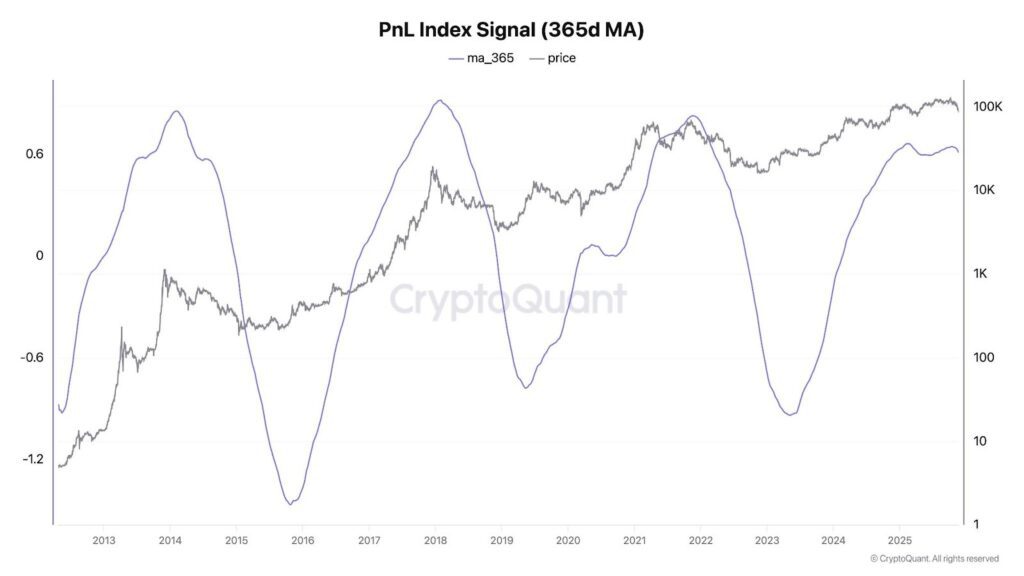
According to @ki_young_ju’s PnL Index, which measures profits and losses based on the average cost basis of all wallets, Bitcoin is now in a clear profit-taking phase. In classic cycle theory, that often marks the transition into a bear market, where investors close winning positions as momentum slows down. The one factor that can still flip this pattern is liquidity. We saw this in 2020, when massive global stimulus overpowered negative signals and sent Bitcoin much higher despite “late-cycle” warnings.
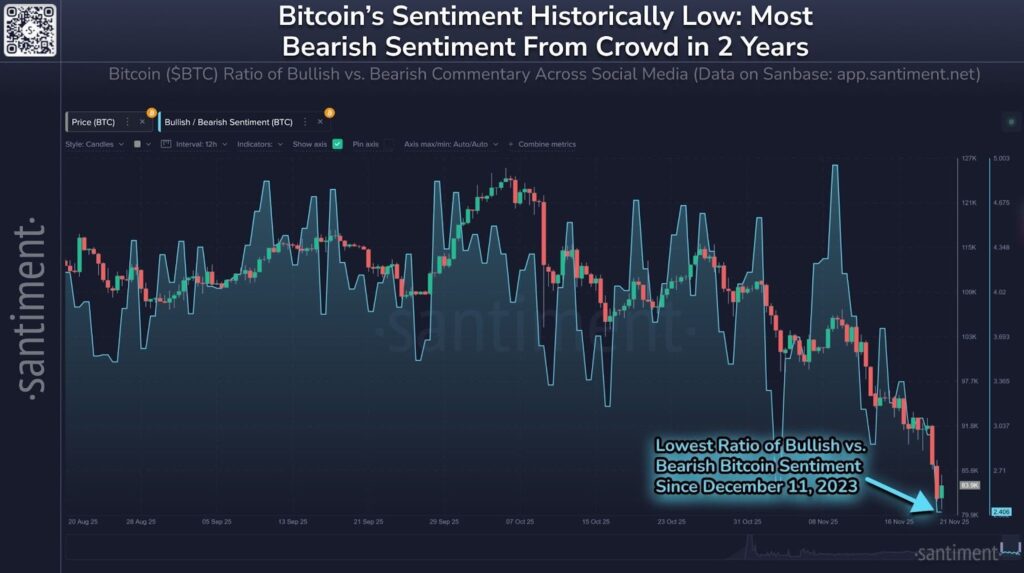
At the same time, data from @santimentfeed shows that market sentiment toward BTC is at its lowest level since 11 December 2023. That means a lot of fear, anger, and exhaustion. Historically, such deep negative sentiment has often appeared near large reversal points, but it can also stay low for a while if macro conditions remain bad.
Into this emotional mix, Eric Trump stepped in with a bold call: he said Bitcoin will go above 175,000 dollars this year. The tweet was quickly mocked with comments that “whenever Eric speaks, the market dumps” and jokes that we should “delete the 1” from his target. His name is now being thrown around together with Jim Cramer and “the orange one” meaning Donald Trump, as a kind of contrarian indicator. It does not change any fundamentals, but it shows how sensitive people are right now to loud public predictions.
Government Wallets and Security Warnings
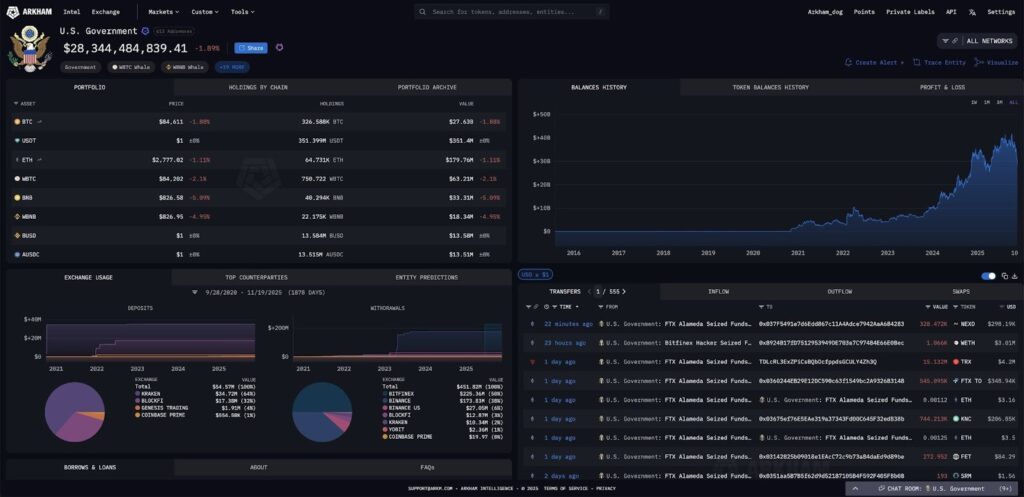
The weekend also brought fresh on-chain moves from the US government. In the last 24 hours, wallets linked to US authorities moved about:
- 300,000 dollars in NEXO,
- 3 million dollars in WETH,
- 4.2 million dollars in TRX.
The NEXO and TRX came from funds seized from Alameda about two years ago, while the WETH was taken from the Bitfinex hacker, Ilya Lichtenstein, between 2022 and 2024. These transfers are not huge at the scale of the entire crypto market, but they always create some short-term attention because they can turn into sell pressure if the coins end up on exchanges.
On the security side, there was an urgent warning from AerodromeFi. The team announced that they are investigating a possible DNS hijacking attack and told users not to use the main domain until the investigation is finished. DNS hijacks are dangerous because they can silently send users to fake websites that look real, capture their wallets, and steal funds. For now, the simple rule is: do not connect to AerodromeFi’s main domain until there is a clear, official all-good signal.

Solana’s Monetary Policy: A Proposal to Double the Speed of Disinflation
Another important on-chain discussion this weekend is about Solana’s inflation schedule.
A new proposal is now live to double the current pace of inflation reduction. In simple words, Solana would cut its inflation twice as fast as planned, which would reduce the future supply more quickly and make SOL scarcer over time.
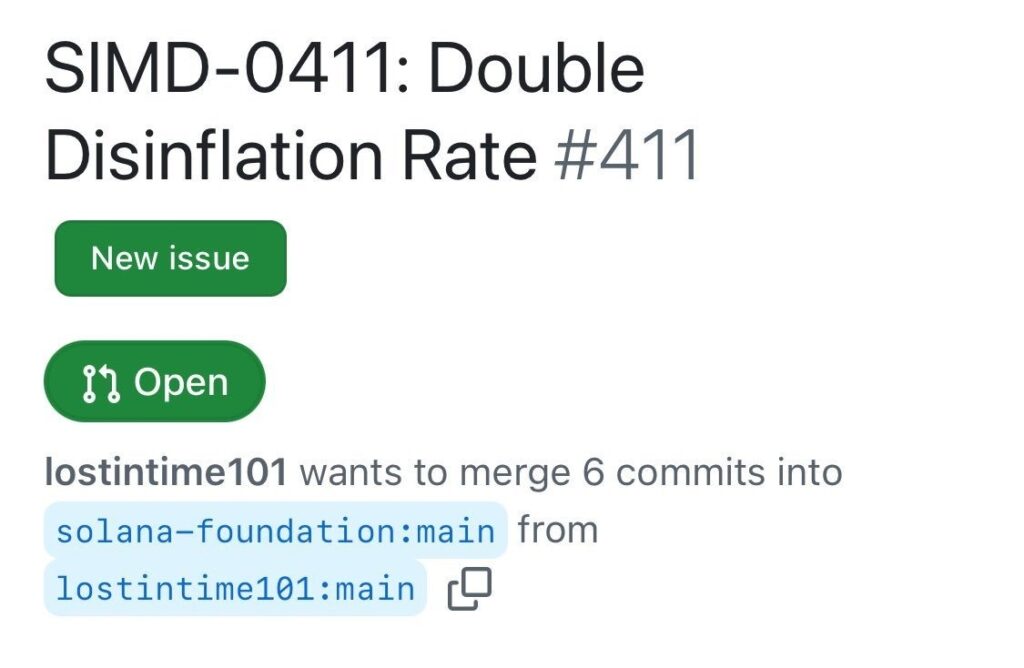
The goal is to improve long-term value by changing the supply–demand dynamics in favor of holders. But such changes also affect staking yields, validator economics, and how people think about Solana’s role as a high-throughput chain. The community is currently debating whether this sharper disinflation path is good for network health or too aggressive.
Traditional Finance Steps Deeper into Crypto
While crypto native platforms were under pressure, some big TradFi names moved further into the digital asset space.
First, HSBC announced that it will start offering tokenized deposits to clients in the United States and the UAE from next year. Tokenized deposits are basically bank deposits represented on a blockchain. They are still claims on the bank, not independent stablecoins, but they make it easier to move value around tokenized markets while staying inside the regulated banking world. This is another sign that large banks are building infrastructure for on-chain finance rather than ignoring it.
Second, Deutsche Bank, which manages more than 1.6 trillion dollars in assets, now holds about 115 million dollars of MSTR shares, according to Bitcoin Treasuries data. MSTR (MicroStrategy) is widely treated as a proxy Bitcoin ETF because of its huge BTC holdings. A big European bank adding serious size in MSTR shows how institutions may prefer “wrapped” ways of getting Bitcoin exposure instead of directly holding coins.
BitMine’s ETH Treasury: From Underwater Bag to Yield-Bearing Asset?
BitMine also made news by announcing that it will start staking its ETH holdings through the “Made in America Validator Network” from early 2026.
Their ETH treasury is still underwater, meaning the current ETH price is below their average buy price, so they are sitting on unrealized losses. Staking can help by generating a steady yearly yield, which lowers the effective cost of holding those coins over time. But the key point is that yield alone cannot fix the loss. For BitMine to turn this treasury into a profitable position, ETH’s price still needs to rise meaningfully.
So this move is financial optimization, not magic. It improves cash flow and makes the balance sheet a bit more efficient, but it does not remove the need for a better market environment.
The Fed, the Shutdown and a Market That Hates Uncertainty
Macro and the Fed are still at the center of everything.
Federal Reserve Governor Miran said that if his vote were the decisive one, he would support a 25 basis point rate cut. This is important because he previously wanted larger, 50 bp cuts, and even dissented when the Fed cut by 25 bp in September.
His latest comments suggest he is ready to compromise on a smaller December cut rather than risk more damage from tight policy.
On the other side, Kevin Hassett, a key White House economic voice, warned that the government shutdown will be “negative for Q4” and could cut around 1.5 percentage points from fourth-quarter GDP. He also argued that pausing rate cuts in December would be a very bad idea, which is his way of saying growth is already fragile and needs support.
Markets are stuck between these two pressures:
- Inflation is still above the Fed’s 2% target, so some Fed officials are nervous about cutting too fast.
- But growth has been hit by the long shutdown and softer labor data, which makes people like Miran and Hassett push for at least a small cut to avoid a deeper slowdown.
The result is confusion. The last 25 bp cut did not give the market a clear path for the next year. Now traders are trying to guess whether December will bring another cut or a pause, with rate expectations moving around every time a new data point or Fed comment comes out.
This Week’s US Data: Simple View for Rate Cuts
This is a short week because of Thanksgiving, but it is packed with numbers that matter for the Fed’s next rate decisions. All of them help answer one question: can the Fed safely keep cutting, or does it need to slow down?
We will get PPI, PCE inflation, retail sales, durable goods orders, GDP (Q3 update), consumer confidence, and housing data (pending and new home sales). Together, these reports show three things:
- how strong inflation still is,
- how much pressure the consumer and housing are under,
- and whether businesses are pulling back on big purchases.
If inflation (PPI, PCE) comes in soft and growth data (sales, GDP, housing, orders) looks weak, it will support the doves like Miran who argue for more cuts. If inflation is sticky while growth holds up, the hawks will have more reason to slow or pause easing.
On top of that, we now know that November CPI will be released on 18 December. That CPI print plus this week’s data will shape how markets price the early-2026 rate path, and that will feed directly into how much liquidity and risk appetite flow back into Bitcoin and the rest of crypto.
This Week’s Token Unlocks
As always, token unlocks can quietly add sell pressure, especially in a weak risk environment. Here are the scheduled unlocks.
Humanity Protocol (H)
Date: November 25, 2025
Unlock Value: 5.95M USDT
% of Circulating supply: 2.74%
Number of Tokens: 50.00M H
Slash Vision Labs (SVL)
Date: November 25, 2025
Unlock Value: 10.17M USDT
% of Circulating supply: 12.18%
Number of Tokens: 279.81M SVL
Plasma (XPL)
Date: November 25, 2025
Unlock Value: 17.14M USDT
% of Circulating supply: 4.71%
Number of Tokens: 88.89M XPL
Sahara AI (SAHARA)
Date: November 26, 2025
Unlock Value: 6.59M USDT
% of Circulating supply: 3.54%
Number of Tokens: 84.27M SAHARA
Jupiter (JUP)
Date: November 28, 2025
Unlock Value: 12.78M USDT
% of Circulating supply: 1.66%
Number of Tokens: 53.47M JUP
Hyperliquid (HYPE)
Date: November 29, 2025
Unlock Value: 314.56M USDT
% of Circulating supply: 3.66%
Number of Tokens: 9.92M HYPE
ZORA (ZORA)
Date: November 30, 2025
Unlock Value: 6.56M USDT
% of Circulating supply: 2.80%
Number of Tokens: 125.00M ZORA
In a risk-off market, unlocks with higher percentages of circulating supply, especially SVL and HYPE, are more likely to matter, because any extra supply meets already weak demand.
How It All Fits Together
Putting everything into one picture:
- On-chain and exchange data (Pump.fun, US government wallets, AerodromeFi’s DNS issue) show a market where liquidity keeps moving and security risks remain real.
- Macro signals from Miran, Hassett, and the shutdown-hit data calendar keep investors guessing about how far and how fast the Fed can cut.
- Sentiment around Bitcoin has dropped to extreme fear, even as profit-taking phase indicators flash late-cycle patterns.
- At the same time, HSBC, Deutsche Bank, and BitMine are quietly building deeper, more structured exposure to digital assets.
The next step for the market will depend less on any single tweet or on-chain move, and more on how this week’s data and December’s CPI shape the Fed’s path. If the reports confirm weaker growth and softening inflation, the risk-off mood may ease. If inflation stays sticky while growth falls, the current stress and low confidence could easily extend into the end of the year.
Nothing in this article is financial advice. Please DYOR before you invest or trade. You can also do your own research by reading our articles on blog.millionero.com.
When you feel ready, you can trade spot and futures on Millionero, with simple tools and a clean interface designed for everyday users.