


Alpenglow is the biggest change to Solana since launch. Think of it as swapping the engine of a fast car while it’s moving, not to change what Solana is, but to make every action feel instant and the network smoother for everyone.
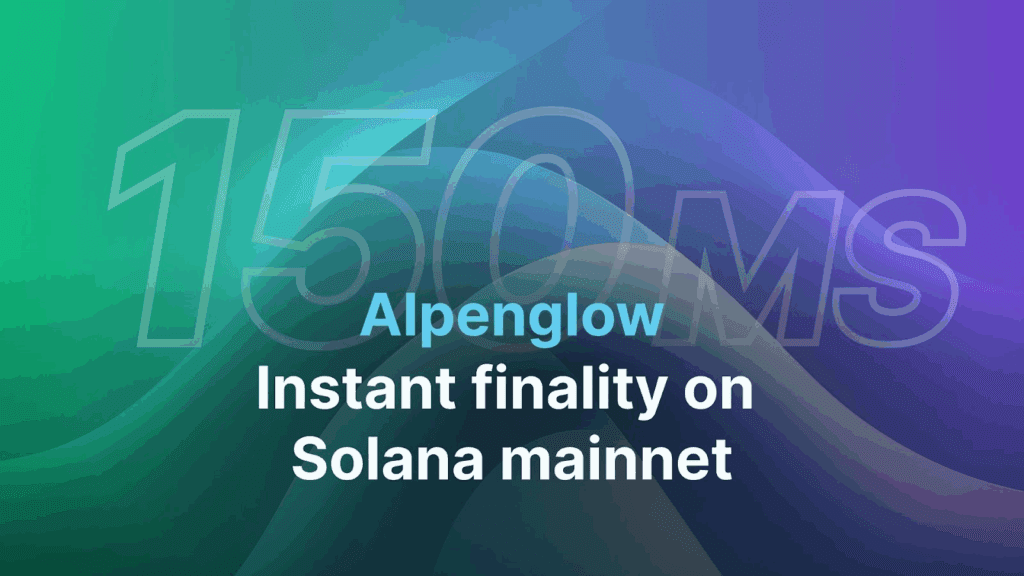
The one-line promise
Alpenglow aims to make transactions final (locked in forever) in about 0.1–0.15 seconds. Not “probably done,” but done-done. That’s the headline.
Why this matters
On most blockchains you click “send” and then… wait. On Solana today, things look quick, but the “fully locked-in” part takes longer behind the scenes. Alpenglow changes that. When this upgrade is live, the time between “I sent it” and “it’s 100% final” will feel like a blink, good for trading, gaming, payments at a store, everything.
What’s actually changing
Solana is replacing two old internal systems with two new ones:
- The old “clock + voting” system → replaced by a simpler, faster voting method (Votor).
- The old data-spreading method (lots of relays in many hops) → replaced by a single-hop relay that gets the block everywhere quicker (Rotor).
You don’t need to memorize the names. What matters is the behavior:
1) Voting gets quiet and direct
Before: validators (the machines that secure the chain) posted vote transactions on-chain every fraction of a second. Imagine thousands of people submitting receipts to the same inbox, all day.
After: validators share their votes directly with each other and the leader for that moment bundles them into one compact certificate. Imagine a group chat where the leader posts a clean summary instead of hundreds of individual messages. Less noise, same trust.
Result: far less network clutter, lower costs, and faster confirmation.
2) Data spreads in one clean burst
Before: the leader sent pieces of the block to a bunch of peers, who then passed them on, and so on. like a phone tree with multiple layers.
After: a small set of relays blast the data to everyone at once, like a live broadcast instead of a phone tree.
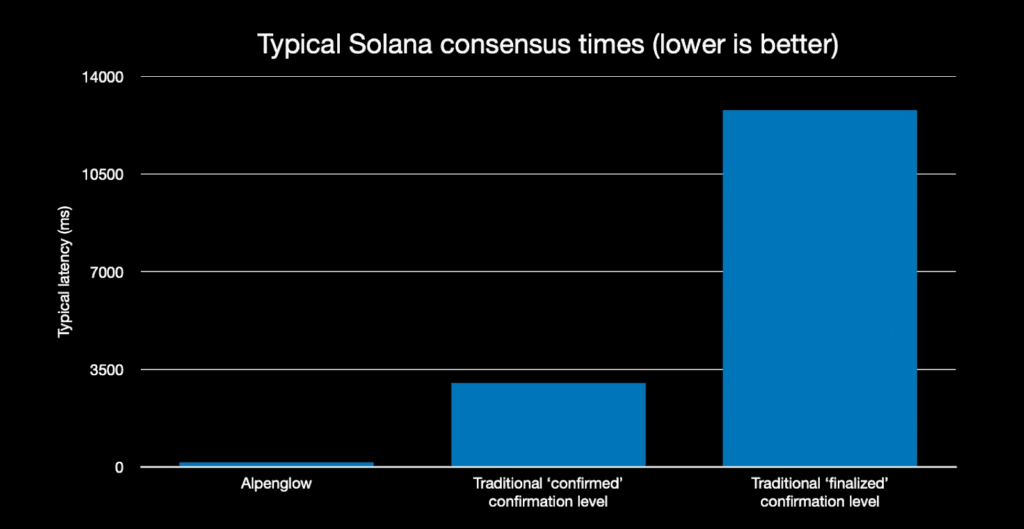
Result: blocks reach everyone faster and more predictably, especially under heavy load.
3) Two simple “green light” paths
- Fast path: if most stake (roughly four-fifths) says “yes” quickly, the block is final in about 100 ms.
- Fallback path: if some are slow or offline, a second step finalizes around 150 ms.
Whichever crosses the line first wins. Either way, it’s sub-second and deterministic.
What you will feel as a user
- Instant confidence. Your transfer, swap, or mint doesn’t just appear fast. it becomes final almost immediately.
- Smoother peaks. Because votes no longer clog the chain, busy moments (airdrops, hyped mints) should feel less chaotic.
- Better uptime. The new design keeps finalizing blocks even if some validators are slow or a chunk of the network blips.
In short: fast and final, not fast then wait.
What improves for validators
- Costs drop. The constant trickle of vote fees goes away. Instead, validators pay a small fixed ticket per epoch to participate. That flattens operating costs.
- Fairer economics. Smaller operators aren’t drowned by per-vote fees. Rewards remain stake-based, but the cost side is far kinder to modest setups.
- Same job, less spam. You’ll exchange votes off-chain and, if you’re leader, package them into a single certificate. Fewer moving parts to congest the ledger.
Heads-up: network latency matters more. If you’re physically far or on a slow link, you might hit the slightly slower (still fast) fallback path more often. Good connectivity remains important.
Is there a trade-off?
Every design balances things. Two that are easy to grasp:
- Speed vs. participation: The fastest path assumes most stake replies quickly. If some validators lag or go offline, the second step still wraps things up fast. So speed rises without sacrificing liveness.
- Simplicity over cleverness: Solana is moving from a fancy “global clock” idea to simple timeouts and direct votes. Fewer moving parts; easier to reason about; faster in practice.
Status & timeline
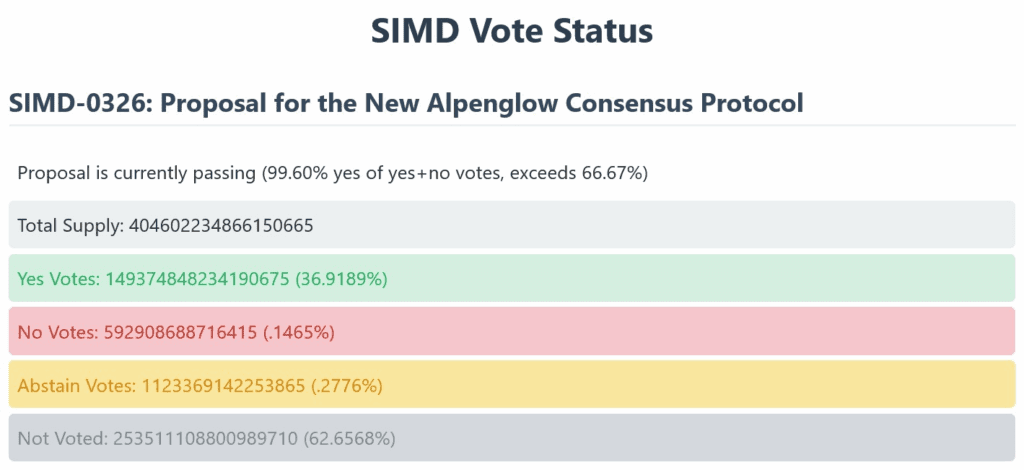
- The community voted yes by a huge margin in early September 2025.
- Engineers are finishing and testing the code on testnets.
- Mainnet rollout is expected late-2025 to early-2026, starting with the new voting and then bringing in the new relay system soon after. Exact dates depend on testing and audits.
(You won’t need to do anything as a regular user; wallets and apps will update under the hood. Validators will upgrade software when the network sets the activation point.)
“How is this different from Firedancer?”
You may have heard of Firedancer. Quick comparison:
- Alpenglow changes the rules of the protocol (how finality and data spreading work). It’s about latency and cleaner consensus.
- Firedancer is a new high-performance validator client (another implementation). It’s about throughput, efficiency, and client diversity.
They’re complementary. Alpenglow makes finality instant. Firedancer helps the network handle huge traffic reliably. Together: fast, final, and scalable.
What this unlocks (the fun part)
- Pro-grade DeFi: Think CEX-like feel, but on-chain. instant confirmations, real market-making, tighter spreads.
- Point-of-sale payments: Tap, pay, final. No awkward waits.
- Real-time games: On-chain actions that feel like regular multiplayer games.
- Rollups & cross-chain: L2s and bridges that checkpoint to Solana and get a final answer in a blink.
Bottom line
Alpenglow takes Solana from “fast to see” to fast to finalize. By quieting the votes, broadcasting blocks in one clean shot, and locking them in within ~0.1–0.15s, it makes the chain feel like the internet: click → done. Users get confidence, developers get simpler building blocks, and validators get fairer economics.
If you remember only one thing: Solana will feel instant — and be instant.
This content is for educational purposes only and does not constitute financial advice. The cryptocurrency market is highly volatile and risky.
Always conduct your own research (DYOR) and never invest more than you can afford to lose. For comprehensive market analysis and educational resources, visit blog.millionero.com.
When you’re ready to trade with proper risk management, consider spot and perpetual futures trading on Millionero. Remember: knowledge first, trading second.