


Late on Jan. 21, US President Donald Trump lit up markets with two messages that, together, changed the mood in minutes: a hard-edged public stance toward Denmark over Greenland, and then a surprise decision to drop planned 10% tariffs on the European Union that were set for Feb. 1.
Traders did what they always do when risk suddenly feels lower: they bought stocks, eased off safe-haven hedges, and re-priced the whole “trade war” narrative in real time.
But the bigger story isn’t only the tariff cancellation. It’s the shape of what Trump is signaling: a deal framework around Greenland and the Arctic that mixes security, minerals, and infrastructure, and uses tariffs as leverage.
The Two Messages: Pressure First, Deal Talk Second
One message was the pressure line, after Denmark reportedly rejected Trump’s demand for negotiations on Greenland: “Tell it to my face.” It fits a familiar posture, direct, confrontational, and built to force a response.
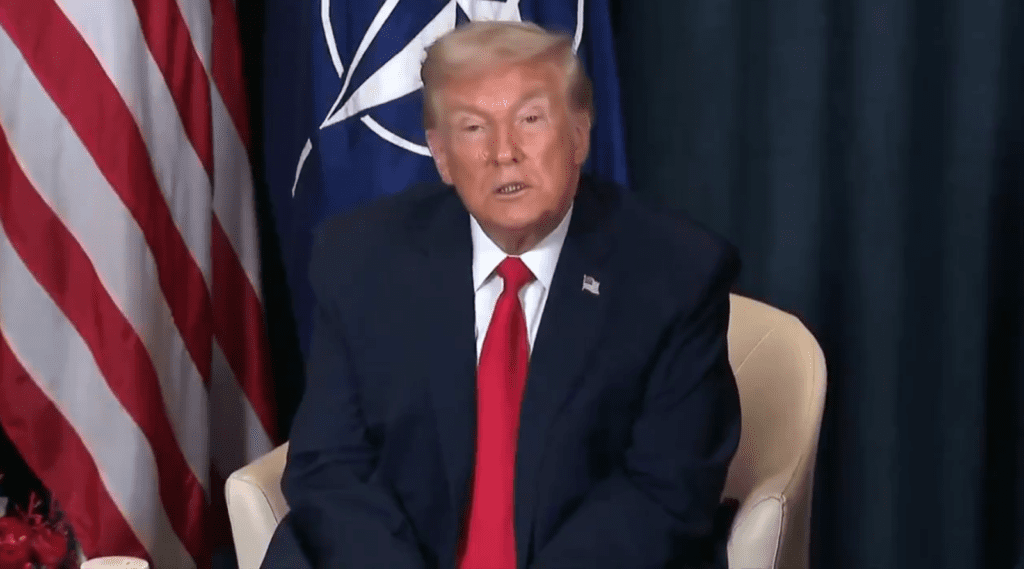
Then came the second message: Trump said he had a “very productive meeting” with NATO Secretary General Mark Rutte, and claimed they had formed the framework for a future deal involving Greenland and, more broadly, the Arctic region.
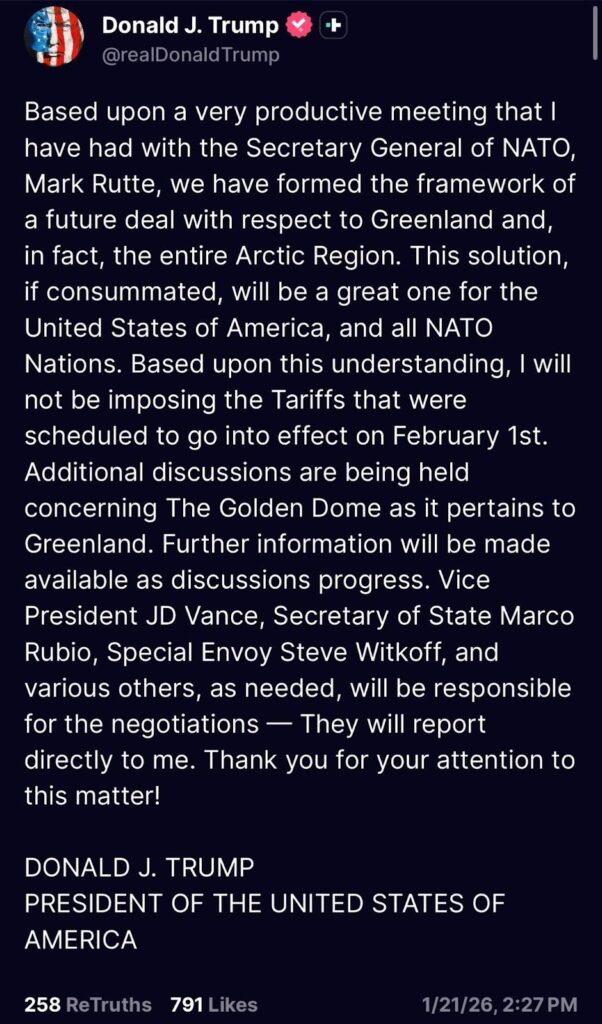
In that same statement, Trump said he will not impose the tariffs that were scheduled to begin on Feb. 1.
In plain terms: the threat stayed on the table long enough to matter, then it was pulled back once a framework was announced.
What Trump Says the Greenland Framework Includes
Trump’s wording, and the follow-up chatter around “initial details,” point to a deal concept that tries to bundle multiple goals into one package:
- Land access: talk of “small pockets of land” for the US
- Mineral involvement: the US being “involved” in Greenland’s mineral rights
- Time horizon: described as an indefinite timeframe
- Geopolitics: designed to block Russian influence in Greenland/Arctic
- Defense layer: references to a “Golden Dome” system connected to Greenland
- Investment angle: opening the door to US-backed infrastructure investment
Even if the details end up changing, the theme is consistent: land + resources + defense in one negotiation lane.
And that matters because Greenland is not just an icy map label. It sits in a strategic corridor and is often discussed as a key piece of the Arctic’s next era of competition, shipping lanes, military positioning, and access to critical materials.
Why Minerals Are the Heart of This Story
One of the loudest market-moving lines was the claim that the US will be involved in Greenland’s mineral rights, alongside an estimate that Greenland’s natural resources could be worth as much as $5 trillion.
Whether that number proves accurate or not, the messaging is clear: this isn’t only about flags and diplomacy. It’s about control and supply chains, especially the kinds of materials that feed modern industry:
- advanced electronics
- batteries and energy systems
- defense manufacturing
- industrial infrastructure
When leaders talk about mineral rights, they are often talking about future leverage, who gets stable access, who sets terms, and who gets locked out.
The Tariff Reversal: Why Stocks Jumped and Metals Dropped
Markets did not need a full treaty to react. They only needed one thing: reduced odds of near-term trade friction.
After Trump said the EU tariffs would not go into effect, BTC surged more than +2% with multiple ups and downs reacting to the news.
At the same time, gold and silver fell sharply. That pattern is common:
- When trade threats rise, investors often buy gold as a hedge.
- When trade threats fade, investors often rotate back into risk assets like stocks.
The key point is not the exact percentage move. The key point is the speed: this kind of headline can re-price markets in minutes because tariffs can hit growth expectations, company costs, and global confidence all at once.
What “Golden Dome” Signals
Trump also mentioned additional discussions about “The Golden Dome” as it relates to Greenland.
The phrase is not standard everyday policy language, but it clearly points to defense architecture, the kind of systems that connect sensors, deterrence, and protective coverage across regions.
If Greenland becomes part of a larger defense design, it turns the island into something more than territory. It becomes infrastructure, a platform for reach, monitoring, and positioning in the Arctic.
That framing also helps explain why this is being tied to NATO discussions. It’s easier to sell big security moves as part of a broader alliance logic rather than as a standalone land-and-minerals grab.
Who Runs the Negotiations and Why That Matters
Trump said the negotiating team would include:
- Vice President JD Vance
- Secretary of State Marco Rubio
- Special Envoy Steve Witkoff
- and “various others”
He also said they will report directly to him.
That structure matters because it signals the deal is being treated as a top-priority political project, not a slow-moving bureaucratic process. It also suggests the White House wants speed, message discipline, and direct control over the outcome.
Denmark’s Quiet Signal: Stepping Back From US Treasuries
Another thread running alongside this story is Denmark’s reported behavior in US debt markets.
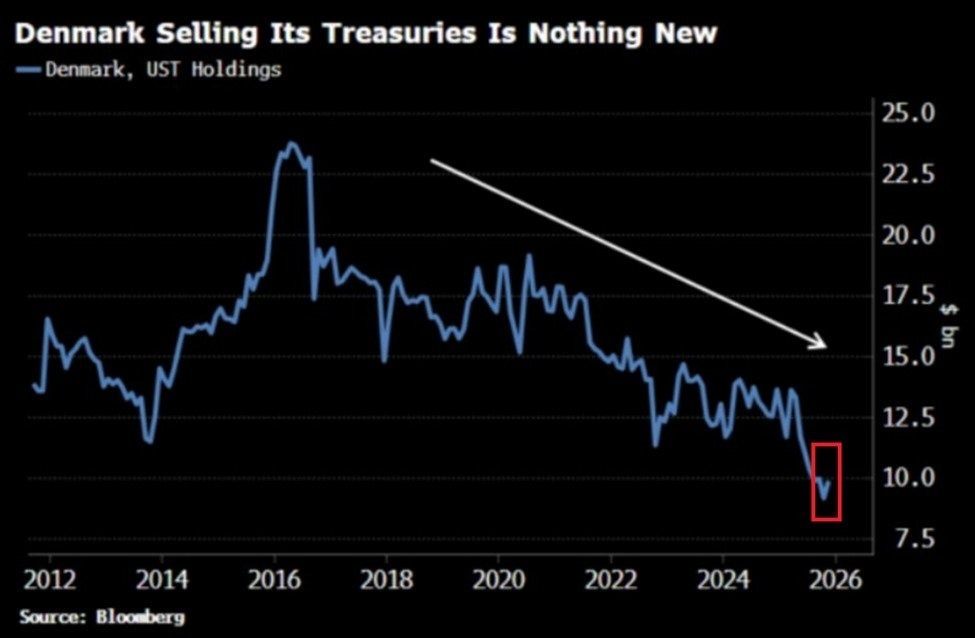
According to the figures:
- Denmark’s US Treasury holdings are around $9 billion, a 14-year low
- Over the last year, holdings fell by about $4 billion (roughly -30%)
- Since the 2016 peak, holdings have more than halved
- A Danish pension fund, AkademikerPension, is reportedly planning to exit all Treasuries by the end of the month, citing concerns about rising credit risks under Trump’s policies
On its own, Denmark is a small slice of the overall European Treasury footprint. But the signal is still worth watching: when allies start trimming US debt exposure during political friction, it becomes part of the bigger confidence story.
The Negotiation Style: Why Trump Often Starts With a Threat
Trump leads with punishment, tariffs, pressure, public confrontation, because it forces faster movement from the other side.
Supporters of this view point to past episodes, including an earlier trade bout with China that ended with a new trade deal, and claims that China removed rare earth export restrictions that were seen as harmful to the US
Whether you see that tactic as effective or reckless, markets treat it as tradable. First comes shock, then comes a deal hint, then comes a relief rally. And that rhythm is exactly what played out here.
What This Could Mean for Crypto, in the Same Lens
Crypto tends to respond less to the politics itself and more to what politics does to the macro mood:
- If tariff pressure falls, markets often shift into risk-on behavior.
- If geopolitical tension rises, traders often get more defensive, at least short term.
- If bond yields, the dollar, or liquidity expectations move, crypto often follows.
Right now BTC is playing the ‘Being Cautious’ game instead of full risk-on.
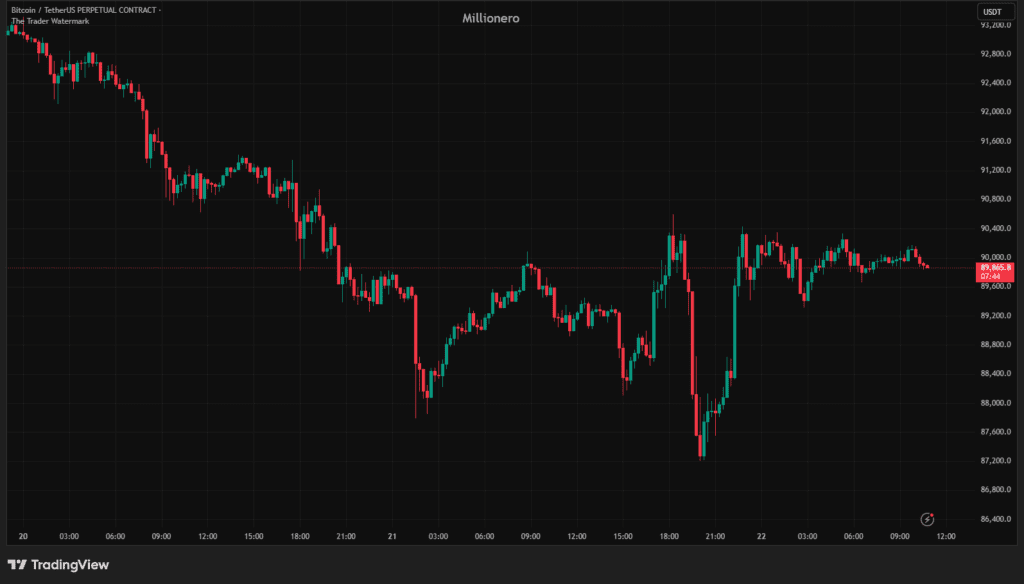
So the Greenland headlines matter mainly because they touched trade risk, global confidence, and market positioning, the same forces that can spill into Bitcoin and the wider crypto market.
Not financial advice. Do your own research.
For more market explainers and weekly recaps, read blog.millionero.com.
If you choose to trade, Millionero spot is for simple buys and sells, while perpetuals add futures tools that require strict risk control.