



Bitcoin entered the end of the week under heavy pressure. ETF outflows reached $1.26 billion this week, continuing the weakness from last week, while BTC traded around $75,400. The market broke down late Friday after Kevin Warsh was sworn in as the new U.S. Federal Reserve Chairman and delivered hawkish remarks. The message was clear for markets: there may be no rate cuts this year, and rate hikes may even remain possible.
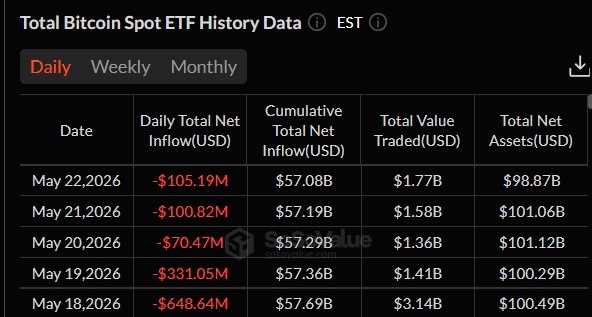
This shift added pressure to a market that was already dealing with weak ETF flows, rising bond yields, geopolitical risk, and bearish prediction market activity. A new strategic Bitcoin reserve bill also became important because it dropped the 1 million BTC purchase target and added a 20-year lockup period, changing the way the market may read future U.S. Bitcoin reserve policy.
Bitcoin, ETFs, and the Return of Rate Pressure
BTC Falls as Monetary Policy Turns More Hawkish
The week’s biggest macro shock came from the Federal Reserve side. Markets were already waiting to see whether Kevin Warsh would bring a different monetary policy direction, especially with interest rates, inflation, and crypto all under pressure.
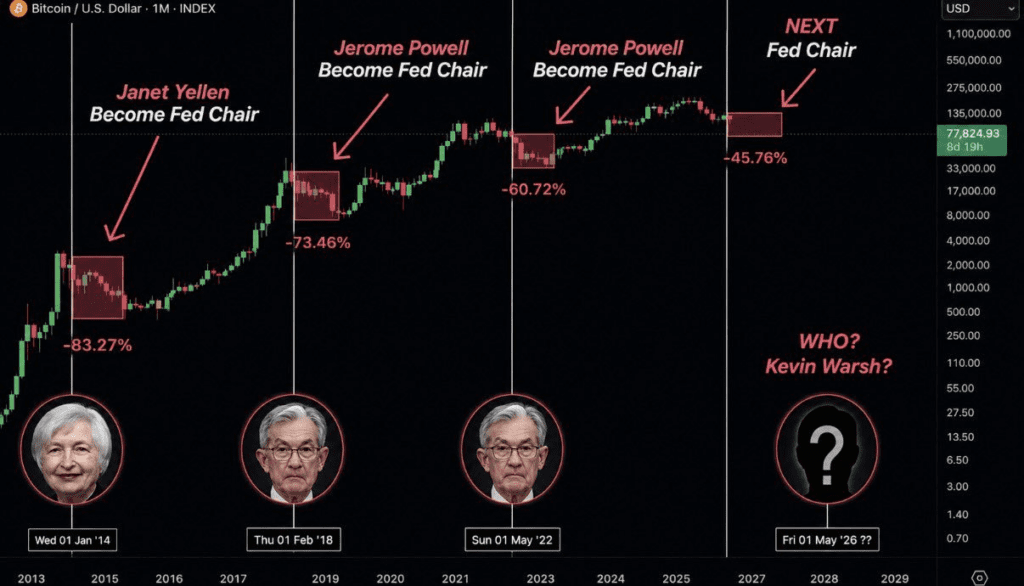
Bitcoin has historically declined during every Federal Reserve chair transition, and this week followed that pattern. After the oath ceremony and hawkish remarks, BTC weakened further. The message from policy officials now points toward a tougher environment for risk assets. There will likely be no easy liquidity support if inflation stays above target.
Federal Reserve meeting minutes also added to the pressure. The minutes showed that most officials are open to raising interest rates again if inflation remains above the 2% target. This strengthened fears that the “higher for longer” policy may return. Markets had been expecting rate cuts, but the current tone suggests that tightening is still on the table.
Bond Yields Add More Stress to Risk Assets
The pressure was also visible in the bond market. The yield on 30-year U.S. bonds rose to 5.16%, its highest level since October 2023. Rising inflation fears triggered a wider sell-off in debt markets, with investors becoming more concerned that high interest rates may last longer than expected.
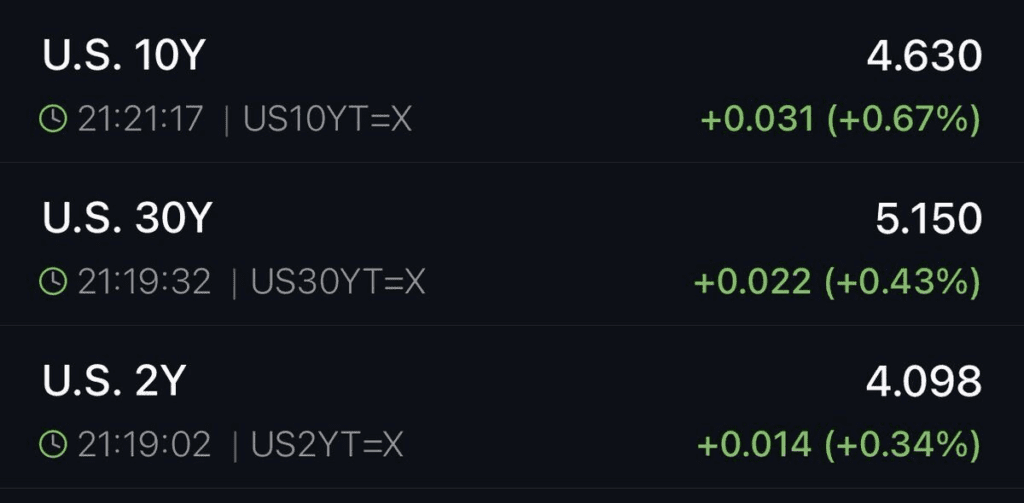
This matters for crypto because higher bond yields can pull liquidity away from riskier assets. Stocks, real estate, and crypto all face pressure when safer assets offer higher returns. This helped explain why Bitcoin struggled around the end of the week.
Prediction Markets Turn Bearish on BTC and ETH
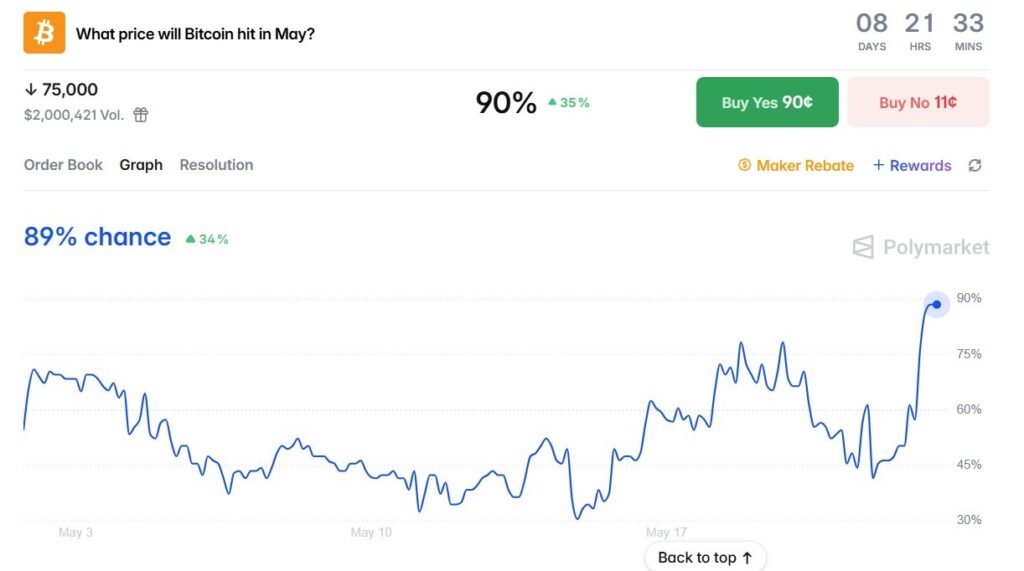
Bearish short-term expectations also increased. Prediction markets showed an 89% chance of Bitcoin falling below $75,000 before the end of May. This rise in bearish bets came as bond yields climbed, ETF flows weakened, and global economic concerns increased.
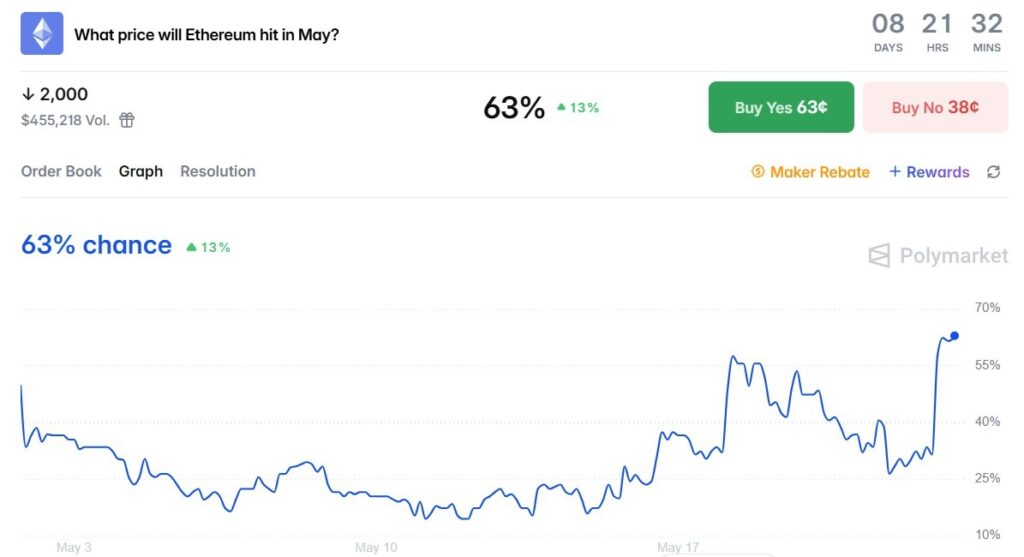
Ethereum also came under pressure. Traders placed a 63% chance on ETH falling below $2,000 before the end of the month. The pressure on Ethereum came from weaker institutional flows and softer momentum compared with Bitcoin.
Geopolitics: Iran, China, Taiwan, and Trade
Iran Tensions Stay High
Geopolitical risk remained one of the main market themes. Trump was seriously considering launching new strikes against Iran if there was no last-minute breakthrough in negotiations. People who had spoken directly with the president said new strikes were being considered if talks failed.
Some members of the U.S. military and intelligence community canceled their Memorial Day weekend plans in anticipation of possible strikes. However, no final decision had been reached as of Friday afternoon.
At the same time, Iranian media said Tehran was discussing a “framework and steps to build confidence” in ongoing negotiations. The latest U.S. messages had helped narrow some gaps, but Iranian statements said fully closing those gaps would require Washington to abandon the “temptation of war.”
This created a tense mix of diplomacy and military threat. Markets watched the talks closely because the Iran file can affect oil prices, global trade, and risk sentiment.
China Blocks Pentagon Visit Over Taiwan Arms Deal
China also became a major geopolitical focus. Beijing blocked a Pentagon visit until Trump makes a decision on a $14 billion arms deal for Taiwan. The proposed military package includes Patriot interceptor missiles and advanced air defense missile systems.
This happened while Chinese military pressure near Taiwan continued to rise. Beijing has repeatedly said it is ready to take control of Taiwan by force if necessary. In response, U.S. laws require the White House to support Taiwan and help arm it for defense.
U.S. and China Announce Trade Developments
There was also a more positive development in U.S.-China relations. The White House announced new trade agreements and developments after the Trump-Xi Jinping meeting.
China agreed to address U.S. concerns related to supply chains and rare earth minerals. It also approved an initial purchase of 200 Boeing aircraft for Chinese airlines. China will also purchase at least $17 billion annually in U.S. agricultural products between 2026 and 2028.
The agreement also includes the restoration of U.S. meat access to the Chinese market after licenses were renewed for more than 400 facilities. U.S. poultry imports from states free of avian flu will also resume. Xi Jinping is expected to visit the White House this fall, signaling a continued attempt to reduce trade tensions between the world’s two largest economies.
AI, Nvidia, and the Infrastructure Race
Nvidia Keeps Expanding Its Market Control
Nvidia remained one of the strongest stories in global markets. The company announced $81.6 billion in revenue for the first quarter of 2026, beating expectations.
Its data center revenue also reached $62.3 billion, surpassing the combined revenue of competitors. This showed Nvidia’s huge dominance in AI and computing infrastructure. The demand for AI processors and data centers continues to push the company into a stronger market position.
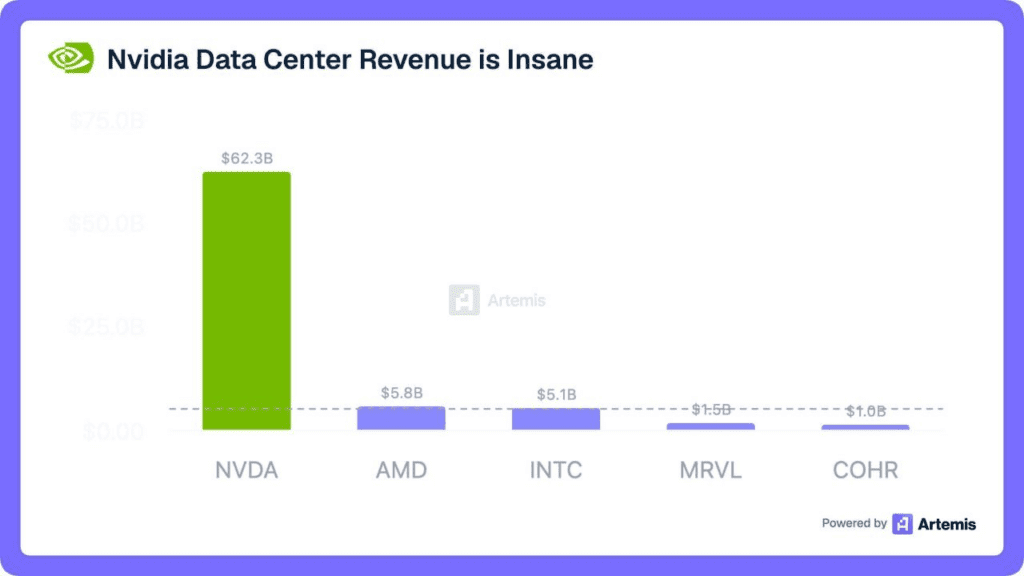
The AI race currently appears to revolve heavily around Nvidia because the company controls a key part of the hardware infrastructure needed for large AI systems.
White House Delays AI and Cybersecurity Order
The White House postponed Trump’s signing ceremony for a new executive order on artificial intelligence and cybersecurity. The event was expected to include top executives from tech, AI, and cybersecurity companies.
The delay came because of internal disagreements inside the U.S. administration. For now, the initiative remains paused, even as AI and cybersecurity stay central to U.S. technology policy.
AI Agents Move On-Chain
BNB Chain officially launched the BNBAgent SDK package on mainnet. The tool allows AI agents to use on-chain identity, self-payments, and persistent memory inside blockchain systems.
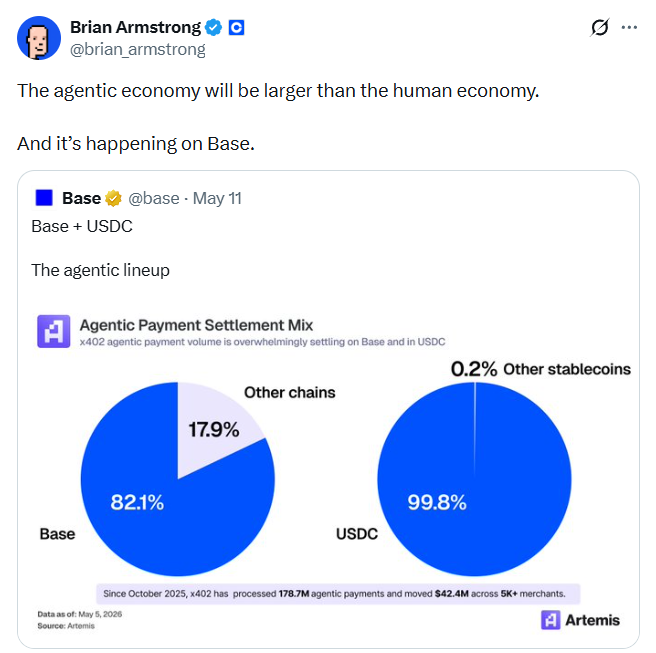
This fits into a broader race between networks to support AI agents that can interact, pay, and make decisions independently. The idea that intelligent agents may become a major economic force is now moving from theory into active blockchain infrastructure.
Regulation, Tokenization, and Digital Money
Tokenized Stocks Pass $1.6 Billion
The market capitalization of tokenized stocks passed $1.6 billion. Ethereum leads this sector with a 41.1% market share, showing its continued role as the main infrastructure layer for tokenized assets.
Tokenized stocks are becoming one of the fastest-growing sectors in crypto. Institutional interest is rising as traditional markets move closer to blockchain-based infrastructure.
The SEC is also preparing an “Innovation Exemption” for tokenized stocks. This could allow digital versions of stocks and securities to trade on decentralized crypto platforms. The move could allow tokenized assets to become tradable on decentralized platforms and may reshape parts of the U.S. stock market.
Stablecoin Adoption Expands Across Regions
Stablecoins also continued to grow. The European Stablecoin Project received support from 37 European banks, showing that stablecoin interest in Europe is increasing. The stablecoin race is no longer only about the U.S. dollar.
Asia now dominates global stablecoin payments. Nearly two-thirds of stablecoin payment volume comes from Asia, led by Singapore, Hong Kong, and Japan. North America accounts for about 25%, Europe is close to 13%, while Latin America and Africa combined remain under $1 billion.
This confirms that Asia has become the leading region for digital payments and blockchain-based financial infrastructure.
Digital Dollar Debate Continues
The former president of the U.S. Commodity Futures Trading Commission said officials are still studying the launch of a U.S. digital dollar behind closed doors. Timothy Massad pointed to U.S. participation in the BIS Agora project, where central banks are testing tokenized money systems and digital settlements.
This is notable because Trump has opposed a U.S. central bank digital currency. Even with that opposition, work around tokenized money systems appears to continue.
South Carolina Passes Bitcoin Protection Law
South Carolina enacted one of the strongest Bitcoin protection laws in the United States. S.163 officially took effect and includes protection for Bitcoin self-custody and a ban on discriminatory taxes against BTC.
This shows that U.S. states are moving ahead while federal regulation is still developing. The CLARITY Act is moving forward at the federal level, but some states are already building their own crypto frameworks.
SEC Reviews Prediction Market ETFs
The SEC is reviewing the implications of ETF funds tied to delayed prediction markets. This reflects growing regulatory interest in betting products and financial prediction markets linked to political and economic events.
Pre-diction markets expanded heavily through 2026, and regulators are now paying more attention to their possible effect on traditional markets and crypto markets.
Prediction Markets Face Insider-Information Concerns
Prediction markets became a major story this week because of activity linked to military events. Nine linked accounts made more than $2.4 million from bets tied to the Iran war.
The success rate reached 98% across more than 80 bets, including accurate predictions on the timing of the first U.S. strikes, the removal of Iran’s Supreme Leader, and the announcement of a ceasefire.
One analyst involved in uncovering the pattern said luck alone could not explain those numbers. The concern became stronger because last month a U.S. Army soldier was charged with using classified information to make more than $400,000 through prediction market bets.
In 2026 alone, more than $1 billion in bets were placed on military outcomes inside prediction markets. This raised a serious question: prediction markets may be turning into a new form of insider-information-based trading.
Crypto Security: Hacks, Breaches, and Scams
THORChain Proposes Recovery After $10.7 Million Breach
THORChain proposed a recovery plan after a May 15 breach. The plan says no new RUNE coins will be minted or sold as part of the recovery process. This aims to avoid adding inflationary pressure while the network tries to contain the damage and restore community trust.
The breach caused a loss of about $10.7 million across Bitcoin, BNB Chain, Ethereum, and Base. A malicious node operator exploited a vulnerability in the protocol’s GG20 signing framework. The issue leaked key material from multisig participants, allowing the attacker to reconstruct a private key and send unauthorized outbound transactions from one of the network’s Asgard vaults.
Echo Protocol and Curvance Face Major Stress
Echo Protocol on the Monad network was exploited after an attacker minted 1,000 eBTC worth about $76.6 million. The attacker used part of the funds as collateral on Curvance to borrow WBTC, bridged assets to Ethereum, converted them to ETH, and passed about 385 ETH through Tornado Cash to hide the movement.
The attacker still controlled about 955 eBTC worth more than $73 million. This became the third major crypto hack in four days, increasing concerns about protocol security and multi-chain infrastructure.
Curvance then temporarily suspended the Echo eBTC market after detecting unusual activity. The team said a malfunction was found in the Echo eBTC market and that the affected market was paused while the issue was investigated with ecosystem partners.
Verus-Ethereum Bridge Loses $11.4 Million
The Verus-Ethereum Bridge was hit by an $11.4 million hack. The attacker withdrew 103.6 tBTC, 1,625 ETH, and 147,000 USDC. The stolen funds were then converted into 5,402 ETH, which is now held in one wallet.
Reports also said the hacker’s address was initially funded with 1 ETH through Tornado Cash, raising more suspicion about identity concealment. Bridge hacks remain one of the biggest security risks in crypto.
Polymarket Reports Internal Wallet Breach
Another breach was linked to Polymarket. The team confirmed it was aware of security reports related to reward distribution operations.
Users’ funds and market outcomes remained secure. Investigations pointed to a private key breach for a wallet used in internal top-up operations. The smart contracts and platform infrastructure were not compromised.
This again showed the importance of private key management and operational security, even when the core protocol remains safe.
GitHub and Crypto Developers Face Malicious Attacks
Developers were also warned about malicious attacks targeting wallets and API keys. The attacks rely on impatience and excessive trust. Users were warned not to run unknown scripts, to check package names carefully because attackers exploit typos, and to avoid placing secret keys inside code.
This came while GitHub investigated unauthorized access to internal repositories. There was no evidence of impact on customer information stored outside GitHub’s internal repositories, but the situation still raised concern for developers.
Jupiter Scam Targets Wallet Users
A new scam impersonated Jupiter. Scammers sent fake CJUP tokens to wallets and then asked users to connect their wallets to a fraudulent site designed to steal assets.
The warning was simple: do not connect wallets to unofficial sites, do not interact with unknown tokens that randomly appear in a wallet, verify official links, and avoid signing untrusted transactions.
FBI Market Manipulation Operation Returns
The FBI’s fake cryptocurrency operation also returned to attention. The FBI created a fake crypto project called NexFundAI, hired market manipulation firms to pump the price, and then arrested the people who agreed to participate.
Some firms were faking 98% of trading volume with only $200, creating false momentum to attract real investors. Victims lost money, and the FBI had to compensate them. After the operation was exposed, other scammers copied the same contract and made $127,000 in one day.
In 2026, the FBI repeated the operation and arrested 10 more people. The lesson was direct: trading volume can be fake, charts can be fabricated, and momentum can be manufactured.
Bitcoin Ordinals Used for Tax Evasion
Tax evaders have started using Bitcoin and Bitcoin Ordinals to hide millions of dollars. Bitcoin Ordinals and BRC-20 tokens are increasingly being used to conceal wealth and move profits away from tax authorities.
One case in Italy showed a suspect creating BRC-20 tokens, selling them for profit, and converting the funds back into BTC to hide about $1.1 million in gains. This shows that newer crypto tools are creating fresh challenges for regulators and tax authorities.
Hyperliquid, HYPE, and Institutional Demand
Hyperliquid became one of the strongest token stories of the week. ETF products tied to HYPE attracted nearly $70 million in inflows since launching earlier this month. There were $25.5 million in inflows on May 20 and another $16.1 million on May 21.
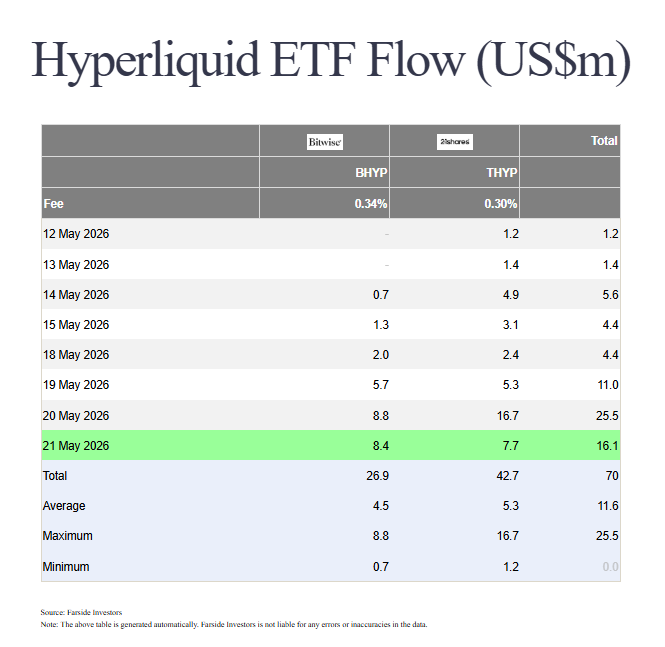
HYPE rose about 50% since the funds launched. The token also reached a new all-time high after an 18% daily surge, peaking at $62.38 before pulling back to around $55.
Institutional accumulation also increased. Grayscale bought 115,733 HYPE worth $6.65 million in one hour and accumulated 682,190 HYPE over the past week.
Whale activity was also strong. A wallet linked to Galaxy Digital bought 158,100 HYPE worth $8.8 million in two hours. A newly created wallet withdrew 536,247 HYPE worth nearly $29.87 million from Coinbase over two days.
Bitwise also announced that it will hold HYPE as part of its general budget. It will allocate 10% of management fees from the Hyperliquid ETF fund, BHYP, to directly buy HYPE.
Bitcoin Finance Products and Treasury Moves
Strategy’s STRC product also drew attention because it promises Bitcoin yields of up to 11.5%. The market is now debating whether this is a real innovation in Bitcoin-linked finance or a high-risk structure built around attractive returns.
The product shows how companies are creating more complex financial tools based on BTC to generate yield and liquidity.
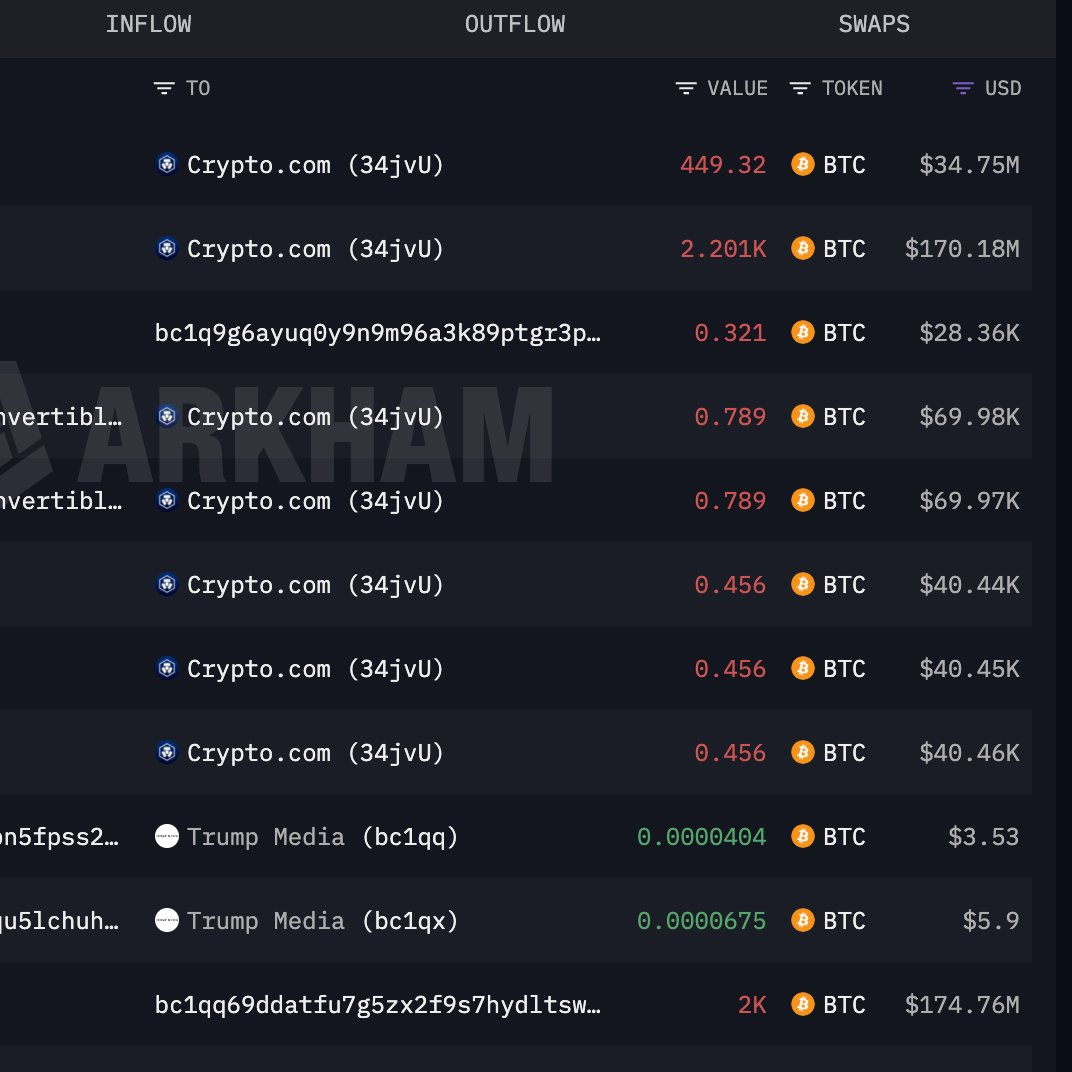
Trump Media also transferred another 2,650 BTC, worth about $205 million, to Crypto.com. This brought its recent BTC transfers to more than 4,600 BTC. The company originally bought 11,542 BTC for about $1.37 billion, at an average price near $118,522 per coin. Reports now suggest the company is down about $455 million on the value of its Bitcoin holdings.
Solana, Sui, Pump.fun, and Consumer Crypto
Morgan Stanley updated its Solana ETF filing to include staking rewards. This was seen as a strong sign that institutions are preparing for more than simple SOL price exposure. They are also considering long-term holding and staking yield.
Sui introduced gas-free transfers for stablecoins. Supported assets include USDC, FDUSD, USDY, USDB, AUSD, SuiUSDe, and USDsui. This feature aims to make payments and transfers smoother by removing the need to hold a separate gas currency.
Pump.fun launched USDC-linked liquidity pools. Using USDC instead of volatile assets may reduce sharp price swings and improve the trading experience inside the platform. This also suggests that meme coin platforms are slowly moving toward more stable financial infrastructure.
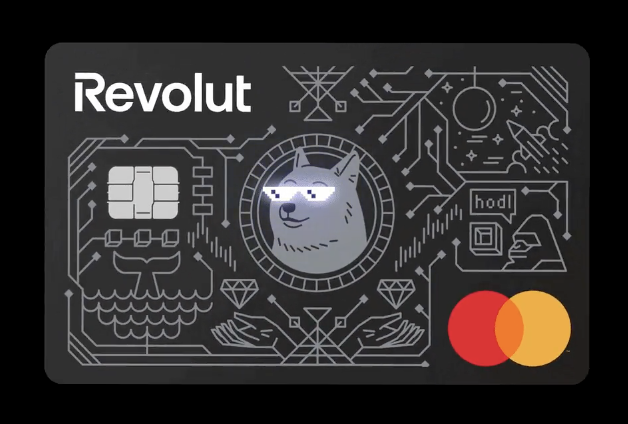
Revolut unveiled a real crypto card with a design inspired by Dogecoin. The card includes contactless payment through LED lighting and will be available to users in the United Kingdom and the European Economic Area. This blends crypto identity with a modern payment experience.
Traditional Finance Keeps Moving Across ETFs and Crypto
BlackRock continued expanding in active funds within the ETF market. The company applied to launch two new active municipal bond funds, including one focused on short-term bonds.
This reflects a wider shift among asset managers toward funds that are managed more flexibly instead of relying only on traditional passive structures. BlackRock is expanding across many asset classes, not only crypto.
Conclusion: A Week of Pressure and Structural Change
This week combined several major forces at once. Bitcoin faced heavy ETF outflows, higher bond yields, hawkish Federal Reserve signals, and bearish prediction market expectations. At the same time, geopolitical risk around Iran and Taiwan kept global markets tense.
Crypto infrastructure also kept growing. Tokenized stocks passed $1.6 billion, stablecoin payments expanded across Asia and Europe, and institutions continued moving into products linked to Solana, Hyperliquid, and Bitcoin.
Security remained the clearest warning. THORChain, Echo Protocol, Curvance, Verus-Ethereum Bridge, Polymarket operations, developer attacks, wallet scams, tax evasion methods, and fake volume schemes all showed that crypto still faces serious operational and security risks.
The week ended with one clear message: crypto is becoming more connected to macro policy, global politics, traditional finance, AI infrastructure, and security discipline. That connection brings growth, but it also brings pressure.
Trade safely, stay informed, and always do your own research before making any move. This article is for educational purposes only and should not be taken as financial advice. You can explore more market updates on the Millionero Blog and trade crypto through Millionero Exchange.