



Weekly News: This past week in markets and crypto was noisy, confusing, and very revealing.
If we put all the headlines together, one clear story appears:
macro stress is high, leverage is dangerous, but the crypto machine keeps growing in the background.
Let’s walk through the week by themes.
Washington: Shutdown Pain and Trump’s New Crypto Politics
The U.S. government shutdown has now dragged on for 38 days.
Congress will return on Saturday at noon after a failed vote to pass a deal.
The numbers are heavy:
- About 42 million people are at risk of losing SNAP food assistance
- More than 750,000 federal workers are on forced leave
- Estimated losses reach around 15 billion dollars per week in GDP
- Flight delays are increasing across the country
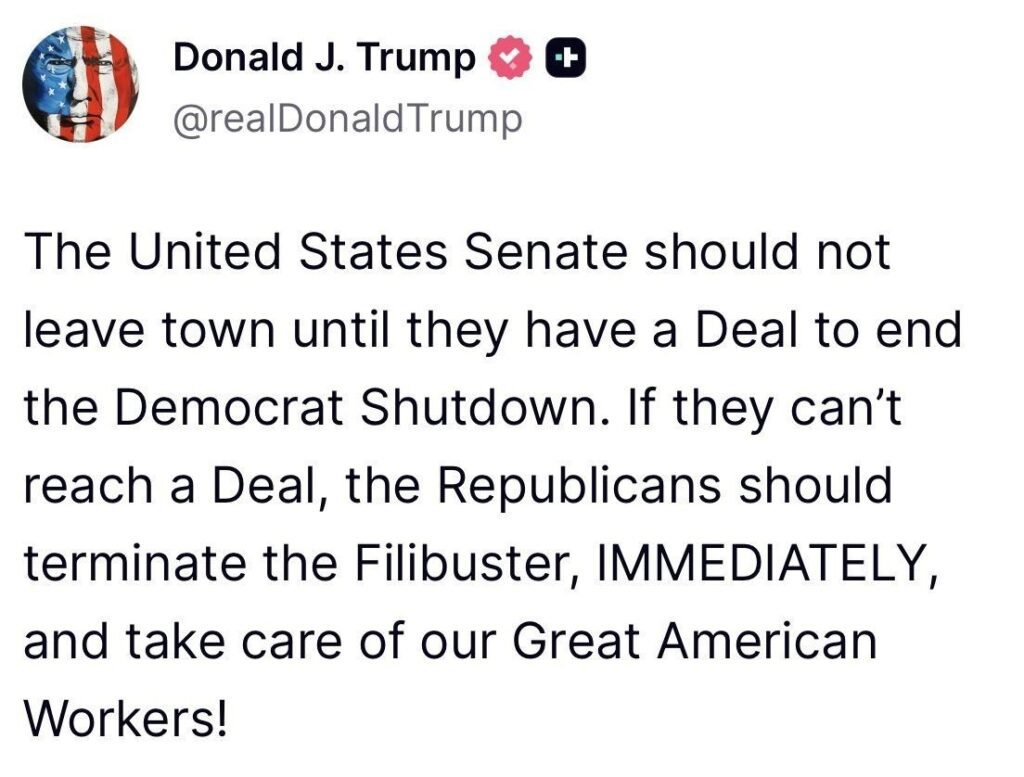
Markets are watching Washington closely, because every extra day adds more pressure on the U.S. economy.
On top of that, tariff politics are back in the spotlight.
Treasury Secretary Scott Bessent said after meetings on tariffs that he is very optimistic and refused to talk about any “Plan B”.
At the same time, Donald Trump is sending a very different message.
He warned again that “the United States could become a third-world country without tariffs.”
He also said he held high-level trade talks with Switzerland, where U.S. tariffs currently stand at 39%, and that discussions on reducing those tariffs will continue.
Trumps’ Message
Trump’s economic messaging is now tightly linked to crypto:
- He declared that “we are making the United States the great Bitcoin power and the capital of digital currencies in the world.”
- He argued that digital assets reduce pressure on the dollar and bring “a lot of benefits.”
- The White House even announced that Trump has “ended the Biden administration’s war on crypto.” (The source itself notes some doubt about whether there ever was a real “war”, but this is the official framing.)
This is not just rhetoric. A detailed on-chain breakdown showed what one analyst called “Trump’s digital empire”:
- Trump Media and Technology Group ($DJT) holds over $1.3 billion in Bitcoin as of 30 September 2025
- Donald Trump himself: about $861,000 in crypto
- World Liberty Fi (WLFI): around $5.76 billion
- Official Trump Meme: about $6.30 billion
- Official Melania Meme: roughly $19.65 million
- Trump Cards: about $29,720
All of these numbers come from Arkham’s tracking.
Put simply, U.S. politics now mix shutdown pain, tariff threats, and a sitting president who is deeply tied to crypto markets, both in language and in balance sheet.
Central Banks, Liquidity, and Weak Data
Macro liquidity and central banks were another key thread.
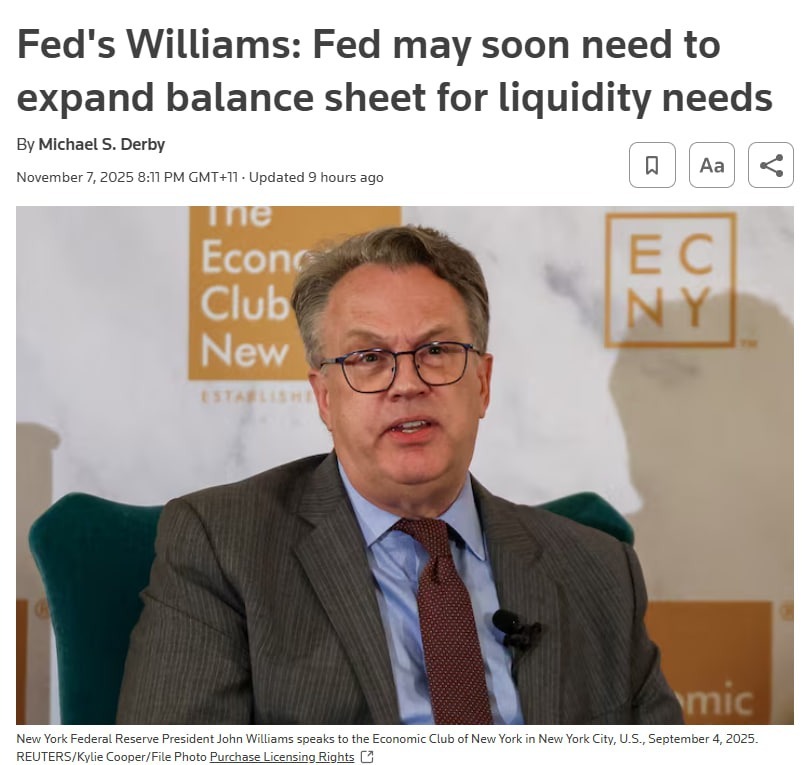
- John Williams, head of the New York Federal Reserve, signaled that the Fed may start expanding its balance sheet soon. Markets see this as a very strong hint of more liquidity and maybe a return to something like quantitative easing.
- In China, new data showed weak trade numbers:
- Trade surplus below expectations
- Exports below expectations
- Imports below expectations
- Trade surplus below expectations
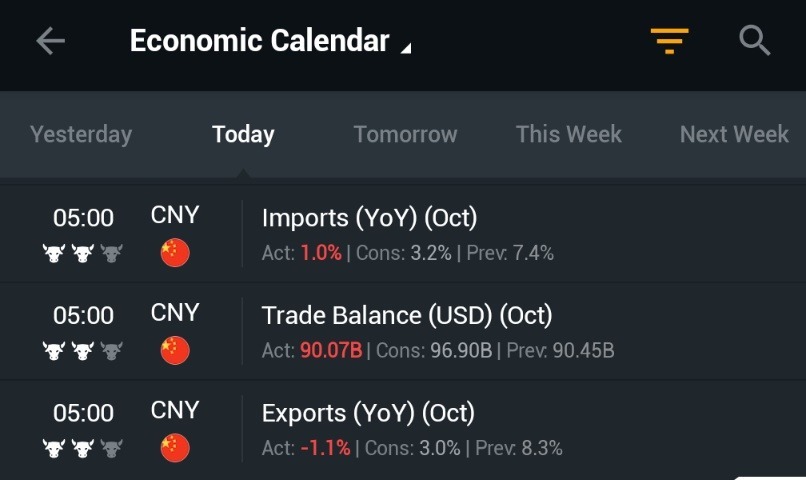
This raises fears that the Chinese economy is close to contraction, and historically such data often triggers new liquidity injections from the People’s Bank of China.
In the U.S. real economy, ISM Manufacturing PMI for October came in at 48.7 (still in contraction and below expectations of 49.4), with prices at 58.0, lower than expected but still elevated.
Fed officials gave mixed but cautious signals:
- Christopher Waller called for another rate cut in December, hinting at more easing.
- Austan Goolsbee said the final interest rate is likely to be much lower than today, but warned against cutting too fast.
In short: growth looks weak, inflation is still a concern, and central banks are preparing to add more liquidity but slowly.
Bitcoin, Leverage, and a Market Addicted to Risk
The “million-dollar question”: what is happening in crypto now?
Since 6 October, the total crypto market has lost more than 1 trillion dollars in value.
Let’s put it this way:
- The total market cap fell from $4.22 trillion to $3.43 trillion
- That is about an 18% drop in four weeks
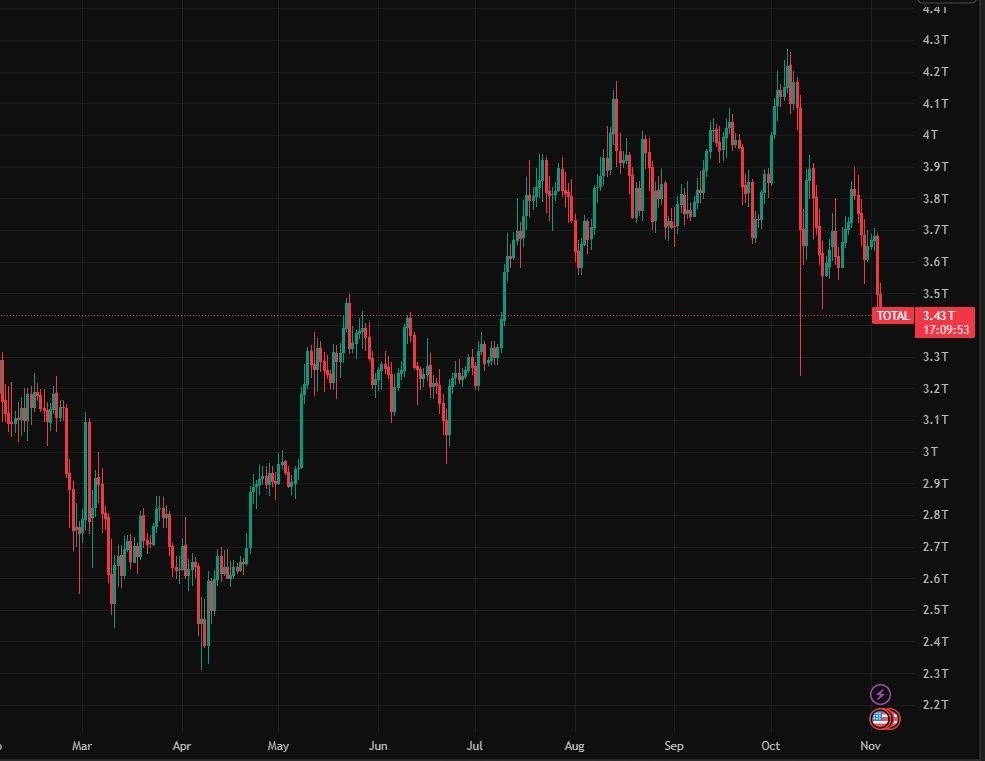
The message was clear:
The problem is not fundamentals. It is technical.
Fundamentals still look strong:
- Crypto adoption is at record levels
- Regulatory clarity is improving in many countries
- Technology is moving very fast
But technically, the market is overloaded with leverage:
- Leverage reached dangerous highs
- On 10 October, about $20 billion in positions were liquidated in one massive move
- Recently, there were $1.65 billion liquidations in 24 hours, and over $2 billion in another, mostly long positions
- Around 300,000 traders are being liquidated every day, often reacting to Trump posts and big headlines in almost real time
Bloomberg was quoted saying that the October liquidation shock is still haunting the market.
Even though Bitcoin revisited around $107,000, many buyers are scared, and trust is shaky.
On top of that, CryptoQuant warned: if Bitcoin fails to hold the $100,000 support, price could fall toward $72,000 in the coming weeks.
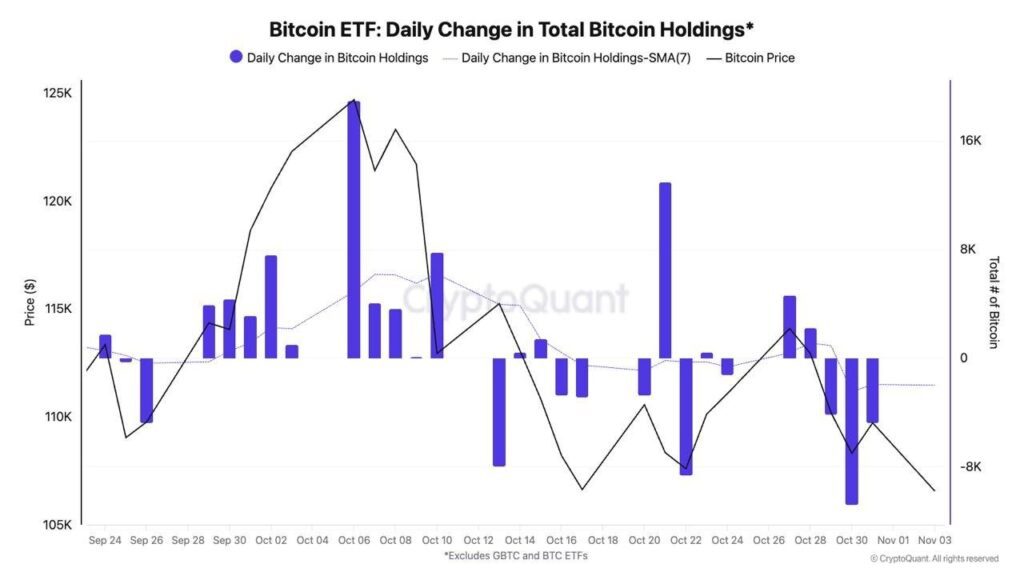
They pointed to weak institutional demand after the big October wipe-out and a bearish sentiment weighing on price.
On the other hand:
- Arthur Hayes said “money markets do not lie” and argued that stress in the dollar system will force the Fed to act, bringing back a “liquidity flood” that could send Bitcoin higher again.
- Ki Young Ju commented that Bitcoin is “fine… only if the four-year cycle theory is wrong.”
If the halving cycle still rules the market, we may be close to a new corrective phase.
If not, we might be entering a new regime driven more by institutions and global liquidity than by miners.
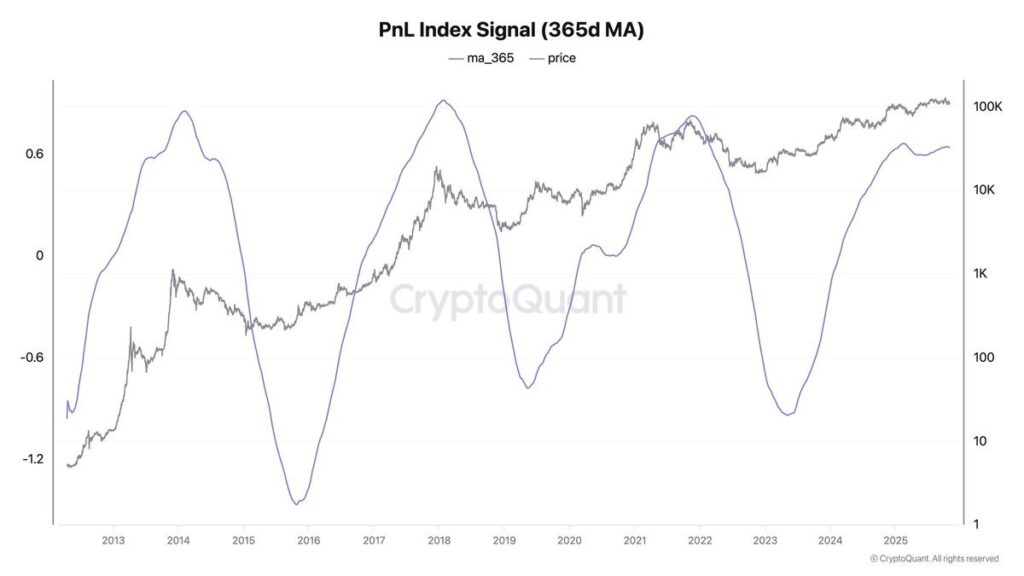
One analyst summed it up with a sharp metaphor:
In the short term, the market is addicted to the “drug” of leverage.
Whoever takes too much of it gets liquidated first.
Altcoins, Zcash, NFTs, and On-Chain Metrics
While Bitcoin dominates, the week was not kind to most altcoins.
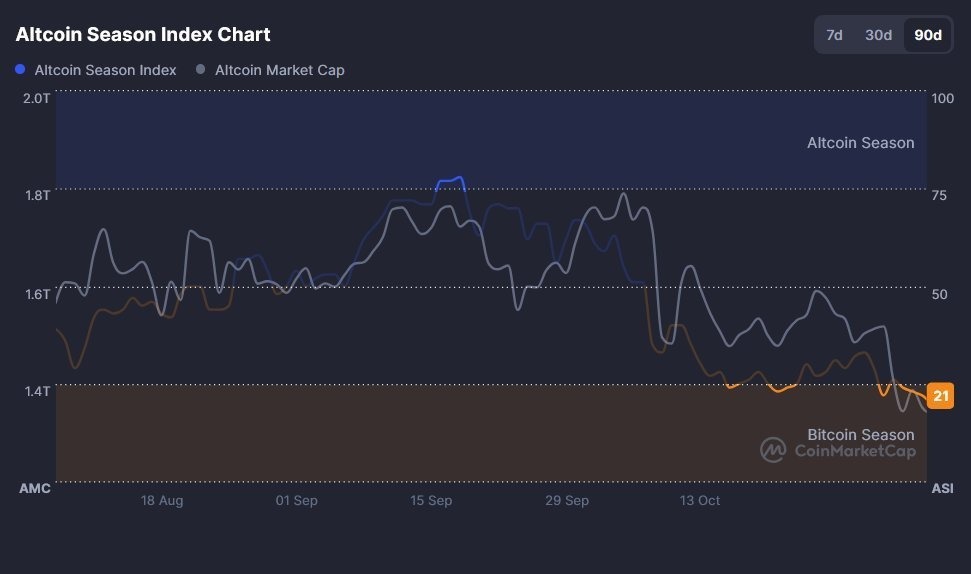
- The Altcoin Season Index from CoinMarketCap dropped to 21, officially marking a “Bitcoin season” where BTC outperforms most altcoins in price and liquidity.
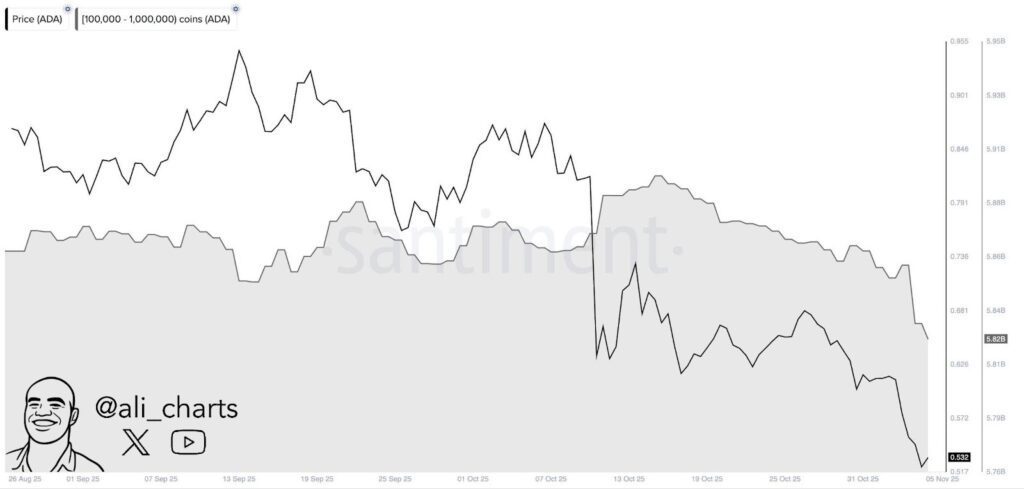
- Whales dumped over 4 million Cardano (ADA) last week, according to @ali_charts. This adds clear selling pressure at a time when on-chain activity is slowing and institutional interest is fading.
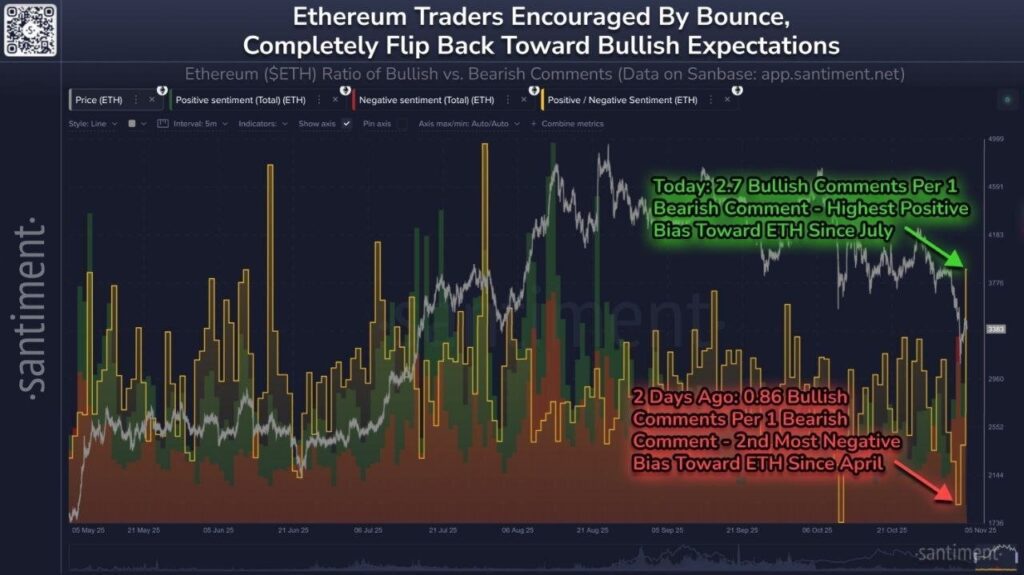
- For Ethereum (ETH), data from @santimentfeed showed a sudden shift to strongly bullish sentiment among traders. But the same source warned that ETH often moves opposite to the crowd, so a short-term correction is possible before any new rally.
Zcash’s surprising comeback
Privacy coin Zcash (ZEC) had a standout week.
It’s noted that ZEC jumped ahead of HYPE (HYPE) in total market cap, reflecting rising demand and trust in this older privacy project.

Another thread gave the background:
- In September, both Galaxy Digital and a16z accumulated large amounts of ZEC at prices between $70 and $150.
- In November, both firms published research reports with price targets between $250 and $400.
- After that, Grayscale Zcash Trust moved from trading at a discount to trading at a 10% premium.
- A Thorchain integration is planned for Q1 2026, which will create a full “liquidity exit infrastructure” for ZEC and may attract more institutional capital.
These moves show how quiet institutional accumulation and new infrastructure can suddenly turn into a sharp rally.
NFTs and DeFi usage
The NFT sector had a brutal month:
- NFT market cap fell by 46%
- From $6.6 billion down to $3.5 billion
This suggests that attention is leaving NFTs and moving toward coins and real infrastructure in the crypto world.
On the other side, DeFi usage metrics are hitting new highs:
- DEX trading volume reached a record $613.3 billion in October (up from about $500 billion in September), even though Bitcoin dropped to around $104,600 on 17 October.
- On Ethereum, stablecoin trading volume for October reached about $2.82 trillion, the highest monthly level ever.
So while prices are correcting, the underlying on-chain economy is extremely active.
Institutions, Regulation, and Tokenisation
Beneath the volatility, institutions kept building.
Big finance steps deeper into crypto
- Charles Schwab, which manages over $7 trillion in assets, announced plans to launch crypto trading services in H1 2026.
- Franklin Templeton introduced a tokenised U.S. dollar money market fund in Hong Kong.
- India’s Supreme Court officially recognised crypto (including Bitcoin) as legal property that can be owned, placed in trust, and protected under the law. This forces exchanges to be more transparent and accountable.
Chainlink’s expanding role
Several sources underlined how Chainlink is becoming a kind of backbone for financial data on-chain:
- Dinari will use Chainlink to tokenise a new S&P Dow Jones index for the crypto market.
- Chainlink and Apex Group will work with the Bermuda Monetary Authority to test a stablecoin regulatory framework built on Chainlink technology.
- Another headline announced a major partnership between Chainlink and FTSE Russell, bringing indices like FTSE 100 and Russell 1000 on-chain via DataLink.
All of this shows traditional finance streaming into Web3 through standardised oracle and data infrastructure.
Ripple, payments, and custody
Ripple was also busy:
- It announced a partnership with Mastercard to enable credit card settlement using RLUSD on the XRP Ledger, aiming for faster and cheaper global payments.
- Ripple also acquired Palisade, a digital wallet and custody specialist.
With earlier deals (Hidden Road, GTreasury, Rail), Ripple’s acquisition spending reached $4 billion this year.
Other institutional moves
The week also included:
- Metaplanet taking a $100 million loan backed by its Bitcoin holdings, to buy even more BTC.
- Swiss startup Future, co-founded by Adam Back, raising $34.5 million to build a Bitcoin treasury and custody platform for institutions.
- A tweet quoting Willy Woo argued that MicroStrategy will not be forced to liquidate its Bitcoin unless we see a deep, long bear market, underlining its extreme commitment.
These moves all send the same signal: institutional reliance on Bitcoin is spreading, from Tokyo to Zurich.
Everyday usage and regional progress
- Tangem launched Tangem Pay, letting users spend USDC via a virtual Visa card, after KYC. This is another bridge from stablecoins to daily payments.
- In Hong Kong, the Securities and Futures Commission (SFC) announced that licensed local exchanges will be allowed to share order books with their global affiliates. This replaces the old “pre-funded, local-only” model and should deepen liquidity.
- In the UAE, telecom company du launched Cloud Miner, the first regulated Bitcoin cloud mining service for local residents.
All of this shows how regulation and real-world integration are advancing, even while prices chop.
DeFi Crises, Hacks, and Trust
This week also highlighted the risk side of crypto.
- Balancer V2 suffered a major hack where about $99.1 million in assets, mostly restaking derivatives of ETH, were moved to a hacker wallet, according to Arkham.
- In response, the Berachain network coordinated an emergency shutdown so that validators and the core team could prepare a hard fork to protect users and close the vulnerability.

- A later update revealed that the attacker was actually a white-hat MEV bot operator, who promised to return the funds after the upgrade.
This sequence shows both the weakness (one bug can freeze an entire ecosystem) and the strength (coordinated response and ethical actors) of today’s DeFi world.
Another case came from StreamDefi:
- It announced a $93 million loss due to an external fund manager overseeing Stream Fund.
- All deposits and withdrawals were suspended, and the token XUSD fell over 28%.
- It’s described as yet another trust crisis for DeFi protocols.
On the CeFi/legal side:
- FTX withdrew a legal motion that would have created a mechanism to judge regulatory “challenges” in countries like China, Russia, and Ukraine and potentially deny claims from users there.
- After backlash, they dropped the plan to calm fears and focus on fairer creditor settlements and restoring trust.
These stories make one thing clear: code, governance, and legal structures still have big gaps.
Price recovery is one problem; confidence recovery is another.
Closing Picture: Short-Term Pain, Long-Term Construction
Finally, we should not forget the funding side.
October saw over $4 billion in new crypto investments from funds like Sequoia and a16z.
- 83 crypto startups were funded in just one month
- Total 2025 crypto funding is now above $21 billion
- The hottest areas are artificial intelligence and decentralised infrastructure
So even as:
- The crypto market has lost around $790 billion–$1 trillion in value since early October
- NFTs have collapsed 46% in market cap
- Liquidations still hit the market almost daily
…money is still flowing into builders, infrastructure, and long-term projects.
Put simply:
- Macro is stressed (shutdown, tariffs, weak manufacturing, soft China).
- Liquidity is tight now but likely to return as central banks move toward easing.
- Bitcoin is in a risky technical zone, with key support around $100,000 and talk of $72,000 if it breaks.
- Altcoins are suffering, but privacy coins like ZEC and some infrastructure projects are showing strong, targeted interest.
- Institutions and regulators are not walking away; they are digging in deeper, from India to Hong Kong to Wall Street.
- DeFi and security risks remain a major weak point, as seen with Balancer, Berachain, and StreamDefi.
The week tells a simple but powerful story:
in the short term, markets are fragile and highly leveraged; in the long term, the rails of a new financial system are being built faster than ever.
The views and opinions expressed on blog.millionero.com are for informational purposes only and do not constitute investment or trading advice. When you are ready to proceed, you may trade spot and perpetual markets on Millionero, but always understand the risks involved and only use capital you can afford to lose