



The week of March 2–7, 2026 opens under an extraordinary cloud of uncertainty. A major military conflict has ignited in the Middle East, crypto markets are reeling, and a packed calendar of Fed sensitive economic data is set to drop in the days ahead. Here is everything you need to know.
Geopolitical Shock: US & Israel Launch Strikes on Iran
How It Started
On February 28, 2026, the United States and Israel launched coordinated military strikes on Iran, officially dubbed Operation Epic Fury (US) and Operation Roaring Lion (Israel). The action marks the most serious military escalation between the parties since the brief 12-day Israel–Iran war that ended in June 2025.
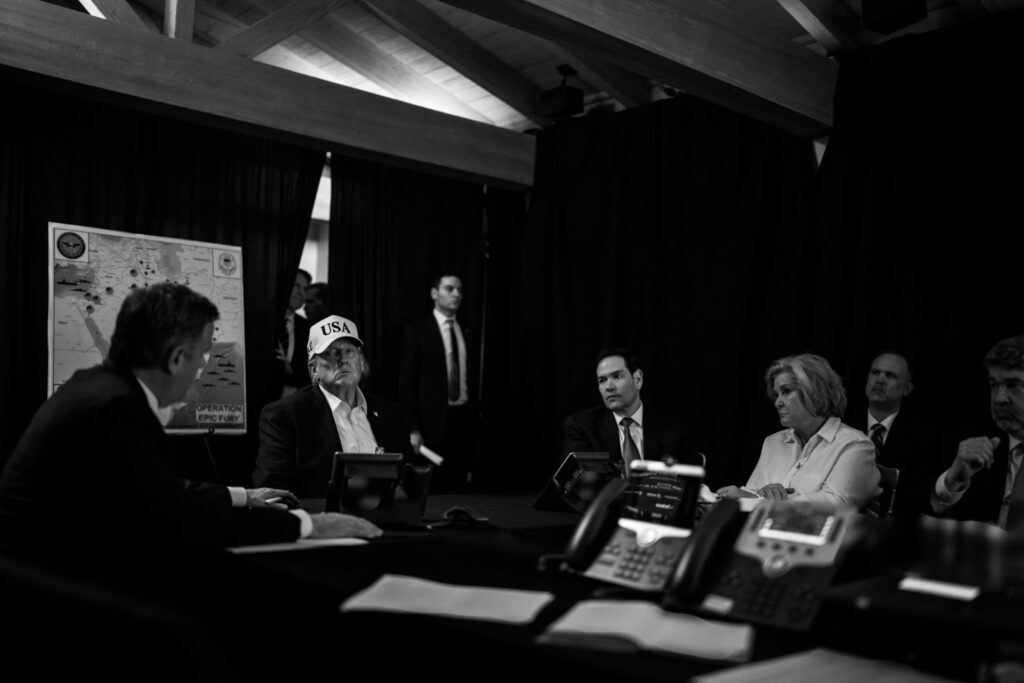
The strikes were triggered by a combination of collapsed nuclear negotiations, growing domestic protests inside Iran, and mounting US and Israeli concern over Iran’s nuclear program and its support for regional proxy groups.
Scale of the Operation
The operation commenced at approximately 9:45 a.m. Tehran time and involved over 200 Israeli fighter jets, US B-2 stealth bombers and Tomahawk cruise missiles, drone swarms, carrier-based forces, and coordinated cyberattacks on Iranian infrastructure. Targets included Tehran’s Supreme Leader compound, government offices, the presidential palace, and military installations across Isfahan, Qom, Karaj, Kermanshah, and Bushehr.
Supreme Leader Ayatollah Ali Khamenei was confirmed killed, along with an estimated 40–48 senior IRGC commanders and officials. Several Iranian warships were also sunk.
Iran’s Retaliation
Iran responded immediately with waves of ballistic missiles and drones aimed at Israel and US military bases in Qatar, the UAE, Bahrain, Kuwait, Jordan, Iraq and Saudi Arabia. The Strait of Hormuz experienced partial disruption, causing oil transport bottlenecks and an immediate spike in global crude prices.
As of March 2, 2026
Strikes are ongoing against remaining Iranian military and command targets. Hezbollah has launched rockets from Lebanon and the Houthis from Yemen restarted Red Sea attacks. Total confirmed deaths across the region are in the hundreds, with airports, ports, and energy infrastructure heavily disrupted. No ceasefire has been announced. Mediation offers from Indonesia and Oman have not halted the fighting, and President Trump stated the operation was “ahead of schedule” and could wrap in four weeks or less.
How Markets Are Responding
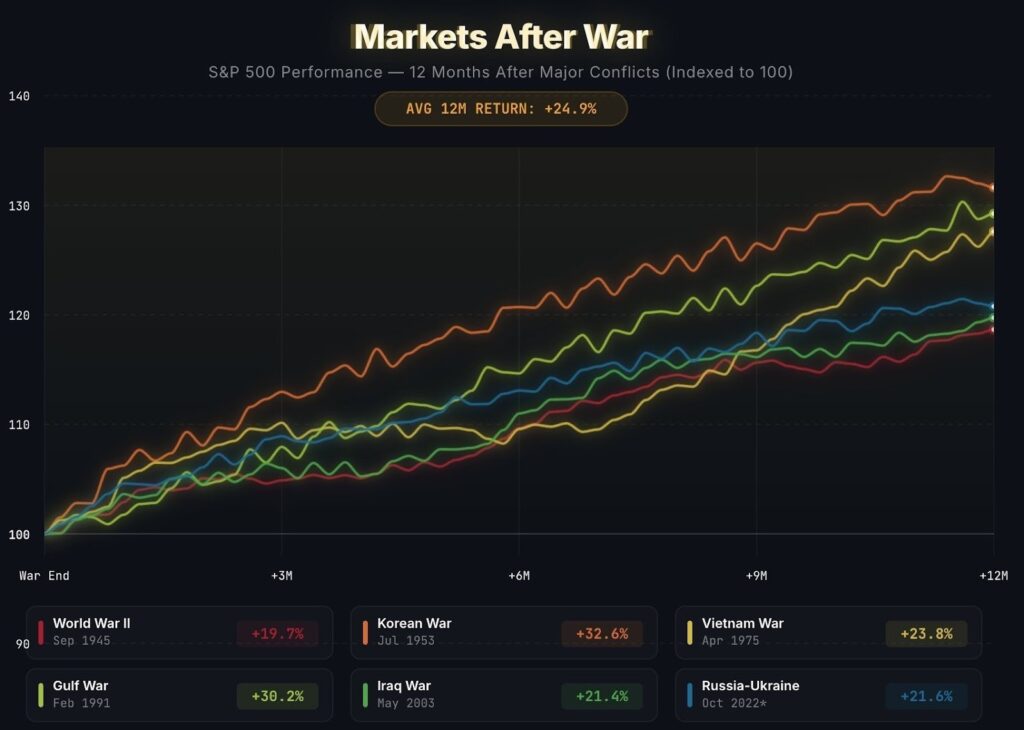
One frequently cited data point offers a counterintuitive note of calm: the average 12-month return of the S&P 500 following any major war is 24.9%. History repeatedly shows that equity markets tend to recover, and sometimes surge, once the initial shock fades.
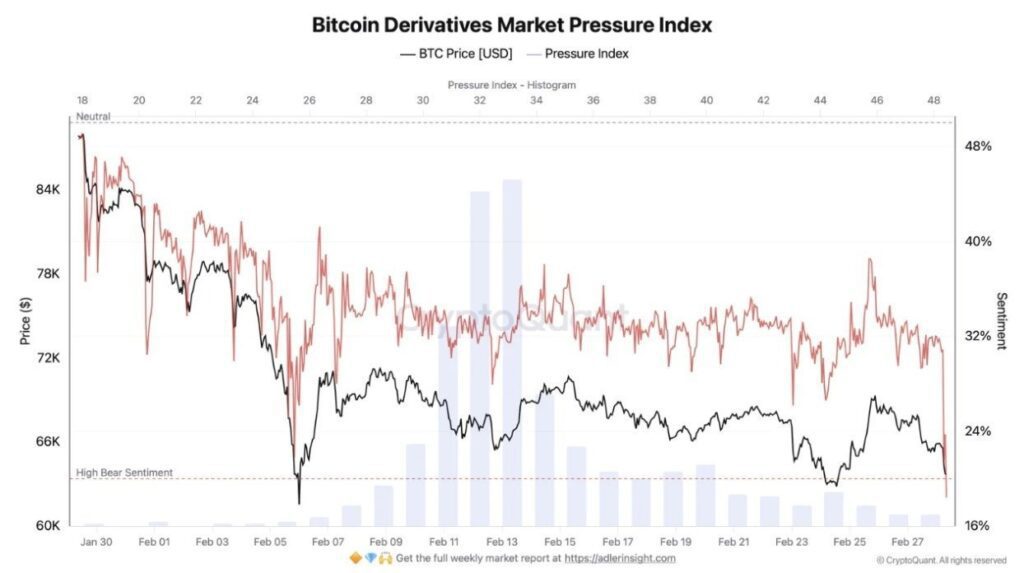
Crypto markets had a far more immediate reaction. As US–Iran tensions escalated, panic selling erupted in Bitcoin derivatives. In just one hour on the morning of March 1, futures sell orders reached approximately $1.8 billion, adding heavy downward pressure on Bitcoin and the broader crypto market. However, BTC has recovered greatly so far, currently holding $65k, $66k.
Global oil prices jumped sharply following the first strikes and remain elevated. If the conflict persists, sustained high oil costs could push US inflation higher in the months ahead, a significant variable for Federal Reserve rate decisions.
AI in Modern Warfare: The Claude Controversy
A striking footnote to the operation: reports indicate that US Central Command used Anthropic’s Claude AI system for intelligence work, target selection, and battle simulations, reportedly happening only hours after President Trump had banned the tool. The government stated it will take six months to fully transition away from Claude.
This ties up with earlier disagreements between Anthropic and the US government. The two sides could not agree on terms and split apart. Then Sam Altman stepped in to take the place, but he offered the same conditions the government had already turned down.
The incident raises urgent questions about how rapidly AI is being embedded into modern military decision-making and how governments navigate partnerships in this space.
Key US Economic Data This Week
Against this geopolitical backdrop, a heavy schedule of market-moving economic releases is due this week. The Federal Reserve watches employment data and inflation signals closely when calibrating interest rate decisions, and high oil prices from the conflict could also feed into future inflation prints, complicating the Fed’s path.
- Today, US Futures reaction to Iran developments: the first real-time read on market sentiment
- Monday, February ISM Manufacturing PMI: early signal on price pressures
- Wednesday, February ADP Employment Data: critical, private hiring trends that often set the tone for Friday’s jobs report
- Thursday, Initial Jobless Claims: critical, the Fed watches this closely for labor market health signals
- Friday, January Retail Sales + February Jobs Report: the most important release of the week, covering employment, wages, and unemployment in full
Expect sharp market moves around each release, with war-driven uncertainty amplifying volatility at every turn.
Crypto Token Unlocks: March 2026
On top of the geopolitical selloff pressure, a series of planned token unlocks will add new circulating supply throughout the month. These are part of normal project vesting schedules but can exert additional downward price pressure, especially in a risk-off environment.
Rain (RAIN)
Date: March 10, 2026
Unlock Value: 338.02M USDT
% of Circulating supply: 3.25%
Number of Tokens: 37.43B RAIN
Aster (ASTER)
Date: March 17, 2026
Unlock Value: 56.02M USDT
% of Circulating supply: 0.98%
Number of Tokens: 78.41M ASTER
Sui (SUI)
Date: March 1, 2026
Unlock Value: 48.65M USDT
% of Circulating supply: 0.54%
Number of Tokens: 53.82M SUI
LayerZero (ZRO)
Date: March 20, 2026
Unlock Value: 45.45M USDT
% of Circulating supply: 2.47%
Number of Tokens: 24.68M ZRO
Stable (STABLE)
Date: March 8, 2026
Unlock Value: 29.41M USDT
% of Circulating supply: 0.89%
Number of Tokens: 888.80M STABLE
Lombard (BARD)
Date: March 18, 2026
Unlock Value: 25.16M USDT
% of Circulating supply: 2.53%
Number of Tokens: 25.31M BARD
Power Protocol (POWER)
Date: March 5, 2026
Unlock Value: 23.04M USDT
% of Circulating supply: 1.20%
Number of Tokens: 12.00M POWER
pump.fun (PUMP)
Date: March 14, 2026
Unlock Value: 19.07M USDT
% of Circulating supply: 1.00%
Number of Tokens: 10.00B PUMP
River (RIVER)
Date: March 22, 2026
Unlock Value: 18.42M USDT
% of Circulating supply: 1.36%
Number of Tokens: 1.36M RIVER
STBL (STBL)
Date: March 16, 2026
Unlock Value: 16.97M USDT
% of Circulating supply: 4.17%
Number of Tokens: 416.73M STBL
The largest unlock to watch is RAIN on March 10 at over $338M, by far the biggest single unlock event of the month. STBL on March 16 also deserves close attention, unlocking 4.17% of its circulating supply despite a lower absolute dollar value. In a volatile macro environment, even modest unlocks can have outsized impact.
Key Takeaways for the Week Ahead
- The US-Iran conflict is the dominant macro risk, oil prices, flight cancellations, and regional instability will remain in focus daily.
- Crypto markets are highly reactive, with $1.8B in futures sold in a single hour, expect continued volatility as headlines evolve.
- Wednesday and Friday are the biggest economic days, ADP and the full Jobs Report could move markets significantly.
- Watch RAIN’s March 10 unlock, at $338M, it is the single largest token unlock event of the month.
- Sustained high oil = inflation risk, this could force the Fed to keep rates higher for longer, even if other data softens.
This article is for informational purposes only and does notconstitute financial, investment, or trading advice. Always conduct your own research before making any financial decisions. DYOR, you can also DYOR on blog.millionero.com for more market analysis and crypto insights. When you’re ready to act, trade spot and perpetuals on Millionero.