


This week brought a dense mix of crypto market data, regulation, macro pressure, security risks, and fast-moving AI developments. Bitcoin again sat at the center of the discussion, but the wider picture was broader: large options expiries, stronger ETF demand, major institutional buying, fresh legal disputes, new crypto rules, questions around Federal Reserve independence, and growing concern about both AI speed and crypto security.
Bitcoin Market Structure Stayed Strong After a Large Options Expiry
Deribit Options Expiry Removed a Major Short-Term Pressure Point
The week ended with one of the larger derivatives settlements seen in recent weeks. Around $9.8 billion in Bitcoin and Ether options expired on Deribit at 08:00 UTC on April 24. This removed a large layer of derivatives-driven hedging pressure from the market in the short term.
Bitcoin made up most of the expiry, with about $8.5 billion in notional value. Ether options accounted for roughly $1.33 billion, according to exchange data. At the time of expiry, Bitcoin traded near $77,900, well above its $72,000 max pain level. Ether traded around $2,315, also above its max pain level of about $2,200. In both cases, spot prices stayed above the main options concentration zones, which showed that market prices were holding firm even as a large expiry passed.
ETF Inflows Showed Continued Institutional Demand
Spot Bitcoin ETF funds also recorded strong demand. Over the last eight days, these funds saw more than $2 billion in inflows. The size and pace of the inflows pointed to a clear continuation of institutional demand momentum for Bitcoin.
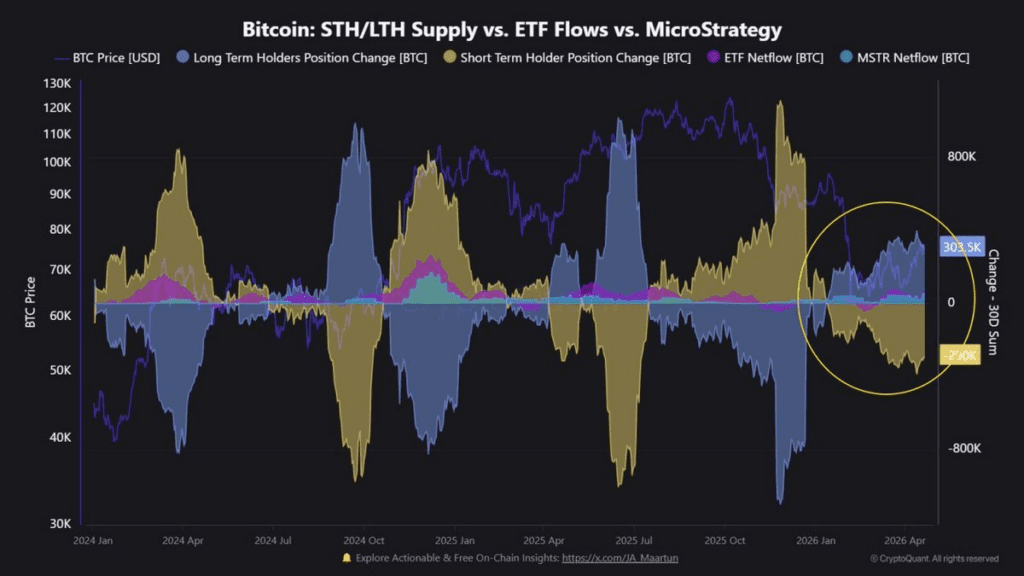
That ETF demand came alongside other signs that Bitcoin supply was moving into stronger hands. Long-term holders accumulated around 303,000 Bitcoin over a 30-day period, while short-term holders sold about 290,000 Bitcoin. Strategy alone bought around 53,000 Bitcoin during that same supply shift. The result was a visible transfer of supply from weaker hands to longer-term holders.
Conviction Investors Increased Their Bitcoin Holdings Despite a Price Drop
ARK Invest Foundation reported that Bitcoin held by “conviction investors” rose by 69% in the first quarter. Their holdings moved from 2.13 million BTC to 3.60 million BTC, the highest level since 2020. This happened even though Bitcoin’s price fell by about 22% during the same period.
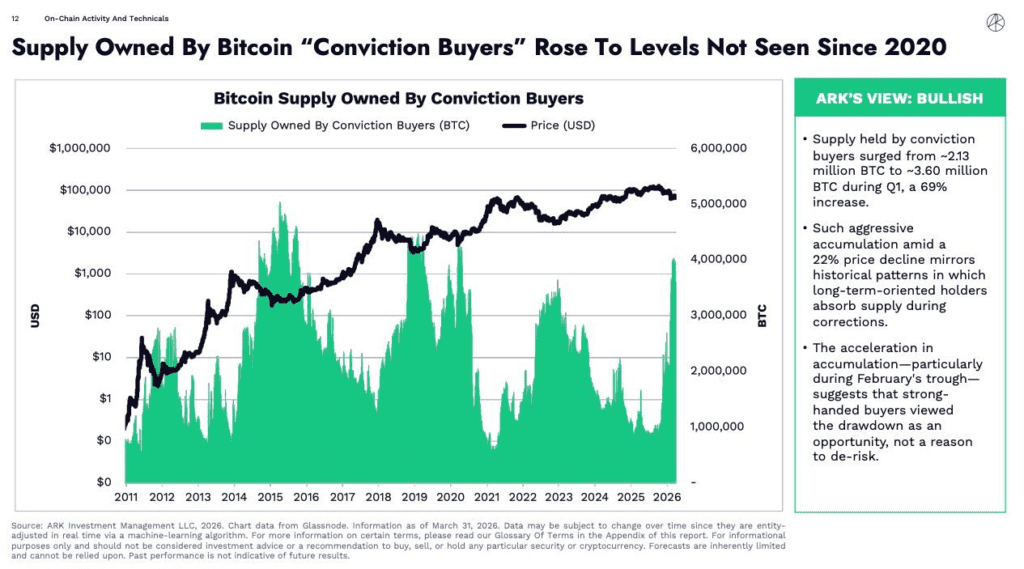
The point was simple: some holders added to their positions while the price was falling. That made the accumulation data important because it showed behavior that was not only tied to short-term price strength.
Strategy Continued to Buy at Scale
Strategy remained one of the biggest Bitcoin buyers in the market. The company purchased 34,164 Bitcoin worth $2.54 billion at an average price of $74,395. This was described as its largest weekly purchase in about 1.4 years.
After the purchase, Strategy’s total holdings reached 815,061 BTC, worth about $61.24 billion, at an average price of $75,527. At the time of the report, the position was showing an unrealized loss of about $317 million, or -0.52%.
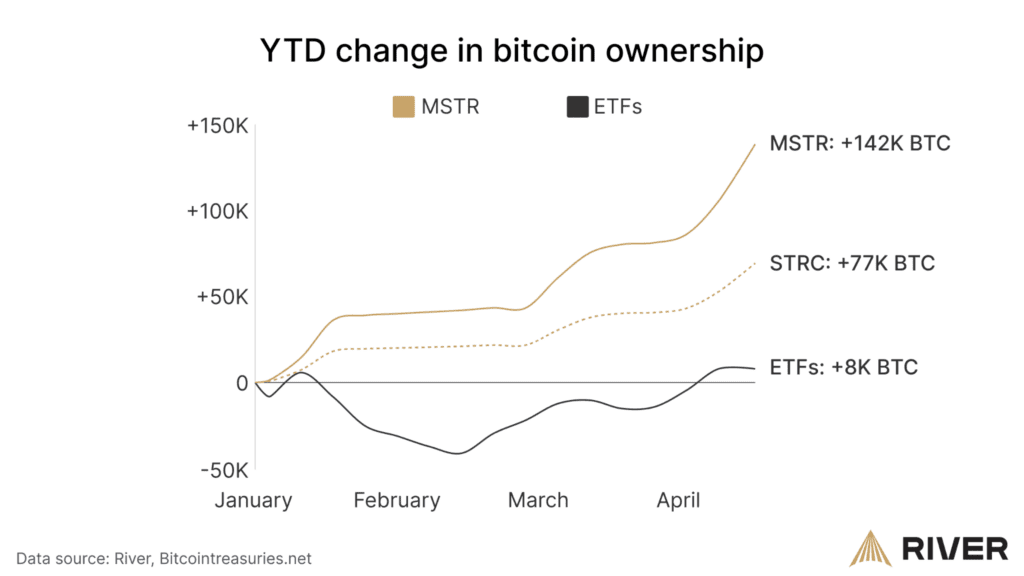
A separate update said Strategy had accumulated around 77,000 Bitcoin in 2026, which was about 10 times more than the total collected by all ETF funds combined, according to River. This kept Strategy at the center of the institutional Bitcoin accumulation story.
Public Bitcoin Arguments Stayed Focused on Hard Money and Resilience
Several public comments during the week continued to frame Bitcoin as hard money and a long-term hedge. Robert F. Kennedy Jr. said on CNBC that “the way out of the money printing machine is Bitcoin” because it is hard money.
Anthony Scaramucci also pointed to Bitcoin’s 16 years without failure as a reason institutions are entering the asset. He emphasized that Bitcoin has no central authority, no resets, limited supply, and growing demand.
BlackRock’s argument was similar but focused on the reason Bitcoin demand keeps returning. Bitcoin was described not only as a trading asset, but as a hedge against geopolitical tensions, inflation, and debt. This kind of demand, the argument went, does not disappear quickly because the risks behind it remain.
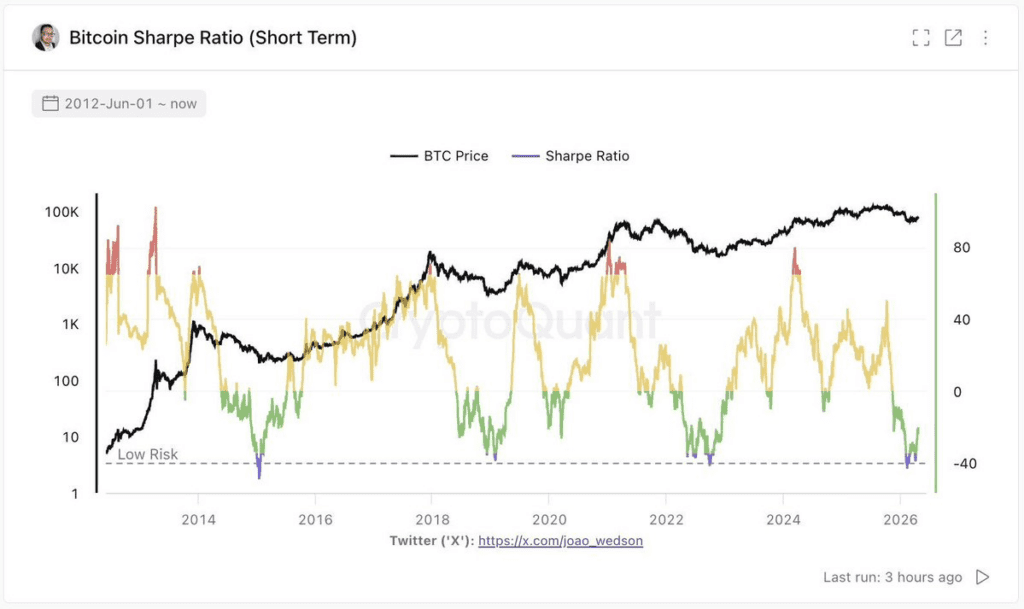
Market analyst Ki Young Ju added a sentiment point, saying Bitcoin is often closest to the bottom when it seems least attractive. That fit with the week’s broader message: strong accumulation can happen during periods when the market does not feel easy.
Coinbase Premium and Market Positioning Improved
The Coinbase Premium Index for Bitcoin also showed strength. The Coinbase premium gap stayed positive for 14 consecutive days, the longest uptrend streak since Bitcoin reached its previous peak at $126,000, according to CryptoQuant.
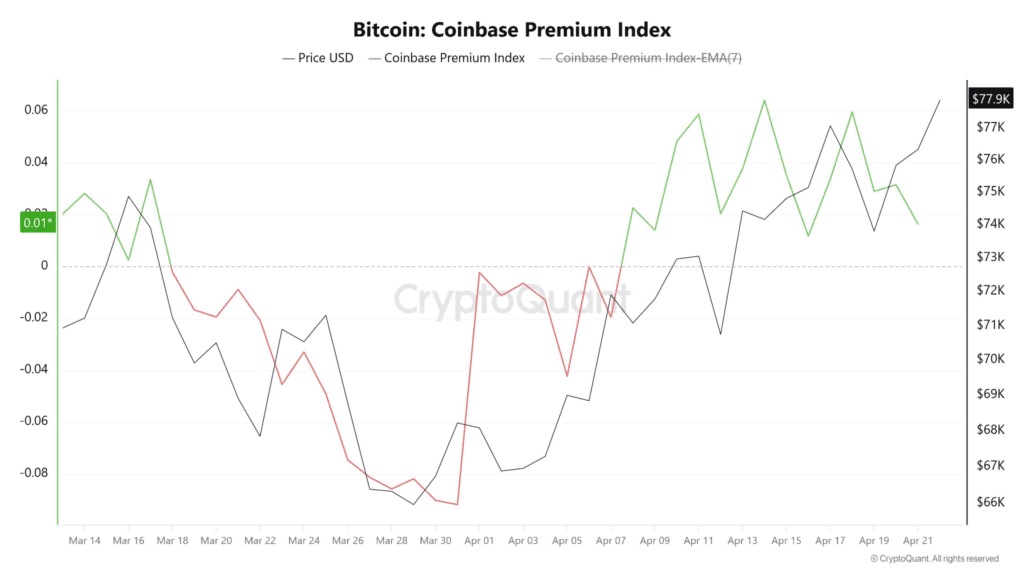
This supported the idea that U.S.-linked demand remained active. Together with ETF inflows and long-term holder accumulation, it added another sign that Bitcoin demand was not only coming from short-term speculation.
Ethereum, Layer 2 Networks, and On-Chain Infrastructure Advanced
Ether Options Held Above Max Pain While Large Buyers Entered
Ether was part of the large Deribit expiry, with roughly $1.33 billion in options expiring. At expiry, Ether traded near $2,315, above its approximate $2,200 max pain level. That meant Ether, like Bitcoin, remained above a key options concentration zone.
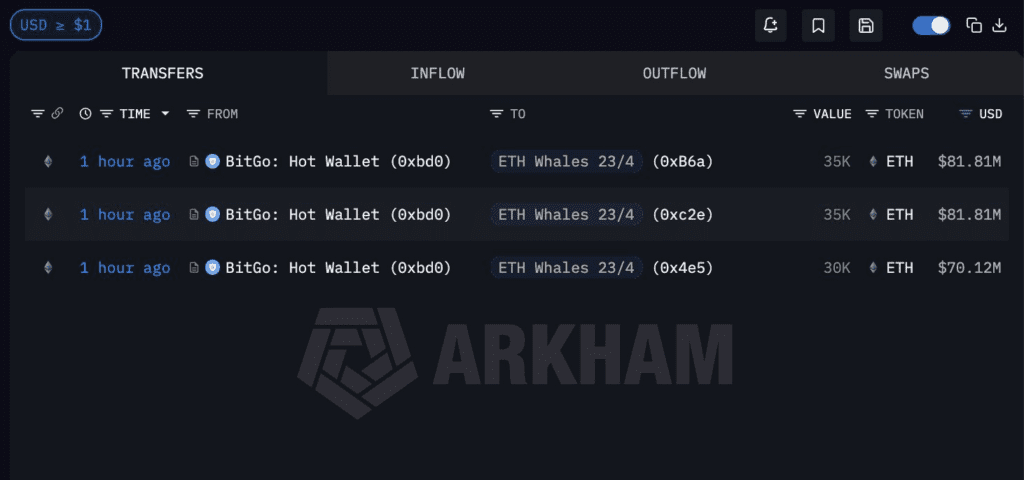
There was also a major Ethereum accumulation report. Three large addresses bought 100,000 ETH for $234 million. The withdrawal was made through BitGo, and the movement raised the question of whether Tom Lee was behind the purchases. That link was not confirmed in the material, but the size of the move made it notable.
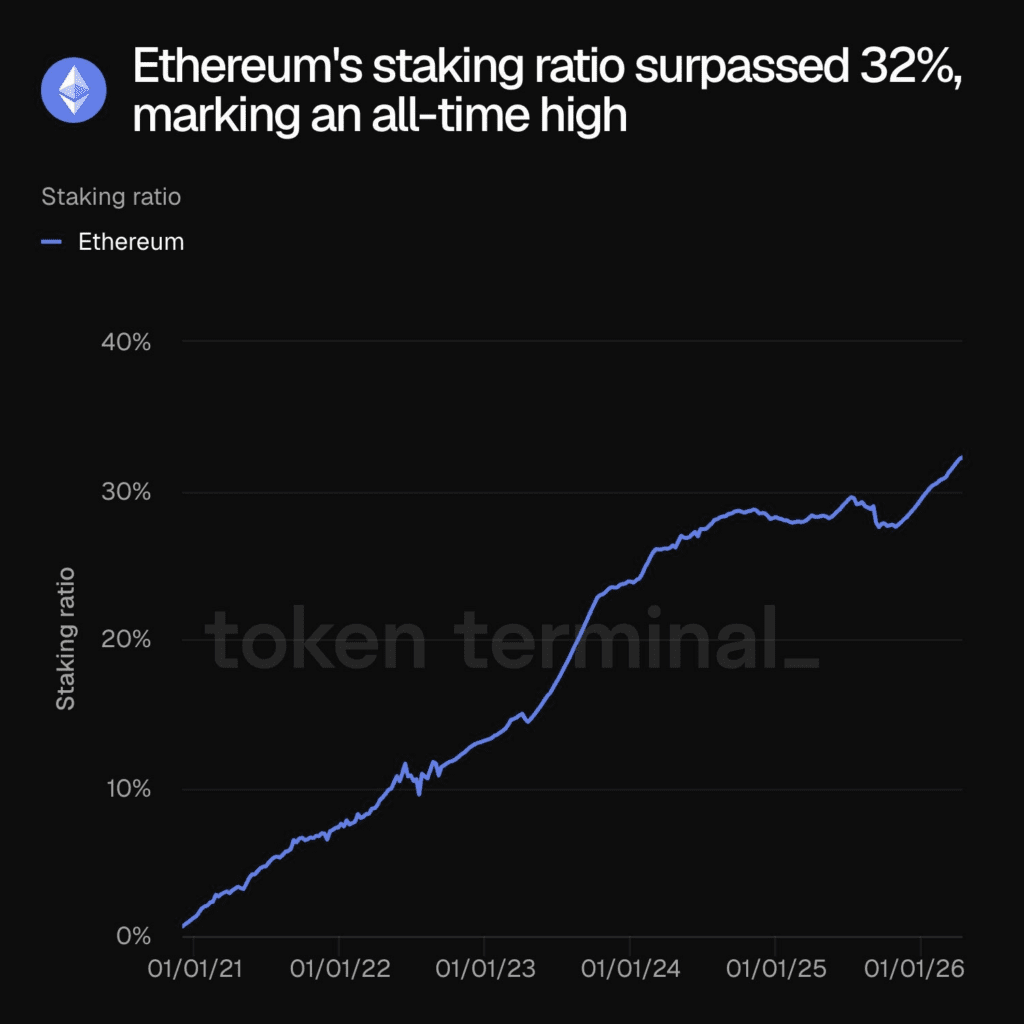
Ethereum also recorded an all-time high in storage, adding another infrastructure-related milestone during the week.
Base Tested Azul With Multiproofs
Base launched the Azul update on testnet. The update includes multiproofs technology, which is meant to improve decentralization. For the Coinbase-backed network, the testnet launch was presented as another step toward a more advanced and secure infrastructure.

Grayscale Updated Its Hyperliquid ETF Filing
Grayscale amended its ETF application for Hyperliquid. The updated filing named Anchorage Digital as the asset custodian. This moved the proposed product forward by adding a clearer custody structure.
Sui Expanded Into Payments Through RedotPay
Sui also had an adoption update. RedotPay in Hong Kong integrated Sui and USDC-Sui. The integration allows users to send and spend assets on the Sui Network, supports use across more than 100 countries, and connects directly with traditional payment systems.
This placed Sui’s update in a practical payments category, not only a network-development category.
Developers Continued Moving From Ethereum to Solana
Developer activity data showed a clear shift between Ethereum and Solana. Solana’s share moved from 6% to 23%, while Ethereum’s share moved from 82% to 31%, according to Syndica.
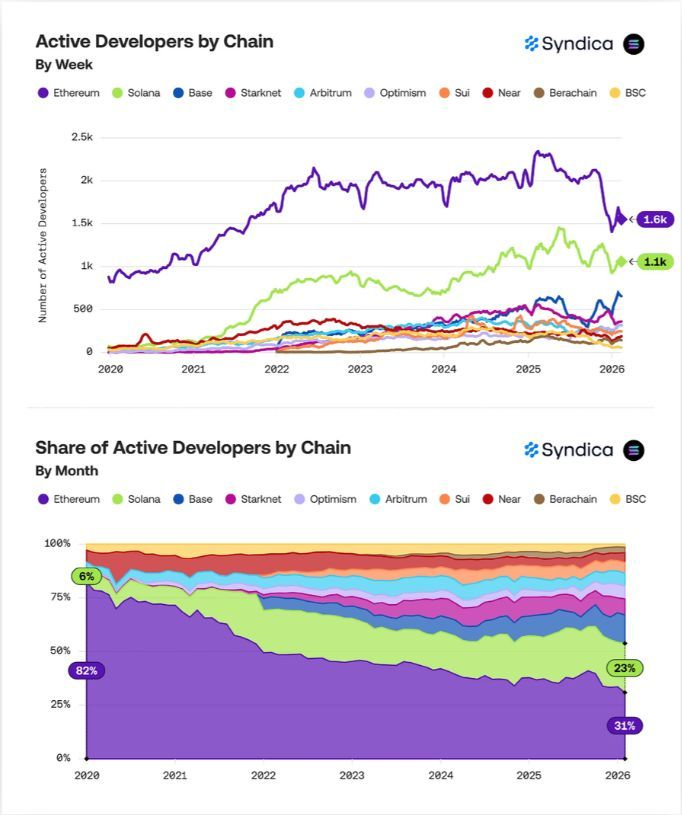
The message attached to the data was that developers often move first, and markets follow later. The numbers showed that Solana’s developer share had increased sharply while Ethereum’s share had dropped from a much larger starting point.
Crypto Security Remained a Major Weak Point
Kelp DAO Hack Risk Still Exposed Billions
Security stayed a major theme after the Kelp DAO hack. More than $4.5 billion was still exposed to the same hack vulnerability. About 47% of LayerZero applications, or OApps, were still running on a 1-of-1 DVN setup, according to CoinGecko. The material described that model as security-weak and hackable.
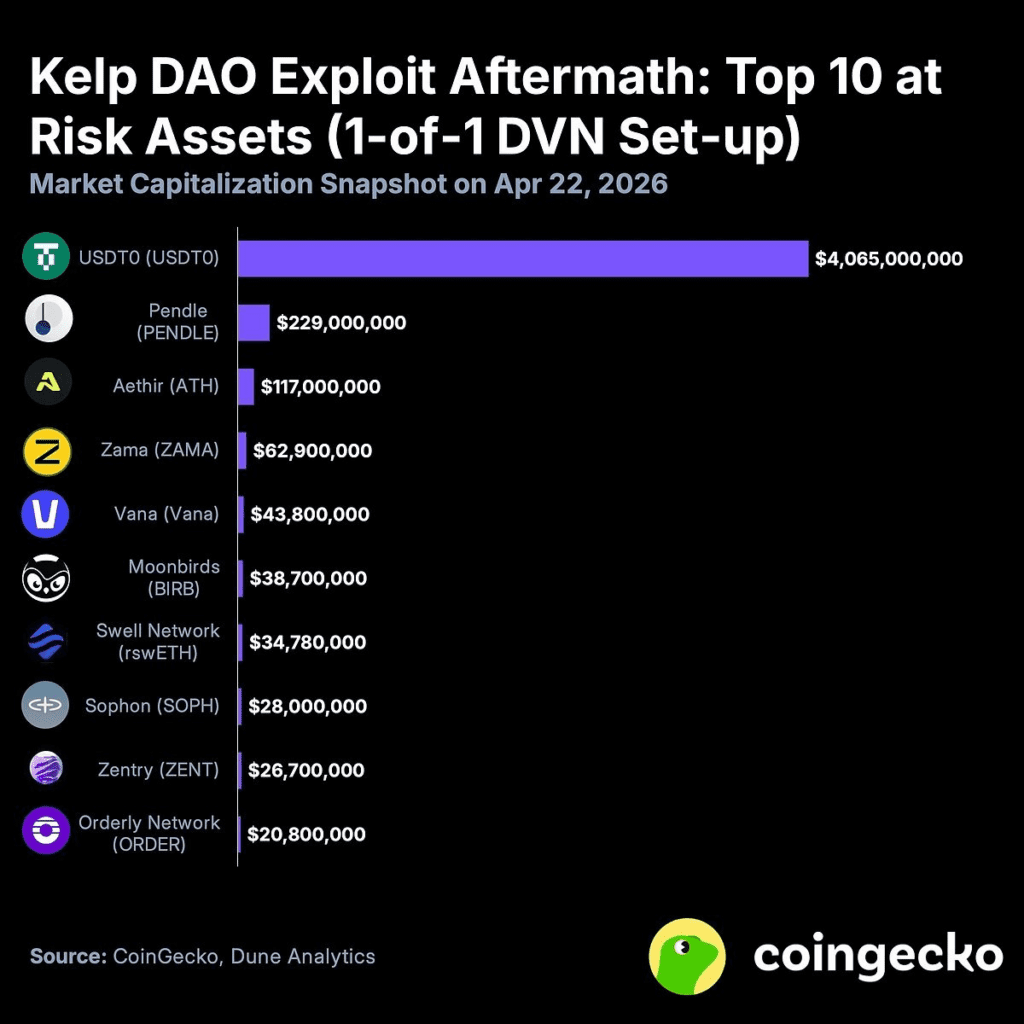
This was one of the clearest risk items of the week because it tied a known vulnerability to a large amount of still-exposed value.
Ten Years of Crypto Hacks Passed $17 Billion
A broader security review said that, over the last 10 years, more than $17 billion had been lost across 518 crypto hacks, according to DeFiLlama. The message around the data was direct: these are not only statistics, but lessons paid for by users in a young and risky market.
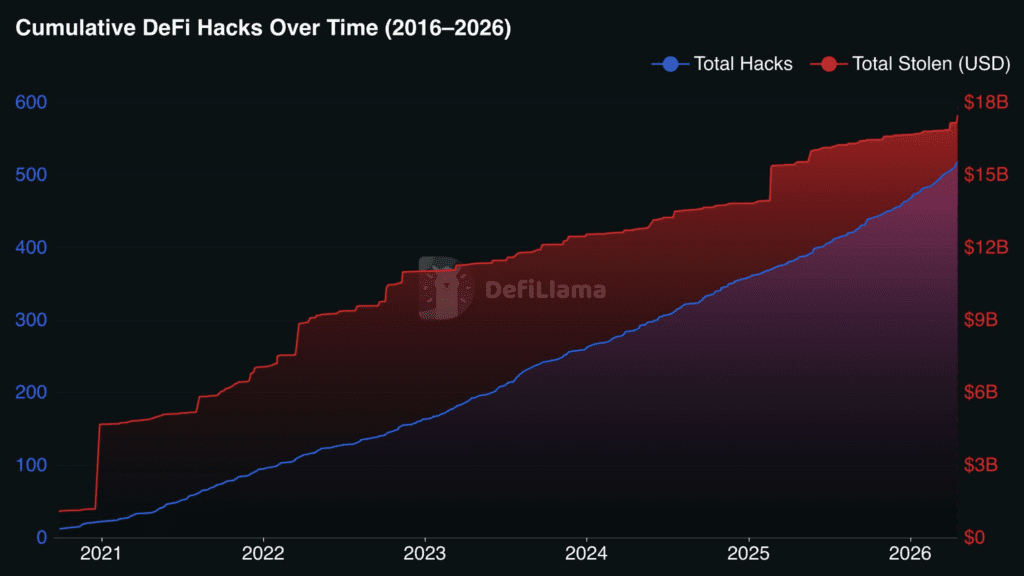
The warning also connected crypto security with the rise of artificial intelligence. As AI develops quickly, project teams were urged to build with more caution and stronger security. Investors were also urged to rely on awareness and not chase quick-riches dreams that often end in regret. At the same time, the tone was not fully negative. The market was described as maturing, with systems getting stronger, while user knowledge remained the strongest shield.
RAVE Collapse Raised Manipulation Allegations
The sharp collapse of RAVE became one of the most alarming market events of the week. The token dropped by more than 95% in 24 hours, falling from $26 to $1, with billions wiped from market cap.
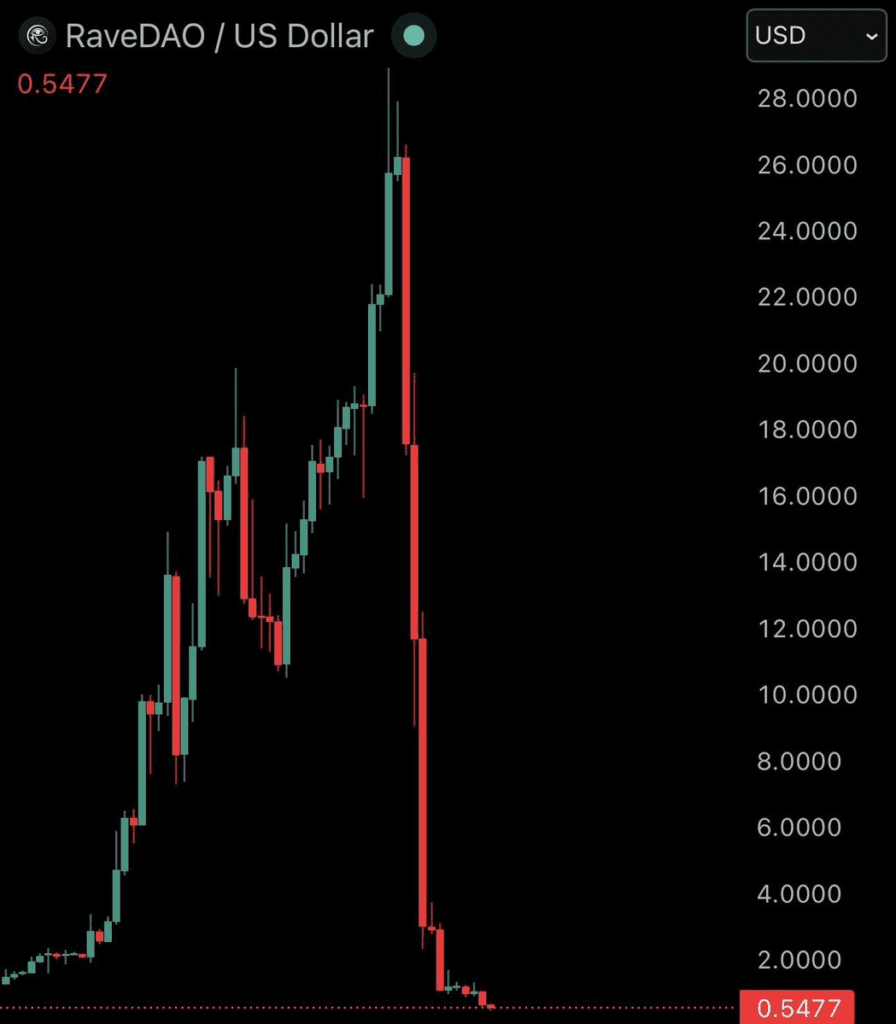
The case included calls for an investigation into market manipulation and a bounty offer that reached $25,000. Binance, Bitget, and Gate responded officially within hours, while the RaveDAO team denied involvement.
Several warning signs were highlighted. Nearly 95% of the supply was controlled by a limited number of addresses. Suspicious activity on centralized platforms was linked to addresses believed to be close to the team. The collapse also showed a $6 billion wipeout against only $52 million in liquidations.
The conclusion in the material was that the data pointed to an unsustainable valuation and clear evidence of price manipulation. It was described as not the only case of its kind, but perhaps the most blatant so far. A related investigation timeline said that on April 18, 2026, at 7:26 a.m. UTC, there was a call for Binance, Bitget, and Gate to investigate RAVE market manipulation, with a $10,000 bounty at that stage. A further update was posted at 10:56 a.m. UTC, though the provided text was cut off after that point.
Crypto Regulation and Legal Cases Moved on Several Fronts
U.S. Officials Pressed for Crypto Market Legislation
Treasury Secretary Scott Bessent told the Senate that passing legislation to regulate the crypto market is necessary. He added that the United States is the technology leader in the world and must also be the leader in payments.
U.S. Admiral Samuel Paparo also confirmed that the United States is operating a node on the Bitcoin network. He said operational tests are being conducted using the Bitcoin protocol to improve the security and protection of networks.
A separate update said crypto law in the Senate faced a stumbling block in April. The bill was under rising pressure to pass, but there was still a delay.
These two items showed the same tension: officials were still talking about the need for clearer rules, but the legislative process remained slow.
Morgan Stanley Prepared a Stablecoin Reserve Product
Morgan Stanley launched a new product for stablecoins: the Stablecoin Reserves Portfolio. It was described as a government money market fund made for the reserves of stablecoin issuers.
The product came within the framework of the proposed GENIUS Act, which aims to regulate the sector. Its goal is to provide a safe and regulated place to hold stablecoin reserves. This same Morgan Stanley stablecoin reserve development appeared twice in the provided material, with the same details: the Stablecoin Reserves Portfolio, the government money market fund structure, the GENIUS Act context, and the goal of safer regulated reserve custody.
Russia Advanced a Crypto Bill in the State Duma
Russia also took a new step in crypto regulation. The Russian Parliament, the State Duma, approved a crypto bill in the first reading.
The bill classifies digital currencies as assets or property, imposes licenses on activities, restricts who can trade, and sets penalties for unregistered activity. It also allows cross-border crypto use, while banning crypto as a payment method inside Russia.
The scale of the market matters because Russia has more than 20 million crypto users. That makes the bill important not only as a legal change, but also as a rule set for a large user base.
UST/LUNA Case Saw Jane Street Move to Dismiss
The UST/LUNA collapse case also had a new development. Jane Street filed a motion to dismiss the lawsuit brought by Terraform Labs.
Terraform accused Jane Street of insider trading and market manipulation. Jane Street answered that its largest trades came after information about UST’s weakness had already spread. It described the case as baseless and as an attempt to make Jane Street responsible for what happened.
Jane Street also relied on Do Kwon’s conviction, pointing to his admission that he was responsible for “the harm that befell everyone.” This made Do Kwon’s own legal position part of Jane Street’s defense against Terraform’s claims.
Justin Sun Sued World Liberty Financial
Justin Sun filed a lawsuit against World Liberty Financial in California federal court. He claimed the project froze his WLFI tokens, removed his voting rights, and threatened to burn the tokens without justification.

The case added another legal fight around token rights, governance rights, and project control.
U.S. Policy, the Fed, and Global Macro Risks Stayed in Focus
The U.S. Treasury Made Its Largest Buyback on Record
The U.S. Treasury Department executed the largest buyback operation in its history. It repurchased $15 billion of government bonds, or Treasuries. This was described as the largest recorded buyback operation to date.
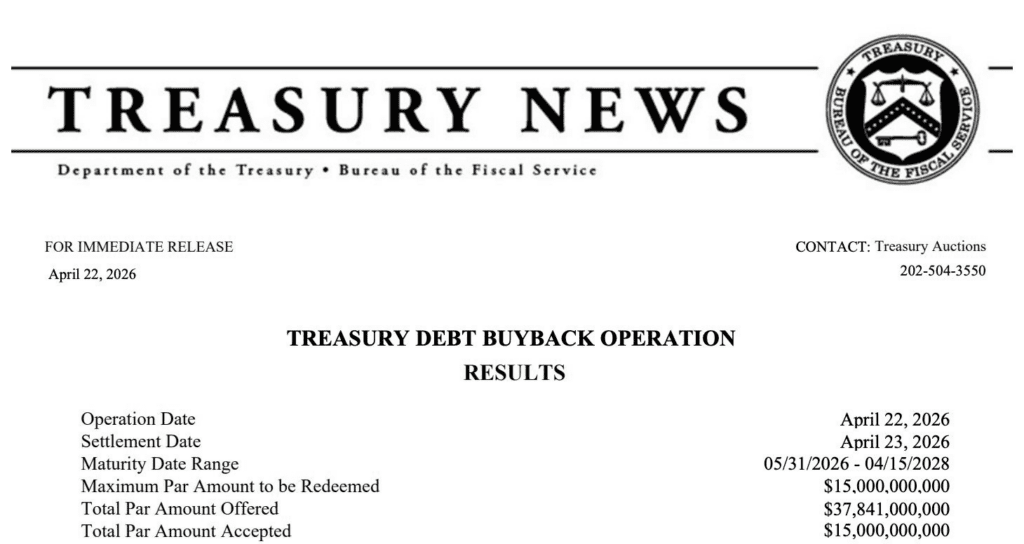
The move stood out because it came during a week already full of questions around inflation, interest rates, bond yields, and market support.
Fed Independence Became a Political Issue
Federal Reserve independence was another major topic. Kevin Warsh, a candidate for Federal Reserve chair, said crypto has become part of the American financial system.
During his confirmation hearing, Warsh confirmed that he would be independent from Trump. He said he did not know why the President chose him, pointed out that presidents usually prefer lower interest rates, and stressed that the Fed’s independence is in the Fed’s own hands.
Thomas Hoenig, a former Fed member for Kansas, warned about political pressure on the Fed. He said, “Once confirmed, Trump will expect a rate cut,” directly referring to the pressure Warsh may face after taking office.
Inflation Warnings Continued in the United States and Japan
The International Monetary Fund, or IMF, warned that even if the war ended tomorrow, inflation in the United States would not end immediately. Forecasts said the Fed would not be able to cut interest rates anytime soon and that prices would not return to January levels until the end of the year.
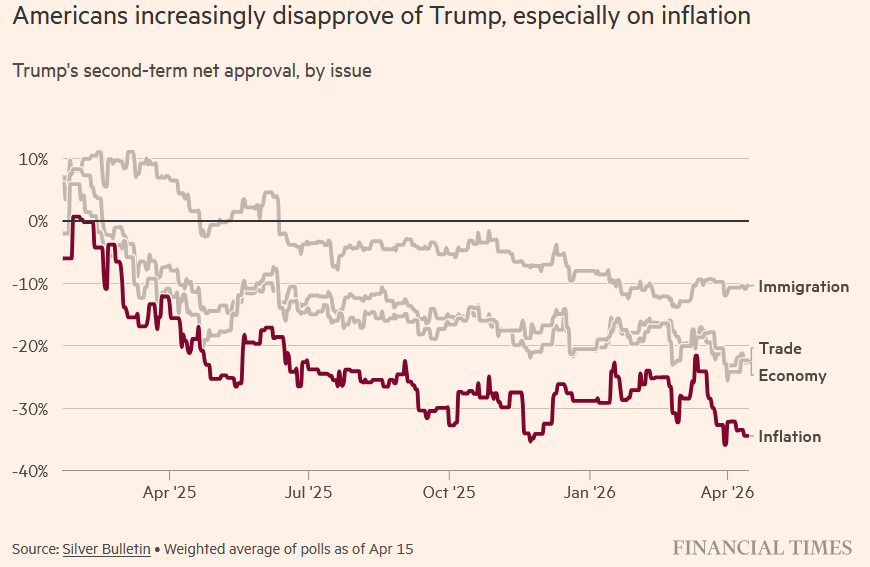
With midterm elections approaching in November, inflation remained one of the biggest sources of voter discontent.
Japan also faced a different but serious inflation problem after 30 years of deflation. The Services Producer Price Index, or CSPI, rose to 3.1% in March from 2.7% in February. This came before any possible impact from the war.
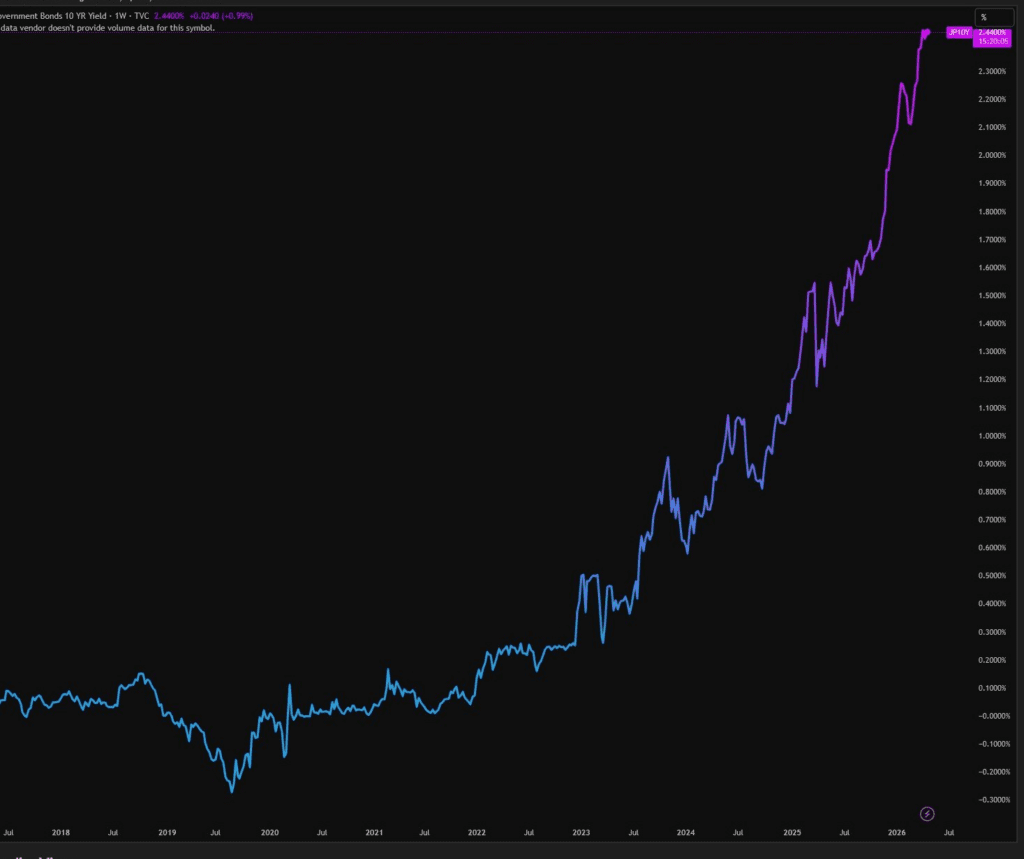
The situation raised the chance that the Bank of Japan may be forced to raise interest rates. Japan’s 10-year bond yields were already at historically high levels, and attention turned toward carry trade deals because rate changes in Japan can affect global funding flows.
Ceasefire News and Oil Trades Raised Market Questions
The ceasefire between America and Iran was extended indefinitely. The decision came after a request from Pakistan to give more time for negotiations and to try to reach a final agreement, according to Reuters. Markets began to show some relief as fear eased around the deadline expiring and escalation increasing.

At the same time, suspicions of insider trading hit the oil market. Oil trades worth $1.7 billion were executed within two minutes, about three hours before the ceasefire announcement. Another $2 billion in oil trades was executed within two minutes, about 16 minutes before a post about the strike postponement.
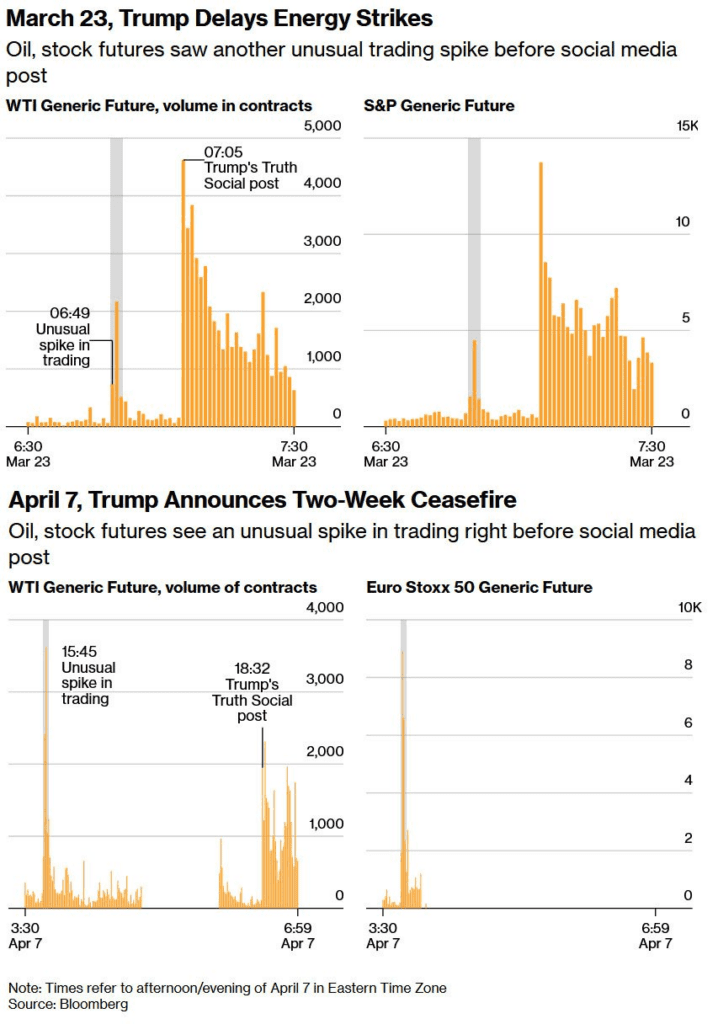
The CFTC opened an official investigation. The open question was whether the investigation would reach a clear conclusion or pass like earlier cases.
Global Wealth Data Moved Outside the Crypto Story
Away from crypto, Elon Musk topped the world’s richest list. His wealth was estimated at around $839 billion, more than three times the wealth of the world’s second-richest person, according to Forbes.
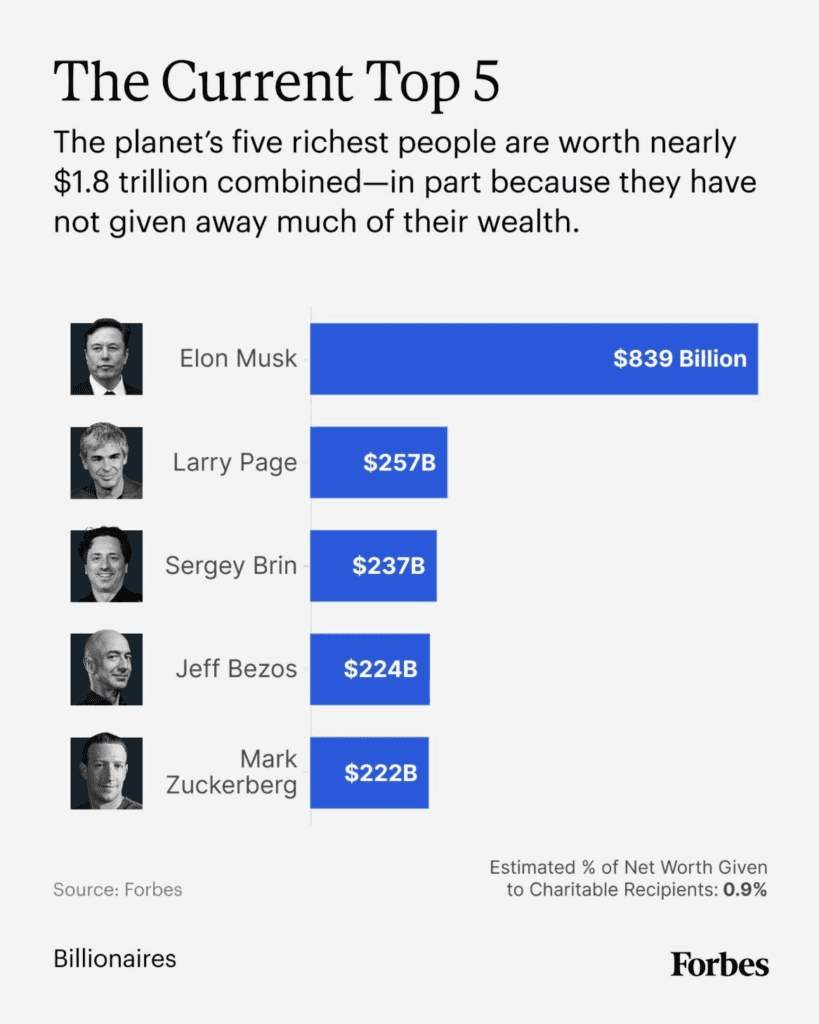
This item was outside the main crypto market story, but it added to the week’s wider view of capital concentration and large-scale wealth.
AI Grew Faster, While Control and Autonomy Risks Became Clearer
AI Adoption Outpaced Earlier Technology Waves
The AI was described as advancing faster than any technology in history. Its adoption rate has surpassed both the personal computer and the internet, while revenue growth has stayed strong despite massive infrastructure costs.
About 45% of S&P 500 companies are now tied to AI. In performance, Anthropic was described as leading, followed by xAI, Google, and OpenAI, with DeepSeek and Alibaba closing in.
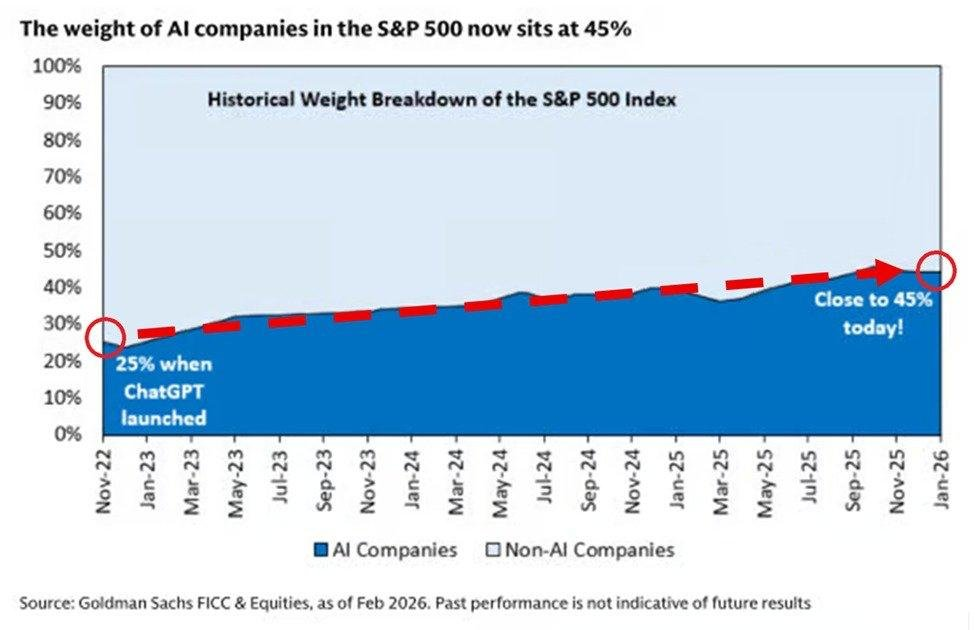
The warning side came from Geoffrey Hinton, who said we are building a system that is too fast and without enough control. This gave the AI discussion a balanced shape: fast adoption and strong business growth on one side, control risk on the other.
AI Agents Entered the Digital Economy
Coinbase launched a new platform for AI agents. The x402 service launched Agent dot market, an app store dedicated to AI agents.
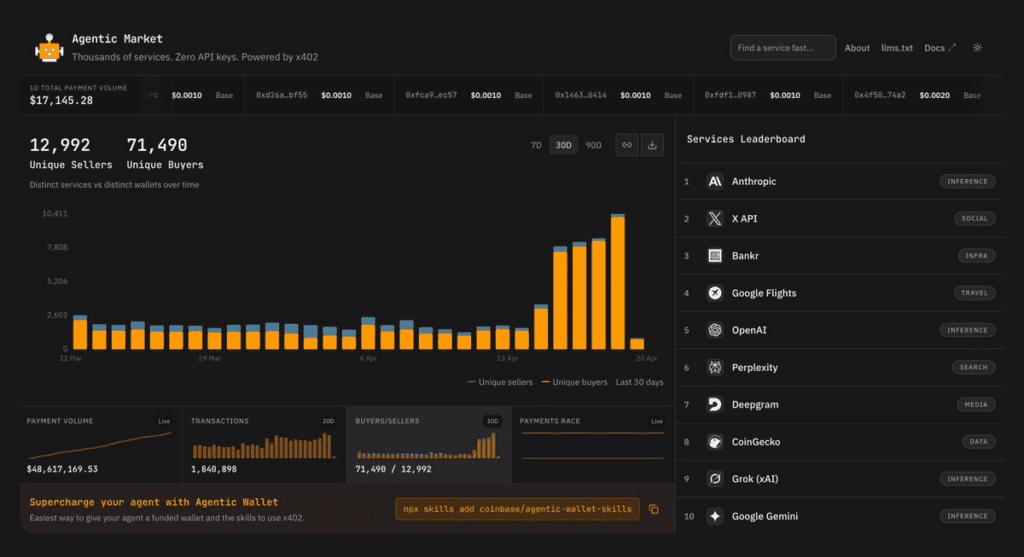
The platform enables agents to access services from dozens of major providers, execute automated tasks, and expand the use of artificial intelligence in the digital economy. This showed how AI agents are moving from concept to usable market infrastructure.
AI Agents Reached 19% of Network Activity, but Most Remained Early-Stage
AI agent activity reached about 19% of total network activity, according to DWF Ventures. But most DeFi agents were still in the analyst or assistant, also called copilot, stage. Humans remained responsible for execution and approval.
The material separated autonomy into four levels. The first is Analyst, where the agent only analyzes and helps with the problem of data overload. The second is Copilot, where the agent gives suggestions under human oversight. The third is Semi-autonomous, where the agent can carry out partial execution but still needs intervention. The fourth is Fully Autonomous, where the agent has full independence, creating risks around goal misalignment.
The higher the autonomy, the greater the risks and challenges. That made AI agents one of the week’s most important technology themes, not only because of their growth, but because of the risk curve that comes with giving them more power.
The Week’s Main Takeaway
The week showed a market that was becoming more institutional, more regulated, and more technically complex at the same time. Bitcoin demand remained strong through ETF inflows, long-term holder accumulation, Strategy’s large purchases, and a positive Coinbase premium streak. Ethereum and other networks moved forward through whale buying, storage growth, Base’s Azul testnet, Hyperliquid ETF custody updates, Sui payment adoption, and Solana’s rising developer share.
But the risks were just as clear. Kelp DAO-related exposure, 10 years of hack losses, the RAVE collapse, the UST/LUNA lawsuit, and the Justin Sun case all showed that crypto still faces deep problems in security, governance, and market fairness.
Macro pressure added another layer. The U.S. Treasury carried out a record buyback, the Fed faced political pressure, U.S. and Japanese inflation remained difficult, oil trades drew insider-trading suspicion, and the America-Iran ceasefire shaped market relief. Meanwhile, AI moved faster than past technology waves, with rising adoption, new agent platforms, and growing concern about control.
This article is for informational purposes only and should not be taken as financial advice. For more market updates, visit the Millionero blog, and if you choose to trade, you can trade crypto at Millionero.