


This week brought a heavy mix of crypto developments, regulatory movement, market strength, security problems, and geopolitical stress. Bitcoin treasury activity slowed, but ETF inflows stayed positive. Stablecoin policy moved closer to a decisive stage in the United States. Ethereum drew fresh institutional accumulation while also facing a possible wallet exploit. At the same time, stocks kept rising on strong earnings, while inflation, oil, tariffs, and the Iran crisis added pressure across the broader macro landscape.
Bitcoin, Market Structure, and Treasury Positioning
Strategy paused new BTC buying while ETF inflows stayed positive
From April 26 to May 2, 2026, there were no reported BTC buys by Strategy (MicroStrategy). As of May 2, official holdings remained at 818,334 BTC, with no new 8-K filing or announcement for the week. SATA and STRC, the stocks most closely tied to Michael Saylor’s fundraising approach, did not stay above $100 long enough to support enough capital raising for a meaningful Bitcoin purchase. At the same time, MSTR rose strongly during the week, which may have allowed roughly $200 million to be raised from the main stock, though there was no official confirmation.
Even without a new Strategy purchase, ETF demand remained positive. Weekly ETF flows totaled $153.87 million in inflows. That was still constructive, but clearly lighter than in prior weeks.
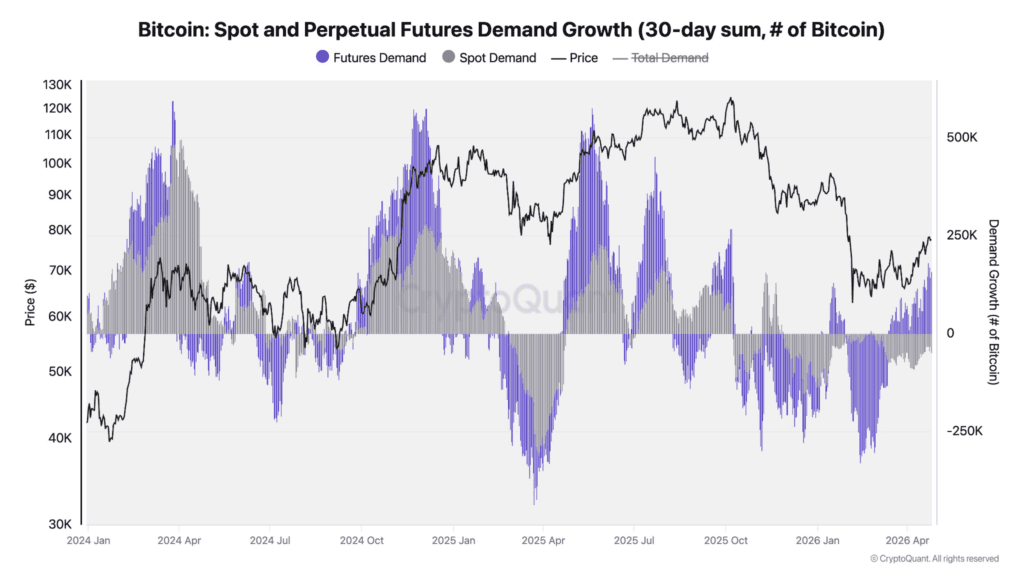
Derivatives led the move while spot demand stayed weak
Open Interest continued to rise, pointing to stronger activity in the derivatives market. But on-chain demand remained negative, even with ETF inflows and corporate buying in the background. Historically, bear markets tend to end when spot demand and derivatives demand return together. By that standard, the recovery still looked incomplete.
Bitcoin’s role and design stayed under debate
Bitcoin was also part of two very different debates this week. Jack Mallers argued that Bitcoin can separate store of value demand from real estate, reduce housing speculation, and help bring home prices back toward levels that are more manageable for families.

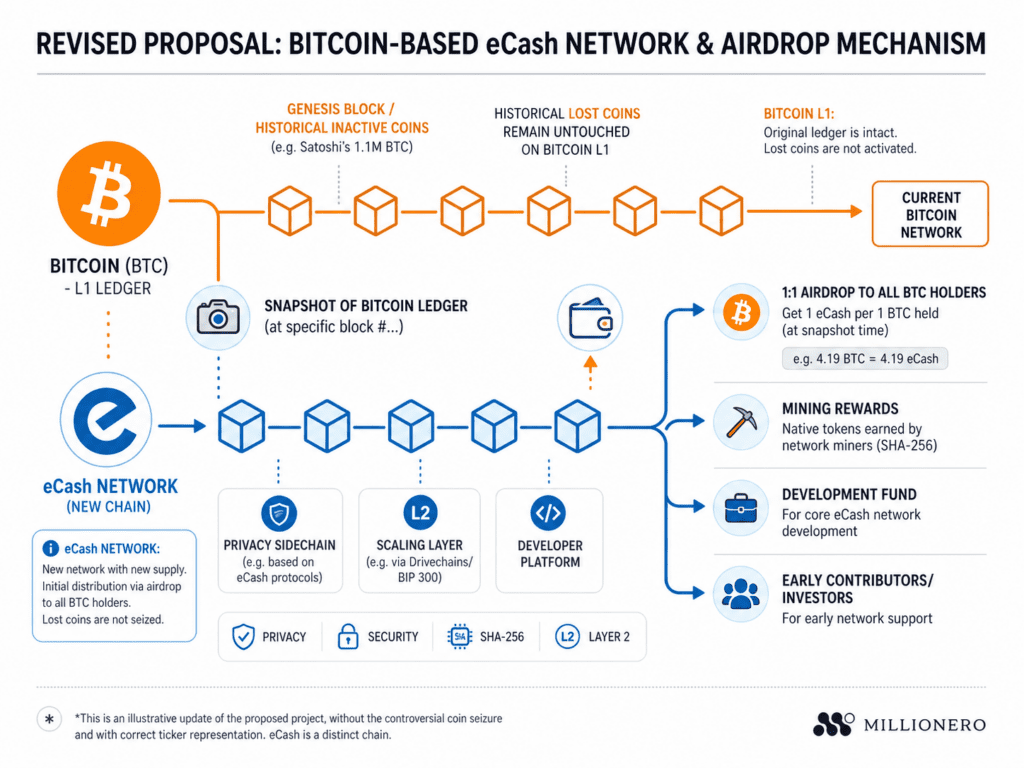
Separately, developer Paul Sztorc proposed a new chain called eCash. Under that idea, every BTC holder would receive the same amount of the new asset, while coins in long-inactive wallets, including those linked to Satoshi Nakamoto, would be redistributed. Supporters see that as a way to recover lost coins and improve liquidity. Opponents see it as a violation of property rights and a dangerous rewrite of Bitcoin’s rules.
Tether added a Bitcoin faucet to its wallet app
Tether launched a BTC Faucet inside its self-custodial wallet app. The feature lets users get free satoshis instantly, try Bitcoin without intermediaries, and learn the basics of self-custody more easily.
Ethereum, Network Activity, and Security Pressure
Bitmine kept accumulating Ethereum
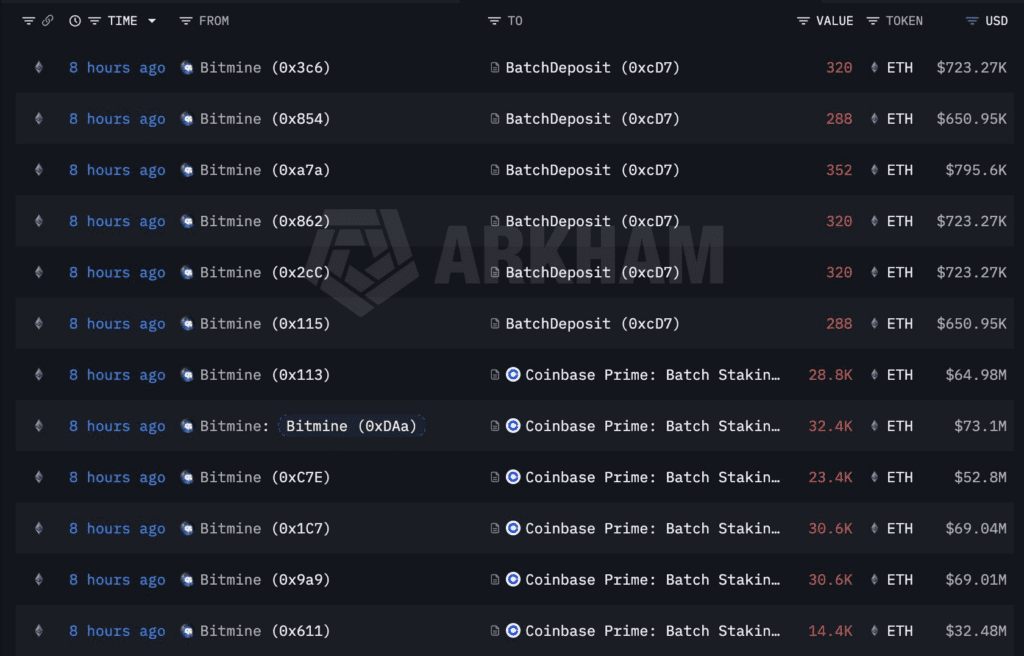
Through Bitmine, Tom Lee added another 162,088 ETH, valued at about $366 million, in recent hours. That pushed the total to 4,194,029 ETH, worth roughly $9.48 billion. Ethereum accounted for 82.59% of total holdings.
A possible wallet exploit raised new concern
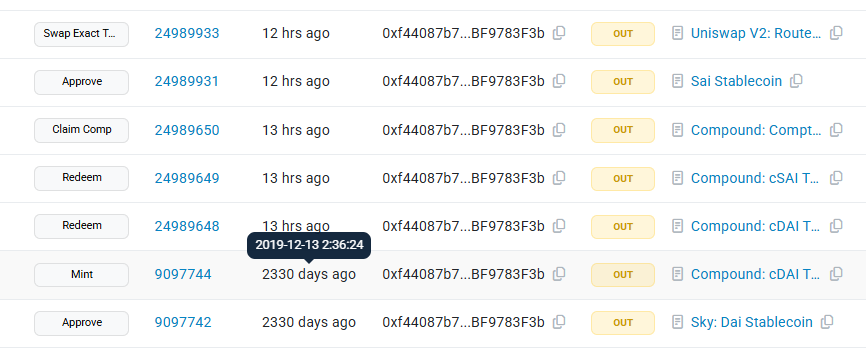
A possible security breach added a darker note to the week. Hundreds of wallets on the Ethereum network were reportedly drained by a single address. Some of those wallets had been inactive for more than seven years. The pattern suggested a new vulnerability might be under active exploitation, and the incident was still under monitoring as more details emerged.
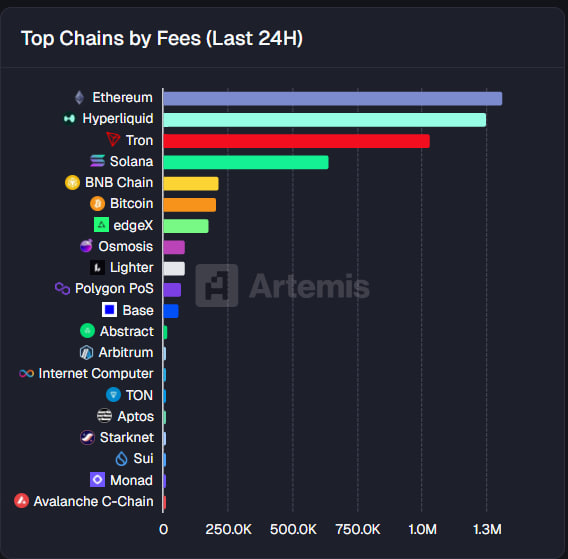
Ethereum and Hyperliquid ran nearly even on fees
Over the previous 24 hours, Ethereum generated around $1.3 million in fees, while Hyperliquid generated around $1.3 million as well. Ethereum held only a slight lead. The comparison showed how closely other networks are starting to compete with Ethereum on actual fee activity.
Tokens, Unlocks, and Project-Level Moves
Ripple released a major XRP unlock
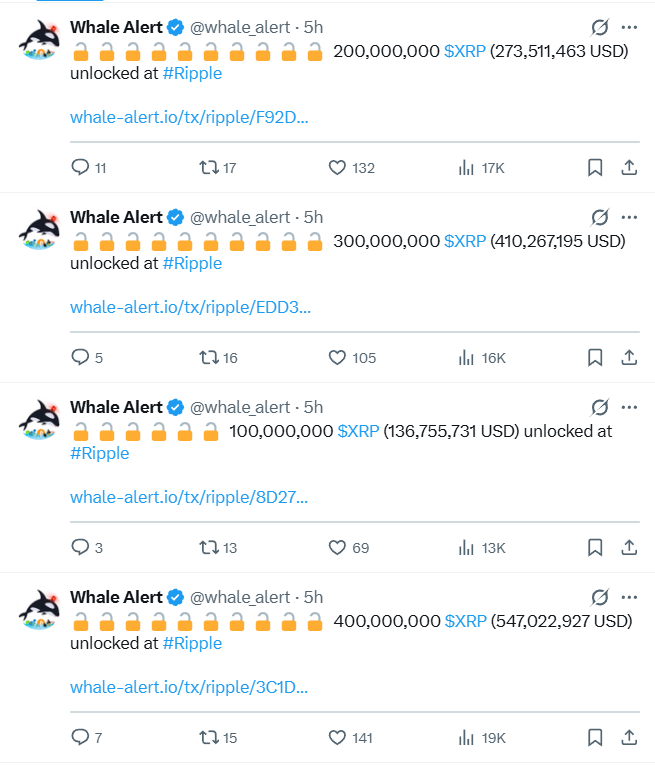
A large supply event hit Ripple’s native currency. 1 billion XRP was released in one hour by Ripple. The move could affect liquidity and price in the short term.
WLFI moved closer to a major unlock plan
World Liberty Financial moved closer to a major governance decision. A proposal to unlock 62 billion WLFI tokens was nearing approval with 99.5% support. The plan included burning 10% of insider holdings, unlocking 40.7 billion tokens after a two-year lockup period, and distributing tokens over five years. At the same time, the top four wallets control about 40% of voting power, and the issue is complicated by a lawsuit from Justin Sun over the freezing of his tokens and governance rights. These steps could have a meaningful impact on both price and liquidity.
Pump.fun burned tokens and changed its buyback policy
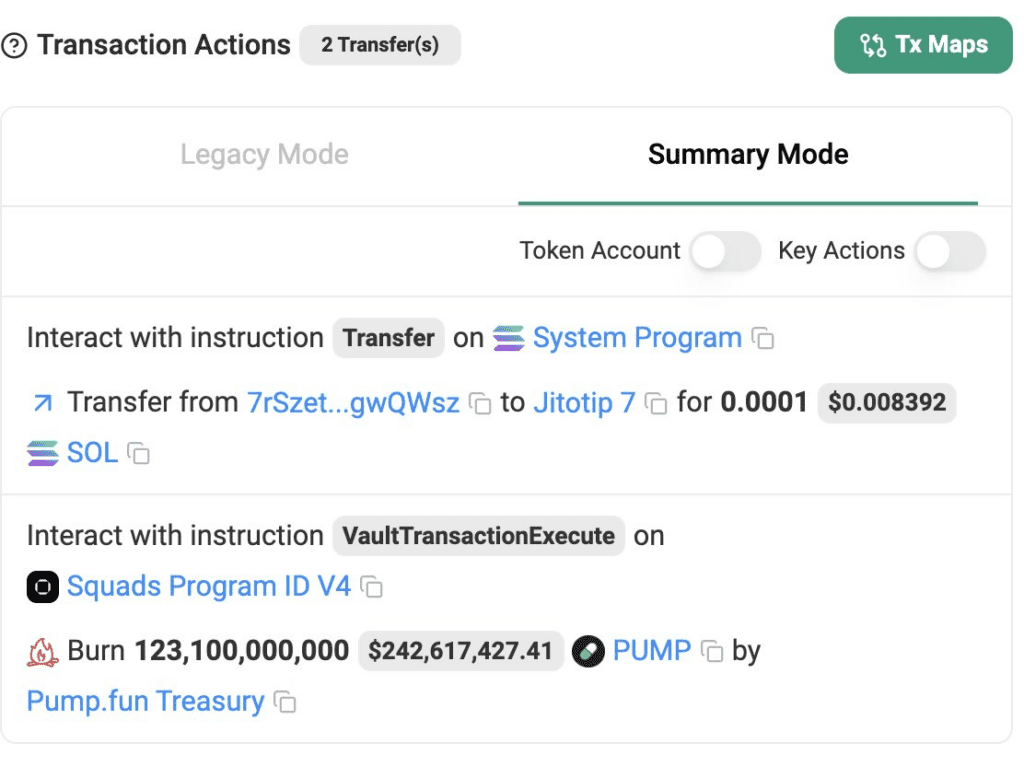
Pump.fun said it had burned all $PUMP tokens bought during the previous period, removing about $370 million from circulation permanently. The platform also changed its capital return model. Instead of directing 100% of profits toward buybacks, it said it would allocate 50% of net revenue to buybacks over the coming year. The move pointed to a balance between token support and platform development.
Stablecoins, Payments, and Regulation
The CLARITY Act entered a more decisive phase
The CLARITY Act moved closer to a critical stage. A new version of the text would ban “passive” yields on stablecoins while allowing only “real” yields tied to activity and transactions. The aim is to stop crypto from looking too much like the traditional banking system while still leaving room for operational incentives.
The timetable also became clearer. A US Senator Tom Tillis said the bill had entered a critical stage, was likely to be reviewed in committee during May, and could reach a Senate vote in June or July. Cynthia Lummis also said the act would be reviewed in May, with a strong push to finalize and pass it in full.
Tether posted strong quarterly results
Tether reported $1.04 billion in first-quarter profit. It also said it held $8.23 billion in additional reserves as a buffer, alongside roughly $141 billion in US Treasury bonds backing USDT. The figures highlighted the scale and liquidity behind the stablecoin at a time when stablecoin regulation is becoming more important.
Payments infrastructure moved further toward crypto and AI
Stripe launched an AI Agents Wallet, a system that allows AI agents to execute payments without revealing user data. The move points toward an economy where AI agents take a direct role in financial transactions.

That broader shift also appeared in comments from Paolo Ardoino, CEO of Tether, who said the future may require trillions of daily payments from billions of humans and AI agents, and that current financial infrastructure will not be able to handle that volume.
Another payment story involved Western Union, which is preparing a deeper push into crypto. The company plans to launch a stablecoin identified as USDPT, built on Solana, as part of a global crypto payments effort tied to next month.
Canada moved against crypto ATMs
Canada is planning a ban on crypto ATMs, treating them as a major tool for fraud and money laundering. The move could affect around 4,000 machines, one of the highest densities of crypto devices in the world.
Security, Adoption, and Ecosystem Development
April was a brutal month for crypto hacks
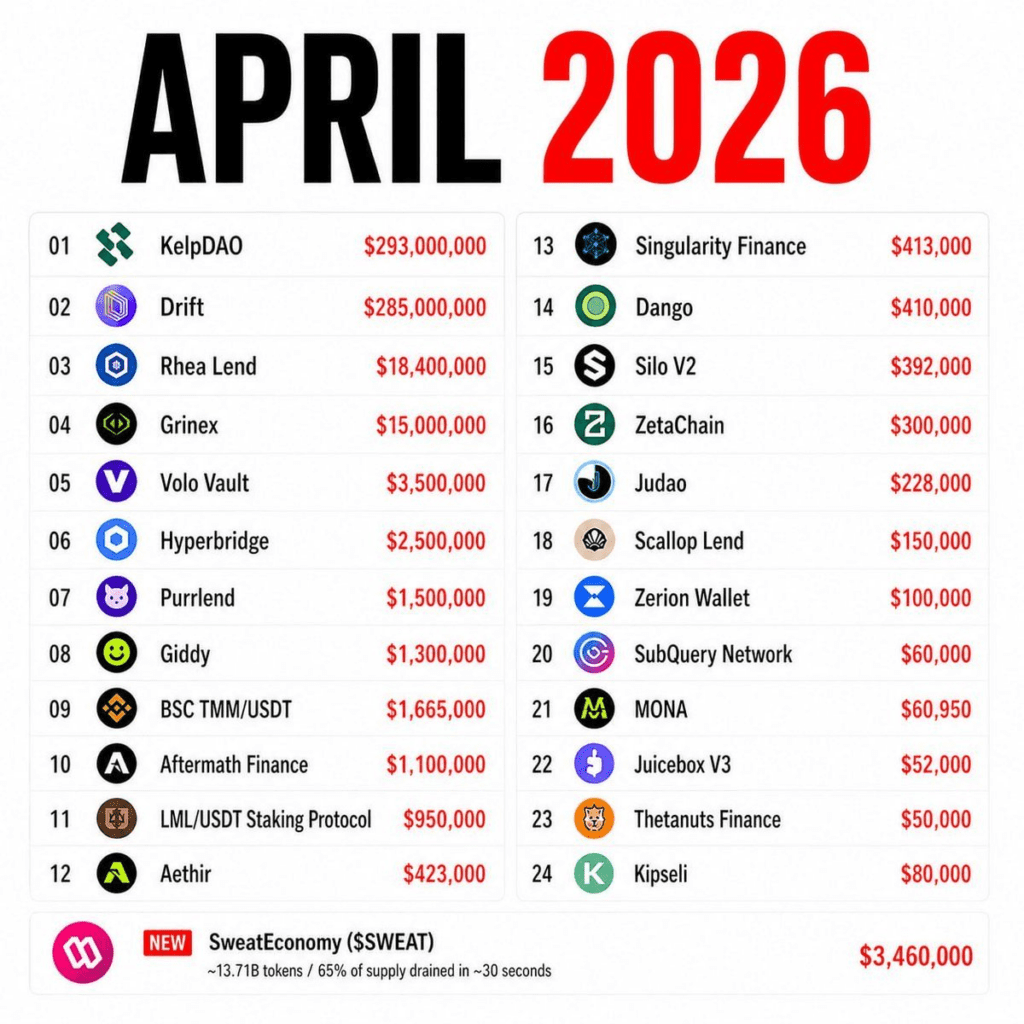
Security remained a major problem across the sector. In April 2026, crypto suffered 25 hacks in 29 days, with more than $629 million stolen. The latest case was the Sweat Economy hack, where $3.46 million was withdrawn, equal to 65% of supply, in just 30 seconds. That pace worked out to one hack every 27 hours.
Solana’s RWA market reached a record level
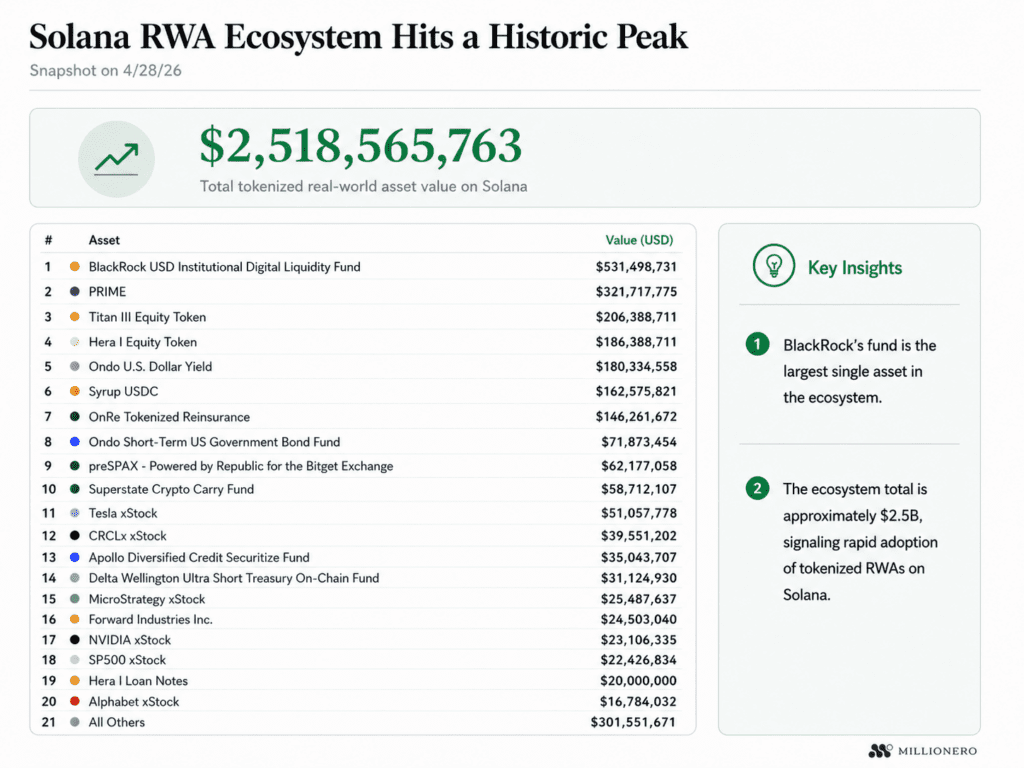
The Real World Assets (RWA) ecosystem on Solana climbed to roughly $2.5 billion in total value, marking a historic peak and a strong sign of faster adoption of real-world assets on-chain.
Solana developers advanced work on quantum risk
The Solana Foundation said core developers had agreed on a potential solution to quantum computing risks, and that early implementation work was already underway to protect the network in the future.
Crypto faced an attention problem as well
At the platform level, crypto became the most muted topic on X since the launch of the Snooze Topics feature. It ranked ahead of politics and the Iran conflict. Even with steady hype around the sector, a large share of users appears to be actively avoiding crypto content.

Equities, Debt, and the Broader Macro Backdrop
The S&P 500 hit a record high on strong earnings momentum
US equities stayed strong. The S&P 500 closed at its highest level on record, up 14.5% from the March 30 bottom. That rally added roughly $8.3 trillion in market capitalization in only 24 trading days.
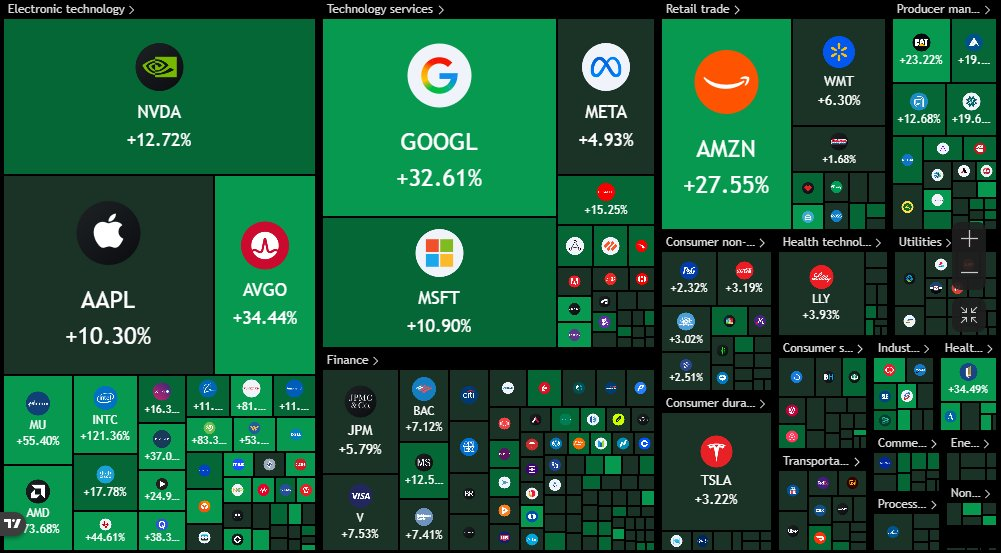
The move was backed by earnings. The year-over-year blended earnings growth rate for the index reached 27.1%, more than double the 13.1% that had been expected. With about 63% of S&P 500 companies already having reported Q1 earnings, the market was on track for its strongest earnings growth since Q4 2021. At the same time, the Magnificent 7 companies alone were guiding for more than $700 billion in CapEx spending for 2026.
Inflation rose again as debt concerns deepened
The macro backdrop was not cleanly bullish. Annual US inflation reached 3.5% in March, its highest level since May 2023. The main drivers were higher gasoline prices linked to the Iran war and the effect of broad tariffs.
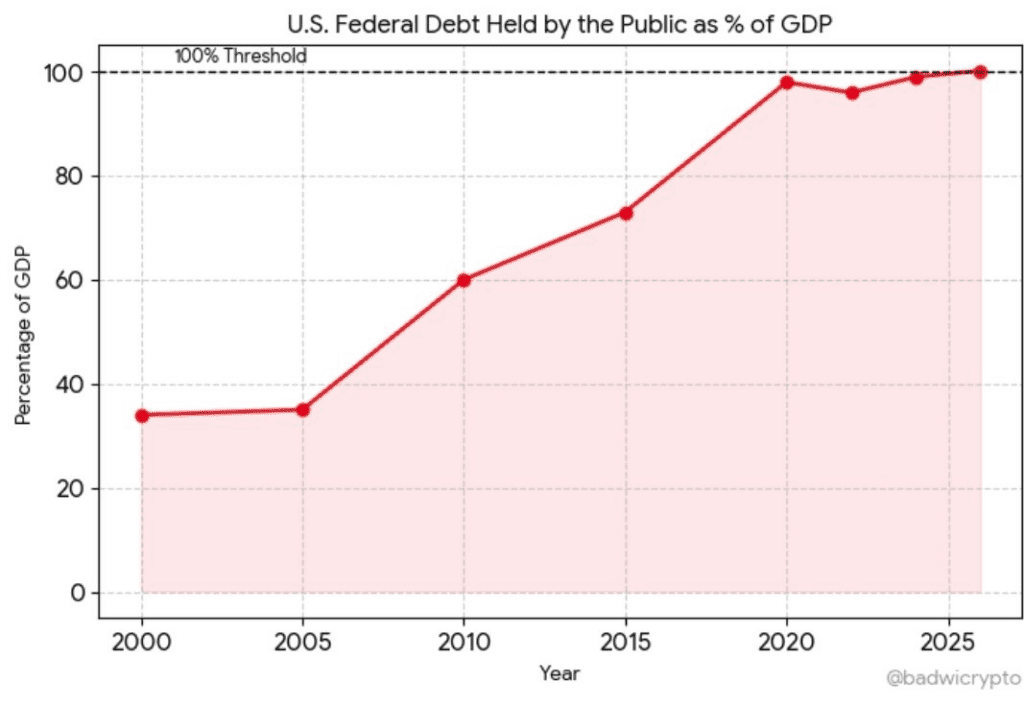
At the same time, the US national debt moved above total US gross domestic product for the first time since World War II. That added a longer-term warning to an already tense macro picture.
Ray Dalio warned against early rate cuts
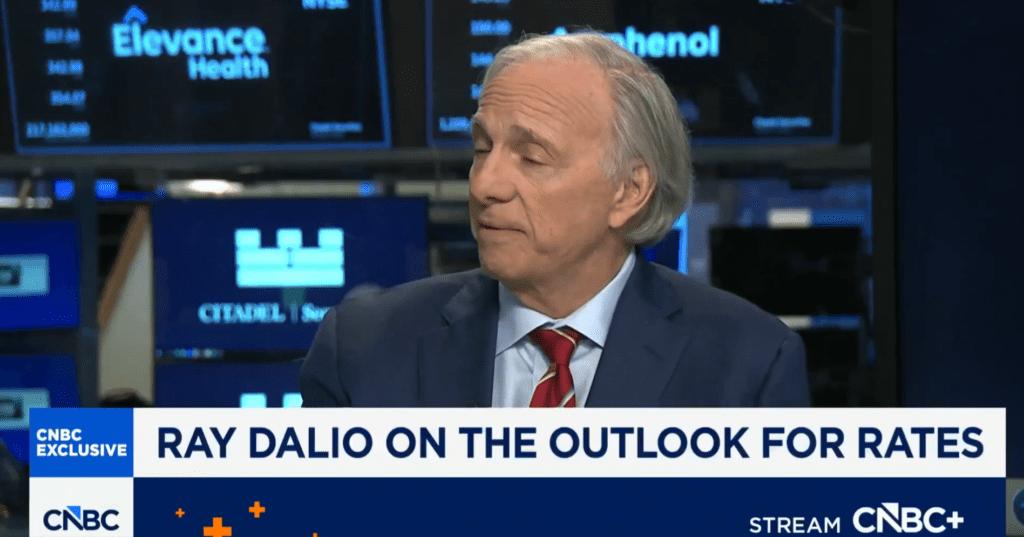
Ray Dalio warned against cutting interest rates too early. He said such a move, especially if Kevin Warsh were to take over, could weaken market confidence in monetary policy. He also argued that the United States is already in a phase of stagflation, marked by high inflation and slowing economic growth.
Iran, Oil, Trade, and Strategic Risk
Oil and markets stayed fixed on Iran
The Iran crisis remained one of the main drivers of market tone. Trump said the Strait of Hormuz was “100% closed”, while also saying negotiations with Iran were ongoing but showing “no progress.” He added, “Either we hit them… or we reach a deal.” He also said there had just been a conversation with Iran, that he was not satisfied with Iran’s latest proposal, that negotiations were happening by phone, and that it was still unclear whether a deal could be reached.
At the same time, he was also moving to raise tariffs on EU cars and trucks to 25%, widening the story from military risk into direct economic escalation.
Three military scenarios framed the market risk
The week also brought a three-scenario framework for possible US action against Iran. The first option was “swift and powerful” strikes targeting infrastructure such as energy assets and bridges. In that case, oil would rise and then stabilize, while stocks would fall first and then bounce.
The second option was ground operations in the Strait of Hormuz, a direct intervention to control a vital passage. In that case, oil would stay elevated, inflation would resume rising, stocks would lean risk-off, and liquidity would leave crypto. That would look less like a temporary dip and more like a possible regime shift.
The third option was a special forces mission to seize uranium, a more precise but also higher-risk path. In that scenario, success could bring a strong rebound in assets, while failure could trigger an oil shock and a global sell-off. The setup was highly binary and difficult to predict, making positioning before the event as important as forecasting direction.
The UAE’s OPEC exit added another oil shock
Oil policy also shifted elsewhere. The UAE is leaving OPEC, a move that gives it full freedom to pump oil according to national plans rather than quota limits. In the short term, that could increase supply and add more price volatility. In the long term, it supports greater economic independence and a stronger position as a global energy supplier. The move added another layer to an oil market already under pressure from the Iran war.
Closing View
This was a week in which nearly every major story connected to another one. Bitcoin treasury buying paused, but ETF inflows stayed positive. Bitcoin demand still leaned more on derivatives than on healthy spot participation.
Ethereum drew major accumulation while also facing a possible exploit and tighter fee competition. XRP, WLFI, and PUMP each saw their own supply-side or governance shock.
Stablecoin regulation moved closer to a real decision point, while Tether, Stripe, Western Union, and Ardoino all pointed in different ways toward a broader transition in payments.
This weekly recap is for informational purposes only and should not be considered financial advice. Readers can explore the Millionero blog for more market coverage and trade on Millioneroafter doing their own research and managing risk carefully.