



The new week is opening under the shadow of one of the most dramatic weekends markets have seen in a long time. The main driver was simple, but powerful: a sharp escalation in geopolitical risk pushed oil violently higher, sent stock futures lower, shook Bitcoin, and forced traders to rethink what this means for inflation, growth, and Federal Reserve rate cuts.
This was not a normal risk-off move. It was the kind of weekend where every market seemed to react at once. Oil surged, equity futures sank, Japan’s stock market opened sharply lower, and even crypto felt the shock. Then, just as panic was starting to build, reports emerged that G7 countries were considering a major coordinated oil reserve release, which suddenly took some heat out of crude prices and created one of the wildest reversals in recent memory.
Oil Took Center Stage
Oil was the clearest sign of fear over the weekend. At one stage, U.S. oil prices were attempting one of their biggest reversals in history. Prices were up as much as 30% on the day before reports said G7 countries were discussing a joint release of crude from reserves. Later, oil gave back a large part of the move, with prices falling by around $15 a barrel in under two hours and trading back below $104 at one point.
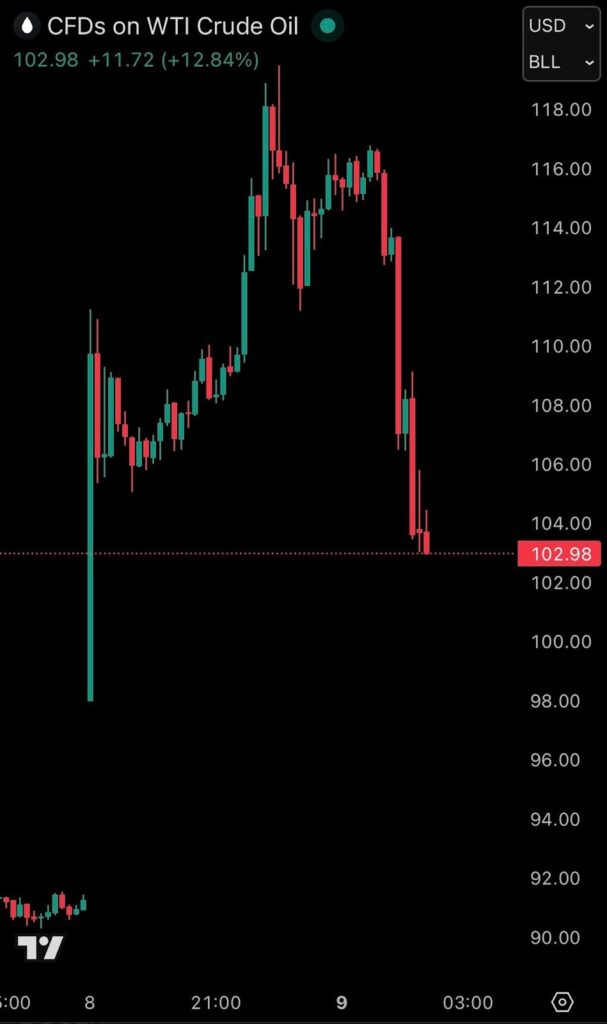
The reported plan was massive. The discussion centered on a possible release of 300 million to 400 million barrels, potentially coordinated by the International Energy Agency. According to the details being shared, three G7 countries, including the United States, had already expressed support, and officials believed a joint release in that range was appropriate. That is a huge number, and it shows how seriously governments are taking the recent spike in energy prices.
Even with that reversal, the bigger picture did not change much. Oil still remained extremely elevated, and the market was still trying to price in a serious supply shock. One of the most striking comments over the weekend described this as one of those days that will be remembered for decades, with oil up roughly 25% on a Sunday, U.S. stock market futures wiping out enormous value, and around 20 million barrels per day of supply seen as offline with no clear sign of de-escalation.
Why This Matters So Much
When oil rises this fast, it does not stay an “oil market story.” It becomes an inflation story, a consumer story, a central bank story, and eventually a crypto story too.
Higher oil usually means higher transportation costs, higher production costs, and more pressure on household budgets. It also raises the risk that inflation could stay sticky for longer. That is exactly why traders are now looking at this week’s U.S. data through a very different lens. Even if some numbers come in soft, a fresh energy shock can quickly change how the Federal Reserve thinks about cutting rates.
Stock Markets Reacted Immediately
The pressure spread quickly into equities. U.S. stock market futures opened sharply lower as oil extended its rally, with the S&P 500, Nasdaq 100, and Dow Jones all hit hard. Later, as crude pushed even higher, losses deepened further. One market update described futures as erasing over $1.3 trillion in value on the day, while another estimated more than $2 trillion had been wiped out at one stage.
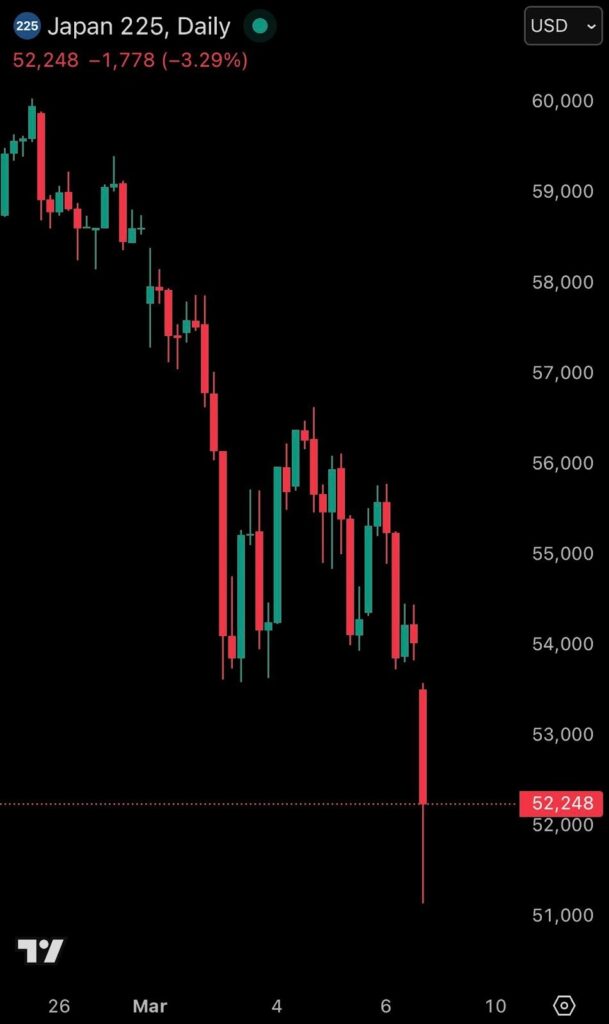
The move was not limited to the U.S. Japan’s stock market fell more than 5% in its first reaction to oil surging to fresh four-year highs. That kind of reaction makes sense. Japan is highly sensitive to imported energy costs, so a sudden oil spike hits sentiment there very quickly.
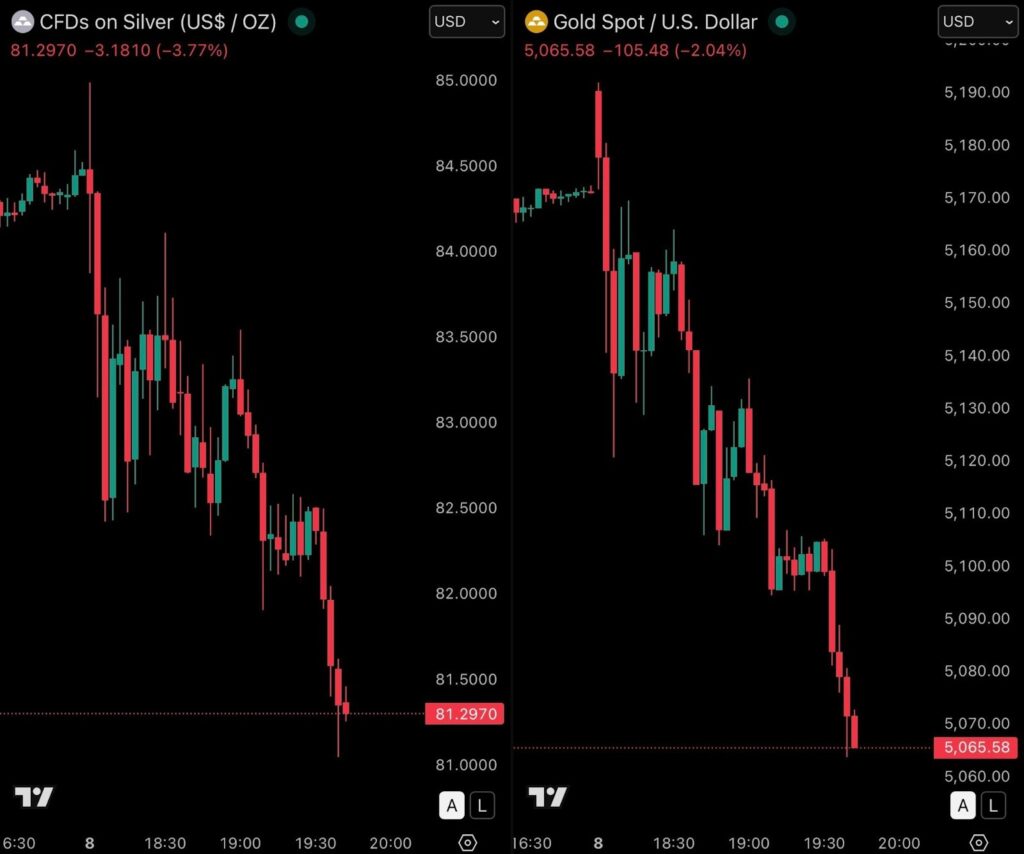
Another notable move came from silver and gold, which both fell by nearly 3% despite the worsening Middle East situation. That may look strange at first, because precious metals are often expected to rise during geopolitical stress. But when markets are moving this fast, traders often sell whatever they can, cut leverage, and raise cash. In that kind of environment, even traditional safe-haven assets can drop.
Trump’s Comments Added to the Tension
Politics added another layer of uncertainty. President Trump said oil prices would “drop rapidly” once the “Iran nuclear threat is over,” calling the current price rise “a very small price to pay.” At the same time, there were fresh reports about his openness to deploying U.S. troops in Iran under certain circumstances, including special forces and even the possibility of securing enriched uranium stockpiles later on.
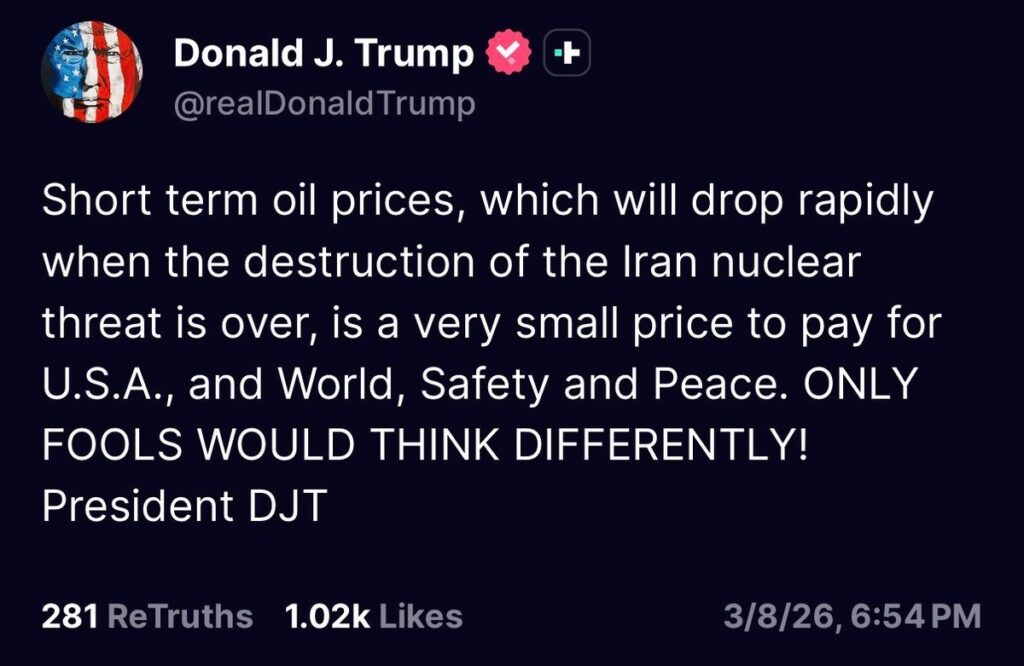
That language matters because markets do not just react to what already happened. They react to what could happen next. The possibility of a wider conflict, more direct military involvement, or further disruption to supply routes is enough to keep traders nervous even after oil pulls back from the highest levels.
A New Leader in Iran, but More Questions Than Answers
Another major development over the weekend was the announcement from Iran’s Assembly of Experts that Mojtaba Khamenei had been chosen as the new Supreme Leader, succeeding his father Ali Khamenei and becoming the third Supreme Leader of the Islamic Republic since 1979.
In market terms, this did not calm anything. If anything, it added more uncertainty. Leadership changes during a period of conflict rarely give markets confidence, especially when the regional situation is already unstable. One social media post also noted that Donald Trump did not approve of the appointment, which only added to the feeling that the political story around Iran is still far from settled.
Bitcoin Broke Down, Then Bounced
Crypto did not escape the macro shock. Bitcoin dropped below $66,000 shortly after U.S. stock futures opened, with around $140 million in leveraged positions liquidated within minutes. After that flush, BTC bounced back and reached $68,000 before slipping again to around $67,000 at the time of writing.
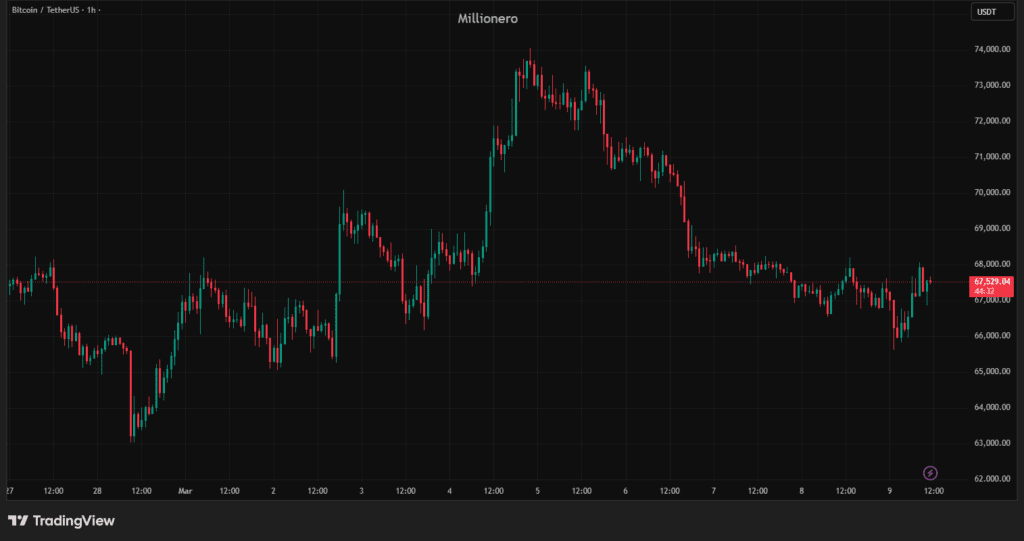
That quick drop and rebound says a lot about the current market. On one hand, there is still clear dip-buying interest. On the other hand, leverage remains fragile, and macro headlines can still force very fast liquidations. Bitcoin continues to trade like a highly reactive global asset in these moments, especially when traditional markets are also under pressure.
Altcoins Still Look Weak
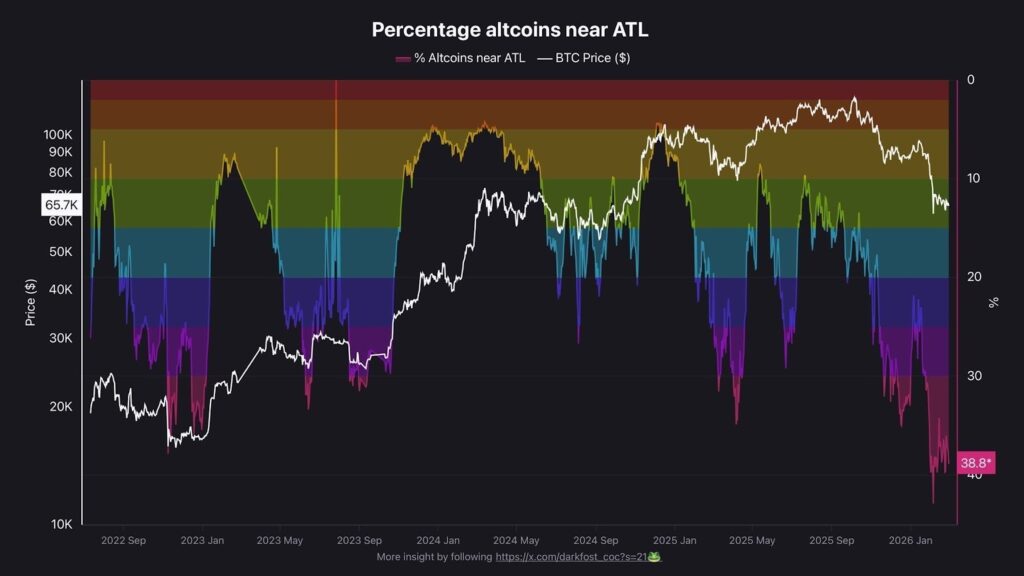
Beyond Bitcoin, the altcoin market still looks deeply stressed. One widely shared observation said that nearly 40% of altcoins are currently trading near their all-time lows. That does not mean every project is broken, but it does show how much pain still exists below the surface.
There was also fresh attention on Ethereum after a report claimed that co-founder Jeffrey Wilcke had moved more than 79,000 ETH, worth over $157 million, to Kraken. Traders naturally read that as a bearish signal, or at least as another source of possible market pressure during an already tense weekend.
Retail Traders Are Still Taking Risk
One of the more surprising themes in the middle of all this chaos was just how strong retail risk appetite still appears to be. According to one market thread, February was the fifth-strongest month on record for individual investor equity purchases. It also said retail investors have now bought stocks for 26 straight months, while average daily retail options volumes in 2026 are running 14% above 2025 levels and 47% above the 2020–2025 average.
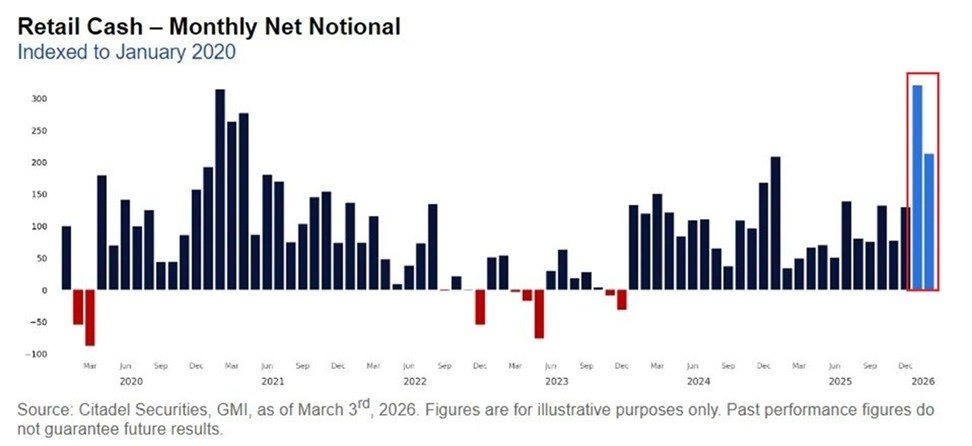
That matters because it helps explain why markets can sometimes bounce faster than expected. Retail participation is still a major force. But it also means that when the market turns sharply, the unwind can be violent, especially in leveraged products.
Other Crypto Narratives Did Not Stop
Even with the war-driven market shock, crypto traders were still discussing other major stories.
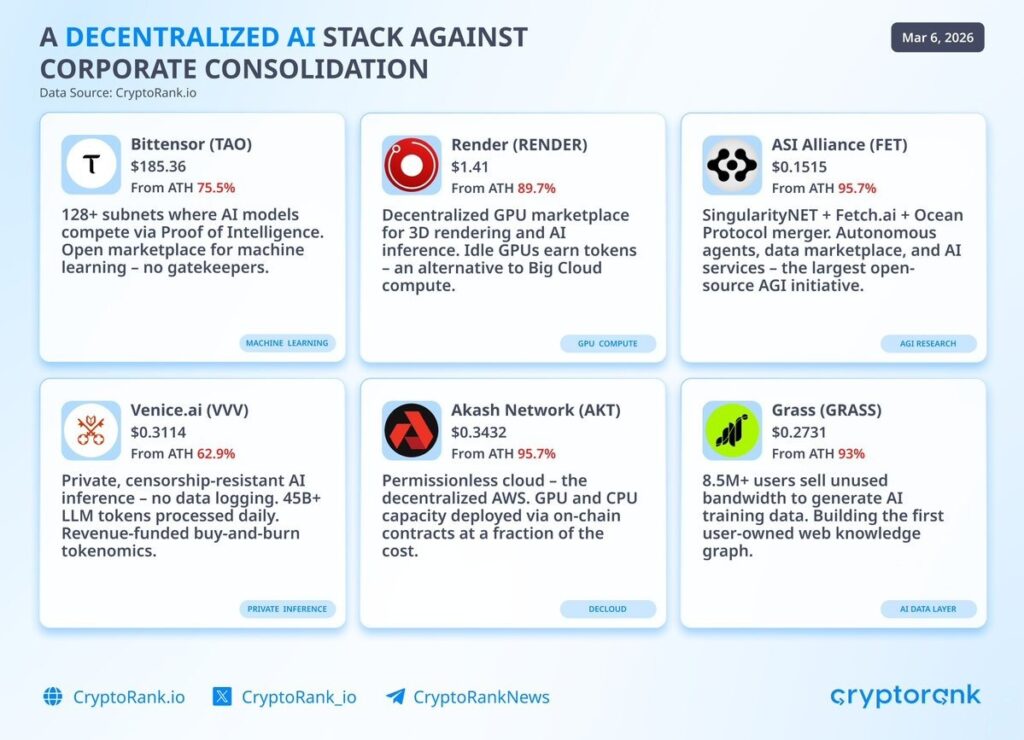
One of them was the growing concern around AI centralization. A post circulating over the weekend argued that control over artificial intelligence is becoming concentrated in the hands of a small number of giant companies. It claimed the U.S. Department of Defense had described Anthropic as a national security risk, that OpenAI replaced it within hours, and that a full blockchain-based alternative is quietly being built through decentralized AI infrastructure. The bigger idea was that open model markets, private inference, and user-owned training data could become key layers in the DeAI stack over time.
Another major topic was Kalshi. The prediction platform is facing a class action lawsuit after refusing to pay out roughly $54 million in bets tied to the removal of Iran’s Supreme Leader from power. According to the discussion, many traders believed the contract should have paid after Khamenei was killed in U.S.-Israeli strikes. Kalshi, however, reportedly froze the market, settled positions at the last traded price before confirmation of death, and refunded some fees and later trades, saying its rules do not allow contracts directly tied to a person’s death. The case is now feeding a much broader debate in Washington over how prediction markets should be regulated, especially when they touch wars, political violence, or national leaders.
The Week Ahead: U.S. Data Now Matters Even More
After a weekend like this, even a normal economic calendar feels much more important.
Monday has no major releases, so the focus will be on pure market reaction, whether oil cools further, whether stocks find support, and whether crypto steadies after the overnight shock.
Tuesday brings NFIB Small Business Optimism and existing home sales, offering a look at business confidence and housing demand.
Wednesday is the key day, with CPI, Core CPI, and the federal budget balance. A hotter inflation print could push markets toward a more cautious Fed, while a softer one may help the rate-cut story, though rising oil could still keep traders uneasy.
Thursday includes jobless claims, the trade deficit, housing starts, and building permits, all useful for reading labor and housing pressure.
Friday is packed with GDP revision, personal income and spending, PCE, durable goods orders, JOLTS, and consumer sentiment. PCE matters most because it is the Fed’s preferred inflation gauge.
The main issue is simple: softer growth data would normally support rate cuts, but hotter inflation, or even the fear of future inflation from higher oil, could make the Fed more cautious. That is why this week’s numbers may not get a straightforward market reaction.
Token Unlocks
WBT (WBT)
Date: March 9th to March 16th
Unlock Value: 4,340.00M USD
% of Adj. Released Supply: 27.77%
Number of Tokens: 81.50M WBT
CONX (CONX)
Date: March 9th to March 16th
Unlock Value: 15.00M USD
% of Adj. Released Supply: 1.54%
Number of Tokens: 1.32M CONX
APT (APT)
Date: March 9th to March 16th
Unlock Value: 11.62M USD
% of Adj. Released Supply: 0.76%
Number of Tokens: 12.45M APT
SOL (SOL)
Date: March 9th to March 16th
Unlock Value: 38.87M USD
% of Adj. Released Supply: 0.07%
Number of Tokens: 473.50K SOL
TRUMP (TRUMP)
Date: March 9th to March 16th
Unlock Value: 18.80M USD
% of Adj. Released Supply: 1.23%
Number of Tokens: 6.33M TRUMP
RIVER (RIVER)
Date: March 9th to March 16th
Unlock Value: 18.06M USD
% of Adj. Released Supply: 2.81%
Number of Tokens: 1.25M RIVER
WLD (WLD)
Date: March 9th to March 16th
Unlock Value: 13.47M USD
% of Adj. Released Supply: 0.77%
Number of Tokens: 37.23M WLD
DOGE (DOGE)
Date: March 9th to March 16th
Unlock Value: 8.59M USD
% of Adj. Released Supply: 0.06%
Number of Tokens: 95.81M DOGE
ASTER (ASTER)
Date: March 9th to March 16th
Unlock Value: 7.06M USD
% of Adj. Released Supply: 0.28%
Number of Tokens: 10.28M ASTER
Rain (RAIN)
Date: March 10th
Unlock Value: 338M USD
% of Circulating Supply: 3.25%
Number of Tokens: 37.43B RAIN
pump.fun (PUMP)
Date: March 14th
Unlock Value: 19.07M USD
% of Circulating Supply: 1.00%
Number of Tokens: 10B PUMP
STBL (STBL)
Date: March 16th
Unlock Value: 16.97M USD
% of Circulating Supply: 4.17%
Number of Tokens: 416.73M STBL
Linea (LINEA)
Date: March 10th
Unlock Value: 3.7M USD
% of Circulating Supply: 5.45%
Number of Tokens: 1.38B LINEA
Cheelee (CHEEL)
Date: March 10th
Unlock Value: 1.2M USD
% of Circulating Supply: 5.29%
Number of Tokens: 2.98M CHEEL
Final Thoughts
The weekend reminded traders how quickly the whole market can reprice when energy, war, and policy expectations collide. Oil is now the center of the story, but the consequences are much wider. Stocks are trying to absorb a growth shock, Bitcoin is dealing with leverage-driven volatility, altcoins remain under pressure, and the Federal Reserve now faces an even more difficult balance between inflation and easing.
This week’s US data will matter, but it will be read through the lens of what just happened over the weekend. That means inflation prints, labor signals, and spending data are no longer being judged in isolation. They are being judged in a market that suddenly has to think about oil, conflict, and sticky inflation all at once.
This article is not financial advice. Please do your own research. You can also explore more market explainers on blog.millionero.com, and when ready, trade spot and perpetuals on Millionero.