


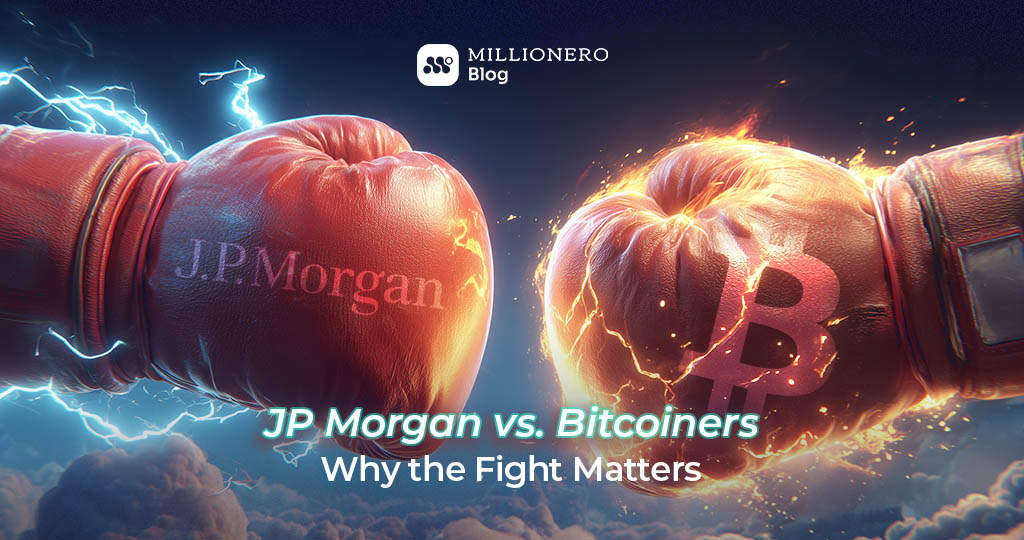
JP Morgan and the Bitcoin community are in the middle of a public clash. On one side is one of the biggest banks in the world. On the other side are Bitcoin holders who believe the traditional banking system is unfair and wants to crush anything it cannot control.
At the heart of this fight are claims of market manipulation, calls for boycotts, and billions of dollars that could move if big institutions change how they treat Bitcoin-linked companies.
How the Feud Started (This Time)
The latest wave of anger began after a JP Morgan research note about a large Bitcoin treasury company. This company holds a massive amount of Bitcoin on its balance sheet and is seen by many as a “public proxy” for BTC.
In the note, JP Morgan warned that:
- New index rules could push this company out of major stock indexes
- If that happens, index funds might be forced to sell its shares
- That selling could reach into the billions of dollars in outflows
For Bitcoiners, this sounded less like neutral research and more like a targeted threat. If index providers follow these rules, one of the biggest Bitcoin-heavy stocks could face heavy, mechanical selling, not because investors changed their minds, but because of index rules.
To many in the crypto community, this looks like part of a wider pattern: the old system defending itself.
Boycott Calls and Online Anger
The Bitcoin crowd did not stay quiet.
Several well-known Bitcoin supporters took to X (Twitter) and other platforms to say they were:
- Pulling their money out of JP Morgan accounts
- Calling for others to boycott the bank
- Urging people to “buy Bitcoin, not bank stocks”
Some voices compared this moment to the GameStop episode, where retail investors felt they were fighting Wall Street head-on. This time, the story is framed as:
“Big banks and index providers want to punish Bitcoin companies and scare investors. We should push back.”
Whether or not that is fully true, the feeling is powerful. The anger is not only about one report. It is about years of tension between banks and Bitcoin.
Jamie Dimon and Years of Bad Blood
The feud did not begin with this note. It has a long history, especially around Jamie Dimon, JP Morgan’s CEO.
Over the years, Dimon has:
- Called Bitcoin a “fraud”
- Compared it to past bubbles
- Said he would fire traders who dealt in Bitcoin
At the same time, the bank itself has slowly moved into the crypto space. JP Morgan now:
- Experiments with blockchain-based payments
- Offers some clients ways to hold or get exposure to Bitcoin and other crypto assets
- Looks into lending against crypto holdings through third-party custodians
To Bitcoiners, this mix of “we hate it” in public and “we’ll still profit from it” in private looks hypocritical. It feeds the idea that big banks want to control crypto rather than see it grow freely.
Market Manipulation: Past Proof and New Claims
When people in crypto say JP Morgan manipulates markets, they are not starting from zero.
In past years, the bank paid large fines for spoofing in metals and bond markets. Spoofing is when traders place large fake orders to move prices, then cancel them. Regulators called this market manipulation, and the bank agreed to pay penalties.
Those cases did not involve Bitcoin. But they left a mark. Many Bitcoiners now say:
“If they cheated in those markets, why should we trust them around Bitcoin or Bitcoin-related stocks?”
In the current clash, online critics go further. They claim JP Morgan might:
- Be short the Bitcoin-heavy stock
- Use negative research to push the price down
- Quietly benefit from fear and forced selling
These points are claims, not proven in court. Still, in an environment where trust is already low, they spread quickly and deepen the sense of “us versus them.”
Billions on the Line
This is not a small story. The money involved is huge.
- Forced selling from index changes could reach into the billions of dollars
- The Bitcoin treasury company itself holds hundreds of thousands of BTC, worth tens of billions at high prices
- JP Morgan’s own crypto-related services could become a multi-billion-dollar business over time
In simple terms: if indexes change their rules, if banks shift their stance, or if major funds dump or add exposure, the price impact can be very real, both for the stock in question and, at the margin, for Bitcoin itself.
Can a Boycott Hurt JP Morgan?
Will a boycott from Bitcoiners break JP Morgan? Honestly, no. The bank is enormous, with trillions in assets and a huge customer base.
But that does not mean the protest is meaningless. It can matter in at least two ways:
- Reputation
Being cast as the villain in the next “Wall Street vs the people” story is never good. It can stick in public memory, especially if new scandals or leaks appear later. - Future Crypto Business
If the most passionate Bitcoin users see JP Morgan as an enemy, they may avoid the bank’s products, even if they become “crypto-friendly.” They might choose crypto-native exchanges, wallets, and lenders instead. Over time, that could weaken JP Morgan’s position in the next wave of financial infrastructure.
So, while the bank itself is not in danger, it could lose influence in the very space it is trying to enter.
What This Clash Tells Us About the Future
This fight is about more than one report or one company. It shows a deeper tension in today’s markets.
- Big banks want to stay in control of money flows, even as they adopt new tools like blockchain.
- Bitcoiners want a system that does not depend on those same banks, and they are quick to see bad faith in every move.
Both sides need each other in some way. Institutions bring liquidity, products, and access to mainstream investors. The crypto space brings innovation, upside, and a new type of asset that many people now want.
But the core question is still open:
Will the future of crypto be built mainly by old banks like JP Morgan,
or by new players who share the original Bitcoin ethos of self-custody, openness, and resistance to control?
The current clash does not answer that question. It only makes it more urgent.
This article is for informational purposes only and is not financial advice.
Always do your own research (DYOR) before making any investment decisions. You can start your DYOR journey by reading more educational content on blog.millionero.com.
When you feel ready and understand the risks, you can trade spot and futures on Millionero.