



For more than a century, U.S. stocks have lived by a fixed rhythm: the opening bell, the closing bell, and long stretches of “nothing” in between. But markets don’t live in a calm world anymore. News breaks at midnight. Geopolitics moves on weekends. Social media can move prices in minutes. Now the (NYSE) New York Stock Exchange (through ICE) is working on a tokenized securities trading platform that aims to run 24 hours a day, 7 days a week, with on-chain settlement and funding through stablecoins or tokenized cash, pending regulatory approval.
This is not a small tweak. It’s a structural change that could reshape how “price” forms, how risk is managed, and who gets the advantage.
What “24/7 On-Chain NYSE” Actually Means
The idea is simple to say, but big in practice:
- Stocks and ETFs become tokens (digital representations of the same securities).
- Trading can happen anytime, including nights, weekends, and holidays.
- Settlement becomes near-instant (closer to T+0) instead of waiting for traditional clearing cycles.
- Traders can place orders in fractional shares or even dollar amounts, which matters for accessibility.
Importantly, this is being built to look and feel like traditional markets in the places that regulators care about. NYSE leadership has framed it as modern tech without losing the “trust layer” that a major exchange is supposed to provide.
The Real Market Change: Prices Don’t Have to “Wait”
In today’s structure, a lot of drama happens because the market is closed. If major news drops after hours, the reaction builds up like pressure in a sealed container. Then the market opens and you get the famous gap, a sudden jump up or down.
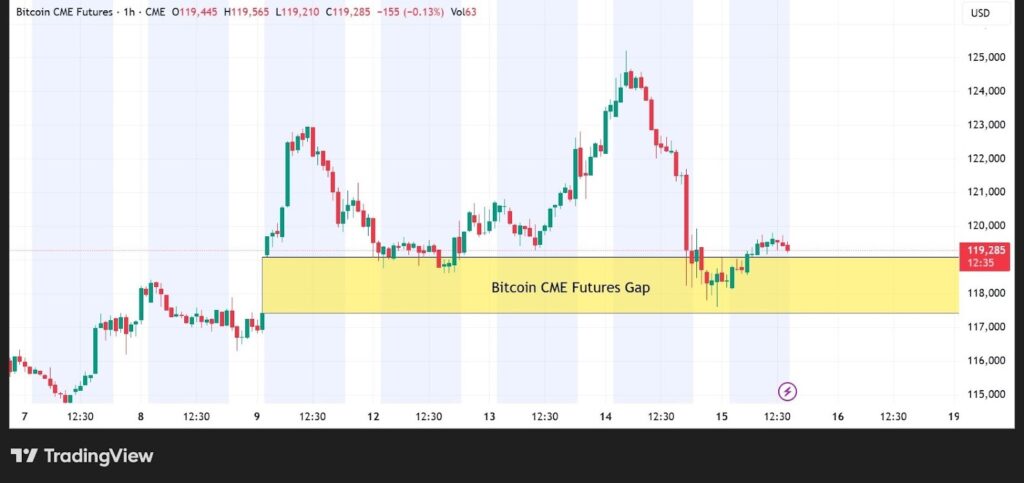
A 24/7 market tries to remove that “pressure build-up.” Instead of one violent reset at 9:30 a.m., the price can move in smaller steps throughout the night.
That sounds healthier. It also means something uncomfortable for traders:
many easy edges come from delay.
When the delay shrinks, so does the advantage of being early.
Why This Can Make Markets More “Efficient” (and Harder to Game)
A continuous market closes a lot of loopholes that exist only because the stock market sleeps.
Think about the Monday gap. If big news hits Friday night, the public can’t act until Monday. But professionals can hedge or position in other places (futures, overseas proxies, synthetic exposure). When Monday opens, the “real” price jump often reflects actions that already happened elsewhere.
If the main market is open all weekend, a lot of that gap-risk becomes tradable for everyone, not just those with special routes.
In plain terms: less waiting = less ambush.
The Tradeoff: Liquidity Won’t Be Even Across the Day
Crypto taught the world a brutal truth: 24/7 doesn’t mean “equally liquid.”
Even if a stock trades all night, some hours will still be thin. Thin liquidity can mean:
- wider spreads
- sharper, faster moves
- easier price pushes when order books are small
So we may end up with a market that is “always open,” but not always comfortable. The risk doesn’t vanish, it just shows up at different times.
Retail Investors: More Freedom, More Pressure
For everyday investors, the upside is obvious. You can trade after work. You can react to breaking news without waiting. You can manage risk in real time.
But the emotional downside is also real.
A market that never closes can create constant temptation:
- checking prices at odd hours
- panic-selling in low-liquidity moments
- feeling like you must always be “on”
In a world like that, discipline becomes more important than speed. Many people may choose to keep trading mostly during normal high-liquidity hours, even if the door is technically open all day.
Regulation: The Biggest Gate in the Room
This entire shift depends on approvals and rule alignment. A 24/7 tokenized market forces hard questions:
What is the “close” price if the market never closes?
How do circuit breakers work at 2 a.m.?
How does custody work when ownership moves through blockchain rails?
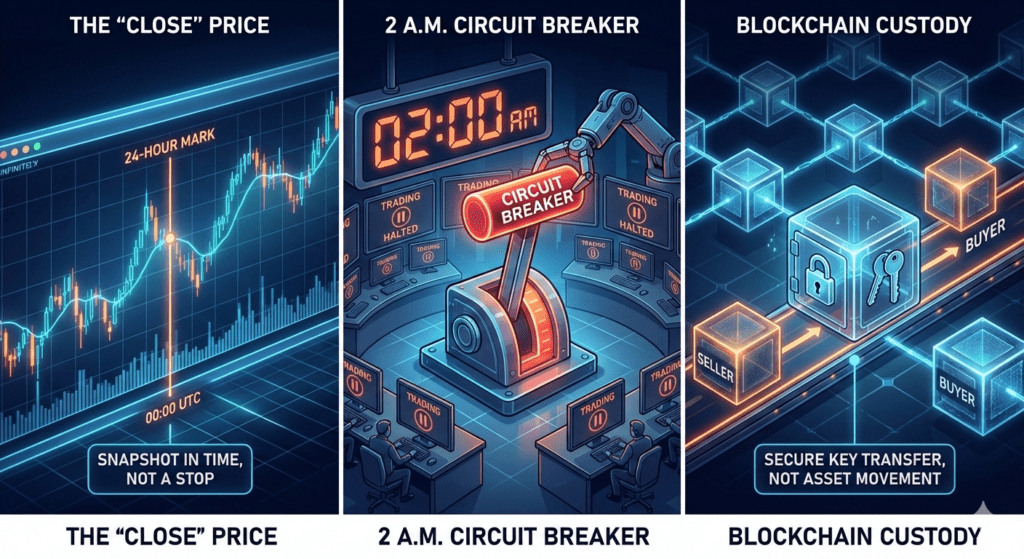
Regulators have already been moving toward pilot-like steps in extended trading and tokenization frameworks. The message is basically: if it’s a security, it stays under securities rules, even if it’s on-chain.
So the “on-chain” part here isn’t an escape hatch. It’s an attempt to modernize infrastructure while keeping the legal structure intact.
What This Means for Crypto Traders Watching From the Sidelines
Crypto traders are used to markets reacting instantly. Traditional stock traders are used to scheduled reactions.
If equities go 24/7, the stock market starts to behave more like crypto in one key way: news becomes tradable immediately.
That can make markets more “fair,” but it also removes a lot of exploitable dead time. And for short-term traders, dead time is often where the opportunity hides.
The world may be moving toward a single expectation: if information is live, the market should be live too.
Not financial advice. Do your own research. If you want more simple market explainers and weekly recaps, you can read blog.millionero.com. If you trade, use Millionero spot for straightforward buying/selling, and perpetuals only if you fully understand futures risk and use strict risk control.