


The story of Ordinals is the story of a market trying to turn permanence into demand.
That was the emotional promise from the beginning. Bitcoin already had the strongest myth in crypto: old, secure, limited, difficult to change. Ordinals added a strange new layer to that myth. A single satoshi, the smallest unit of Bitcoin, could carry data. An image, a line of text, a piece of code, or a collectible could be attached to Bitcoin itself through an inscription.
For collectors, this felt powerful. The artwork could live directly on-chain. The artifact could become part of Bitcoin’s permanent record. In a market trained to fear broken links, dead metadata, and abandoned projects, permanence sounded like a serious upgrade.
For a short time, that promise worked.
Bitcoin suddenly felt culturally active again. The network was no longer discussed only through price, halvings, miners, ETFs, and institutional flows. It became a place for pixel art, rare sats, experimental tokens, early inscriptions, and loud arguments about what Bitcoin should be used for.
Then the noise faded.
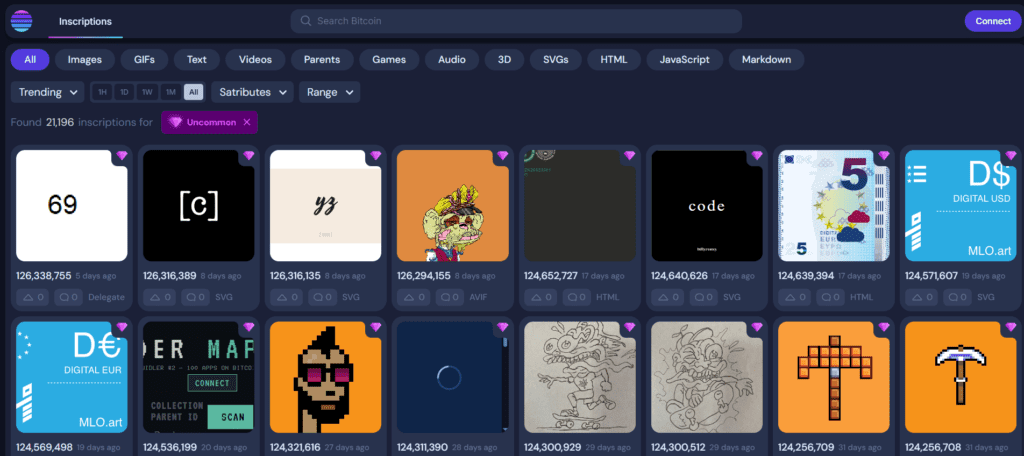
Ord.io, one of the main explorers and community hubs for Bitcoin Ordinals, announced that it would shut down on June 1, 2026. The platform had served more than one million users and offered tools such as Satributes and real-time Runes tracking. Its historical data is expected to be archived on GitHub. The inscriptions remain on Bitcoin, but one of the clearest windows into that world is closing.
What Bitcoin Ordinals Actually Are
Bitcoin is divided into tiny units called satoshis. One BTC contains 100 million sats. Ordinal theory gives each satoshi a unique number based on the order it was mined. Once a sat can be tracked, data can be attached to it through an inscription.
That data can be an image, text, audio, code, or another digital file. The result is a Bitcoin-native digital artifact. Many people call these “Bitcoin NFTs,” although the structure is very different from the NFTs that became famous on Ethereum.
Ethereum NFTs usually rely on smart contracts, such as ERC-721 or ERC-1155. These contracts manage ownership, token IDs, transfers, and sometimes royalties. The artwork or metadata often lives off-chain through IPFS or another storage system.
Ordinals took a harder path. The inscribed data could live directly inside Bitcoin transaction data, using space made possible by SegWit and Taproot. There was no smart contract giving the asset its identity. No built-in royalty system. No familiar token dashboard. The satoshi itself carried the inscription.
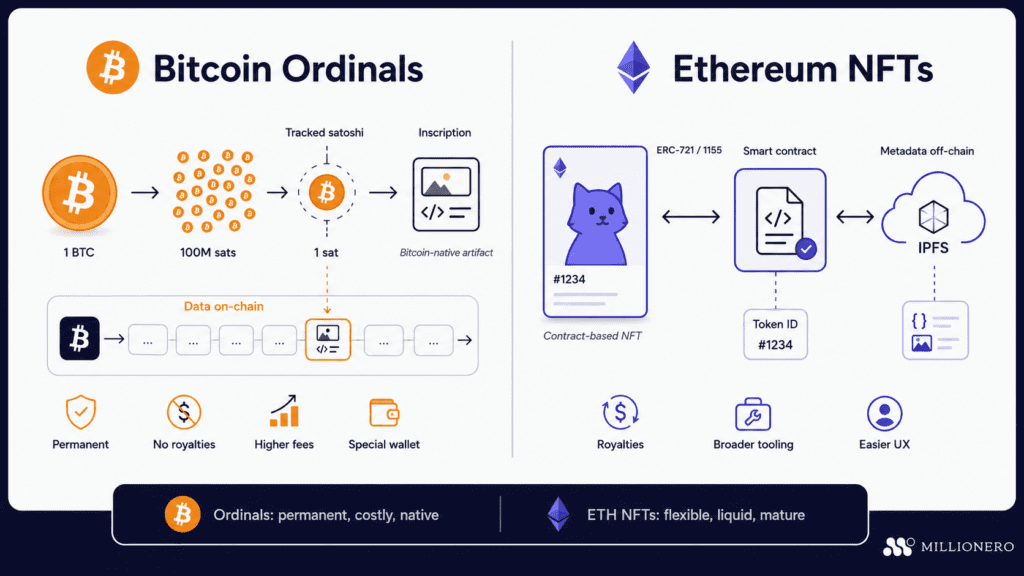
That design gave Ordinals their strongest sentence: if Bitcoin survives, the inscription survives.
It also created their hardest problems. On-chain data uses block space. Block space costs money. Larger inscriptions can raise fees and crowd the mempool. Users also need special wallets and careful handling, because an inscribed satoshi can be accidentally spent like normal BTC if the wallet does not understand Ordinals.
The Ethereum NFT Shadow
Ordinals arrived under the shadow of Ethereum’s NFT bull run.
From 2020 to 2022, Ethereum became the home of digital collectibles. CryptoPunks, Bored Ape Yacht Club, Art Blocks, Azuki, and many other collections turned NFTs into a full crypto sector. OpenSea became the trading floor. MetaMask made ownership visible. Royalties gave creators a revenue model. Floor prices became status signals.
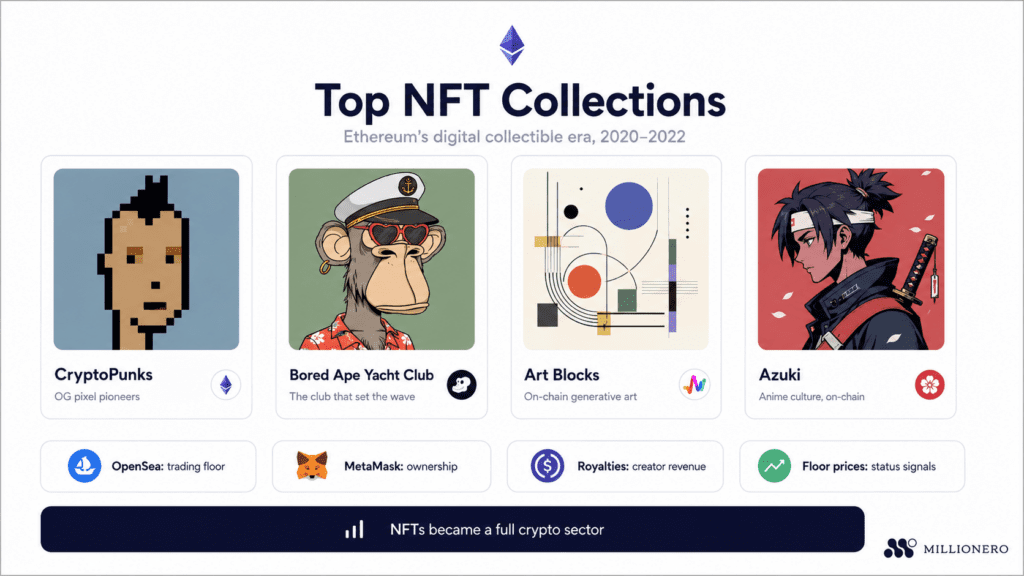
That market had structure. Marketplaces, aggregators, launchpads, analytics tools, NFT lending, games, and brand experiments all grew around Ethereum NFTs. The ecosystem had liquidity, culture, and easy visibility.
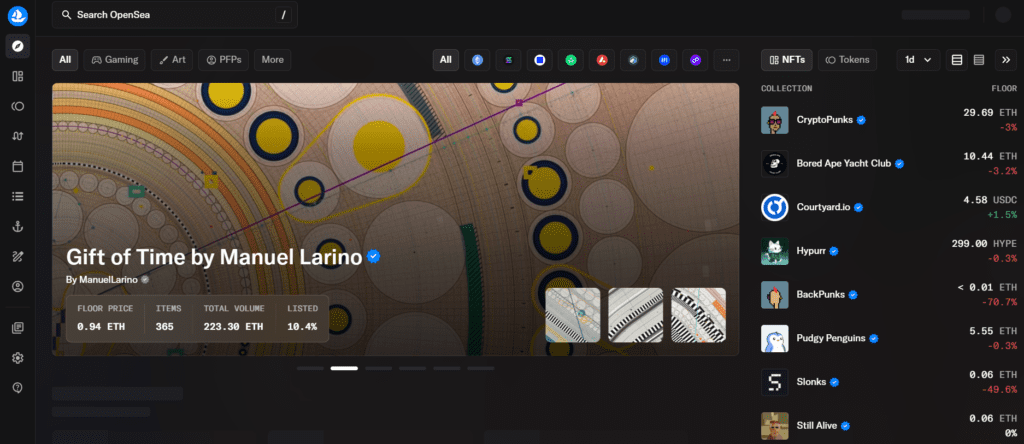
Ordinals had a different attraction. They had fewer tools, rougher user experience, weaker marketplace depth, and no smart-contract flexibility. Their strength came from historical weight. Buyers were attracted to early inscription numbers, rare sats, technical firsts, and artifacts tied directly to Bitcoin’s chain.
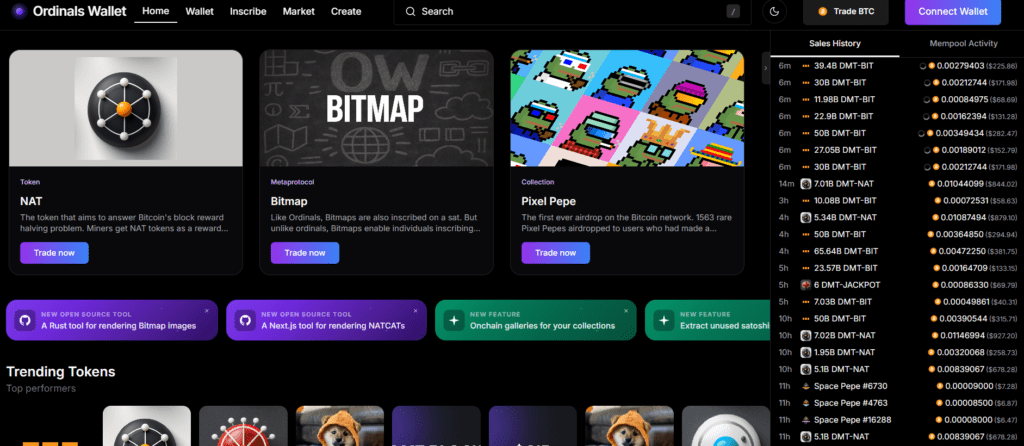
Ethereum NFTs created a consumer market. Bitcoin Ordinals created an archive with a speculative layer on top.
That difference shaped the whole cycle.
The Fast Rise of Ordinals
The Ordinals protocol was released in January 2023. Early collections quickly followed: Ordinal Punks, Bitcoin Rocks, Bitcoin Shrooms, Timechain Collectibles, Honey Badgers, and Taproot Wizards.
Some projects were artistic experiments. Some borrowed from Ethereum NFT culture. And some became valuable because they were early. In Ordinals, timing mattered almost as much as the image itself. A low inscription number carried a kind of digital archaeology.
Then BRC-20 tokens arrived in March 2023. These used inscriptions to create fungible tokens on Bitcoin through simple text data. This changed the market’s rhythm. Ordinals moved from collectible art into token mania.
Activity surged. Bitcoin fees rose. The mempool became crowded. Daily inscriptions reached hundreds of thousands during the 2023 peak. By late July 2023, total inscriptions had crossed 20 million. By late 2025, the number had moved toward the 100 million range, with BRC-20-related inscriptions making up most of the count.
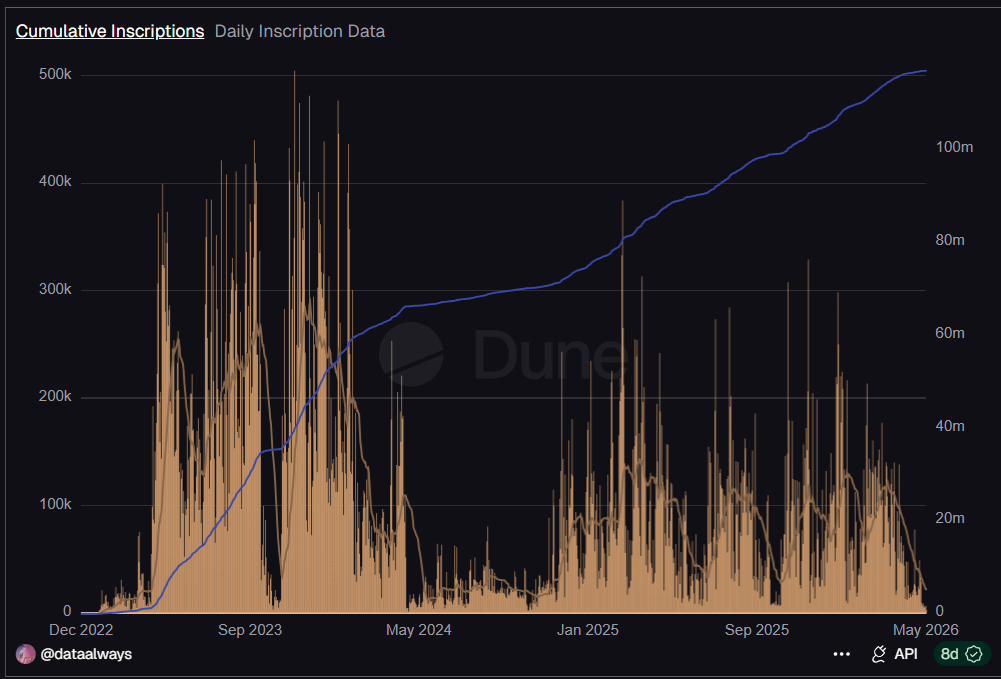
For a moment, Bitcoin looked like it had found its own NFT season.
The Collections That Defined the Cycle
A few launches gave Ordinals their mythology.
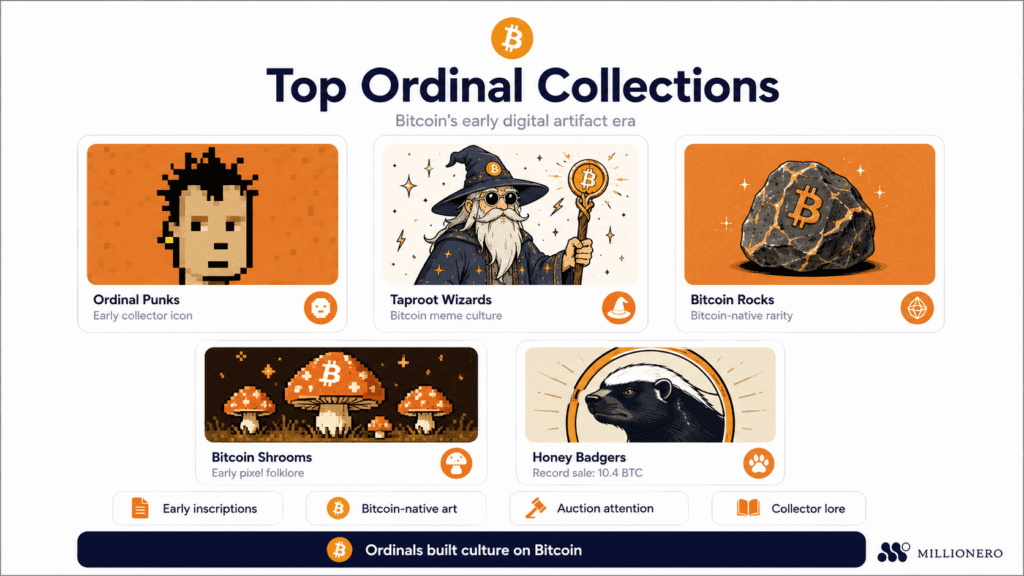
Ordinal Punks
Ordinal Punks became one of the earliest serious collector targets. Their small supply, early inscription range, and familiar CryptoPunks style helped them gain attention quickly.
Taproot Wizards
Taproot Wizards gave Ordinals a cultural identity. The project leaned into Bitcoin memes, technical experimentation, and the argument that Bitcoin could carry expressive digital culture.
Bitcoin Rocks
Bitcoin Rocks brought the EtherRock idea into Bitcoin’s world. It became a clean symbol of how Ethereum NFT culture moved across chains and took a more permanent form.
Bitcoin Shrooms and Honey Badgers
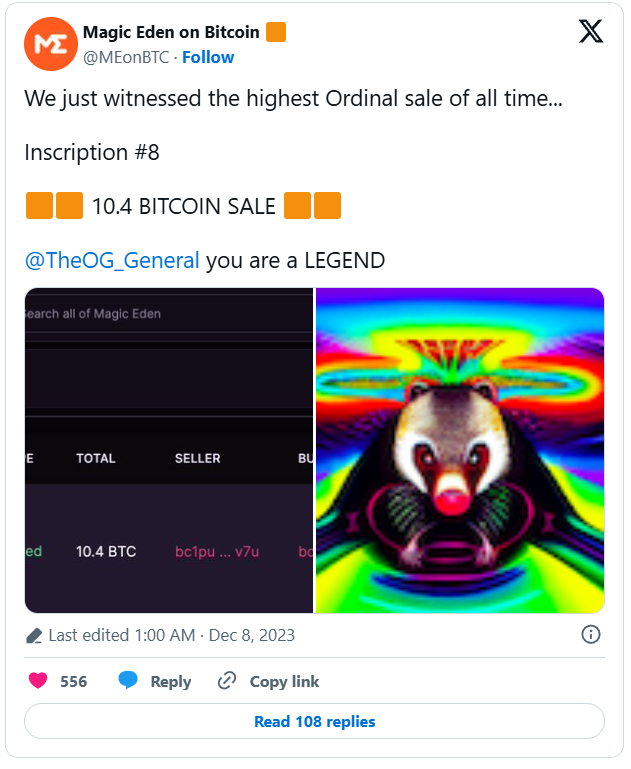
Bitcoin Shrooms gained attention as early Bitcoin-themed pixel art and later appeared in a Sotheby’s Ordinals auction. Honey Badgers entered the record-book story when Inscription #8 sold for 10.4 BTC, roughly $450,000 at the time.
These collections mattered because they gave Ordinals memory. The wider market needed more than memory.
The Slow Fade
Ordinals never reached Ethereum NFT scale.
Ethereum NFTs once reached weekly volumes in the billion-dollar range. Bitcoin Ordinals stayed far smaller. Onchain data shows early 2026 Ordinals monthly volume in the tens of millions, including around $53 million in January, $33.6 million in February, and $46.8 million in March. That activity is real, but it belongs to a niche market rather than a broad NFT revival.
The decline was visible in prices, liquidity, and infrastructure. Early average sale prices fell after the first speculative wave. Marketplace support weakened. Magic Eden’s exit from Bitcoin NFT support in 2026 added another signal that the sector had lost wider momentum.
The central issue was demand. Permanence gave Ordinals a strong technical story, but permanence did not create a large buyer base by itself. Collectors cared about early inscriptions, rare sats, and historic collections. Casual NFT traders wanted easier wallets, deeper liquidity, and stronger social momentum. Many Bitcoin users still rejected the idea of using block space for collectibles.
What Ord.io’s Shutdown Means
Ord.io helped make Ordinals visible. It gave users a way to browse inscriptions, track activity, discover rare sats, and follow the culture around Bitcoin digital artifacts. Its shutdown feels symbolic because cultural infrastructure carries emotion. When a major hub closes, the market hears the silence.
Ordinals remain on Bitcoin. The early artifacts still exist. Developers can still experiment. Collectors can still value historic inscriptions.
The hype cycle failed to become the next NFT bull run. The experiment succeeded in proving that Bitcoin can hold a permanent cultural layer.
That is the strange final shape of Ordinals. They were too small to become the future of NFTs, and too important to dismiss as a temporary mistake. They showed what happens when a market tries to convert permanence into price.
Ord.io is closing. The record stays open.
This article is for educational purposes only and should not be taken as financial advice. Always do your own research before making crypto decisions. For more simple crypto explainers and market guides, visit the Millionero Blog. When you are ready to explore crypto markets, you can trade spot and perpetuals on Millionero Exchange.