


Tomorrow, Federal Reserve Chair Jerome Powell faces one of the trickiest decisions of his tenure. After a month of mixed economic signals, and a historic government shutdown that left crucial data missing, the Fed must decide whether to rate cut interest rates again or hit pause.
Wall Street is betting heavily on another quarter-point cut. But inside the Fed, officials are deeply divided. And for anyone holding Bitcoin or watching their savings account, the outcome could reshape the financial landscape heading into 2026.
The Numbers Tell Two Different Stories
Inflation is cooling, but not fast enough. The Fed’s preferred measure rose 2.8% in September, down slightly from 2.9% in August. That’s close to the Fed’s 2% target, but recent tariffs have added pressure. Consumer goods prices jumped 0.4% in back-to-back months. As former Fed Vice Chair Alan Blinder warns, cutting rates too aggressively could “unleash persistent inflation” before the economy is fully stable.
The job market is softening, but not collapsing. Unemployment has climbed to 4.4%, a four-year high. September added just 119,000 jobs. Then came November’s shock: private employers cut 32,000 positions, the largest drop in over two and a half years. Small businesses bore the brunt, squeezed by higher costs and tighter credit.
Yet weekly jobless claims remain low, suggesting what economists call a “no-hire, no-fire” moment. Companies aren’t laying off workers in droves, but they’re not bringing on new ones either. It’s a labor market in slow-motion decline, enough to worry the Fed, but not enough to trigger panic.
The Shutdown That Changed Everything
The Fed is flying partially blind. A 43-day government shutdown, the longest in U.S. history, delayed critical economic reports. November’s jobs numbers and the latest inflation data won’t arrive until after the Fed meets. October’s unemployment rate will forever remain unknown because the shutdown disrupted the household survey.
“Operating with limited visibility,” as one analyst put it, the Fed has relied on private surveys and anecdotes. This data blackout could push officials toward caution, or convince them that the warning signs they can see justify action now.
Inside the Fed: Doves vs. Hawks
The Federal Open Market Committee is deeply split on what to do next.
The hawks want patience. Boston Fed President Susan Collins and others argue there’s “not a strong need” to cut with inflation still around 3%. They worry the Fed shouldn’t pivot too quickly after raising rates so aggressively in 2022–23.
The doves see a weakening economy that needs support. New York Fed President John Williams, a key Powell ally, signaled in November that he sees “room for a further adjustment in the near term”, Fed-speak for “let’s cut.” Their concern: the labor market’s weakness now outweighs lingering inflation risks.

The likely result? What traders call a “hawkish cut”, a rate reduction delivered with heavy doses of caution. Powell will probably emphasize that nothing is on autopilot and that future moves depend entirely on incoming data.
Markets Have Made Up Their Minds
Despite the internal debate, financial markets are treating a rate cut as virtually certain. CME futures show an 88% probability. On prediction platform Polymarket, traders put the odds at 94–95%. In the past 24 hours alone, $14 million traded on Fed rate-cut bets.
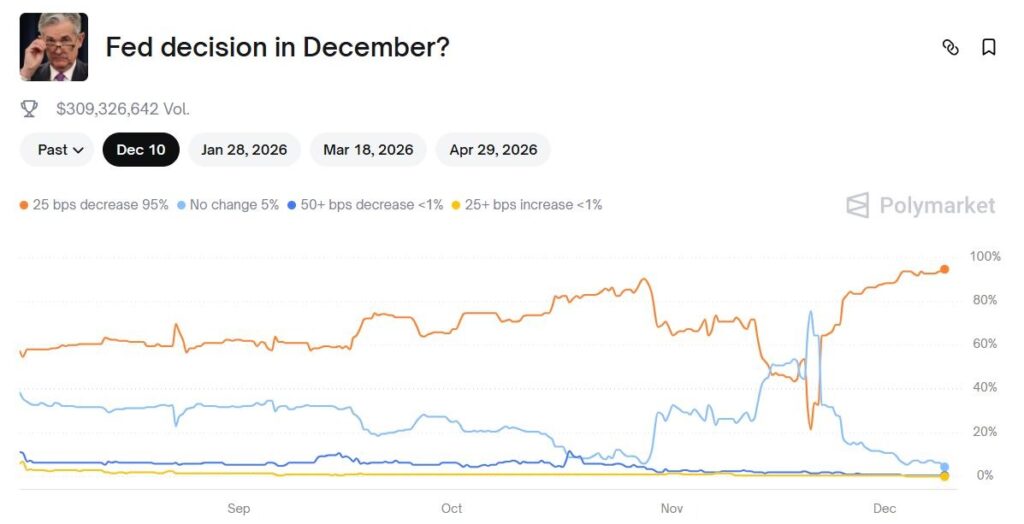
It wasn’t always this confident. Three weeks ago, when Fed meeting minutes revealed “strongly differing views” among officials, Polymarket’s odds of no cut spiked above 60%. But dovish signals from Williams and others swung sentiment back. By late November, weak labor data sealed the deal in traders’ minds.
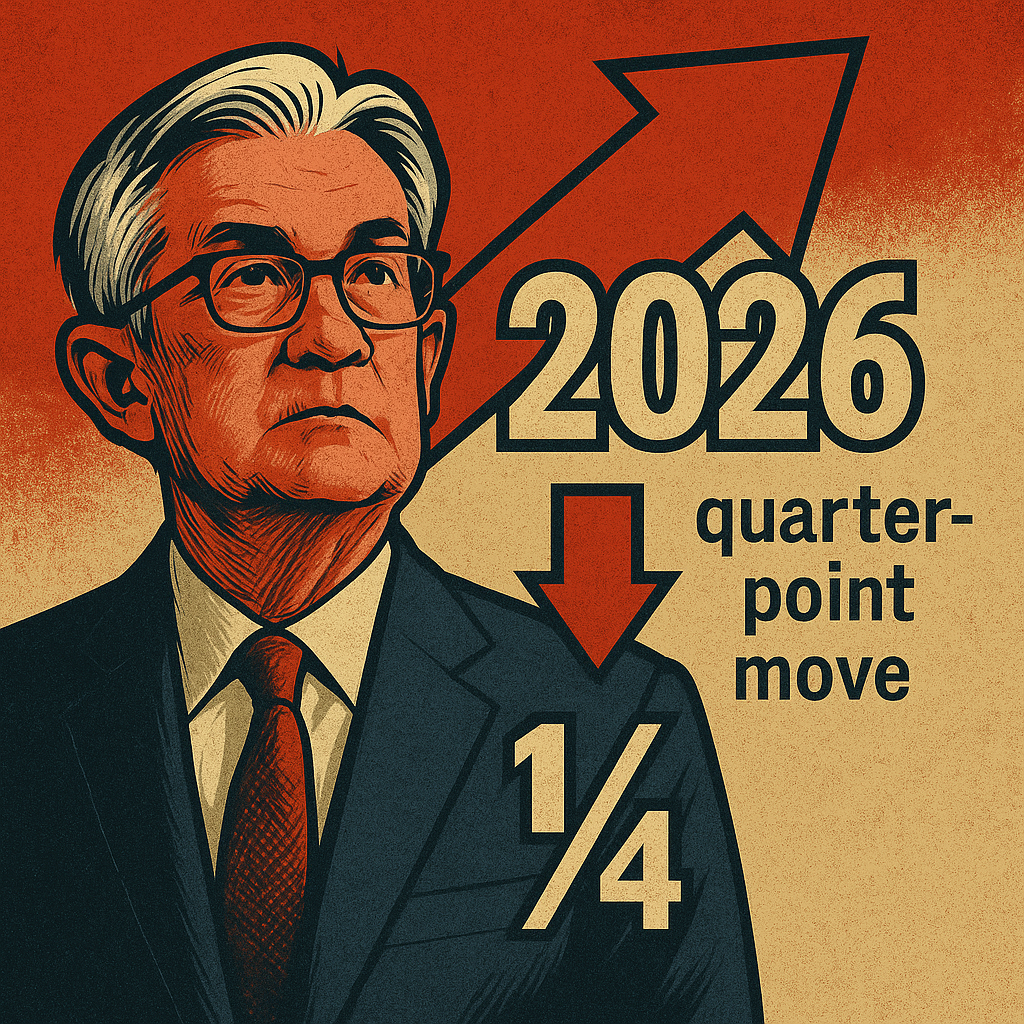
The real question isn’t whether the Fed cuts, it’s what Powell signals about 2026. Will this be the last cut for a while, or the beginning of a longer easing cycle? That guidance could matter more than the quarter-point move everyone expects.
What This Means for Bitcoin
The crypto community is watching intently. Bitcoin surged to $126,000 in October on Fed pivot hopes, then pulled back sharply to around $90,000–$92,000.
Here’s the key insight: Bitcoin doesn’t pump just because rates go down. It pumps when there’s actual liquidity sloshing around. Despite rate cuts in September and October, the Fed was still draining its balance sheet through quantitative tightening, essentially pulling money out of the financial system. That ended December 1st, removing what one analyst called “one of the biggest pressures” on markets.
If the Fed cuts as expected and signals more easing ahead, it’s generally bullish for risk assets including crypto. Lower rates make cash and bonds less appealing, potentially driving money toward stocks, tech, and digital assets. Some analysts think a straightforward cut with dovish language could push Bitcoin toward $95,000–$100,000 quickly.
The flip side? A hawkish surprise, say, Powell emphasizing that inflation isn’t defeated yet, could trigger another leg down. With Bitcoin already off its highs and leverage in crypto markets running high, an unwelcome surprise could test support in the $70,000 range.
The Bigger Picture
For the broader economy, tomorrow’s decision matters for anyone with a credit card, car loan, or mortgage. Another rate cut would provide marginal relief on borrowing costs. But Powell will likely frame this as insurance against a sharper slowdown, not the start of an aggressive cutting campaign.
The Fed is walking a tightrope. Cut too little, and the job market could weaken faster than necessary. Cut too much, and inflation could reignite. All while facing political pressure (President Trump has repeatedly criticized Powell for not cutting faster) and navigating an election year ahead.
The bottom line: Barring a major surprise, expect a quarter-point cut tomorrow that brings the Fed’s benchmark rate to 3.50%–3.75%. Markets have priced this in. What happens after, the pace of future cuts, Powell’s tone about 2026, the updated economic forecasts, will determine whether stocks rally further, whether Bitcoin breaks back above six figures, and whether consumers see meaningful relief on their debt payments.
As crypto traders like to say: don’t fight the Fed. Tomorrow, we’ll find out if the central bank is truly entering a new, easier chapter, or just taking one cautious step before pausing to reassess.
Either way, the stakes are high. And this time, the Fed is making the call with less information than usual, in a deeply divided committee, while financial markets from Wall Street to the blockchain world hold their breath.
The Federal Reserve’s policy decision will be announced Wednesday afternoon, followed by Chair Powell’s press conference at 2:00 PM ET.
This article is for information only and is not financial advice. Crypto markets are volatile and every trader’s situation is different, so please do your own research before making any decisions. You can dig deeper into these topics on blog.millionero.com. When you feel ready, you can trade spot and futures on Millionero in a way that fits your own risk and strategy.