


If you want the cleanest way to understand why Uniswap just won in court, think about this question:
When a scam happens on top of neutral infrastructure, who is legally “doing the scam”?
A federal judge in New York (Judge Katherine Polk Failla) just answered that question in a way that matters for every open DeFi protocol. The court dismissed the remaining state-law claims against Uniswap Labs and founder Hayden Adams with prejudice, meaning the plaintiffs can’t come back and re-file the same claims.
The edge: the “blame graph” problem
DeFi scams are weird because the “crime scene” is not a single company. It’s a chain:
token creator → liquidity pool → router → front-end → wallet → user
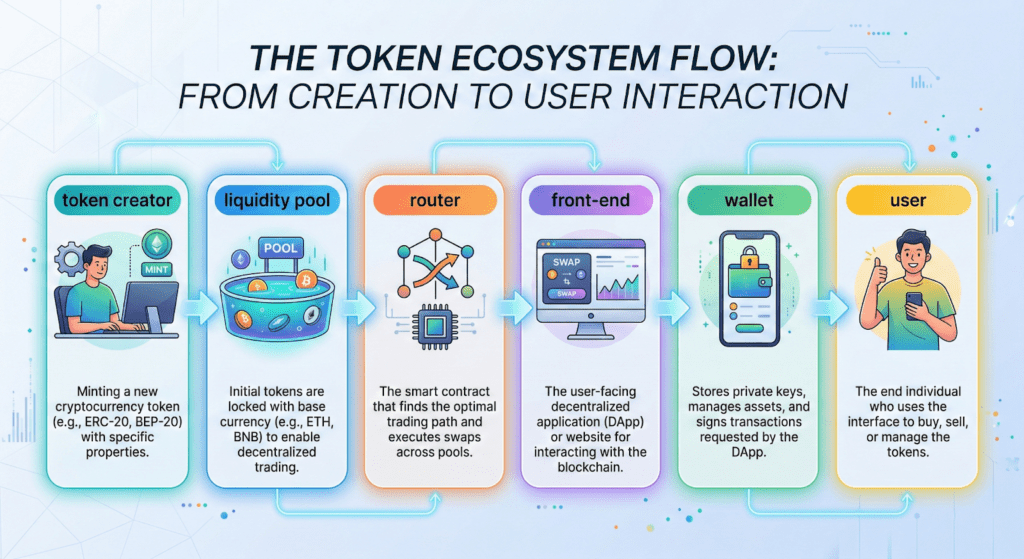
When a rug pull happens, the token creator vanishes, and victims look for the nearest deep pocket still standing. That’s what this case basically was: buyers said they got wrecked by scam tokens and argued Uniswap should be on the hook because its protocol made trading possible.
But courts are increasingly treating that argument like blaming the road for a bank robbery because the robber used it to escape.
What the judge actually rejected
According to reporting on the latest decision, the plaintiffs tried state-law angles like aiding and abetting fraud, consumer protection violations, and unjust enrichment, the classic “you benefited from the activity, so you share the blame” play. The judge said they still failed to plead a viable case even after multiple chances to amend.
The core idea the court rejected is simple:
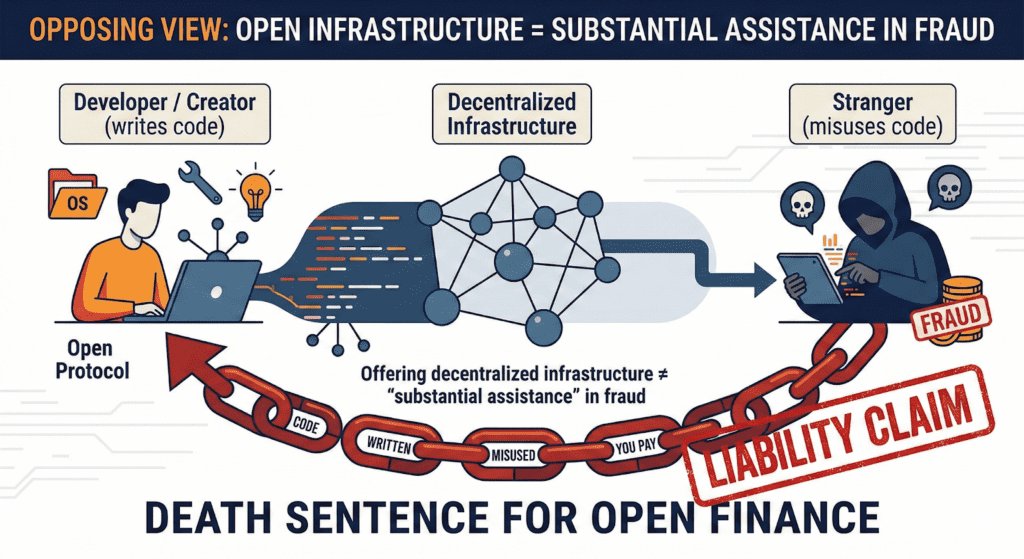
Offering decentralized infrastructure ≠ “substantial assistance” in fraud.
That sounds obvious, but it’s not trivial legally. If the opposite view won, then the default rule for open protocols would become: “You write code, strangers misuse it, you pay.” That’s basically a death sentence for open-source finance.
This wasn’t a one-day win, it’s the end of a long arc
This story didn’t start this week.
Back in August 2023, the same judge dismissed the plaintiffs’ federal securities claims with prejudice and kicked the state-law claims without prejudice (meaning they could try again elsewhere). In her opinion, she openly noted the brutal reality: victims had “an identifiable injury but no identifiable defendant,” and the complaint tried to solve that by suing the builders and investors around Uniswap.
Then the fight moved up the ladder. The Second Circuit later affirmed dismissal of the federal claims, leaning on a principle that matters a lot in securities law: you generally need the defendant to be a “statutory seller” to pin Section 12 liability on them. The court also echoed that it “defies logic” to hold a smart-contract drafter liable for a third party’s misuse.
After that appellate phase, the remaining state-law claims came back for cleanup, leading to the final, with-prejudice dismissal now being reported.
The “Venmo defense” is real (and it’s spreading)
One of the most important parts here is the analogy courts keep reaching for: payment apps and neutral tools.
DLA Piper’s breakdown of the earlier decision notes the court didn’t treat Uniswap like a defective product maker. It treated the protocol more like a general-purpose tool, useful for lawful trades and unlawful trades, and said it doesn’t make sense to attach automatic liability to the toolmaker for what users do with it.
This is the “Venmo defense” in plain English:
If criminals use Venmo, we prosecute criminals. We don’t sue the people who wrote Venmo.
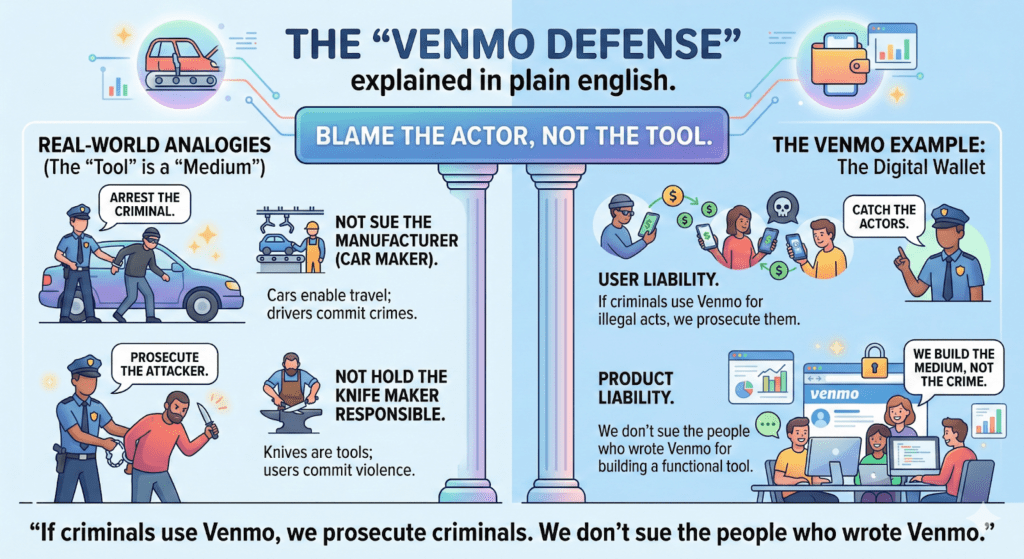
The Uniswap ruling pushes DeFi further into that same legal bucket: infrastructure-first, culpability-second.
Why UNI jumped (and why traders cared)
UNI popped after the decision, reportedly around +6% to about $3.92, not because lawsuits change Uniswap’s code, but because they change its risk profile.
Markets hate uncertainty. A long-running class action hanging over a protocol is like a foghorn: “this could get expensive and contagious.” When that fog lifts, traders often reprice the asset quickly.
The uncomfortable part: this leaves victims in a liability gap
Here’s the part nobody likes to say out loud.
A win for DeFi infrastructure is also a reminder that a lot of retail victims still won’t get made whole, because the actual scammer is anonymous, offshore, or both. The 2023 opinion basically acknowledged that dynamic: people got hurt, but the law (as written) didn’t fit the target they picked.
So where does accountability go now?
- Token issuers and promoters (the ones who created and marketed the scam)
- Front-ends and interfaces if they do active promotion, listing, or misrepresentation
- Centralized chokepoints (fiat on-ramps, hosted wallets, marketing platforms) when there’s provable involvement
The practical shift is: courts are drawing a line between “writing rails” and “running the train.”
The real takeaway: DeFi is slowly getting a legal shape
This ruling doesn’t mean “DeFi is unregulated” or “anything goes.” It means courts are trying to define where responsibility attaches in systems designed to remove middlemen.
The emerging rule looks like this:
- Publishing open code is not automatically actionable.
- Direct involvement, knowledge, and active participation are what courts want to see before assigning liability.
And that’s a big deal, because once courts lock in that distinction, it becomes harder to kill open protocols by suing the nearest visible developer.This article is not financial advice. Please do your own research on blog.millionero.com and other sources. When you’re ready, you can trade spot and perpetuals (perps) on Millionero.