


Crypto research begins with one clear question: can this project be checked?
A strong project gives you something to inspect. It has a clear purpose, visible token details, understandable tokenomics, real activity, public security information, and enough transparency for beginners to verify the main claims. A weak project asks for belief before evidence.
The crypto market in 2026 moves with sharper speed. Institutions are involved. Token unlock calendars are public. On-chain tools are stronger. Narratives around AI, real-world assets, DePIN, gaming, stablecoins, and tokenization can pull attention across the market in days. Regulation also matters more. Scams look cleaner, louder, and more professional.
That makes research a survival skill. The goal is simple: slow the decision down until the project becomes understandable.
Start with the Problem
Every crypto project tells a story. Your first job is to find the problem inside that story.
Ask what the project solves, who needs it, and why a blockchain is useful here. A serious project can explain its purpose in plain language. The technology may be advanced, but the basic need should feel clear.
A decentralized exchange helps people trade without a central order book. A lending protocol creates borrowing and lending markets. A real-world asset project may bring Treasuries, credit, or other financial products on-chain. A stablecoin project may focus on payments, settlement, or savings access.
Vague language deserves caution. Words like “revolutionary,” “AI-powered,” “next-generation,” and “Web3 ecosystem” can decorate an empty idea. Strong documentation teaches the reader. Weak documentation performs confidence.
Read the project’s website, whitepaper, litepaper, and official docs. Look for the product idea, the token’s role, the roadmap, the target users, the technical design, and the risks. A good document explains the system. A poor one sells the dream.
If you cannot explain the project after reading its own materials, the project has not earned your trust yet.
Verify the Token Before Studying the Price
Many beginners search the token symbol and assume the first result is correct. That is risky. Token names and symbols can be copied. Fake contracts can appear beside real ones. Scam links can spread through social media, search results, and private messages.
Find the official contract address from the project’s website, docs, or verified channels. Then check it on a blockchain explorer.
Use Etherscan for Ethereum and many EVM-based networks. Use Solscan for Solana. Similar explorers exist for other chains. These tools show holders, transfers, contract details, supply information, and recent activity.
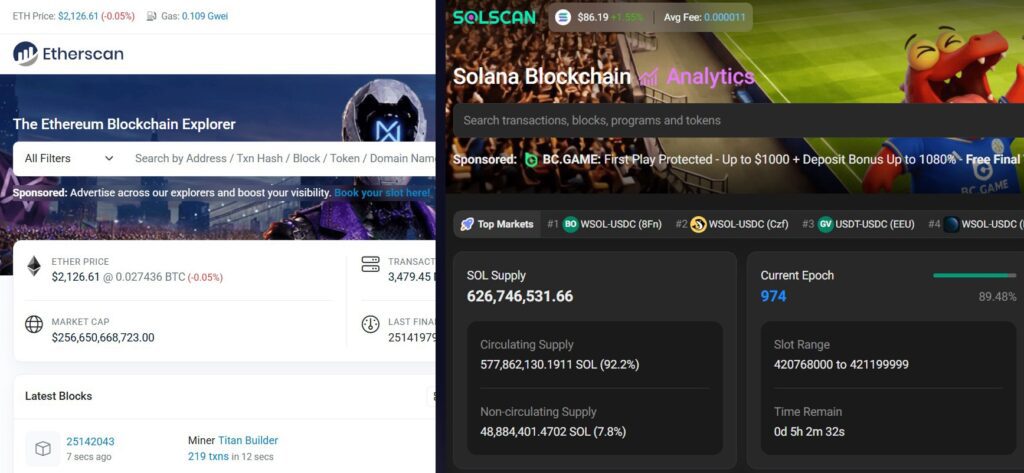
This step matters because it moves you from the project’s marketing page to the public record. The website tells the story. The explorer shows part of the machine.
Check whether the contract address matches the official docs. Look at holder count, recent transfers, supply details, and concentration. If a few wallets hold a large share, take note. If the contract has unusual minting powers or unclear admin control, take note again.
A token with a clean design still carries risk. A token with confusing contract details carries risk before the research has even begun.
Study Tokenomics with a Clear Head
A token that costs $0.05 is not automatically cheap. A token that costs $500 is not automatically expensive. Price per token means little without supply.
The numbers that matter are circulating supply, total supply, max supply, market cap, and FDV. Market cap shows the value of the tokens currently circulating. FDV, or fully diluted valuation, estimates the value if the full supply were already in the market.
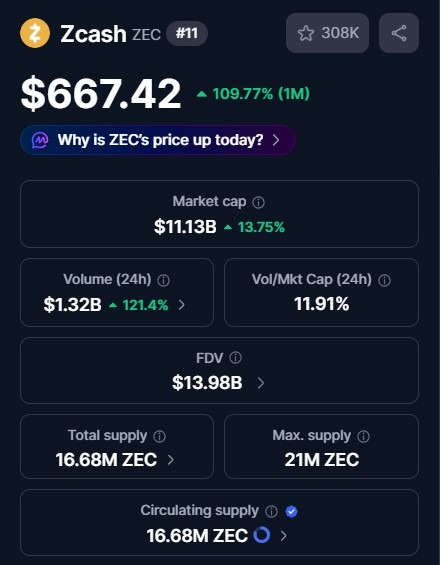
Coinmarketcap
FDV is one of the most useful beginner checks. A project may look small by market cap while carrying a huge FDV because most tokens are still locked. That means future supply may enter later.
Then study allocation. Who received the tokens?
Team, advisors, private investors, foundations, treasuries, ecosystem rewards, liquidity programs, and public sale buyers can all hold different portions. A large insider allocation does not automatically make a project bad. It does change the question. When do those tokens unlock, and who can sell them?
Check Unlocks and Vesting
Token unlocks are now central to crypto research.
An unlock happens when locked tokens become transferable or sellable. These tokens may belong to the team, private investors, advisors, community reward programs, or ecosystem funds.
Use public tools like Tokenomist, CryptoRank, CoinGecko token unlocks, and DefiLlama unlocks. They help you see upcoming supply events before they surprise you.
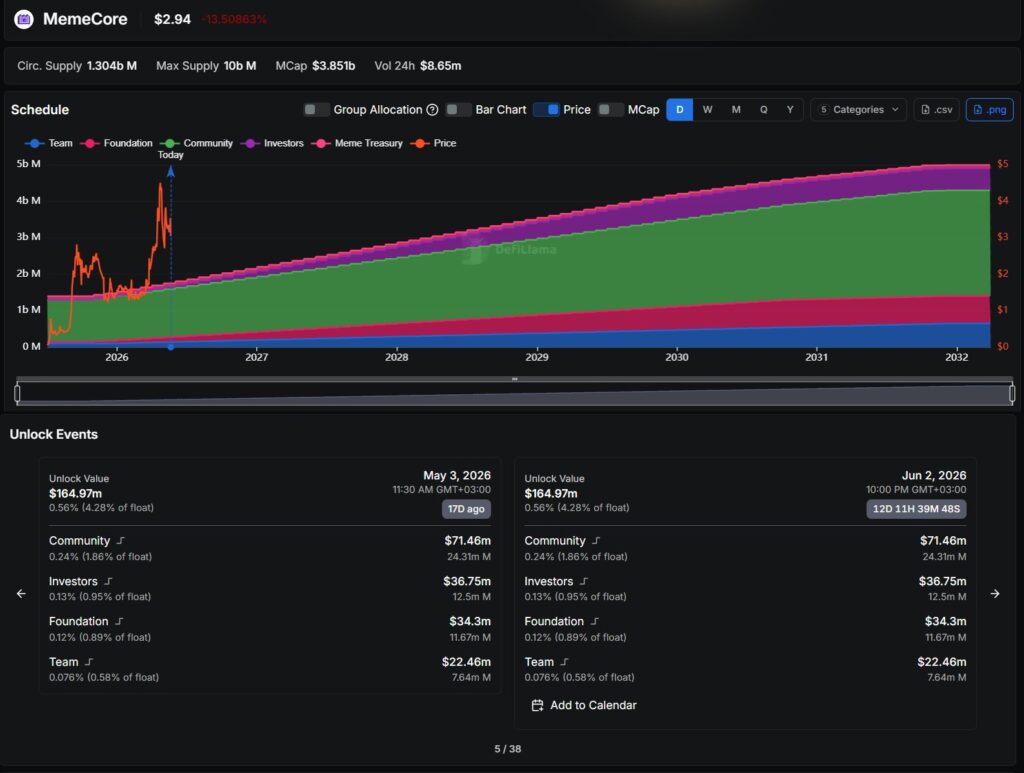
DefiLlama
Focus on three questions:
- How much is unlocking?
- When does it unlock?
- Who receives the tokens?
A small unlock during strong demand may pass quietly. A large insider unlock during weak liquidity can create pressure. Context matters.
An unlock is a supply event, not a prophecy. It does not guarantee a price drop. It tells you where new sellable supply may appear. That information belongs inside every serious decision.
Ask What the Token Actually Does
A token needs a job.
Ask this directly: would the product still work without the token?
If the answer is yes, the token may be attached to the project rather than built into it.
Real utility can include fee payment, staking that secures a network, governance rights, collateral, access rights, coordination incentives, liquidity incentives, or value capture from protocol activity. The exact design depends on the project. The important point is the connection between the token and the system.
Weak token utility often hides behind broad promises. “Community,” “ecosystem growth,” and “future rewards” may sound exciting, but they need structure. A token with no clear role depends mainly on attention.
Attention can move price. Utility gives the project a deeper reason to exist.
Look for Real Usage, Fees, and Revenue
After you understand the claim, the contract, the supply, and the token role, look for activity.
Use DefiLlama, Dune, and Token Terminal. These tools help you move beyond public statements and check whether people actually use the product.
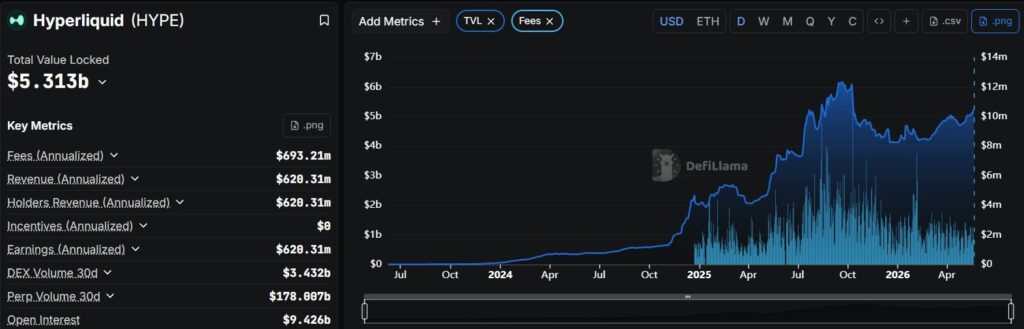
DefiLlama
DefiLlama can show TVL, fees, revenue, protocol comparisons, treasuries, raises, and sometimes incident history. Dune dashboards can show users, transactions, token flows, whale activity, stablecoin movement, and ecosystem behavior. Token Terminal is useful for comparing fees and revenue across protocols.
The simple version is this:
| Metric | Simple Meaning | Why It Matters |
| TVL | Assets deposited into a protocol | Shows capital activity and user trust |
| Fees | What users pay | Shows whether the product is used |
| Revenue | What the protocol keeps | Shows possible sustainability |
| FDV | Value if all tokens circulated | Shows dilution risk |
| Unlocks | Locked tokens becoming available | Shows future supply pressure |
| Liquidity | Ease of buying or selling | Shows execution risk |
A project with a powerful story and no activity needs caution. A project with activity and weak value capture also needs caution. Usage matters, but the token still needs a reason to benefit from that usage.
Review Liquidity and Market Depth
Trading volume can mislead beginners.
A token may show high 24-hour volume while having thin liquidity. Some markets are shallow. Some activity is artificial. And some tokens trade mainly on one small exchange or one weak pool.
Liquidity tells you how easily you can buy or sell without moving the price too much. Market depth shows the real buy and sell interest around the current price.
Check where the token trades. Look at whether volume is spread across trusted venues. Compare trading volume with DEX pool liquidity or order-book depth. Be careful when most activity comes from one obscure venue.
A token can look active from far away and become difficult to exit up close.
Study the Team, Code, and Delivery
A strong team leaves evidence.
Check the official website, founder history, LinkedIn profiles, previous projects, interviews, and public communication. Anonymous teams can build real products, especially in crypto, but anonymity increases the need for stronger technical proof and visible delivery.
Use GitHub when the project is open source. Look for recent commits, active contributors, release notes, issue discussions, and documentation updates.
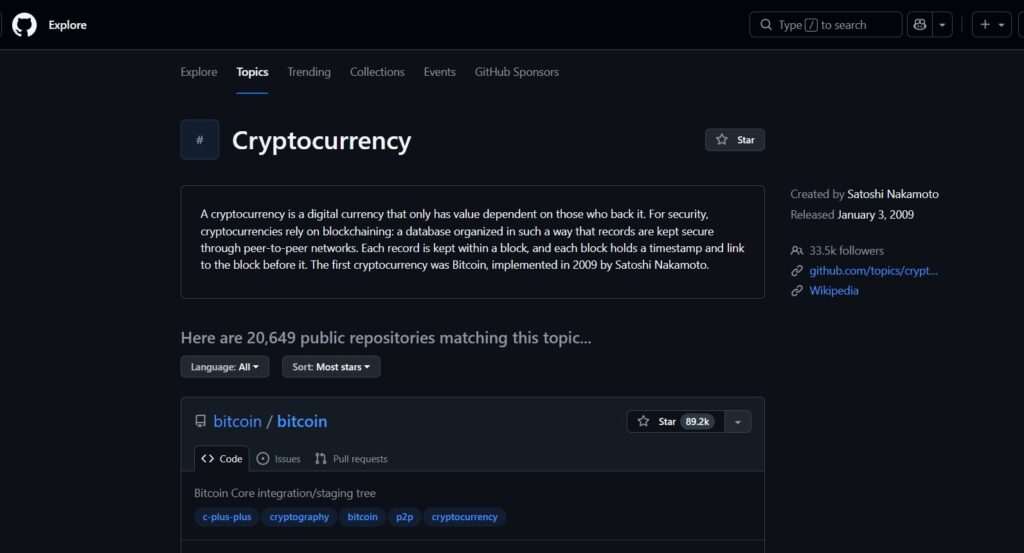
Github.com
A roadmap is a promise. Shipping history is evidence.
A project that posts campaigns every week and ships nothing for months deserves pressure from your research. Marketing can create momentum. Delivery creates credibility.
Check Security Beyond the Audit Badge
Security is never one word.
An audit is useful, but it does not guarantee safety. Smart contracts can change. New bugs can appear. Bridges, oracles, admin keys, upgradeable contracts, and treasury controls can all create risk.
Check who performed the audit, whether the report is public, what the audit covered, when it happened, what issues were found, and whether the team fixed them. Look for bug bounties, incident history, and post-incident communication.
Be careful with fake audit badges. A copied logo on a website proves nothing. Click through to the auditor’s official page or report.
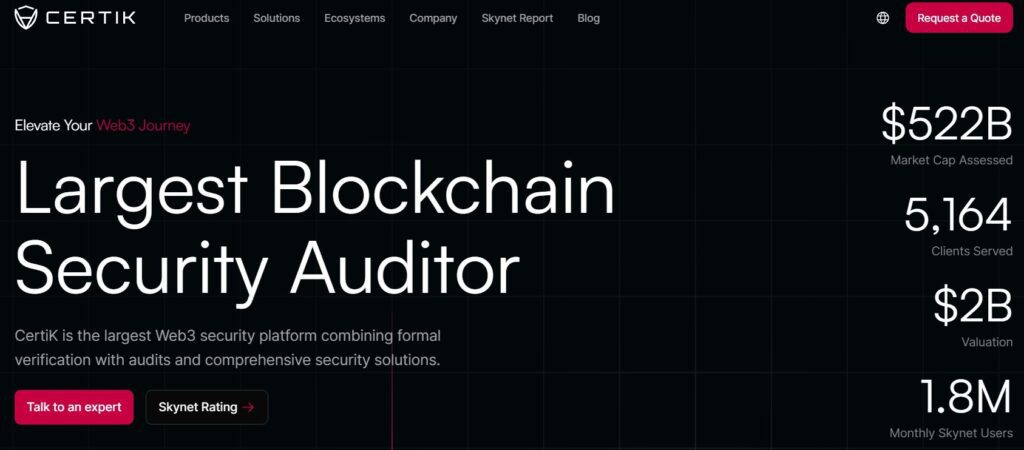
Certik.com
Good security looks like a pattern: public reports, fresh reviews, careful fixes, bounty programs, transparent controls, and honest updates.
Review Governance and Treasury Control
Many projects control treasuries, grants, reserves, or ecosystem funds. That means you should understand who can move money and who can change the system.
A multisig wallet, such as Safe, can reduce single-wallet risk by requiring several signers to approve transactions. This does not remove all danger, but it gives the project more visible operational control.
Check treasury addresses when available. Look at governance votes, upgrade rights, emergency powers, and tokenholder influence. Some projects look decentralized in branding while a small group still controls the important switches.
Real governance shows how power moves.
Consider Legal and Access Risk
Regulation is part of market risk.
A token’s legal position can affect exchange listings, access, disclosures, marketing, and long-term operations. Rules differ by region. A token available in one country may be restricted in another.
Review the project’s terms of service, restricted-country notices, entity name, jurisdiction, whitepaper disclosures, and exchange access. In Europe, MiCA has pushed crypto assets and service providers closer to formal disclosure and authorization rules. In the United States, regulators continue to examine how certain crypto assets are offered, sold, and promoted.
For beginners, the practical lesson is clear: legal uncertainty can shape liquidity, access, and survival.
Read the Community Without Catching the Fever
Community matters. Hype alone proves little.
A healthy community has real questions, product discussion, governance debate, bug reports, and honest updates. Criticism is allowed. Developers or moderators answer with useful information.
A weak community often feels loud and fragile. It focuses on price targets, memes, referral links, and attacks on anyone who asks serious questions. Some communities delete criticism quickly. Others push users into private messages, “VIP groups,” or urgent buying campaigns.
Follower count is a surface signal. Conversation quality tells you more.
Use Narratives as Context
Narratives move crypto markets. AI, real-world assets, DePIN, restaking, liquid staking, gaming, memecoins, and stablecoins can all attract capital quickly.
Use CoinGecko categories, CoinGecko research, and the DefiLlama narrative tracker to understand where attention is flowing. Narrative research can help you compare projects, measure competition, and see whether a token belongs to a growing area.
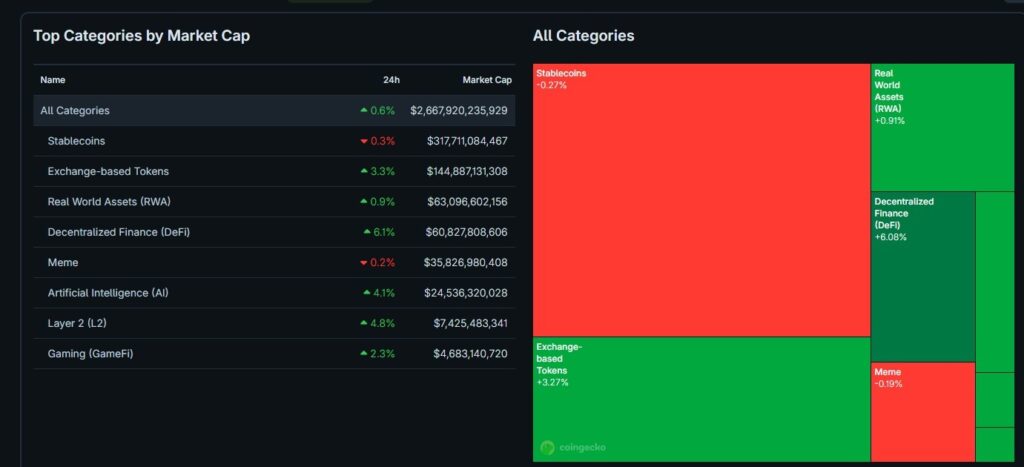
Coingecko Categories
Then return to evidence.
A strong narrative can lift weak projects for a while. A serious project still needs clear utility, transparent supply, real activity, reasonable security, and enough liquidity to support the market around it.
A Simple Example: Project Atlas
Imagine a new project called Project Atlas. It claims to combine AI infrastructure with real-world asset markets. The website looks polished. Influencers are talking about it. The token has already moved fast.
The beginner sees excitement.
The researcher checks.
The docs show an early product with limited live usage. The token is not required for the platform yet. Etherscan shows a few wallets holding a large share of supply. Tokenomist and CryptoRank show a major private investor unlock in two months. DefiLlama shows little revenue. Dune shows mostly token-transfer activity rather than product usage. GitHub activity is limited.
The result becomes simple: watchlist, not enough evidence yet.
That is a strong outcome. Research does not exist to force a trade. It exists to protect your attention, your capital, and your judgment.
Final Checklist Before You Invest
Before investing, try to answer these questions with confidence:
- Can I explain what the project solves?
- Have I verified the official token contract?
- Do I understand supply, FDV, allocation, and unlocks?
- Does the token have a real role?
- Are people using the product?
- Are fees, revenue, or other traction signals visible?
- Is liquidity strong enough?
- Are audits, bug bounties, and incident history clear?
- Who controls treasury, upgrades, and governance?
- Are legal and access risks visible?
- Is the community useful or only loud?
A clean research flow could look like this:
Project Claim → Docs → Contract Verification → Tokenomics → Unlocks → Utility → Usage and Revenue → Liquidity → Security → Legal and Community Review → Pass, Watchlist, or Research Further
Research Is a Filter
Crypto rewards curiosity and punishes carelessness.
Research cannot remove volatility. A strong project can fall. A weak project can pump. A hot narrative can overpower fundamentals for a short time.
Still, research gives you structure. It slows down impulse, separates a product from a pitch. It shows where supply sits, where dilution may arrive, whether users exist, whether revenue is real, and whether the system can survive beyond attention.
The best answer is not always action. Sometimes the best answer is wait. Sometimes it is watchlist. And sometimes it is not enough evidence yet.
That mindset protects beginners from one of the most expensive mistakes in crypto: buying before understanding.
This article is for educational purposes only and should not be taken as financial advice. Always do your own research, manage your risk, and make decisions based on your own situation. You can explore more beginner-friendly crypto guides on the Millionero Blog and trade digital assets through Millionero Exchange when you are ready to apply what you have learned responsibly.